SID-2 Agentic Search: What SID AI's 0.720 NDCG Swarm Mode Means for the Future of AI
Search is changing in a way most people have not noticed yet. For twenty years, search meant typing words into a box and getting a list of links. You did the reading, the comparing, and the deciding. Now a new generation of AI systems wants to do that work for you, and a small but important release shows exactly how that shift is being measured.
On November 18, 2026, SID AI released SID-2, which it describes as an agentic search model. The headline number attached to the launch is a 0.720 NDCG score, achieved in a configuration the company calls Swarm Mode. Those few words carry a lot of meaning. NDCG is a way of scoring how good search results are, and 0.720 is a strong signal in a field where small gaps matter. "Agentic" means the system does not just return links, it takes actions, plans steps, and works toward a goal. "Swarm Mode" suggests that instead of one AI model thinking alone, several of them work together.
Taken together, this release points to where AI is heading next: away from chat windows that answer one question at a time, and toward teams of AI agents that search, check, and report back on their own.
What SID AI Actually Announced
The facts of the release are simple. SID AI shipped a model called SID-2. It is built for agentic search. It scored 0.720 on NDCG, and that score was reached with Swarm Mode turned on.
That is a short list, but each piece matters. Let's break them down in plain language.
Search That Acts, Not Just Answers
A traditional search engine matches your words to documents. An agentic search model goes further. It reads your request, decides what it needs to find out, runs several searches, checks what it found, and puts together a final answer or takes a final action. If the first search does not turn up anything useful, it tries a different angle. It behaves less like a search box and more like a careful research assistant who keeps digging until the job is done.
This matters because most real questions are messy. "Which of these three suppliers can meet our deadline at the lowest total cost?" is not something you can answer with one keyword query. It needs several lookups, a comparison, and a judgment. Agentic search is built for exactly that kind of work.
What 0.720 NDCG Tells Us
NDCG stands for Normalized Discounted Cumulative Gain. The name is heavy, but the idea is friendly. It scores a ranked list of results by asking two questions: Did you include the good stuff? and Did you put it near the top? The "discounted" part means a great result buried at position ten counts for less than the same result at position one, because users rarely scroll that far. The "normalized" part means the score is squeezed into a scale from 0 to 1, so you can compare across different searches, even when some questions are harder than others.
A score of 1.0 would mean the ranking is perfect. Real systems never hit that. So 0.720 NDCG is not a number to dismiss, it is a benchmark the company is putting its name behind, and in search engineering, moving a few points on NDCG often means a large change in whether people find what they need. Companies publish these numbers because they are comparable and repeatable, and because buyers of AI systems increasingly demand evidence rather than demos.
That is one of the quiet trends here: AI marketing is becoming measurement-driven. The pitch is no longer "our model is amazing." It is "here is our score on a standard yardstick, and here is the setting that produced it."
Swarm Mode: Many Agents, One Answer
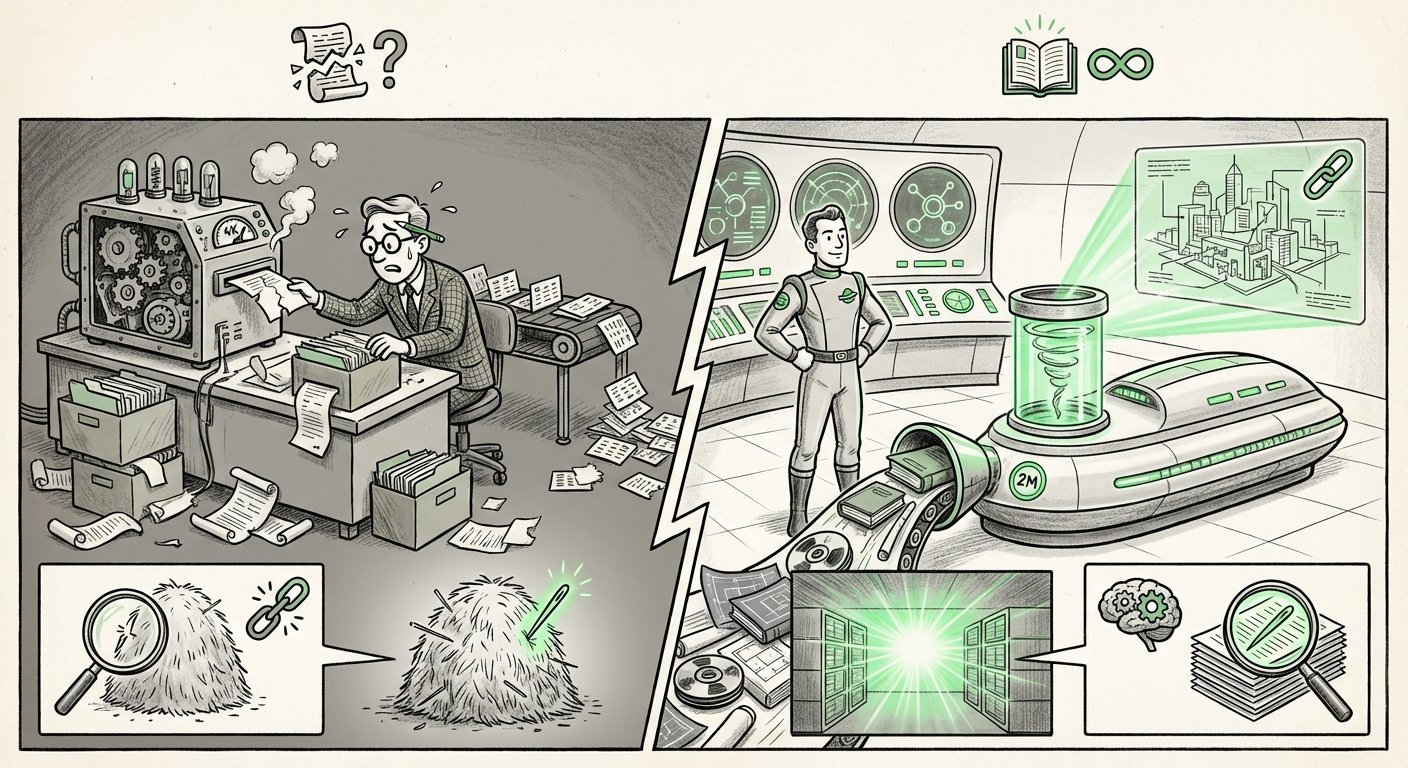
The most interesting part of the release is Swarm Mode. Rather than one model doing all the reasoning, a swarm splits the work across multiple agents. One agent might scan for sources. Another might check whether a claim is accurate. A third might compare options or draft the summary. They share what they learn and converge on a result.
This mirrors how good human teams work. A single researcher can miss things. A team assigns roles, compares notes, and catches each other's mistakes. AI swarms aim for the same benefit: broader coverage and fewer errors, because no single agent has to be perfect.
The catch is complexity. More agents means more coordination, more compute, and more chances for one agent's mistake to spread. Getting a swarm to produce a better answer than a single model, rather than just a slower, more expensive one, is the real engineering challenge. The fact that SID AI reports its 0.720 NDCG figure specifically under Swarm Mode suggests the company is tying its strongest result to the multi-agent setup, and treating that setup as the product's centerpiece rather than a side feature.
The Bigger Trend: Search Becomes Work
SID-2 fits into a pattern that has been building across the AI industry. For the last few years, the main event was the model that could talk. Now the main event is the model that can do.
Three shifts are converging:
- From answers to outcomes. Users do not want a paragraph of text; they want a task finished. Booking, comparing, verifying, compiling, that is where the value sits.
- From one model to many. Instead of scaling a single model bigger and bigger, teams are combining smaller, specialized agents that check each other. Orchestration is becoming the skill that matters.
- From vibes to benchmarks. Buyers want proof. Standard scores like NDCG give them a way to compare systems on something other than a flashy demo.
Agentic search sits right where all three meet. It is a task-completing system, it is naturally multi-agent, and it is easy to measure because search has decades of established evaluation practice behind it.
What This Means for the Future of AI
Evaluation Becomes the Real Battleground
If scores like 0.720 NDCG become the norm for launch announcements, expect the conversation to shift from "which model is smartest" to "which system is most reliable on my actual work." That is a healthier conversation. It pushes vendors to publish consistent, reproducible numbers and pushes buyers to define what "good" means for their own use case before they sign a contract.
Multi-Agent Systems Move From Research to Product
Swarm-style designs have been a research topic for years. What changes when they ship as a named mode in a commercial model is that they become something teams can actually deploy and test. Over time, expect the same questions that hit every new architecture: When is a swarm worth the extra cost? How do you debug five agents instead of one? Where do you draw the line between helpful autonomy and uncontrolled behavior?
The Unit of Software Shifts
As agentic search matures, the unit of work stops being "a query" and becomes "a task." That has downstream effects on how products get designed. Interfaces will need to show not just the answer but the trail: what the agents searched, what they found, what they skipped. Trust will come from visible process, not just confident output.
Practical Implications for Businesses
Where Agentic Search Pays Off First
The early wins tend to show up wherever people currently do repetitive multi-step research. That includes competitive and market research, procurement comparisons, customer support where answers require pulling from several systems, compliance checks that need a trail of evidence, and internal knowledge search across messy document stores. These are places where a single query never worked well in the first place, and where the cost of a wrong answer is high enough that extra verification is worth paying for.
What to Ask Before You Buy
- What is the benchmark, exactly? A score is only meaningful with the dataset and setup behind it. Ask what was measured and under what conditions.
- How does Swarm Mode change cost and latency? More agents usually means more compute. Get numbers for your expected volume.
- Can I see the reasoning trail? If the system cannot show its steps, it is hard to trust and hard to audit.
- What happens when it is wrong? Ask about failure behavior, not just accuracy. Good systems fail visibly.
- How does it handle my data? Agentic systems touch many sources. Know where data goes and what is retained.
Design Your Own Yardstick
The most useful takeaway from a launch like this is not the number itself, it is the habit. Build a small test set of 50 to 100 real questions from your business, with known-good answers. Run any candidate system against it. Then you are not comparing marketing claims; you are comparing performance on your work. That single practice will save more money than any vendor comparison chart.
Risks and Open Questions
None of this is free of risk. NDCG measures ranking quality, not truth. A system can rank relevant documents beautifully and still misread them. Multi-agent swarms can also amplify a shared mistake: if every agent relies on the same flawed source, the swarm agrees confidently and wrongly. Cost is another issue, running several agents per task can multiply expenses in ways that are easy to underestimate at pilot scale.
There is also the human factor. When a system hands you a tidy, well-sourced answer, the temptation to stop checking is strong. Organizations that deploy these tools well will keep a review step in the loop for decisions that matter, and will train staff to ask how the answer was reached, not just what it says.
Actionable Steps
- Audit your research bottlenecks. Find the three workflows where people spend hours searching, cross-checking, and summarizing. Those are your pilots.
- Build a baseline before you shop. Record how long those tasks take today, and how often they go wrong. Without a baseline, improvement is a feeling, not a fact.
- Pilot with the trail turned on. Run agentic search in observation mode first. Read the reasoning steps. You will learn more about the tool in a week than in a month of demos.
- Start narrow. One team, one task, one clear success metric beats a company-wide rollout every time.
- Plan for governance early. Decide who can approve autonomous actions, what gets logged, and which decisions always need a human signature.
The Bottom Line
SID AI's SID-2 release is not the loudest AI news of the year, but it is one of the more instructive. A 0.720 NDCG score in Swarm Mode tells a story about where the field is going: toward measured performance instead of confident claims, toward teams of agents instead of single models, and toward software that finishes tasks instead of just describing them.
For businesses, the message is practical. The tools are getting good enough to trust with real research work, provided you define what good means, keep a human in the loop, and insist on seeing the steps. For the wider AI industry, the message is that the next round of competition will not be won by the most impressive demo. It will be won by the systems that can prove, on a standard score and in your own workflow, that they actually deliver.