nanoVLM Explained: Train Your Own Vision-Language Model in Pure PyTorch
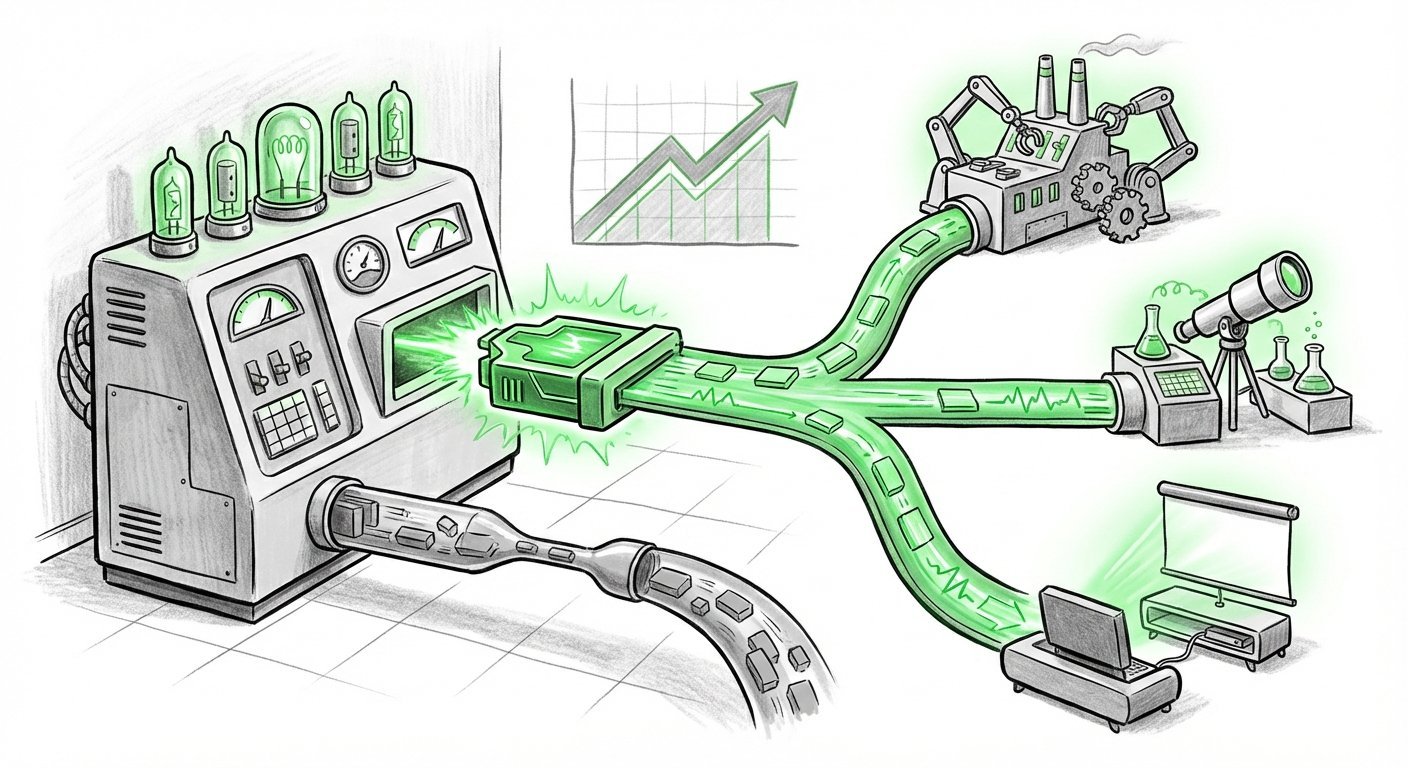
Vision-language models are some of the most useful AI systems today. They can look at an image and answer questions about it, read a chart, describe a product, or help a machine understand the world. But for most people, training one has felt out of reach. The code is often hidden behind large frameworks, long setup guides, and heavy infrastructure. A new project called nanoVLM is trying to change that. Its goal is simple: be the simplest repository to train your own vision-language model in pure PyTorch.
That may sound narrow. It is not. The project points to a bigger shift in AI: powerful ideas are moving out of closed labs and into readable, hackable code. When more people can train, inspect, and change a model, the future of AI looks different. It becomes less about a few giant systems and more about many small, focused tools built by everyday teams.
What Is a Vision-Language Model?
A vision-language model, or VLM, connects two kinds of data: images and text. You show it a picture and ask a question. It gives you a text answer. That simple setup powers many real tasks. A VLM can help a blind user understand a photo. It can check a factory part for defects. It can read a receipt, spot a damaged package, or answer customer questions about a product image.
Until recently, building a VLM meant using large, complex codebases. Teams had to learn many layers of software. They had to manage distributed training, custom data loaders, and hidden configuration files. The result worked, but few people understood every part. That is a problem for trust, for learning, and for fast experimentation.
Why nanoVLM Matters: Small Code, Big Shift
nanoVLM takes a different path. It is a repository built in pure PyTorch. PyTorch is one of the most widely used tools for building AI models. “Pure PyTorch” means the project avoids heavy wrappers and extra frameworks. It tries to keep the code close to the metal. You can read it, trace it, and change it. The title says it is the simplest repository to train your VLM, and that simplicity is the point.
This follows a wider trend in AI engineering. In the last few years, small “nano” projects have shown that complex models can be built with surprisingly little code. These projects are not always meant to win benchmarks. They are meant to teach, to demystify, and to give builders a clean starting point. nanoVLM applies that same idea to vision-language models.
What “Pure PyTorch” Gives You
- Transparency: You can see how images and text are processed, how the model learns, and where the training loop runs.
- Control: You can change the model, the data pipeline, or the loss function without fighting a framework.
- Fewer dependencies: Less hidden code means fewer version conflicts and fewer surprises.
- Better learning: Students and researchers can study a full VLM without getting lost in abstraction.
- Easier debugging: When something breaks, you can follow the code from start to finish.
For a business, those points are not just academic. They affect cost, speed, and risk. A team that understands its model can audit it. It can fix problems faster. It can avoid vendor lock-in. It can test new ideas without waiting for a platform update.
The Future of AI: From Giant Models to Focused Tools
The first wave of modern AI was about scale. Bigger models, bigger data, bigger compute. That wave is not over. But a second wave is growing beside it: small, specialized models built for narrow jobs. nanoVLM is a sign of that second wave.
Not every problem needs a giant general-purpose model. A warehouse robot needs to spot a missing label. A clinic needs to route a scanned form. A retailer needs to check shelf compliance. These tasks need models that are accurate, private, and cheap to run. They do not always need a model that can write poetry or answer trivia.
When training code becomes simple, more teams can build these focused tools. They can start with a small VLM, train it on their own images and text, and keep it close to their data. That can mean lower latency, lower cost, and stronger privacy. It can also mean more competition. If the barrier to entry falls, new products can come from small companies, universities, and independent developers.
Domain-Specific VLMs Will Grow
We should expect more domain-specific vision-language models in the next few years. A model trained on construction site photos will not know how to read a medical chart. A model trained on fashion catalogs will not understand engine diagrams. That is fine. Specialization can be a strength. A small model trained on the right data can outperform a large general model on a narrow task, and it can do so at a fraction of the cost.
nanoVLM makes this easier to test. A team can take the repository, swap in its own data, and run an experiment. If the result is promising, the team can invest more. If not, it can learn quickly and move on. That fast loop is how practical AI gets built.
Practical Implications for Businesses
Business leaders should not read this as “every company must train its own VLM.” That would be a mistake. Most companies should first use existing models through APIs or open weights. But some should go further. The question is where a custom model creates real advantage.
Where a Custom VLM Makes Sense
- Private data: If your images cannot leave your network, a small model you train and run yourself can be a good fit.
- Narrow visual tasks: Defect detection, document routing, shelf checks, and field service photos can benefit from focused training.
- Edge deployment: Small models can run on local devices, which reduces latency and cloud costs.
- Fast iteration: A readable codebase lets your team test ideas in days, not months.
- Education and hiring: A team that can read a full VLM pipeline builds deeper AI skills.
Where It Does Not Make Sense, Yet
Do not start by training a VLM from scratch for a general chatbot. Do not assume a small research repository is production-ready. nanoVLM is a starting point, not a finished platform. It may lack the safety filters, monitoring, evaluation tools, and scaling features that a live product needs. Treat it as a learning and prototyping tool first.
A sensible path looks like this: pick one narrow task. Collect a small, clean dataset. Run a baseline with an existing model. Then try a custom model if the baseline is too costly, too slow, or too hard to control. Measure accuracy, speed, and cost. Only then decide whether to invest in a full build.
What This Means for Society
Simple training code has social value beyond business. It makes AI more understandable. When people can read the code, they can ask better questions. Where does the data come from? How is bias handled? What happens when the model is wrong? These questions are easier to answer when the system is not a black box.
It also changes who gets to participate. A student in a small town, a researcher with a modest budget, or a startup with two engineers can now study a full VLM pipeline. That widens the pool of people who can contribute. It also makes AI education more practical. Instead of only learning theory, students can train a small model and see the results.
There are risks. Simpler code can make it easier to build harmful applications. It can also create a false sense of safety. A model that works in a demo may fail in the real world. Society will need clear rules, good evaluation, and responsible data practices. The answer is not to hide the code. The answer is to pair openness with strong governance.
The Road Ahead: What to Watch
The nanoVLM project is a signal, not an ending. Watch for three things next.
First, more minimal implementations. As the AI community learns that small code can teach big ideas, expect more “nano” projects for other model types. This will make AI engineering more like open-source software: readable, forkable, and shared.
Second, better tools for small-model training. The hard part is rarely the model code. It is the data. Teams need clean ways to label images, balance datasets, and test for bias. The next wave of useful AI tools may focus on data quality, not model size.
Third, a shift in how companies buy AI. Instead of only buying access to a giant model, more companies may buy the ability to build and own a small one. That could change pricing, contracts, and the balance of power between AI vendors and their customers.
Actionable Insights
- For developers: Read the nanoVLM code even if you do not train a model. It will make you a better AI engineer.
- For data teams: Start collecting clean image-text pairs now. Data is the real bottleneck for custom VLMs.
- For product leaders: Pick one narrow visual task and run a two-week experiment. Do not aim for a general model.
- For educators: Use minimal repositories as teaching tools. They turn AI from magic into engineering.
- For policymakers: Support transparent code and clear evaluation. Openness works best with accountability.
The future of AI will not be built only by giant labs. It will also be built by small teams with clear problems and clean code. nanoVLM shows what that future can look like: simpler, more open, and more within reach. The question for businesses is not whether they can train a VLM. It is whether they can find the right problem to solve with one.