Why a $1,200 Emergency Kit Explains the Next Phase of AI Risk Forecasting
In November 2026, a buyer sat down and spent $1,200 on emergency supplies. The reason given for the purchase was refreshingly honest: not because a disaster was coming, but because the supplies would be useful either way. Even if nothing happened, the money would not be wasted.
That single sentence is worth more attention than most AI product announcements this year.
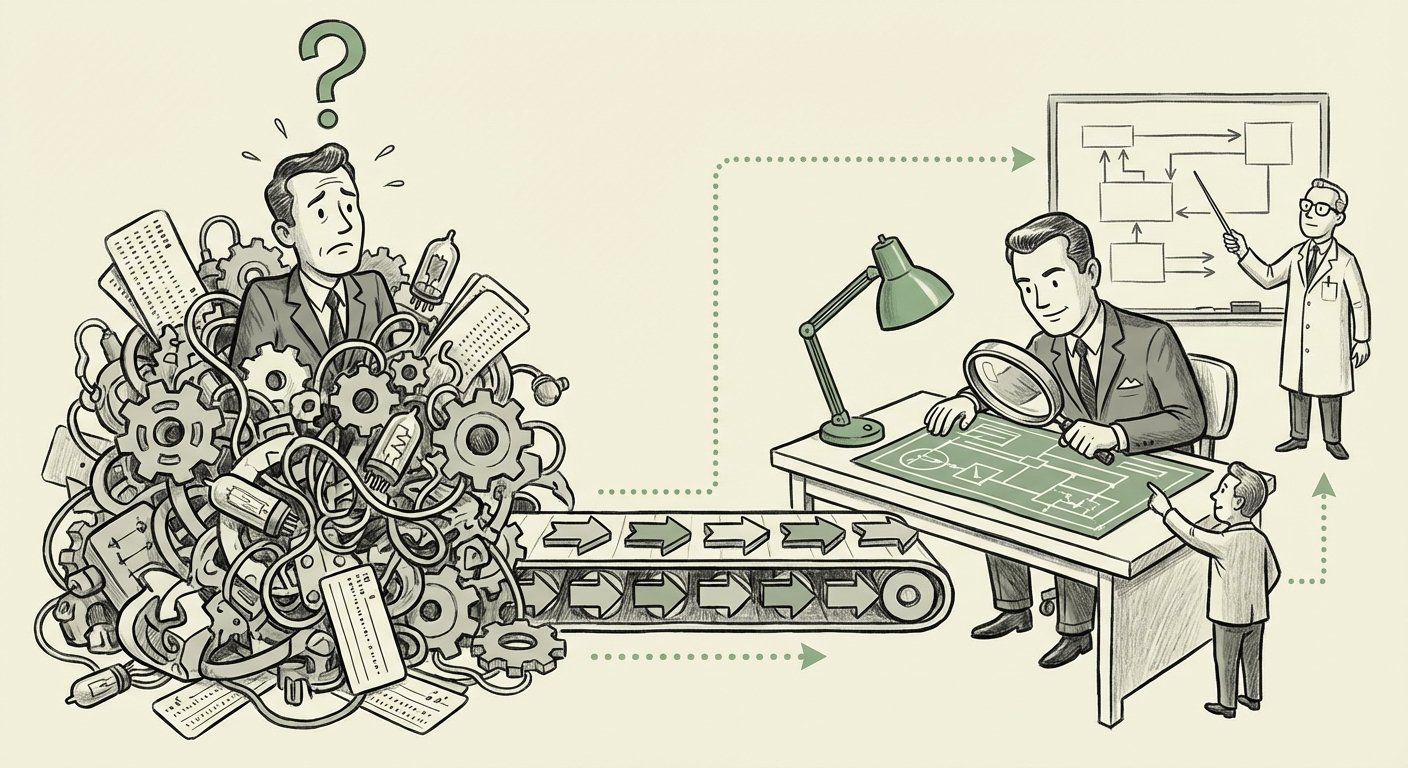
It describes a way of thinking that is spreading fast through households, businesses, and boardrooms: buy options against uncertainty you cannot price. You do not need to know which bad thing will happen. You only need to know that being somewhat ready is cheap compared to being caught flat-footed. And the moment millions of people start reasoning that way, an entire industry of forecasting, monitoring, and logistics gets pulled along with them, an industry that is increasingly built on artificial intelligence.
Here is the uncomfortable part for the AI sector. The $1,200 decision was made by a human being, using judgment, not a model. That is exactly the gap the next wave of AI products is trying to close, and exactly where it is most likely to fail.
The Real Signal: Preparedness Is Turning Into an Information Problem
Not long ago, emergency readiness was mostly a gear problem. You bought the water, the radio, the paperwork in a folder, and you felt done. What has changed is that the gear is now the easy part. The hard part is knowing when to act, how much to spend, and what to buy for your specific situation, a house in a flood zone, an apartment in a heat dome, a business with three warehouses and one fragile supplier.
Those are information questions. And information questions are where AI earns its keep.
The $1,200 buyer effectively paid a small premium for optionality. That is the same trade a good forecasting system makes on a much larger scale: accept a modest, certain cost now to avoid an uncertain, catastrophic cost later. When a household starts thinking like a risk manager, the tools that risk managers use stop being enterprise software and start being consumer products.
What This Means for AI: From Prediction to Calibrated Preparation
Most AI forecasting today is judged on accuracy. That is the wrong scoreboard for this moment. A weather model that is right 98% of the time but screams a false alarm every other week will train people to ignore it. A model that stays quiet and misses the one event that mattered is worse.
What the $1,200 purchase hints at is demand for a different kind of output: calibrated, actionable guidance. Not "there is a 40% chance of a disruption." Rather: "Given your location, your family, and your budget, spend this much on these categories this month, and skip the rest."
1. Signal detection and early warning
AI is already being pointed at weather feeds, grid data, shipping records, water levels, and public health signals. The technical work is largely about fusing messy data sources into one readable picture. The commercial work is about trust: a warning only has value if a person believes it enough to act, and not so much that they panic-buy everything in sight.
Expect the winning systems to be boring. A well-designed alert tells you the two things worth doing this week and says plainly what it does not know.
2. Supply chain and demand sensing
When a niche category suddenly spikes, the companies that notice first win and the ones that notice last sell out. AI demand sensing turns a strange spike in, say, home water storage into an early read on regional anxiety, which is genuinely useful commercial intelligence. It also raises a fairness question: if the models learn first, the fastest buyers get the stock, and slower, poorer buyers get nothing.
3. The household layer
The least glamorous and most promising frontier. An assistant that tracks what is in your cupboard, knows which items expire, notices that the flashlight batteries are three years old, and quietly builds a restock list. Suddenly the $1,200 is not a one-time panic purchase but a maintained system. Recurring small spending beats occasional large spending, and it is far easier to sustain.
This is where AI agents become genuinely useful to normal people: not by writing poetry, but by remembering what you already own.
Practical Implications for Businesses
For companies, the $1,200 story is a map of where customer expectations are heading.
- Resilience becomes a feature, not a cost center. Buyers are starting to ask suppliers the same questions they ask themselves: what happens if this breaks? Vendors who can answer with data, inventory buffers, alternate routes, recovery times, will win deals on trust rather than price.
- Insurance and risk pricing will lean on models. Expect premiums and contracts to increasingly reflect what AI systems believe about exposure. That makes model quality a financial issue, not a technical one, and it makes explainability a legal requirement rather than a nice-to-have.
- False alarms are expensive. Every unnecessary evacuation, recall, or stock write-off erodes the credibility of the system that triggered it. Organizations need a feedback loop that measures the cost of being wrong in both directions.
- Small, cheap options beat big, certain bets. The most defensible AI investments right now are the ones that reduce the cost of being surprised, monitoring, scenario planning, flexible contracts, rather than the ones that promise to predict the future exactly.
There is also a quieter lesson about product design. The buyer did not want a prediction. They wanted permission to spend money on something that might never be used. AI products that reduce the guilt and guesswork of that decision, by showing a clear, defensible rationale, will sell better than dashboards full of probabilities.
Practical Implications for Society
Preparedness has an uncomfortable class dimension. A $1,200 purchase is a luxury for many households. If AI-driven readiness tools become the norm, the people with the best models, the best data, and the most disposable income will be ready first, and everyone else will find out later, when shelves are empty.
That is not a hypothetical. It is the standard pattern whenever a useful technology arrives before it becomes cheap. Public agencies therefore have a role that goes beyond issuing alerts: making the basic version of readiness free, simple, and default. A city that can push a clear, localized, AI-assisted checklist to every resident before a heat wave is doing more good than a thousand premium subscriptions.
There is a second social risk, and it is subtler: alarm fatigue. AI makes it cheap to generate warnings. It does not make it cheap to earn attention. If every model with something to say sends a notification, people will mute the whole category, and the one warning that mattered will go unread.
Actionable Steps
For individuals and households
- Treat readiness as a small recurring budget, not a one-time splurge. The $1,200 insight is that useful gear is useful regardless of disasters.
- Use AI tools to plan and track, but keep the decision in your hands. A model can tell you a risk exists; only you know what your household can afford.
- Write down the plan somewhere offline. Tools fail exactly when you need them most.
For business leaders
- Ask your forecasting systems to report their false-alarm rate alongside their accuracy.
- Fund the boring resilience work, inventory visibility, supplier mapping, scenario drills, before the flashy prediction layer.
- Measure the cost of a missed warning and the cost of an unnecessary one. Manage both.
For AI builders
- Optimize for decisions taken, not predictions made. A model that changes behavior beats a model that scores well.
- Show your uncertainty in plain language. Users trust systems that admit what they do not know.
- Design for maintenance, not purchase. The lasting value is in the ongoing loop.
Where This Goes Next
The most likely short-term outcome is unremarkable and that is precisely the point. Most people who spend a few hundred or a few thousand dollars on readiness will never face the disaster they prepared for. Their supplies will sit in a cupboard, get rotated, and quietly expire. Nothing dramatic will happen.
But the behavior itself is the change. It signals a broad shift from reacting to shocks toward holding small, cheap options against them, at the household level, at the company level, and increasingly at the level of software that learns your situation and nudges you before you need to be nudged.
AI's role in that shift is real but bounded. It is very good at watching many signals at once, at spotting patterns humans miss, at turning messy data into a short list of things worth doing. It is not good at deciding what a family should sacrifice to be safe, and it should not be allowed to try.
The $1,200 buyer got the important part right. They did not wait for certainty. They bought a little insurance, on the reasonable assumption that useful things are useful. The AI systems that win the next few years will be the ones that make that same judgment cheaper, clearer, and available to far more people than the ones who can afford to make it alone.