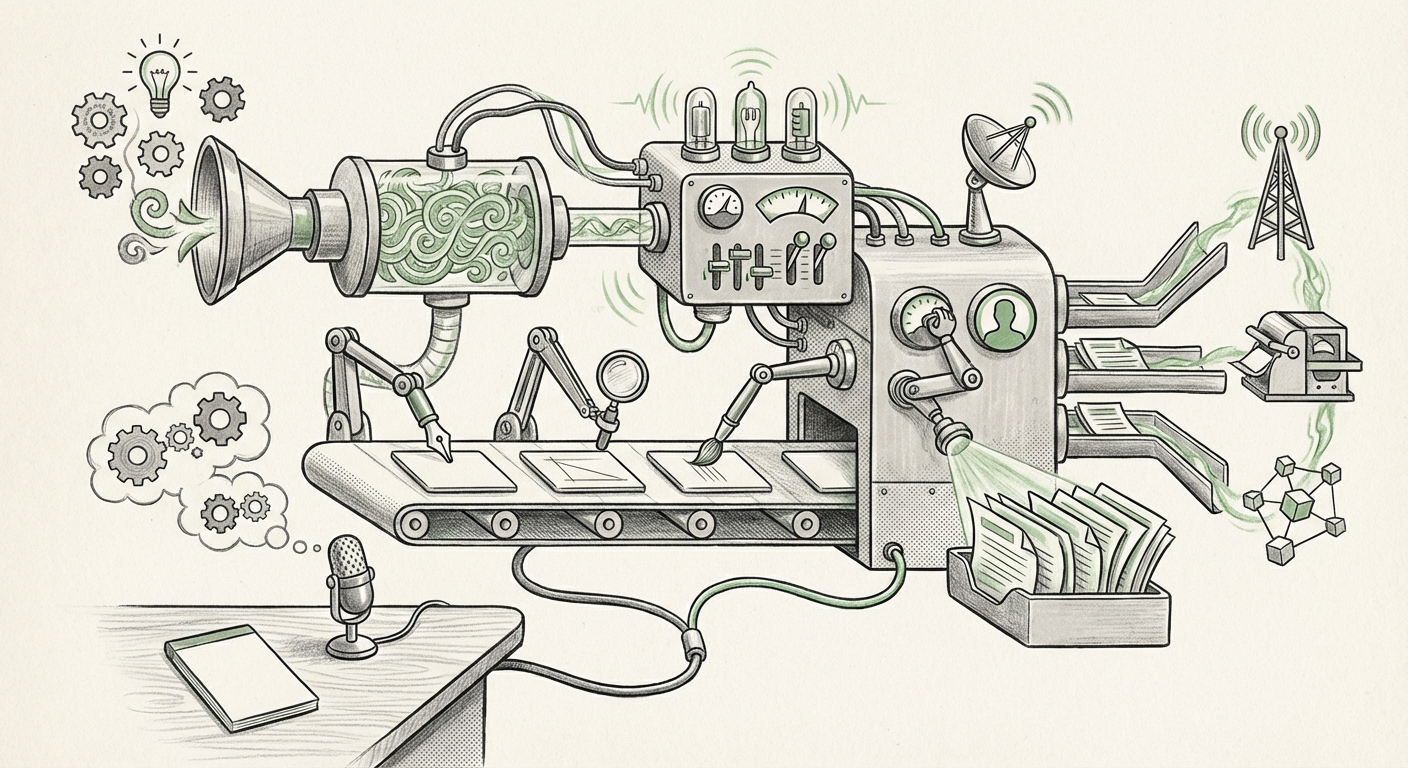
Google Deepmind's Gemma 4 12B Runs Multimodal AI on a Laptop with Just 16 GB of RAM
Artificial intelligence just took a giant leap toward everyday practicality. On June 3, 2026, Google Deepmind released Gemma 4 12B, a multimodal AI model that can run entirely on a standard laptop with only 16 GB of RAM. This is not a stripped-down "lite" version of something bigger. It is a full multimodal model that can understand text, images, and possibly other data types — all without needing cloud servers or expensive hardware.
For years, powerful AI models have been locked inside massive data centers, accessible only through internet connections and API keys. But Gemma 4 12B changes that equation. It brings serious AI capability directly to the device in your backpack. Let's break down why this matters, what it means for the future of AI, and how businesses and society can start preparing for a world where advanced AI runs locally on everyday computers.
The Big Picture: AI Gets Personal
To understand why Gemma 4 12B is a big deal, we have to remember where AI was just a few years ago. Large language models like GPT-3 and early versions of Gemini required enormous computing power. They lived in server farms and you accessed them through the internet. Every prompt, every image analysis, every conversation traveled to a cloud server and back.
That model works, but it has real downsides. It requires constant internet connectivity. It raises privacy concerns because your data leaves your device. It adds latency — that little delay while your request travels to the cloud and back. And it costs money for both the user and the company providing the service.
Gemma 4 12B flips that script. By running entirely on a laptop with 16 GB of RAM, it offers true local AI — no internet needed, no data leaving your machine, no cloud bills. And because it is multimodal, it can handle more than just text. It can understand images and potentially other inputs, making it useful for a wide range of real-world tasks.
This shift from cloud-only to local-first AI is one of the most important trends in the field right now. And with Gemma 4 12B, Google Deepmind has set a new benchmark for what is possible on consumer hardware.
What Makes Gemma 4 12B Different?
The name itself tells part of the story. "12B" means the model has 12 billion parameters. That might sound like a lot — and it is — but what matters more is that Google Deepmind has found a way to fit those 12 billion parameters, plus the multimodal processing capabilities, into a memory footprint that a typical laptop can handle.
Most laptops sold today come with at least 16 GB of RAM. That means Gemma 4 12B can run on hardware that millions of people already own. You do not need a high-end workstation with multiple graphics cards. You do not need a cloud subscription. You just need a decent laptop.
The "multimodal" part is equally important. Early local AI models were mostly limited to text. They could answer questions, write emails, or generate code. But they could not "see" images. Gemma 4 12B can process visual information alongside text, opening up use cases like describing photos, analyzing diagrams, or working with scanned documents — all on your laptop.
This is a major technical achievement. Running a multimodal model locally requires careful optimization of the model architecture, efficient use of memory, and smart scheduling of computational tasks. Google Deepmind has clearly made significant progress in model compression and efficient inference to pull this off.
What This Means for the Future of AI
1. AI Becomes a Utility, Not a Service
When AI runs locally, it shifts from being something you "use" through a service to something your device can do natively — like running a spreadsheet or editing a photo. This changes expectations. Users will start to expect AI capabilities built into their operating systems, their office software, and their creative tools.
Local AI also means lower barriers to entry. Students, small business owners, freelancers, and hobbyists can experiment with powerful AI without needing cloud credits or high-speed internet. That democratization could spark a wave of innovation from people who were previously priced out of the AI revolution.
2. Privacy and Security Get a Boost
One of the biggest concerns with cloud-based AI is privacy. When you upload a document or an image to an AI service, you are trusting that company with your data. With local AI, everything stays on your machine. That is a game-changer for industries like healthcare, legal, finance, and government, where data sensitivity is paramount.
Imagine a doctor analyzing medical images on a laptop without sending anything to the cloud. Or a lawyer reviewing confidential documents with AI assistance — all locally. Gemma 4 12B makes this kind of secure, private AI use possible today.
3. Real-Time and Offline Use Cases Explode
Because local AI has no network latency, it can respond instantly. That matters for applications like real-time transcription, live translation, interactive tutoring, or accessibility tools for people with disabilities. It also means AI works in places with poor or no internet — on airplanes, in rural areas, or in secure facilities.
The combination of multimodal capabilities and local execution means you can snap a picture of a plant, an appliance manual, or a whiteboard full of notes and get immediate AI analysis — all without sending that image anywhere.
Practical Implications for Businesses
Cost Savings and Predictability
For businesses, the most immediate benefit is cost. Cloud AI services charge per API call, per token, or per minute of processing. Those costs can add up fast, especially for companies that integrate AI into their daily workflows. With local AI like Gemma 4 12B, the cost is essentially zero after the initial hardware investment.
There is also budget predictability. No more surprise bills because an employee used AI a little too enthusiastically. A laptop with 16 GB of RAM is a fixed cost, and the AI runs as much as you want.
New Product Categories
Local multimodal AI opens the door for software and hardware products that were not feasible before. Imagine a new generation of laptops that market themselves as "AI-native" — designed specifically to run models like Gemma 4 12B right out of the box. Or offline-first mobile apps that use local AI to analyze photos, translate signs, or summarize documents.
Businesses that build their products around this capability could gain a competitive edge by offering features that work anywhere, anytime, without a data connection.
Workforce Transformation
When AI is available on every employee's laptop, it changes how work gets done. Routine tasks that involve processing text or images can be automated or assisted. Data entry, report summarization, image tagging, content drafting — all of these become faster and easier.
But this also means businesses need to think about retraining and upskilling. Employees need to learn how to use local AI effectively, how to prompt it, and how to verify its outputs. The companies that invest in this training will see the biggest productivity gains.
Implications for Society
Bridging the Digital Divide
Access to advanced AI has been heavily skewed toward people and organizations with money, fast internet, and cloud infrastructure. Local AI models like Gemma 4 12B help level the playing field. A student in a developing country with a modest laptop can now use the same kind of multimodal AI as a well-funded startup in Silicon Valley.
That has profound implications for education, healthcare, and economic opportunity. When powerful tools become cheap and widely available, the gap between haves and have-nots can shrink.
Environmental Impact
Cloud AI has a significant carbon footprint because it relies on massive data centers that consume enormous amounts of electricity. Local AI, by contrast, uses the hardware you already own. Running a model on your laptop is far more energy-efficient than sending data to a data center and back.
If local AI becomes the norm, the environmental cost of AI drops dramatically. That is good news for sustainability goals and for the planet.
New Risks and Responsibilities
Of course, local AI also brings new challenges. When AI runs on a laptop, updates are not automatic. Users might stick with older, less capable, or even broken versions of a model. There is also the risk of misuse — generating misleading content, deepfakes, or harmful information without any oversight from a cloud provider.
Companies like Google Deepmind will need to think carefully about how to manage updates, safety features, and content moderation in a local-only environment. The responsibility shifts from the service provider to the end user and the device manufacturer.
Actionable Insights for Readers
Whether you are a business leader, a developer, or just someone curious about AI, here are some practical steps you can take right now:
- Check your hardware. If your laptop has 16 GB of RAM or more, you might already be able to run Gemma 4 12B. That is a powerful capability sitting idle in your device right now.
- Experiment with local AI. Start using local models for tasks you currently do online. Try analyzing images, summarizing documents, or drafting content without sending data to the cloud. Notice the speed and privacy benefits.
- Think about privacy-first workflows. If your organization handles sensitive data, consider moving AI tasks to local models. It reduces risk and simplifies compliance with data protection regulations.
- Plan for offline AI. If your work takes you places without reliable internet, local AI can be a productivity lifeline. Identify tasks that would benefit from always-available intelligence.
- Watch for updates. Google Deepmind and other companies will continue to push the boundaries of what runs on consumer hardware. Models are getting smaller, faster, and more capable. Stay informed and be ready to upgrade when better local models arrive.
What Comes Next?
Gemma 4 12B is not the end of the road — it is the beginning of a new phase. If a 12-billion-parameter multimodal model runs on 16 GB of RAM today, what will run on 32 GB in two years? Or on a smartphone in five years? The trajectory is clear: AI is moving from the cloud to the edge, from the server room to your pocket.
We can expect to see even more efficient models that offer higher accuracy with smaller footprints. We will see operating systems that treat AI as a built-in resource, like memory or storage. And we will see applications that feel truly intelligent because they are always on, always available, and completely private.
Google Deepmind has shown that advanced multimodal AI no longer requires a data center. It fits on a laptop. And that changes everything.
Conclusion: The Local AI Revolution Is Here
The release of Gemma 4 12B on June 3, 2026 marks a pivotal moment in the history of artificial intelligence. By squeezing a multimodal model onto a laptop with just 16 GB of RAM, Google Deepmind has made advanced AI truly personal. It is no longer a remote service you connect to. It is a tool you own, that runs on your machine, respects your privacy, and answers to you.
For businesses, this means lower costs, new product opportunities, and a chance to build AI into everyday workflows without cloud dependency. For society, it means broader access, better privacy, and a smaller environmental footprint. For individuals, it means having a smart, capable, multimodal assistant that goes wherever your laptop goes — no internet required.
The future of AI is not just in the cloud. It is on your desk, in your bag, and in your hands. Gemma 4 12B is proof that the future is already here.