Perplexity's "Search as Code" Lets AI Models Write Their Own Search Pipelines – What This Means for the Future of AI
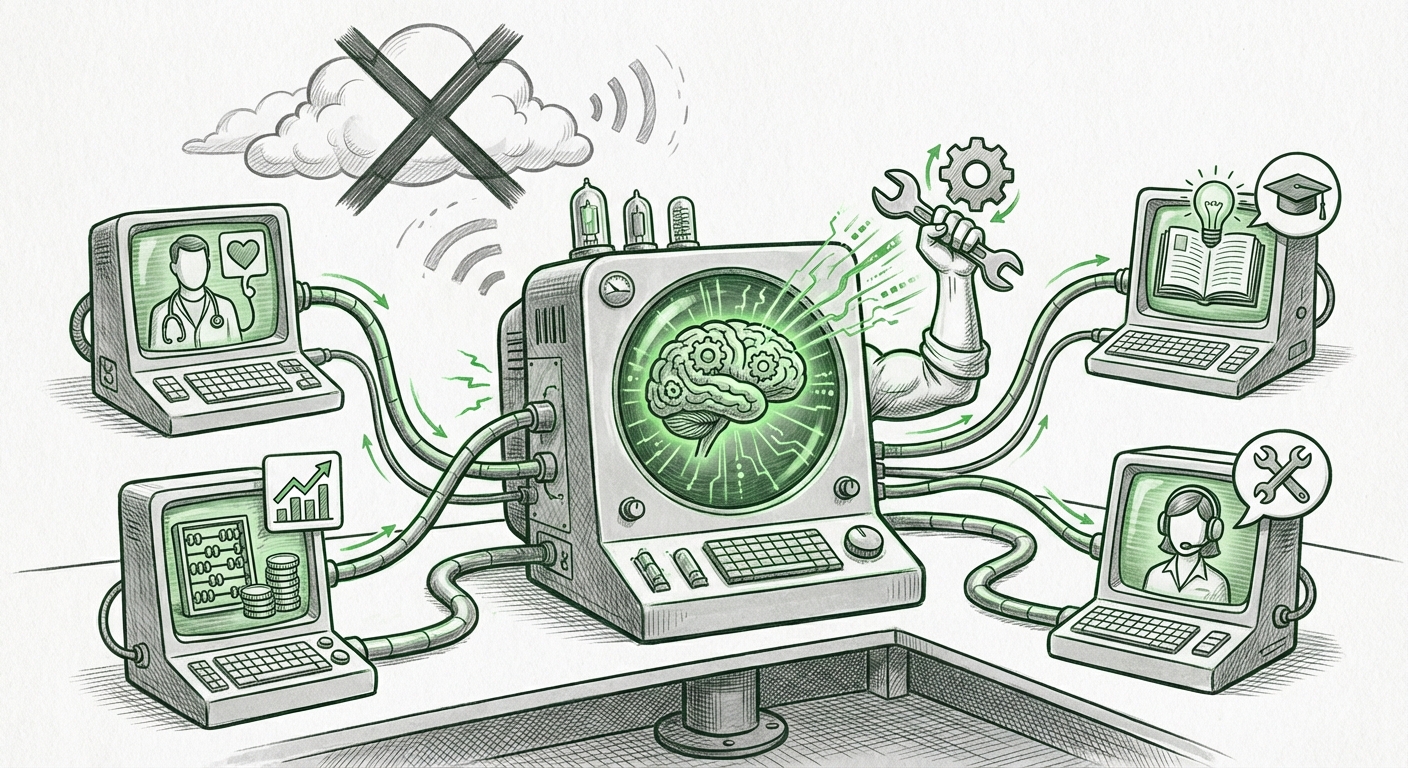
For years, when an AI model needed to search for information, it followed a rigid script: call a fixed API, wait for a static response, and hope the data was formatted correctly. That era is ending. Perplexity's new "Search as Code" paradigm flips this model on its head. Instead of calling fixed APIs, AI models can now write their own search pipelines – dynamically constructing the entire search strategy from scratch based on the specific query. This shift is not just a technical improvement; it represents a fundamental change in how AI interacts with the world's information.
In this article, we break down what "Search as Code" actually means, why it matters for businesses and developers, and how it will reshape the future of AI-powered search, reasoning, and automation.
What Is "Search as Code"?
At its core, "Search as Code" is a paradigm where an AI model generates the search query logic itself rather than relying on a pre-built, fixed API endpoint. Traditional search APIs (think of something like a standard search engine API) accept a query string and return a fixed set of results. The search logic – how to rank, filter, and retrieve information – is hardcoded by the API provider. The AI model has no control over the pipeline; it can only send a request and receive a response.
With "Search as Code," the AI model writes the entire search pipeline as executable code. This means the model decides:
- Which data sources to query
- How to rank and filter results
- What transformations to apply to raw data
- How to combine multiple searches into a single coherent answer
- When to refine or broaden the search based on intermediate results
In other words, instead of being a passive consumer of a search API, the AI becomes an active architect of the search process. This is a radical departure from the standard approach where the search logic is fixed and opaque to the AI.
Why This Matters: From Fixed APIs to Dynamic Intelligence
Traditional search APIs are like a vending machine: you push a button, and you get a pre-packaged snack. "Search as Code" is like having a personal chef who decides what ingredients to use, how to prepare them, and adjusts the recipe based on what you actually want to eat.
The problem with fixed APIs is that they impose a ceiling on intelligence. No matter how good the AI model is, it is limited by the structure of the API it calls. If the API doesn't support multi-step reasoning, the AI cannot perform it. If the API only returns ten results, the AI cannot explore deeper. "Search as Code" removes these constraints by giving the AI the ability to craft its own search strategy for every unique request.
Key shift: The search pipeline becomes an output of the AI model rather than an external constraint on it. This means the AI can adapt its search behavior to the complexity of the question. A simple factual query might use a straightforward retrieval pipeline, while a complex analytical question could trigger a multi-stage search process that synthesizes information from dozens of sources.
How "Search as Code" Works in Practice
While the source material does not provide explicit technical implementation details, the core idea is clear: the AI model generates code that defines the search pipeline. This code could be written in a language like Python, a domain-specific search language, or even a structured query format that gets interpreted by a runtime engine.
For example, a traditional search API call might look like:
GET /search?q=weather+Berlin+JuneWith "Search as Code," the AI might generate something like:
1. Query weather API for Berlin in June
2. Parse the JSON response
3. Extract temperature, humidity, and precipitation
4. Cross-reference with historical averages from another API
5. Generate a natural language summary
6. Return the combined result
This pipeline is not predefined by the platform – it is written on the fly by the AI model based on the specific query. This enables a level of flexibility and intelligence that is impossible with fixed APIs.
Implications for the Future of AI
1. AI Becomes a True Information Architect
With "Search as Code," AI models are no longer just answer engines – they become information architects. They can design custom retrieval and synthesis workflows for every question. This means the AI can handle nuanced, multi-part, or ambiguous queries much more effectively. The same model could answer "What is the capital of France?" with a simple lookup and then turn around and answer "How has climate change affected wheat yields in Kansas compared to Ukraine over the last decade?" with a complex, multi-source analytical pipeline.
2. The End of One-Size-Fits-All Search APIs
Today, most AI applications rely on a handful of search APIs (Google, Bing, Elasticsearch, etc.). These APIs are designed to work for a wide range of queries, but they are inherently limited. "Search as Code" suggests a future where search is not a service you call but a capability the AI generates. This could reduce the dominance of large search API providers and give rise to more flexible, AI-native search systems.
3. Faster Iteration and Customization
If an AI model can write its own search pipelines, then improving search quality becomes a matter of improving the model itself – not rewriting API logic. This means developers can iterate faster and customize search behavior for specific domains without touching backend infrastructure. For example, a medical AI could generate search pipelines that prioritize peer-reviewed journals and clinical trials, while a legal AI could prioritize case law and statutes – all using the same underlying model.
Practical Implications for Businesses
1. More Intelligent Customer Support
Customer support chatbots powered by "Search as Code" could dynamically search internal knowledge bases, product documentation, support tickets, and external resources – each time constructing the optimal search pipeline for the specific customer question. This would lead to faster, more accurate resolutions and fewer escalations.
2. Smarter Business Intelligence
Analysts often spend significant time figuring out which data sources to query and how to combine them. AI models with "Search as Code" could automate this process, generating custom data retrieval and analysis pipelines for every business question. This could dramatically accelerate decision-making in areas like market research, competitive analysis, and financial forecasting.
3. Autonomous Research Agents
One of the most exciting applications is in research. An AI research agent could design and execute a search pipeline that explores academic databases, technical documentation, news articles, and social media – iteratively refining its approach as it learns. This could revolutionize how businesses conduct competitive intelligence, patent research, or technology scouting.
4. Dynamic Content Generation
Content creators and marketers could use "Search as Code" to automatically research topics, gather statistics, and synthesize information from multiple sources. The AI would not just retrieve data – it would design a search strategy tailored to the specific content needs, ensuring comprehensive and accurate coverage of any topic.
What This Means for Society
1. Information Access Becomes More Democratic
When AI models can write their own search pipelines, the quality of information retrieval is no longer tied to the quality of a fixed API. This could democratize access to information, as the AI adapts to the user's needs rather than forcing the user to adapt to the API. People with less technical expertise could get better search results because the AI designs the search process for them.
2. Risks of Misinformation and Bias
On the flip side, if AI models dynamically construct search pipelines, they could also introduce new forms of bias or misinformation. The search strategy itself could be biased toward certain sources or perspectives. Ensuring transparency and fairness in AI-generated search pipelines will be a critical challenge. Users need to understand how the AI decided to search in a particular way and what sources it prioritized.
3. Transparency and Explainability Become More Complex
With fixed APIs, it is relatively easy to audit what the AI did: it called a specific endpoint with a specific query. With "Search as Code," the search pipeline is generated by the AI, which means auditing requires understanding the code the AI wrote. This adds a layer of complexity to explainability. However, it also presents an opportunity: the generated search pipeline code could itself be a form of explanation, showing exactly what the AI did to find the answer.
Challenges and Considerations
1. Execution Environment Requirements
For "Search as Code" to work, there needs to be a safe and scalable execution environment where the AI's generated code can run. This brings challenges around security, resource management, and error handling. If the AI generates a search pipeline that is inefficient or infinite-loops, the system needs to protect itself.
2. The Inference Latency Trade-Off
Writing and executing custom search pipelines takes time. For simple queries, the overhead of generating a pipeline might not be worth it. Hybrid approaches – where the AI decides when to use a fixed API versus when to generate a custom pipeline – may be more practical.
3. Dependence on Model Quality
"Search as Code" moves complexity from the API layer to the model layer. If the AI model is not good at generating search pipelines, the results could be worse than using a traditional API. This places a premium on model quality and training data that includes diverse search scenarios.
Actionable Insights for Developers and Leaders
For developers: Start experimenting with AI models that can generate search strategies. Watch for frameworks that support code generation and execution in a safe sandbox. The skills needed are shifting from "calling APIs" to "designing AI systems that can design their own APIs."
For business leaders: Consider how your organization uses search today. Are you relying on rigid search APIs that limit what your AI can do? Invest in AI-native search infrastructure that allows models to dynamically construct retrieval pipelines. The competitive advantage will go to companies that can unlock the full flexibility of AI-driven search.
For policy makers and ethicists: Pay attention to the transparency implications. As search pipelines become generated code, auditing and accountability mechanisms need to evolve. The question is no longer just "what answer did the AI give?" but "what search strategy did the AI design?"
The Bigger Picture: A Shift from Consumption to Creation
"Search as Code" represents a broader trend in AI: moving from models that consume pre-built tools to models that create their own tools. We are seeing this in other domains too – AI models that write their own code, design their own prompts, and now, write their own search pipelines.
This shift has profound implications. When AI models can create their own tools, they become less dependent on human-designed infrastructure. This could accelerate the pace of AI development and enable capabilities that are impossible with fixed, human-designed systems. However, it also requires us to think carefully about control, oversight, and alignment.
The future of AI is not just about smarter models – it is about models that can intelligently design their own processes. "Search as Code" is a glimpse of that future, and it is arriving now.
Conclusion: Embrace the Flexibility Revolution
Perplexity's "Search as Code" is a paradigm shift that deserves attention from anyone involved in AI, search, or information retrieval. By letting AI models write their own search pipelines instead of calling fixed APIs, we unlock a new level of flexibility, intelligence, and adaptability. The era of one-size-fits-all search is ending. The era of AI-designed search pipelines is just beginning.
For businesses, the message is clear: prepare for a world where your AI systems are not limited by the APIs you call but are empowered by the code they generate. For developers, the message is equally clear: learn to design systems that can design themselves. And for everyone else, be ready for a future where the AI you interact with does not just search for answers – it decides how to search for answers, every single time.
The question is no longer "what can we search for?" but "how can the AI design the perfect search?" With "Search as Code," the AI is finally being asked to answer that question itself.