Nvidia's $30 Billion Bet on Perplexity: The Future of AI Search Just Changed
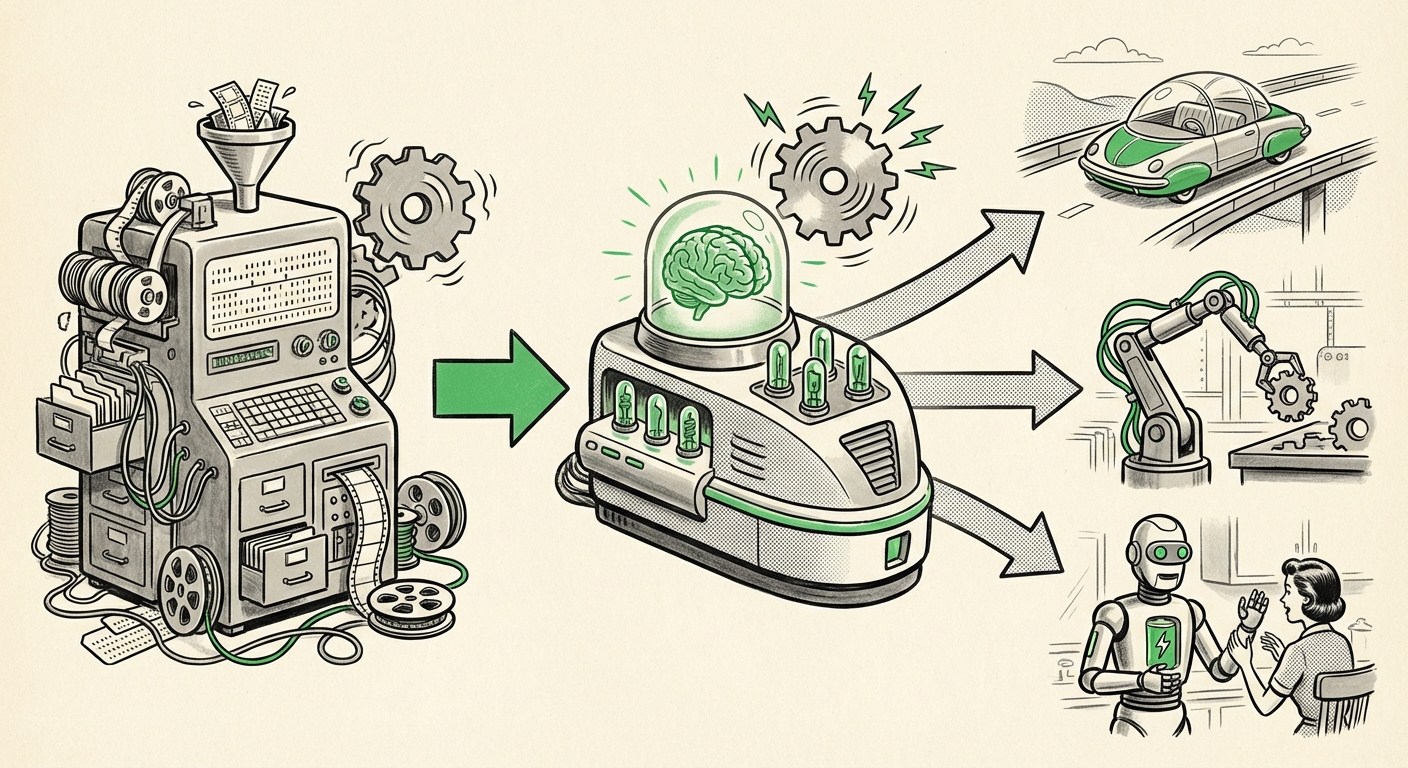
The artificial intelligence industry is famous for big numbers. Massive funding rounds, trillion-dollar valuations, and supercomputer-scale investments have become almost routine. But even by those extreme standards, one piece of news stands out: Nvidia is in talks to invest in Perplexity at a valuation of more than $30 billion.
At first glance, this looks like another wealthy tech giant placing a large bet on a fast-growing startup. But look closer, and it becomes something much more interesting. This is the moment when the company that builds the "brains" of artificial intelligence meets the company that is trying to reinvent how humans search for information. The talks, if they turn into a deal, would send a clear signal about where the entire AI industry is headed over the next decade.
This article breaks down what we know, why this matters for the future of AI, and what it means for businesses, society, and everyday users of technology.
What We Know About the Talks
The core facts are simple. Nvidia, the world's most valuable chip maker and the dominant supplier of the graphics processing units (GPUs) that power modern AI, is in discussions to invest in Perplexity. The reported valuation for Perplexity in these talks is $30 billion or more. A valuation, in simple terms, is the total estimated worth of a company. A $30 billion price tag puts Perplexity in very elite company.
To understand why this is a big deal, you first need to understand the two players involved.
Nvidia is the company behind the GPUs that train and run nearly all of the world's most advanced AI models. When you use a chatbot, an image generator, or an AI assistant, there is a good chance Nvidia hardware made it possible. If the AI boom were a gold rush, Nvidia is the company selling the picks, shovels, and drills.
Perplexity is a different kind of animal. It is an AI-native search company. Instead of giving you a list of website links like a traditional search engine, Perplexity reads and understands information from across the web, then writes you a direct answer, complete with sources you can check. It has become one of the most talked-about challengers to the old way of searching online.
So why would a chip company want to own a piece of a search company? The answer reveals a lot about the future of AI.
Why Nvidia Is Moving Beyond Chips
For years, Nvidia's strategy was simple and wildly successful: make the best AI chips, sell them to everyone, and let the world build whatever it wants on top. That strategy turned Nvidia into one of the most valuable companies on Earth. But there is a problem with selling "picks and shovels." You grow only as fast as the people digging for gold.
Investing in Perplexity changes that equation. It gives Nvidia a direct stake in a major user-facing AI product. If millions of people rely on Perplexity for answers every day, and Perplexity needs enormous amounts of computing power to deliver those answers, then Nvidia benefits at both ends. It gets the money from selling the chips, and it shares in the value created by the company using those chips.
This is a pattern we have seen before in the AI industry. Large technology companies have been making strategic investments in AI startups for years, not just for financial returns, but for influence and access. Nvidia's interest in Perplexity follows that same logic, but with an important twist. Nvidia is not just a software giant or a cloud provider. It is the foundational hardware layer. By reaching downstream into applications, Nvidia would be making a statement: we intend to shape how AI is used, not just how it is built.
Why Perplexity Needs Nvidia
Of course, this is not a one-way street. Perplexity has plenty of reasons to welcome Nvidia's interest.
Running an AI search engine is expensive. Every time a user asks a question, the system must process the request through powerful AI models, gather information from across the web, and generate a coherent answer. That work requires huge amounts of computing power, and computing power means GPUs. Having Nvidia as a partner and investor would help Perplexity secure access to the hardware it needs, potentially at better prices and with better technical support than its competitors.
A Nvidia investment would also be a powerful vote of confidence. The AI market is crowded and confusing, with hundreds of startups competing for attention. An endorsement from the most important company in AI hardware would send a signal to customers, partners, and future investors that Perplexity is here to stay. In a market where trust is everything, that kind of backing is worth a lot more than money alone.
The Rise of Answer-First Search
To understand the bigger picture, it helps to step back and look at how search has worked for the past 25 years. For most of the internet's history, search engines worked the same way. You typed in a question, and you got a list of blue links. You clicked, you read, you compared, and you made up your own mind. The search engine's job was simply to point you in the right direction.
AI-native search flips that model. Instead of giving you links, it gives you an answer. Instead of making you read ten websites, it reads them for you and summarizes what it finds. Instead of leaving you to judge conflicting information, it synthesizes everything into a single, sourced response.
This is a genuinely revolutionary change. The way people access information is the foundation of how they learn, decide, shop, and act. Whoever owns the "answer experience" owns one of the most valuable pieces of real estate in the digital world. Perplexity's reported $30 billion-plus valuation reflects a belief that the answer experience is the future of the internet.
For Nvidia, investing in that future makes strategic sense. AI search is one of the most compute-hungry applications that exists. Every single query burns processing power. If AI search becomes the default way people access information, the demand for AI chips will explode. An investment in Perplexity is, in a very real sense, an investment in the future demand for Nvidia's own products.
What This Signals About the Future of AI
So what does this deal tell us about where artificial intelligence is going? Several important trends come into focus.
The Line Between Hardware and Software Is Disappearing
For years, the AI industry was divided into layers. Some companies made chips. Others trained models. Still others built applications. This deal is another sign that those boundaries are dissolving. The giants of AI want to control the whole stack, from the silicon to the user interface. Nvidia's move into Perplexity shows that hardware companies now understand that the value of their chips depends on the applications those chips power.
The "Answer Economy" Is Arriving
The traditional internet runs on clicks and pages. The AI internet will run on answers. When you get a direct answer from an AI, there is no page to load and no ad to display. The entire economic engine of the web, built on advertising and page views, will need to be rebuilt around the answer economy. Nvidia's investment suggests that the company wants to be at the center of that new economy.
AI Search Will Become Action, Not Just Information
The next stage of AI search is not just answering questions. It is taking action. Instead of "book me a flight and a hotel," future AI systems will not only find the options, they will complete the purchase. Instead of "what should I cook for dinner?" they will order the groceries. These actions require massive computing power, seamless integration with services, and deep user trust. Partnerships like the one Nvidia and Perplexity are exploring are designed to build the foundation for that agentic future.
What This Means for Businesses
Whatever happens with this specific deal, the direction is clear. Businesses that ignore the shift to AI search do so at their own risk. Here is what leaders need to think about.
Your Customers Will Get Answers Before They Visit You
In the old model, a customer searched, clicked your website, and learned about your product. In the new model, the AI answers the question directly, and your website may never be visited. Being visible in AI answers is now as important as being visible in search results. Businesses must ask themselves: when an AI describes our product or service, what does it say? Where does it get that information? Is it accurate?
Optimize for Citations, Not Just Rankings
Traditional search engine optimization, or SEO, focused on getting to the top of a list of links. AI search optimization is different. It focuses on being cited as a trustworthy source within an AI-generated answer. That means creating clear, well-structured, factually solid content that AI systems can easily understand and safely reference. High-quality content has never been more valuable.
Watch for Bundled Offers
If Nvidia invests in Perplexity, we may see more deals where computing power and AI services are sold together. For businesses, this could lower the cost of adopting advanced AI. Instead of buying chips, cloud access, and AI software separately, customers might one day buy them as a single package. This could make powerful AI tools available to smaller companies that could never afford them before.
For Startups, Compute Is the New Currency
The most important lesson for entrepreneurs is simple: access to computing power is now a strategic advantage as valuable as great engineering or great marketing. Startups that form partnerships with hardware and cloud providers early will have a massive head start over those that try to go it alone.
What This Means for Society
Beyond business, this deal raises questions that affect everyone.
Information access. AI search has the potential to give more people high-quality answers to complex questions, regardless of their education or background. A student with a cheap phone could get explanations as clear as those purchased from an expensive tutor. That is a genuinely exciting future.
Trust and accuracy. But AI answers are not always right. When an AI gives you a confident answer with sources attached, you are more likely to trust it than a list of links. That trust can be exploited. If a single AI search company becomes the world's primary gateway to information, its mistakes, and its biases, could affect billions of people.
Concentration of power. This is the biggest concern. Right now, one company dominates AI hardware, and a handful of companies dominate AI models and search. A partnership between a chip giant and an answer engine would unite two enormous sources of power in one strategic relationship. History suggests that when too much power over information is concentrated in too few hands, regulators eventually step in. Expect close scrutiny of this deal.
The digital divide. AI search is expensive to run. If the best AI search experiences require paid subscriptions or high-end devices, we could create a two-tier internet: one for people who can afford great answers, and another for people stuck with old-fashioned links. How this plays out will depend on the choices companies and governments make in the coming years.
Actionable Insights: How to Prepare Today
Whether you are a business leader, a marketer, a developer, or just a curious user, there are practical steps you can take right now to prepare for the answer-first future.
- Start optimizing for AI answers today. Audit your website and ask how an AI would describe your organization. Fix gaps in your public information so that any AI summarizing your field gets it right.
- Build a citation strategy. Create original, authoritative, and citable content. Aim to be the source that AI systems reference, not just another page on the internet.
- Diversify your traffic sources. Do not rely on any single search engine or AI tool. Build direct relationships with your audience through email, communities, and owned channels.
- Experiment with AI search tools. Use them yourself. Learn how they present your industry, your competitors, and your brand. That hands-on knowledge is impossible to replace.
- Push for transparency. As a consumer and citizen, ask questions about how AI answers are generated, how they are funded, and who is accountable when they are wrong. Demand clear labeling of AI-generated content.
- Plan for an agentic future. Think about what it means when AI assistants book services, buy products, and manage workflows on behalf of your customers. Build processes that are designed to be discoverable and usable by automated agents.
Conclusion: The Map Is Being Redrawn
The talks between Nvidia and Perplexity may or may not result in a deal. Negotiations fail all the time, and valuations change. But that almost misses the point. The fact that these conversations are happening at all tells us something profound about the state of artificial intelligence.
The era in which AI hardware, AI models, and AI applications existed in separate silos is ending. The future belongs to companies that can connect raw computational power to real human needs. Nvidia's reported interest in Perplexity at more than $30 billion is a bet on that connected future. It is a bet that the way we ask questions is about to change forever, and that the companies controlling the path from question to answer will define the next generation of the internet.
The future of AI is not just about smarter machines. It is about faster, clearer, and more human answers. And it is about who gets to stand between the question and the response. That fight just got a lot more interesting.