OpenAI Buys Ona to Push Codex Toward Long-Running, Autonomous Coding Tasks
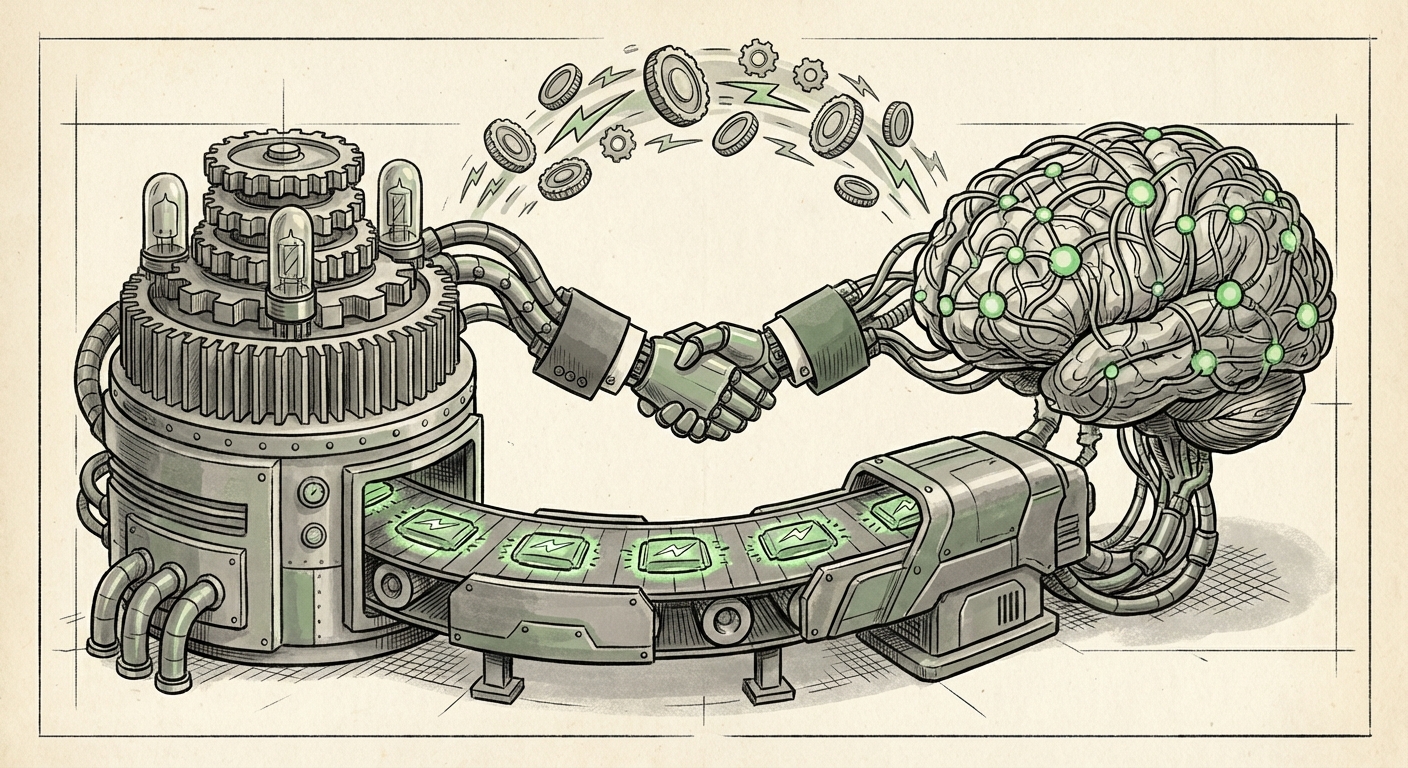
On June 12, 2026, OpenAI announced a strategic acquisition of a company called Ona. The goal? To supercharge Codex — the AI that turns natural language into computer code — so it can handle long-running, autonomous coding tasks. This isn't just another startup buyout. It's a clear signal that the future of programming is moving away from simple one-shot code generation and toward full-blown AI software agents that can plan, test, debug, and deploy code over hours or even days.
For anyone who uses coding assistants like GitHub Copilot (built on Codex), this is a huge leap. Right now, you ask for a function, and AI gives you one. But soon, you might describe a whole feature — “build a secure user authentication system with email verification” — and the AI will break it into steps, write each module, run unit tests, fix errors it finds, and come back with a working solution. That's the vision behind the Ona acquisition.
In this article, we'll unpack what Ona likely brings to the table, how Codex will evolve, and what this means for developers, businesses, and society.
Why OpenAI Bought Ona: The Missing Piece for Autonomous Codex Agents
Since its launch, Codex has been remarkably good at generating short snippets of code from natural language prompts. But ask it to build a complete, multi-file application from scratch, and it often loses track. It can't remember what it did five minutes ago, can't test its own output, and can't iterate when something breaks.
Ona appears to have solved exactly those problems. Although the Decoder article (published on the same date) provides few details, the phrase “long-running, autonomous coding tasks” points to an AI system capable of maintaining context across many steps, planning ahead, executing sub-tasks, and self-correcting. In other words, Ona likely built a platform for autonomous AI agents that can work on software projects over extended periods — much like a human developer would.
This is a natural progression. The entire AI industry is moving from “models that answer questions” to “agents that take actions.” OpenAI's own research has been trending that way: GPT-4 can use tools, browse the web, and write code. But integrating all of that into a single, reliable agent that doesn't get stuck or drift off course is hard. Ona may have cracked that nut for code.
What Does “Long-Running, Autonomous Coding” Look Like in Practice?
To understand the impact, let's imagine how a future version of Codex (enhanced by Ona) would work:
- You give a high-level task: “Add a shopping cart feature to our React ecommerce app. It should support adding/removing items, updating quantities, and calculating total with tax.”
- Codex plans the work: It identifies the need for new components, state management, a checkout page, and integration with a backend API. It writes a step-by-step plan and asks for confirmation.
- It writes code incrementally: Codex creates each file, imports dependencies, and follows best practices. It uses a persistent memory — thanks to Ona's technology — to remember style conventions and earlier decisions.
- It tests and debugs itself: After writing, Codex runs unit tests, checks for syntax errors, and even does automated UI tests. If something fails, it reads the error log, identifies the bug, and rewrites the code. This loop can run autonomously for hours until the feature passes all tests.
- It deploys and monitors: Once everything works, Codex can push the code to a staging environment, run integration tests, and even monitor for regressions in production. The human developer only needs to review and approve the final pull request.
This isn't science fiction. Google and Microsoft have shown early versions of such agents. But OpenAI's move suggests they want to make this the default mode for Codex, not just a research demo.
Why This Changes Everything for Software Development
The acquisition of Ona is a bet that the next big productivity leap in software will come from AI that can manage entire development workflows, not just generate lines of code.
1. Developer Productivity Soars
Currently, developers spend about 40% of their time writing code and the rest debugging, testing, and planning. Autonomous coding agents could cut that overhead dramatically. A single developer might become as productive as a team of three or four, especially on routine features and bug fixes.
2. Lower Barriers to Entry
Non-programmers could describe an app idea in plain English and have a working prototype in hours. This opens up software creation to a much wider audience — product managers, designers, entrepreneurs — without needing to learn complex programming languages.
3. New Skills in Demand
The role of a software developer will shift from “writing code” to “directing AI agents.” Skills like prompt engineering, test case design, code review, and architecture planning will become more important than memorizing syntax. Developers who embrace these new tools will be in high demand.
4. Risk of Over-Reliance
Just as spellcheck made us worse spellers, autonomous coding agents could make developers less skilled at fundamental tasks. Bugs caused by AI-generated code can be subtle and hard to trace. Teams will need strong code review processes and testing cultures to avoid quality issues.
What This Means for the Future of AI and How It Will Be Used
OpenAI's move is part of a broader trend: AI is becoming an autonomous worker, not just a tool. Once Codex can handle long-running coding tasks, similar agents will appear for other domains — legal document drafting, financial modeling, medical data analysis, and more.
The key technology behind Ona is likely a combination of long-term memory, task decomposition, and self-monitoring. These are the building blocks for general AI agents. If OpenAI can perfect them for coding, they'll have a blueprint for agents in every field.
Businesses will need to rethink how they organize work. Instead of hiring large teams to execute tasks, companies might hire a few “AI operators” who manage a fleet of agents. This could dramatically reduce costs and speed up innovation cycles — but also raise questions about job displacement and economic inequality.
Society will have to grapple with new norms: Who owns the output of an AI agent that worked for hours? Who is liable if that code introduces a security vulnerability? These questions are already being debated, but autonomous agents make them more urgent.
Actionable Insights for Developers and Business Leaders
Whether you're a coder or a CTO, the Ona acquisition should prompt you to prepare for a world where coding assistants become autonomous agents.
- Start experimenting with agent-based workflows now. Tools like GitHub Copilot, Codex playground, and AutoGPT offer glimpses of what's coming. Learn how to decompose tasks into prompts and validate AI output.
- Invest in testing infrastructure. Autonomous code will only be as reliable as the tests it runs. Build strong CI/CD pipelines with automated testing at every stage.
- Focus on architecture and design. As AI writes more code, humans will focus on high-level design decisions. Strengthen your skills in system design, security, and scalability.
- Review your IP and security policies. AI-generated code may pull from public repositories with unknown licenses. Ensure your legal team updates policies for code ownership and use.
- Prepare your team for the shift. Help developers transition from “typing code” to “directing AI.” Offer training in prompt engineering and AI-assisted debugging.
The Bottom Line: Codex Is Becoming an AI Developer, Not Just a Code Generator
OpenAI's buy of Ona marks a pivotal moment. Codex is already one of the most widely used AI tools in the world, powering GitHub Copilot and countless internal tools. Adding autonomous, long-running capabilities will transform it from a copilot into a full-fledged crew member — one that can work independently on complex tasks.
For the AI industry, this is another proof point that autonomous agents are the next wave. For developers, it's both an opportunity and a challenge: the tools are getting smarter, but so must the people using them. The coming years will see a rapid evolution in how software is built, tested, and maintained. Those who adapt early will have a significant edge.