ByteDance's Seedance 2.5 Breaks the 30-Second Barrier for AI Video Generation – What This Means for the Future
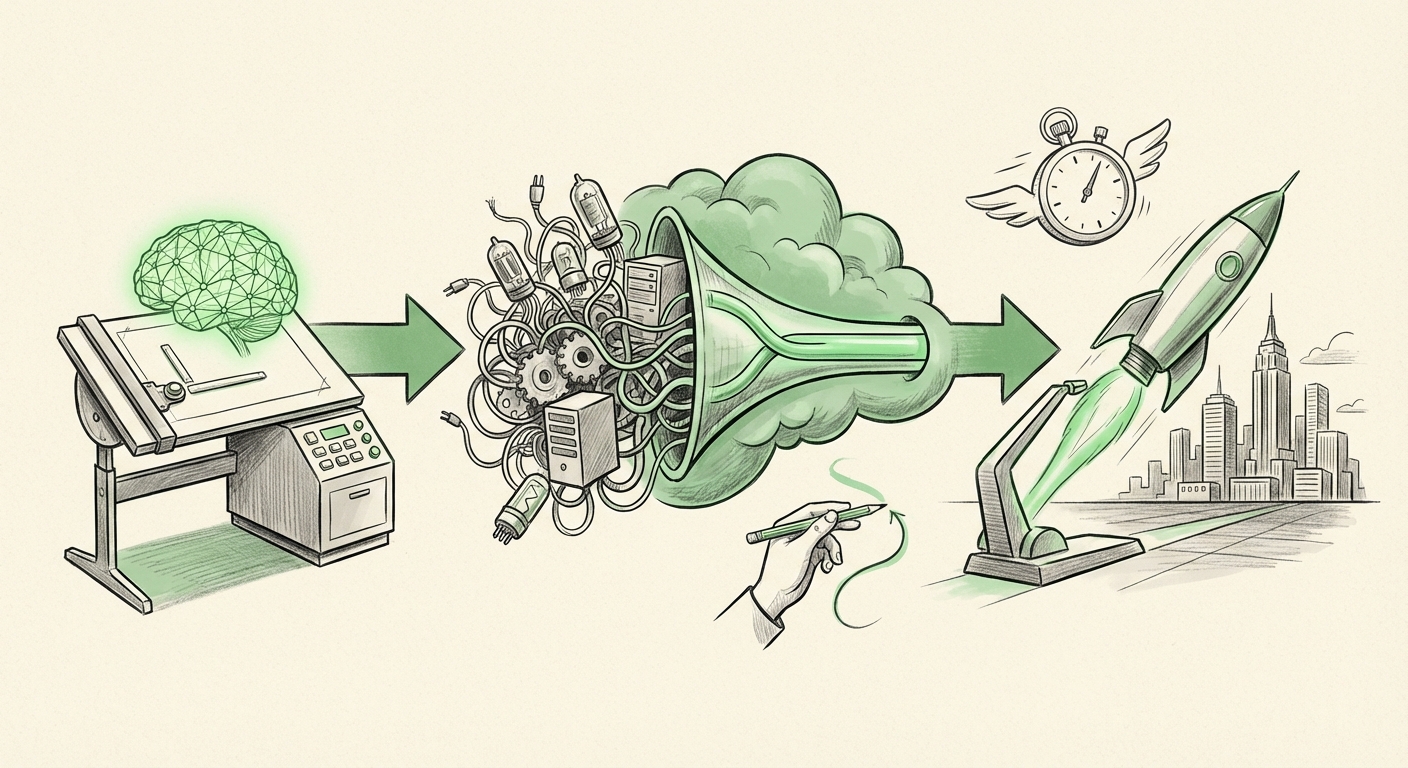
On June 23, 2026, ByteDance — the company behind TikTok — quietly moved the goalposts for the entire AI video generation industry. With the release of Seedance 2.5, the company broke through a barrier that had seemed almost psychological: the 30-second ceiling for AI-generated video. Until now, most AI video models struggled to produce coherent clips beyond a few seconds. Seedance 2.5 changes that equation entirely.
This is not just another incremental update. Crossing the 30-second threshold opens the door to use cases that were previously out of reach. Short-form social media clips, product demos, training videos, and even narrative storytelling become feasible when AI can hold a scene together for half a minute or more. For businesses, creators, and technologists, Seedance 2.5 signals a shift from AI video as a novelty to AI video as a serious production tool.
In this article, we will break down what Seedance 2.5 actually does, why the 30-second barrier matters, and how this development fits into the larger trajectory of AI-generated media. We will also explore the practical implications for companies and society — and offer actionable steps for anyone looking to stay ahead of this curve.
The 30-Second Barrier: Why It Existed and Why It Fell
To understand why Seedance 2.5 is a big deal, you first need to understand why AI video generation has been stuck on short clips. Most models — from early GAN-based systems to modern diffusion transformers — rely on generating frames one after another. The longer the video, the more frames the model must produce, and the more opportunities there are for drift. A character's face might subtly change expression across frames. Background details can warp. Lighting can flicker. Over even ten seconds, these small errors compound into obvious visual glitches.
ByteDance's Seedance 2.5 tackles this problem head-on. While the company has not published a detailed technical paper alongside the announcement, the result is clear: the model can sustain coherent video generation beyond the 30-second mark. That is a leap from the typical 10-to-15-second ceiling that defined earlier state-of-the-art systems.
The 30-second length is not arbitrary. It matches the average duration of a TikTok video, a YouTube Shorts clip, and many social media ad formats. It is also long enough to convey a simple narrative arc — a problem, a solution, a testimonial — without cutting away. In short, 30 seconds is the minimum viable length for a huge range of commercial and creative content. By crossing that line, Seedance 2.5 makes AI video generation practical for real-world production workflows.
What Seedance 2.5 Means for the Future of AI Video
Every leap in AI capability tends to follow a pattern: first, the technology is a curiosity. Then it becomes a tool for early adopters. Then it becomes infrastructure. We are watching Seedance 2.5 accelerate that transition for video.
From Clips to Stories
The most immediate consequence is that AI video can now support narrative. A 5-second clip is a burst. A 10-second clip is a vignette. A 30-second clip is a story. Marketers can write a script, generate a video that follows it, and publish. Educators can create micro-lessons. Game developers can generate cutscenes. Filmmakers can storyboard entire sequences. The leap from short burst to short narrative is perhaps the most consequential shift in AI video since the technology first emerged.
Coherence at Scale
Longer generation forces models to maintain consistency over more frames. The fact that Seedance 2.5 can do this suggests that ByteDance has solved — or at least dramatically mitigated — the temporal drift problem. That has knock-on effects for even longer videos. If a model can hold coherence for 30 seconds, the path to 60 seconds and beyond becomes much clearer. Seedance 2.5 does not merely extend runtime; it validates that the underlying architecture can handle extended temporal dependencies.
Competitive Pressure on the Industry
ByteDance is not the only player in the AI video space. OpenAI, Google, Meta, and a host of startups have all released video-generation models. But ByteDance has a unique advantage: the scale and data of TikTok. With Seedance 2.5, ByteDance can integrate AI video generation directly into the TikTok ecosystem — letting creators generate clips that fit the platform's native format, length, and style. That integration gives ByteDance a distribution advantage that pure model providers lack. Competitors will need to match both the capability and the ecosystem play.
Practical Implications for Businesses
For business leaders, Seedance 2.5 is not a science project. It is a signal that AI video is entering the mainstream. Here are the areas where we expect the most immediate impact.
Content Marketing and Social Media
Short-form video is the most engaging content format on the internet. Brands that can produce high-quality, 30-second AI-generated videos at scale will have a significant cost and speed advantage over competitors still relying on traditional production. A single marketer with Seedance 2.5 could generate dozens of ad variants, test different messages, and iterate rapidly — all without a camera crew. This does not eliminate the need for creative strategy, but it dramatically reduces production friction.
Product Demos and Explainer Videos
Many products are best explained visually. Seedance 2.5 makes it possible to generate a 30-second product demo from a text description. Software companies can show how a feature works. Physical goods companies can showcase usage. Training teams can create onboarding videos without filming a single frame. For companies that serve global audiences, generating localized versions of these videos becomes trivial: change the text prompt, get a new video in a different language or cultural context.
Prototyping and Concept Testing
Before Seedance 2.5, creating a video prototype of a concept required animators or significant manual effort. Now, a product manager, designer, or entrepreneur can type a description and see a 30-second video of their idea within minutes. This lowers the cost of experimentation. Teams can test multiple creative directions before committing resources to full production. In industries like advertising, entertainment, and consumer goods, this could shrink concept-to-test cycles from weeks to days.
Education and Training
Educational content benefits enormously from visual demonstration. Seedance 2.5 enables the creation of short instructional videos tailored to specific topics, audiences, or difficulty levels. A corporate training team could generate a library of 30-second micro-lessons on everything from compliance procedures to soft skills. Because the videos are AI-generated, they can be updated — a process that traditionally required reshooting — by simply editing the prompt and regenerating.
Societal and Creative Implications
Every powerful tool has a dual edge. Seedance 2.5 is no exception. For society, the ability to generate realistic 30-second video from text raises important questions about authenticity, misinformation, and creative labor.
Deepfakes and Misinformation
Longer, more coherent AI-generated video makes it harder for viewers to distinguish real footage from synthetic content. While 30 seconds is still short enough that context and source checking can help, the sheer quality of Seedance 2.5 output could make fake videos more convincing. Platforms will need to invest in detection and watermarking. ByteDance, as the creator of both the model and a major content platform, has a particular responsibility here. The company has not disclosed specific safeguards for Seedance 2.5, and transparency will be critical as the technology rolls out.
Impact on Creators and Creative Jobs
There is understandable concern that AI video generation will displace human creators. The reality is likely more nuanced. Seedance 2.5 excels at generating generic, template-driven content — the kind of video that currently occupies the lower end of the production market. For high-end, bespoke creative work, human directors, cinematographers, and editors still bring vision and taste that AI cannot replicate. The most likely outcome is a split market: AI handles volume and speed; humans handle artistry and strategy. Creators who learn to work with AI tools will be in a stronger position than those who resist them.
Copyright and Ownership
Who owns a video generated by Seedance 2.5? The user who wrote the prompt? ByteDance, which trained the model? The answer is not yet settled. As AI-generated content becomes more prevalent, legal frameworks will need to catch up. For now, businesses should treat AI-generated videos with the same caution they apply to any AI output: assume that the copyright status is unclear, and avoid using generated content in ways that depend on exclusive ownership. This is an evolving area, and Seedance 2.5 — by producing longer, more commercial-grade output — makes the question more urgent.
Actionable Insights for Technologists and Business Leaders
If you are a technical leader, product manager, or strategist, here is how you should think about Seedance 2.5 in the coming months.
- Begin experimenting now. Seedance 2.5 is not theoretical. Get access, run tests, and build a mental model of what it can and cannot do. The only way to develop good intuition about AI video is to generate a lot of it.
- Identify high-volume, low-complexity video needs. The best early use cases are those where you currently produce many short videos that follow a pattern — ad variants, product shots, social media posts. These are the easiest to hand off to AI.
- Invest in prompt engineering for video. Just as text-based AI required new skills in prompt crafting, video generation rewards precision. Experiment with descriptors for camera angles, lighting, motion, and pacing. Build a library of prompts that work.
- Plan for integration. Seedance 2.5 will be most powerful when embedded into existing workflows. Think about how it might plug into your CMS, your ad server, or your content calendar. The companies that integrate AI video into their systems — rather than using it as a standalone tool — will capture the most value.
- Monitor the regulatory landscape. AI-generated video is likely to attract regulatory attention, especially around labeling, deepfakes, and copyright. Stay informed about requirements in your jurisdiction, and build compliance into your workflows from the start.
- Prepare your team. The skills your content team needs are changing. Creativity, strategy, and taste matter more than ever. But technical execution — filming, lighting, editing — may become less central. Help your team navigate this shift through training, reskilling, and clear communication about how AI fits into your strategy.
Looking Ahead: Beyond the 30-Second Mark
Seedance 2.5 breaks the 30-second barrier, but the ceiling will not stay at 30 seconds for long. The same optimizations that enabled this leap — better temporal modeling, more consistent latent space, smarter frame prediction — will likely extend to longer durations in future versions. It is reasonable to expect that within a year or two, AI video models will routinely produce clips of 60 seconds, then two minutes, then five minutes. At that point, the distinction between AI-generated video and traditionally produced video will begin to blur.
ByteDance's strategic position is formidable. By combining a state-of-the-art video generation model with the world's largest short-video platform, the company can create a flywheel: creators use Seedance 2.5 to make content, which enriches the TikTok ecosystem, which generates more data, which improves the model. Competitors will struggle to match this closed loop.
For the rest of us, Seedance 2.5 is a reminder that AI progress does not always arrive with a dramatic announcement. Sometimes it arrives as a quiet update — a version number tick from 2.0 to 2.5 — that quietly redefines what is possible. The 30-second barrier was, in retrospect, a wall built from lack of imagination. ByteDance just knocked it down.