Google's Gemini Goes to Law School: How AI Is Automating Contracts and Legal Research
For years, the legal profession was seen as a fortress that technology could not breach. Legal work is built on careful reading, precise language, and serious consequences. But that fortress just opened its gates. Google has launched Gemini for legal work, a specialized AI tool designed to automate two of the most time-consuming jobs in law: contract review and legal research.
This is not just another chatbot update. It is one of the most important attempts yet to bring generative AI into the daily workflow of lawyers, paralegals, and in-house legal teams. The move raises a big question: if AI can handle the document-heavy drudgery of law, what does that mean for the future of the legal profession, and for the future of AI itself?
What Gemini for Legal Work Actually Does
Contracts are the lifeblood of business. Every partnership, hire, lease, and sale is built on them. But contract review is slow, expensive, and famously tedious. Lawyers spend thousands of hours reading dense legal text, hunting for hidden risks, and negotiating standard clauses. Google's Gemini for legal work aims to compress that timeline dramatically.
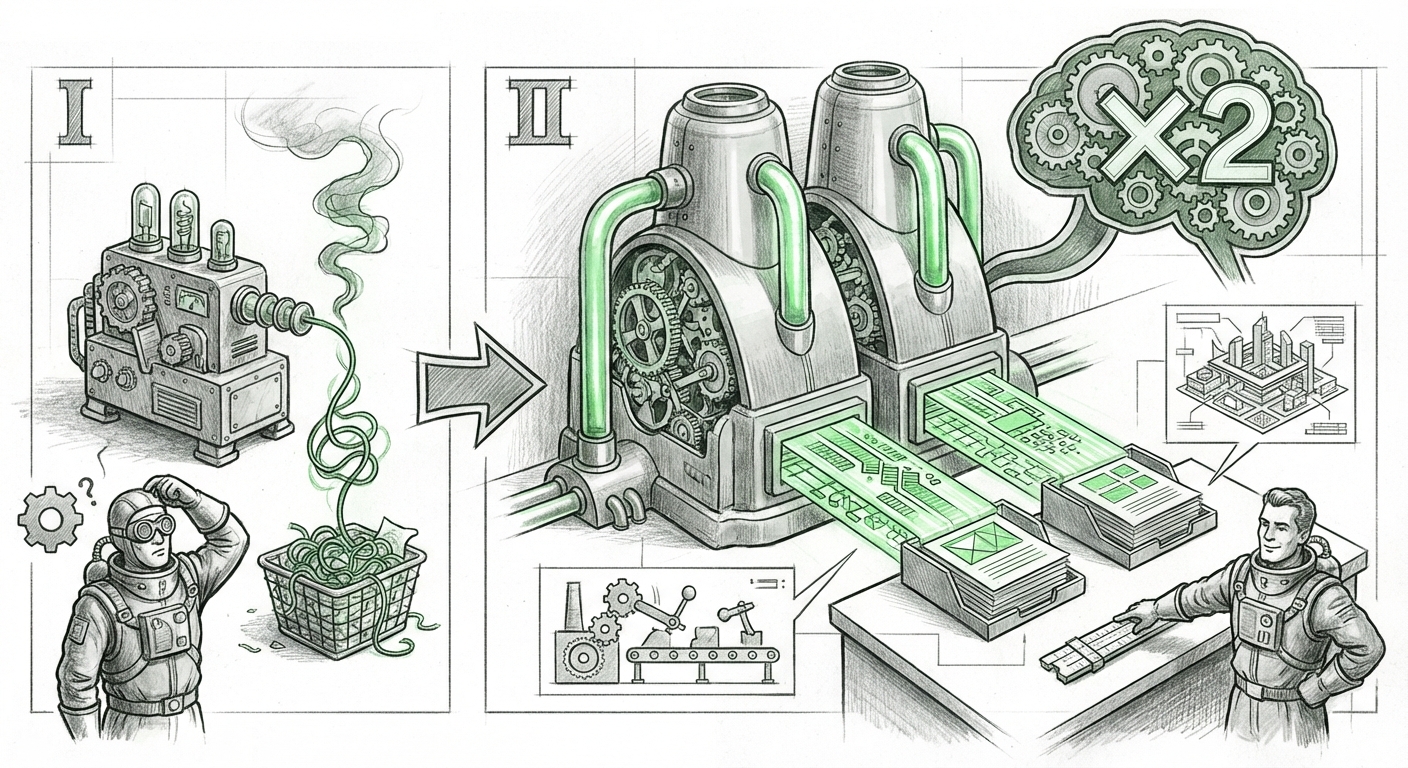
On the contract side, the tool is designed to help legal teams draft, review, and compare agreements. It can identify risky clauses, flag missing terms, and suggest language based on a company's own standards. Instead of reading a 40-page vendor agreement from start to finish, a lawyer can let the AI surface problem areas in seconds and focus human attention where it matters most.
On the research side, Gemini is being positioned as an assistant that can search case law, statutes, regulations, and legal commentary, then return clear answers with relevant citations. Traditional legal research is painstaking work. Even experienced professionals spend hours, sometimes days, chasing precedents. An AI that can scan millions of documents and summarize what matters in plain language could fundamentally change how legal work begins.
This is not generic AI doing a clever trick. It is AI built for a specific domain, trained for a specific audience, and integrated into the way lawyers actually work. That distinction matters, and it is the key to understanding where AI is heading next.
The Bigger Trend: AI Is Going Vertical
The launch of Gemini for legal work is a clear signal that the era of generic, one-size-fits-all chatbots is giving way to something more powerful: vertical AI. General-purpose chatbots are useful for brainstorming, summarizing, and answering trivia. But they struggle with the specialized language, strict accuracy needs, and complex workflows of professional environments.
The legal industry has strict rules and serious consequences. Get one fact wrong, and a case could collapse. Overlook one clause, and a company could lose millions. That is why the arrival of a domain-specific legal assistant from a company of Google's scale is so important. It tells us that the future of AI is not about being generally smart; it is about being professionally reliable.
The same pattern is unfolding across other fields. We are seeing AI for doctors that helps read medical images, AI for engineers that reviews code, and AI for accountants that scans financial records. Legal work is the latest, and in many ways most symbolic, addition to this list. Law has always been a profession built on judgment. If AI can find a real place here, it can find a place almost anywhere.
What This Means for the Future of AI
So what does Gemini entering the legal arena tell us about the road ahead? A few big things stand out.
Specialization Will Define the Next Wave
The future of enterprise AI will be judged not by how many random questions it can answer, but by how deeply it understands a single profession. The more specific the tool, the more valuable it becomes. A lawyer does not want a generalist. They want a tireless assistant that knows the difference between a force majeure clause and a non-compete agreement, understands jurisdiction, and never sleeps.
Trust and Verification Become as Important as Intelligence
The biggest obstacle to AI adoption in law has always been the risk of hallucination, the tendency of AI models to confidently generate false information. Legal AI tools must be built with verification at the core, linking every claim back to a source a professional can check. The future of AI in high-stakes work is not just about capability; it is about accountability.
Humans Won't Disappear, But Their Roles Will Change
A future legal practice will not be an empty office run by machines. It will be a team of experienced lawyers doing higher-level strategic work, supported by AI that handles the research and the first pass on contracts. Entry-level tasks like document review may shrink dramatically. In their place, we may see a growing need for professionals who can supervise AI, verify its output, and bring the human judgment that machines still lack.
The Race Is Only Beginning
Google's move will force other major tech players and legal technology startups to accelerate their own offerings. The result will be rapid innovation, falling costs, and increasingly capable tools. For businesses and law firms, the message is simple: the legal AI era has begun, and the pace of change will only accelerate.
Practical Implications for Law Firms and Businesses
For large law firms, the implications are enormous. Legal AI will allow experienced lawyers to focus on strategy and client relationships rather than document drudgery. Hourly billing models, built on the assumption that time is the product, will face growing pressure as tasks that once took 20 hours are completed in 20 minutes.
For in-house corporate legal teams, the benefits are even clearer. Faster contract review means faster deals, which means faster revenue. A company that can turn around contracts in hours instead of weeks gains a real competitive edge. AI can also help legal departments track obligations, manage risk, and keep consistency across thousands of agreements.
For small firms, solo practitioners, and businesses without deep legal budgets, the potential is almost revolutionary. The high cost of legal services has long been a barrier to justice and business growth. By automating the most expensive parts of legal work, AI could lower costs and give smaller players access to capabilities once reserved for elite firms with armies of associates.
But the practical implications are not purely positive. Law firm business models will need to change. Billing structures, staffing decisions, and even the way future lawyers are educated will all be re-examined. The question is not whether AI will disrupt the legal profession, but whether the profession will adapt quickly enough to shape that disruption wisely.
The Risks That Won't Go Away
For all the promise, the move raises serious concerns that deserve attention.
Accuracy remains the biggest one. Legal work is unforgiving. A single wrong citation or misinterpreted ruling could cause real harm. Law firms adopting Gemini for legal work will need strong supervision processes, especially in the early days.
Confidentiality is another major issue. Lawyers are bound by strict ethical duties to protect client information. Sending contracts and legal strategies to an external AI tool naturally raises questions about data privacy, attorney-client privilege, and where the data is stored. Legal AI providers must answer these questions clearly, with strong security guarantees and transparent data-handling policies.
There is also the risk of over-reliance. If a new generation of lawyers grows up trusting AI outputs without healthy skepticism, mistakes will happen. AI should be treated as a powerful junior assistant, smart, useful, and fast, but never infallible. The lawyers who succeed in this new era will be the ones who treat AI as a tool to verify and supervise, not an oracle to obey.
Actionable Insights: How to Prepare for Legal AI
For legal professionals and the businesses that employ them, the launch of Gemini for legal work is a clear call to action. Here is how to prepare.
- Start small. Choose a low-risk, high-volume use case like reviewing standard nondisclosure agreements or gathering background research on a routine legal question. Learn how the tool behaves before trusting it with bet-the-company matters.
- Build a human-in-the-loop workflow. Every AI output should be reviewed by a qualified professional before it is used or sent anywhere. That is not just good practice; it is an ethical requirement in law.
- Set data policies now. Before adopting any legal AI tool, clarify how data is stored, whether it is used to train models, and how the tool complies with confidentiality obligations.
- Invest in training. Professionals cannot effectively supervise AI they do not understand. Dedicate time to teaching teams how to prompt, review, and spot problematic AI output.
- Measure what changes. Track time saved, error rates, turnaround times, and cost savings. The data will tell you where AI is helping and where it needs more supervision.
Conclusion: The Human Side of the Legal AI Era
Google launching Gemini for legal work is more than a product announcement. It is a turning point. It marks the moment when one of the world's most conservative professions began its full embrace of generative AI. The benefits are real: faster contracts, quicker research, lower costs, and broader access to legal help. The risks are real too: accuracy, confidentiality, and the changing role of people in a profession built on judgment.
The future of AI is not a future of machines replacing people. It is a future of machines handling the tedious, repeatable, and data-heavy parts of our work, and people focusing on the parts that truly require human wisdom. For lawyers, this means more time for strategy and advocacy, not less. For businesses, it means faster deals and deeper insight into risk. For the broader world of AI, it proves that the next great frontier is not general intelligence. It is trustworthy, specialized, and deeply integrated assistance.
The legal profession will look very different a decade from now. But the vision that is emerging, of humans and AI working together, each playing to their strengths, is not something to fear. It is something to prepare for. And with Google now in the arena, that future has just arrived.