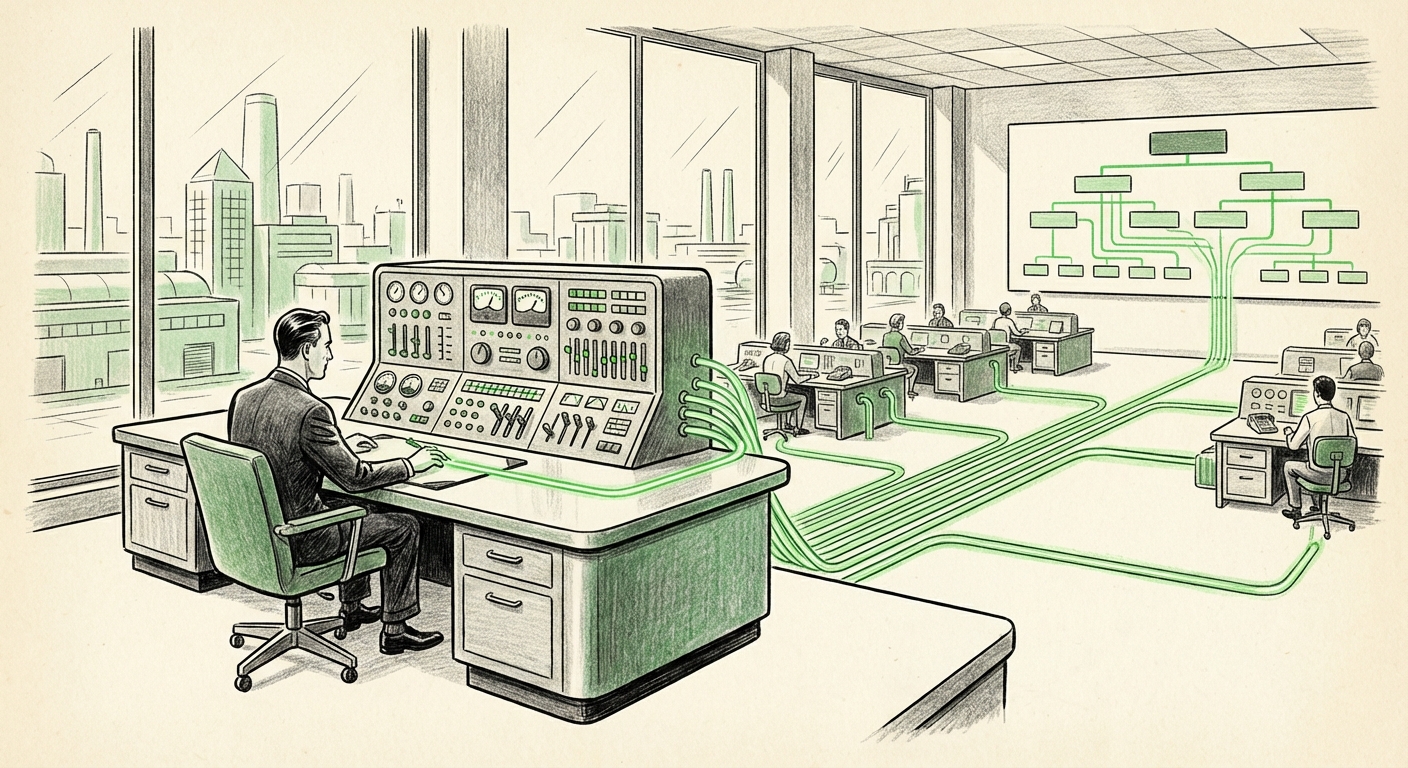
LeRobot and the Transformers Moment: Why the Next AI Revolution Is Happening Inside Robots
For decades, robots have been both impressive and disappointing. Watch a robot arm in a factory and you will see something remarkable: perfect speed, perfect precision, and zero hesitation. But move that same robot to a slightly different environment, change the lighting, or place an object in an unexpected position, and it suddenly becomes useless. That is because most robots are not thinking. They are simply following code that humans wrote for them, step by step, over and over again.
That is about to change in a big way. A new wave of artificial intelligence is finally reaching the physical world, and many researchers are calling it the transformers moment for robots. At the center of this conversation is an open-source project called LeRobot. It promises to give robots what large language models gave to text: the ability to learn, adapt, and generalize instead of simply repeat.
This is not a small upgrade. It is a fundamental shift in what robots are and what they can do. And for businesses, workers, and society, the implications are enormous.
Looking Back: The Original Transformers Moment
To understand why people are so excited about LeRobot, it helps to look at how AI changed the way computers understand language.
For many years, teaching computers to understand words was painfully slow. Engineers wrote rules by hand. They told the computer what a noun was, what a verb was, and how sentences should be structured. The result was brittle. If someone said something the engineers had never imagined, the system collapsed.
Then a new type of AI model called the transformer arrived. Instead of memorizing rules, transformers learn patterns by processing enormous amounts of data. Give a transformer billions of examples of human writing, and it begins to understand context, tone, and meaning on its own. It can answer questions it was never asked, write paragraphs it was never shown, and handle surprises gracefully.
Interestingly, the word transformer makes many people think of giant alien robots from the movies. But in the world of AI, a transformer is simply a mathematical technique, one that turns out to be astonishingly good at recognizing patterns. That technique is the reason modern chatbots, writing assistants, and translation tools work so well.
The leap from rule-based language to learning-based language changed the entire technology industry. Now, the exact same kind of leap is happening in the world of physical machines. That is the heart of the LeRobot story.
What Exactly Is LeRobot?
LeRobot is best understood as an open-source platform that gives robots a trainable brain. Instead of hand-coding every possible movement, developers and researchers use LeRobot to show a robot what to do, and let the AI figure out the rest.
Think of it this way: with older methods, teaching a robot a new task was like writing a giant instruction manual for every tiny motion. Reach here. Grip now. Twist left. Stop. Every exception had to be anticipated in advance. With LeRobot, teaching a robot is more like training an apprentice. You demonstrate the task. You provide many examples. And the model learns the underlying pattern.
The project brings together three important ingredients:
- Data: A growing collection of demonstrations showing robots and humans performing tasks.
- Models: Transformer-based AI systems that learn from that data and turn it into skilled movement.
- Hardware: Connections to real robot arms, grippers, and mobile robots that carry out the learned skills.
Because LeRobot is open source, anyone can use it, contribute to it, and build on the work of others. That matters more than it might seem. In the world of AI, sharing data and models is how progress accelerates. Every successful demonstration becomes a lesson that the entire community can reuse. It is a little like a worldwide classroom where every robot that learns something new hands that knowledge forward to every other robot.
Why This Is Called the Transformers Moment for Robots
The big breakthrough behind transformer models is called generalization. A language model trained on millions of examples does not just memorize sentences. It builds an internal sense of how language works, which means it can handle sentences it has never seen before.
For a very long time, robots lacked that ability. A classic industrial robot is incredibly good at one thing and completely helpless at anything else. It is precise but brittle. Change one small detail in its environment, and it needs a human engineer to reprogram it.
LeRobot represents a different philosophy. By applying transformer-based learning to physical actions, robots can begin to build an internal understanding of how objects behave, how to grip them, push them, slide them, and stack them. This approach is often called imitation learning, and researchers have been working on it for years. But transformers brought something new to the table: scale. With the power of transformer models, robots can learn from far more demonstrations, absorb far more variety, and handle far more unexpected situations.
The result is a robot that can start to handle tasks it never saw in its training data, the same way a language model can answer a question it was never asked. That is the missing piece that has kept robots locked inside factories for so long. Once machines can adapt and react to the messy, unpredictable real world, they can finally leave the assembly line and join the rest of us.
What the Future of AI and Robotics Actually Looks Like
So what does this future feel like in practice? Picture a home robot that watches a human load a dishwasher just once, and the next day does the job on its own. Picture a warehouse robot that gets shifted from packing boxes in the morning to sorting returns in the afternoon, not because an engineer reprogrammed it, but because another robot somewhere else already learned the skill and shared the data.
These scenarios are no longer science fiction. They are the direct, logical endpoint of the transformers moment for robots.
Small businesses will be able to adopt automation without hiring a team of robotics engineers. Simulated environments will generate endless practice data, letting robots train for thousands of hours in a virtual world before they ever touch a physical object. And because the technology is open source, a breakthrough in one lab can quickly become a capability in every lab.
The deeper change is philosophical. We are moving from a world where robots are programmed to a world where robots are taught. And that makes all the difference.
What This Means for Businesses
For business leaders, the transformers moment for robots is not an abstract research topic. It is a competitive force that will reshape how work gets done.
The most immediate implication is flexible automation. Today, automating a task is a major project: expensive engineers, months of programming, and rigid systems that cannot adapt. LeRobot-style platforms flip that equation. Retraining a robot for a new task becomes faster and cheaper than reprogramming it. That means companies can automate tasks that previously were too complex, too varied, or too short-lived to justify the cost.
There is also a sharp lesson here about data. In the world of language AI, data became the new oil. The same will be true in robotics. Businesses that start collecting demonstration data now, videos, teleoperation logs, task descriptions, will be far ahead when the technology matures. Data capture should be part of every operation that might one day be automated.
But there are cautions too. The technology is still young, and reliability and safety remain serious concerns. Robots that learn can also learn badly. For now, the smartest approach is pilot projects: choose a task that is repetitive, has some natural variety, and is difficult to staff. Let the technology prove itself in a low-risk setting before scaling.
What This Means for Society and the Workforce
Whenever robotics and automation are discussed, the question of jobs is never far away. The honest answer is that learning-based robots will change work far more broadly than the rigid factory robots of the past.
Repetitive physical work, the kind that is hard on human bodies and easy to describe, will be the most exposed. But that is not the whole story. LeRobot-style systems also create new kinds of jobs: people who teach robots by demonstration, people who collect and clean training data, people who supervise fleets of learning machines, and people who make sure the robots behave safely and fairly.
Society will also gain in areas beyond the economy. Assistive robots that can adapt to the unpredictable needs of elderly people or people with disabilities become far more realistic when they learn by watching rather than by hard-coded routine. A robot that can learn to help someone out of bed, fetch a glass of water, or tidy a kitchen could change lives in profound ways.
Of course, with that power comes responsibility. We need standards, transparency, and careful governance. Data privacy matters when robots are learning in homes. Safety certification matters when robots are learning near people. The communities building these platforms have an obligation to build trust alongside capability.
Practical Steps You Can Take Today
Whether you run a factory, a hospital, a farm, or a startup, there are concrete moves you can make right now to prepare for this shift.
- Watch and learn. Follow the open-source robotics community and track projects like LeRobot. The field is moving quickly, and early awareness is a real advantage.
- Pick a pilot task. Find one small, repetitive task that causes pain, turnover, injury, errors, and test whether learning-based automation can handle it.
- Start capturing data. Record demonstrations of skilled work before you know exactly how you will use them. Data collected today becomes training material tomorrow.
- Pair engineers with operators. The people doing the work every day are the best teachers for future robots. Build a bridge between them and your technical team.
- Plan for reskilling now. Identify roles that will shift from doing tasks to teaching, supervising, and maintaining learning robots, and start building those skills.
- Think about safety early. Establish clear rules for where robots operate, how they are monitored, and how mistakes are reported and fixed.
A Turning Point Worth Taking Seriously
There is a phrase people use when a technology changes from a curiosity into a foundation: the moment it becomes a platform. The original transformers moment gave machines a human-level grasp of language, and it transformed every industry that touches words. LeRobot is the beginning of that same transformation for movement.
It is hard to overstate how different the world looks when robots can learn, adapt, and improve instead of simply obey. The robots of the future will not arrive from the factory with their skills locked in. They will arrive like new employees: eager, capable, and ready to be trained. Some will be trained in warehouses. Some will be trained in kitchens, hospitals, and fields. And increasingly, they will learn from each other.
We have waited a long time for robots to be genuinely useful in the messy real world. The transformers moment for robots, embodied by projects like LeRobot, is the clearest sign yet that the wait is almost over. The technology is emerging now. The businesses, workers, and communities that start learning how to teach machines will shape the next era of human history.