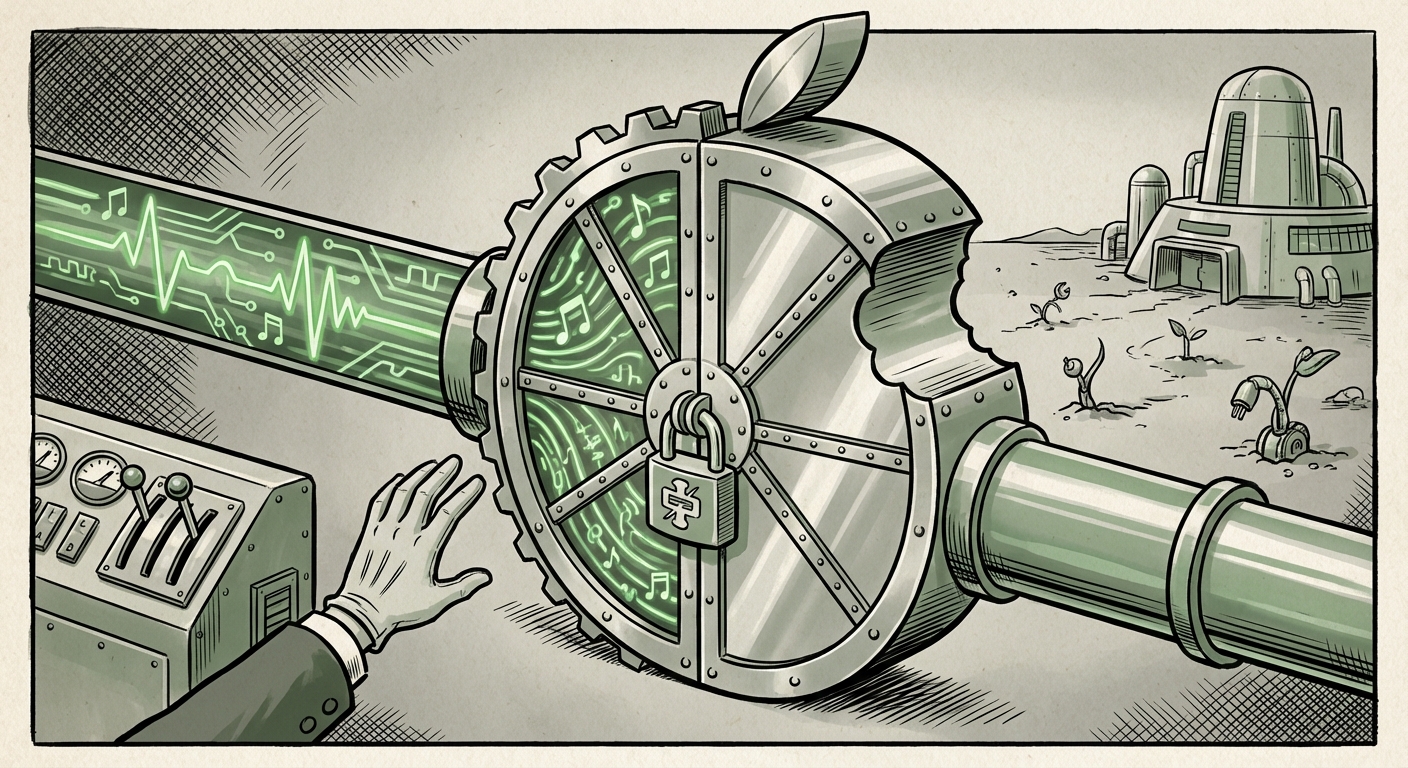
Hugging Face's ML Intern Lets Anyone Run Machine Learning Experiments by Chatting, Here's What It Means for AI's Future
Machine learning has a reputation problem. For years, it has felt like a private club. To get in, you needed to understand Python, know your way around data sets, and speak fluent math. You had to pick the right model, set the right settings, and pray the results made sense. For most people, even smart, curious professionals, that felt impossible.
That wall is starting to crack. In a major step forward, Hugging Face has introduced a new tool called ML Intern. It lets anyone run machine learning experiments through a simple chat interface. Instead of writing code, you describe what you want. Instead of debugging errors, you have a conversation. The result is a world where experimenting with machine learning may soon feel as natural as asking a question.
This is not just a nice new feature. It is part of a much bigger story about what the future of AI will look like. It changes who gets to build with AI, how businesses will test ideas, and what skills will matter most in the years ahead. Let's dig into what this release means, why it matters, and how you should prepare for it.
What Exactly Is ML Intern?
To understand why ML Intern is exciting, it helps to know what an "ML experiment" actually is. In simple terms, it is a structured test. You take some data, you choose a machine learning method, you train it to find patterns, and then you check how well it performed. Researchers do these experiments all the time to answer questions like: "Can we predict which customers will stop buying?" or "Can this model tell the difference between healthy and damaged parts in a factory photo?"
Traditionally, running these experiments meant writing many lines of code. You needed to clean the data. You needed to choose the right algorithm. You needed to adjust settings like learning rates and batch sizes. Then you needed to train the model, often for hours, and finally judge the results. Every step had a steep learning curve. One small mistake could wreck the whole run.
ML Intern attacks that problem at its root. Instead of a coding environment where you wrestle with syntax, the tool gives you a chat window. You ask for what you need in plain language, and the system carries out the heavy lifting behind the scenes. Want to test which approach predicts house prices better? You can simply ask. Want to see how a model handles a specific kind of image? Just describe it.
We should be clear about what this is and is not. ML Intern does not turn someone with zero knowledge into a world-class machine learning engineer overnight. What it does is remove the mechanical barriers. It handles the boring, repetitive parts of experiment design and execution. That frees the human to focus on the part that matters most: asking the right questions.
The Chat Box Becomes the New Control Panel
Step back for a moment and look at the bigger pattern. Over the past few years, the chat interface has quietly become the universal remote control for technology. We started by asking chatbots to write emails. Then we asked them to draft code. Then we asked them to plan trips and summarize meetings. With every season, the boundary moves further.
Now that same interface is reaching into the lab. The message is clear: if you can describe a task, technology should do more to help you complete it. The keyboard and command line are no longer the gatekeepers. Curiosity and clear communication are becoming the real tools of the trade.
This shift has deep roots in how language models understand us. Chat systems have grown dramatically better at taking a messy, human request and turning it into a set of precise actions. When that ability connects to machine learning infrastructure, something new happens. The conversation itself becomes the experiment dashboard.
What makes this moment different from earlier "AutoML" and "no-code AI" tools is the interaction layer. Those earlier tools were visual and structured. They gave you buttons and menus. They were easier than coding, but they still required you to think like an engineer. A chat interface is different. It meets you where you are. You do not need to learn a new visual language. You just ask.
The Great Democratization of Machine Learning
The word "democratization" gets thrown around a lot in AI circles. But this release gives us a concrete example of what it really means. When experiment running becomes a conversation, the audience for machine learning grows from thousands to millions.
Think about who benefits from this shift:
- Small business owners who want to test pricing models but cannot afford to hire a data science team.
- Teachers and students who want to experiment with AI in the classroom without getting lost in coding.
- Healthcare administrators who need to evaluate patient flow predictions but do not write software for a living.
- Journalists, marketers, and product managers who want evidence for their decisions instead of guesswork.
- Non-profits with small budgets that still need powerful answers to hard questions.
For all of these people, the barrier is no longer "do I know how to code?" The barrier is now "do I know what I want to learn?" That is a much fairer question. It rewards clear thinking, not technical privilege.
This matters for the future of AI because more experimenters means more discoveries. When only a small group of specialists can test ideas, we all miss out on the questions they never think to ask. Widening the circle of people who can explore data directly should help us find patterns in fields that have been slow to adopt machine learning, from local government to small-scale agriculture to the arts.
What This Means for Businesses
For companies, ML Intern and tools like it are not a curiosity. They are a signal about how work will get done. The practical consequences are large, and they go far beyond saving a few hours of an engineer's week.
Speed Changes Everything
When experiments become conversational, the cost of testing an idea drops sharply. Today, a business question often sits in a backlog for weeks before a data scientist has time to look at it. With a chat-driven assistant, a product manager can run a fast first test on their own. They can see whether an idea has merit before spending real money on a full project.
This does not mean every business should throw away its data science team. It means the team's time gets saved for the hardest problems, the ones that truly need deep expertise and careful judgment.
New Collaboration Models
Imagine a weekly meeting where the conversation is not "tell me what the data team found" but "let us all look at the quick results we ran today." That is the world ML Intern points toward. Domain experts, the people who understand the business, the customers, and the real-world constraints, can finally interact with machine learning directly. The loop between question and answer gets shorter.
The most successful businesses will treat these tools as a bridge, not a replacement. They will pair wide access with a small number of senior reviewers who check the work for quality and bias.
A Shift in Role for Data Professionals
It would be easy for data scientists and machine learning engineers to see this as a threat. It is not. It is an upgrade. If anyone can run a simple experiment, the data professional's real value shifts upward. They become the ones who design complex systems, review unusual results, build guardrails, and teach others how to ask better questions.
The title we may start to hear more often is "AI steward" or "ML reviewer." These are people who do not just build models. They make sure models are built safely, used responsibly, and understood by everyone involved.
Running Experiments for the Wider Society
Beyond business, there is a social dimension to this release that deserves attention. Machine learning literacy is quickly becoming a basic skill for modern life, like spreadsheet literacy was in the 1990s. You do not need to be a programmer to benefit from understanding what data can and cannot tell you. But you do need hands-on experience to build that understanding.
Tools like ML Intern could give people that experience far earlier and far more often. A high school student could test predictions about local weather. A community group could analyze survey data about neighborhood needs. A healthcare patient advocate could explore which factors seem connected to appointment delays.
That kind of broad, practical exposure is how a society becomes smarter about AI. It creates a public that understands both the power and the limits of these systems. An informed public is harder to scare, harder to deceive, and better prepared to make policy decisions about algorithmic systems.
What Are the Risks and Limits?
It would be irresponsible to talk about a tool like this without being honest about its risks. Access without understanding can be dangerous. So let us look at the biggest concerns.
The Illusion of Simple Results
The biggest risk is blind trust. A chat interface makes results look clean and easy. But the real world is messy. If the underlying data is flawed, the experiment will be flawed no matter how easy it was to run. A bad model can be beautifully wrong. The danger is that confident, conversational output feels more trustworthy than it should.
Users must learn the old computer science saying: garbage in, garbage out. The quality of an experiment starts with the quality of the data, and that responsibility cannot be handed to a chatbot.
Reproducibility and Record-Keeping
When experiments happen in casual chat conversations, keeping track of what was tested, when, and with which settings becomes harder. In professional settings, reproducibility matters. If a competitor or regulator asks "how did you get this result?", the team needs a clear answer. Businesses will need policies that require careful logging of AI-assisted experiments.
Privacy and Sensitive Data
Another open question is data handling. Feeding private customer data into a chat-based system is a serious decision. Companies must know exactly what happens with the data they share during these experiments. Data security cannot become an afterthought just because the interface feels friendly and informal.
Bias Moves Faster
Democratization multiplies good ideas, and it multiplies bad ones, too. If a tool makes it easy to run experiments, it also makes it easy to run biased experiments at scale. People without training may not know to check whether their data unfairly excludes certain groups. The result could be decisions that harm already-marginalized communities. This is why human oversight must stay a core part of the loop.
The Skill Gap Inside AI Skills
Here is a subtle danger: access to a tool is not the same as access to understanding. Two people can ask the same question and get the same result, but only one of them can judge whether the result makes sense. The new divide in society may not be between people who have AI tools and people who do not. It may be between people who understand what those tools are doing behind the scenes and people who simply trust the output.
Actionable Insights for Businesses and Individuals
So what should you do today to prepare for this shift? Whether you run a company or you are simply trying to stay relevant in a changing job market, these practical steps can help.
For Businesses
- Start building AI literacy now. Do not wait until every team member demands access to a chat-based experiment tool. Teach people the basics of data quality, correlation versus causation, and honest reporting.
- Create a safe sandbox. Give teams a safe environment where they can experiment without risking production data. Then let them explore freely. The learning curve is fastest when people are not afraid of breaking things.
- Add a review layer. Decide in advance who reviews machine learning experiments for quality, bias, and reproducibility. Make that role an official part of your data team.
- Document everything. Even if the experiment feels casual, the record should not be. Keep logs of prompts, data used, and results. Future you will be grateful.
- Set guardrails for sensitive data. Before someone pastes customer information into a chat interface, make sure you know how that data is protected. Write the policy down and train people on it.
For Individuals
- Practice asking sharp questions. If the future belongs to people who can direct AI, then question-asking is a career skill. Start with simple questions about your own industry and refine them.
- Learn how to spot weak evidence. Take a free online course on statistics or critical thinking. You do not need a degree. You just need enough knowledge to push back when a result looks too good to be true.
- Run your own small experiment. There is no substitute for doing it yourself. Take a hobby data set, your fitness tracker data, your spending history, and test what a model can learn from it. The experience will change how you read every AI story from now on.
- Keep your skepticism healthy. Treat the output of any AI tool as a suggestion from a brilliant but overconfident intern, very useful, but always worth checking with your own judgment.
The Road Ahead: From Tool to Expectation
Here is the honest truth about what the future looks like. The release of ML Intern is one early step in a long journey. In a few years, the idea of running an experiment through a dedicated, separate chat tool may look old-fashioned. We will probably see this capability woven into the everyday software we already use. Your analytics platform, your spreadsheet, and your business reporting dashboard will all have built-in conversational experiment power.
The deeper trend is that machine learning is becoming a service rather than a specialty. It is moving from the back office to the front line. That is tremendously exciting and genuinely uncomfortable at the same time. We will gain speed and access. We will also gain new responsibilities.
The teams and individuals who thrive in this future will share a common trait: they treat AI tools as teammates that need good direction, clear constraints, and honest feedback. They will not expect the tool to know the context of their business. They will provide it. They will not trust every result automatically. They will validate the important ones.
Hugging Face has spent years building tools that put powerful AI into more hands. With ML Intern, it takes another meaningful step toward a world where running a machine learning experiment is as common as running a search. That shift, from coding labs to conversation, is one of the most important changes in how we will build and use software over the next decade.
Conclusion: The Question Is the New Code
For a long time, we measured technical skill by the words you could type into a blank editor. The future will measure it differently. The new metric is curiosity, clarity, and the ability to ask questions that lead to honest answers.
Machine learning experiments are about learning from experience with data. ML Intern, at its core, is a way of making that experience available to everyone. It will not be the last tool of its kind. But it is a clear sign of where we are heading: a future where writing Python is optional, but thinking clearly is not.
So do not just watch this trend from the sidelines. Start playing with the possibilities. Ask your first question. Run your first experiment. Build the habit of testing ideas with data before you commit to them. The tools are racing to meet you in the chat box. The only real requirement is that you show up with a mind that wants to learn.