Claude Code Limit Change: Why a "Raise" on Paper Is Really a Cut in Practice
Anthropic has changed the usage limits on Claude Code, its coding assistant that does real work right inside a developer's terminal. At first glance, it looks like good news for developers. The numbers are up. The allowance appears bigger. On paper, it is a raise.
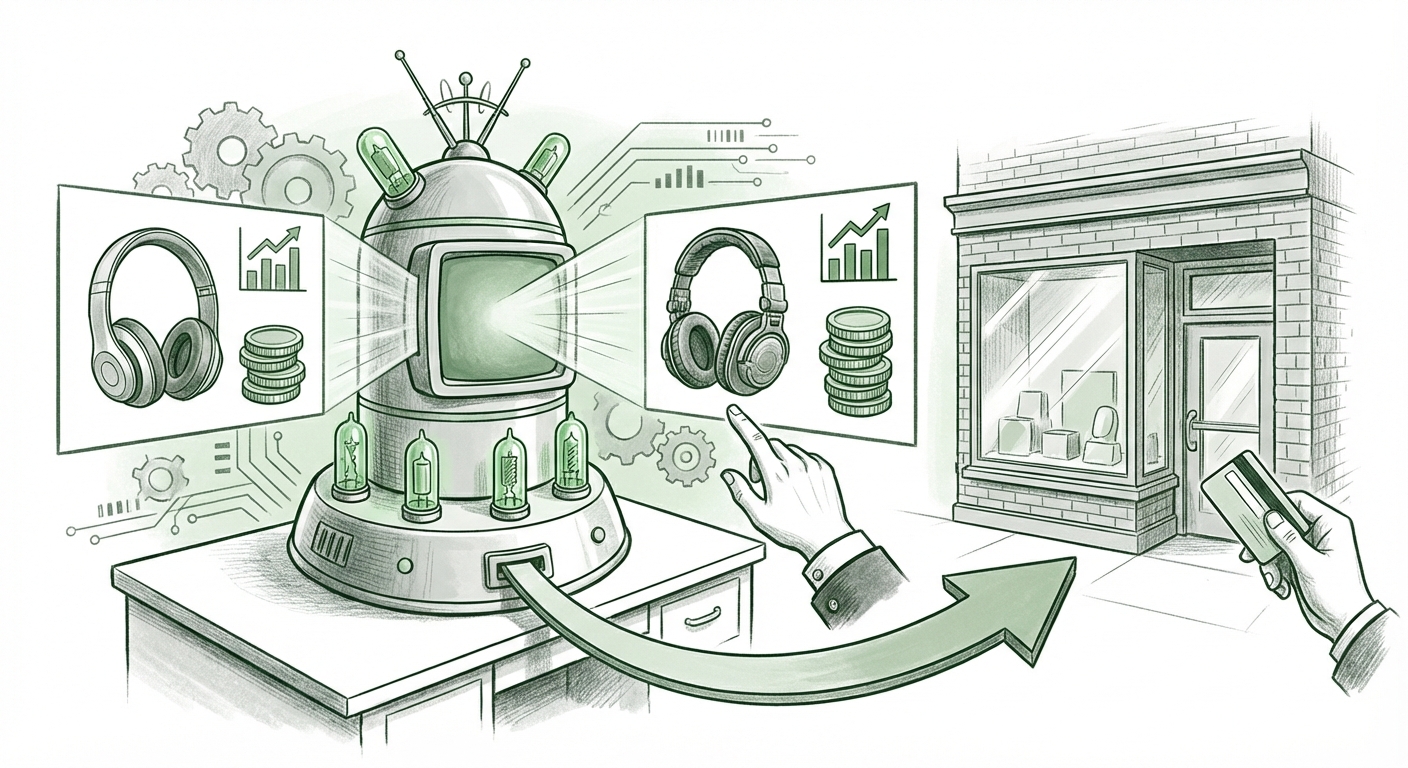
But there is a catch that developers in the trenches are quickly discovering: in practice, the change behaves like a cut. Despite the larger-sounding limit, the tool delivers the same amount of real work, or less. The fuel tank got bigger on the label but smaller where it actually matters.
This gap between what an announcement says and what a user actually experiences is one of the most important dynamics in AI today. It changes how we should think about buying AI, building with AI, and trusting AI. Let's unpack what is really going on.
First, a Quick Refresher: What Exactly Is Claude Code?
Claude Code is Anthropic's agentic coding tool. Unlike a chatbot that gives you suggestions and waits for you to type them in, Claude Code acts. You give it a goal, "fix this bug," "add this feature," "explain this messy file", and it digs into your codebase, runs commands, writes and edits code, tests its own work, and reports back. Think of it like hiring a tireless junior developer who works while you sleep.
But Claude Code, like most advanced AI tools, runs on a fuel tank. It has limits. Those limits cap how much AI work you get in a given period, and they decide when the tireless helper runs out of gas. The limits are the invisible infrastructure underneath the magic. When the limits change, the magic changes with them.
So when Anthropic adjusts Claude Code's limits, it adjusts the practical size of the tank, and therefore the real value of the tool. The recent change is a master class in the economics of modern AI. And the story it tells is a preview of the future for the entire industry.
The Headline Says Raise. The Math Says Otherwise.
Here is the puzzle at the heart of this story: the new limits are presented as an increase, yet the lived experience points in the other direction, a decrease in usable capacity. How can both be true at once? Three mechanisms explain it.
The Measuring Stick Moved
When a service changes how it counts your usage, the limits can grow on paper while shrinking in reality. Early AI tools counted simple things like the number of messages you typed. But modern agents don't work in messages, they work in loops of hidden activity. If the unit of measurement shifts behind the scenes, the advertised number can rise even as each real task consumes far more of it. A bigger number measured on a different ruler is not a bigger allowance.
The Agent Got Hungrier
Modern AI agents are dramatically more powerful than older models, and dramatically more expensive to run. An agent that once answered in a single step now loops: read the file, run the test, spot the error, try again. Each visible step hides many hidden steps. The machine consumes more per task than it used to. If the advertised limit rises twenty percent but each real task now costs thirty percent more, you have lost ground. The model did not get stingier. It got greedier, on your dime.
Expectations Do the Rest
Then there is psychology. When you hear "your limit went up," you naturally relax. You stop watching the meter. You let the agent roam further, explore more, take more shots at a problem. The announcement changes your behavior before the real numbers ever change. By the time you hit the wall, the "raise" has already evaporated. Perception is a silent partner in every pricing change.
This Is Bigger Than One Product: The Era of Metered AI
Now step back. Claude Code is one tool from one company. But the pattern here is the story of the entire AI industry for the next several years.
For a long time, AI companies have used generous limits as marketing. "Look how much you can do!" was the message, and the bill was quietly subsidized in the background. That era is ending. Every AI request consumes real computing power, real electricity, and real money. Investors and finance chiefs are now asking a blunt question: who is going to pay for all of this?
The answer is you. We are moving from a world of "all you can eat" AI to a world of carefully metered AI. That shift is not evil; it is inevitable. But the way it is being rolled out, through announcements that sound like raises and function like cuts, is creating a trust problem.
And trust is the most valuable currency in AI. People will forgive higher prices far more quickly than they will forgive hidden math. The companies that survive this transition will be the ones that make their meters transparent, their definitions clear, and their announcements honest.
What This Means for the Future of AI and How It Will Be Used
This brings us to the big question: where is all of this heading? Here are five predictions for the future of AI, and how you will actually use it.
First, AI will be treated like electricity or water. For more than a century, utilities have sold power by the kilowatt-hour. AI is heading down the same path: measured, metered, and billed by actual consumption. That means businesses will stop treating AI as a software subscription and start treating it as infrastructure. New roles like "AI capacity planner" will become as common as cloud architects, and finance teams will build AI usage dashboards the way they built cloud cost dashboards.
Second, efficiency will become a core skill. In the early days of AI, the best prompt was the cleverest one. In the future, the best prompt will be the cheapest one that still gets the job done. Developers will learn economy: how to get maximum value from minimum tokens. We will see a rise in tools that compress context, summarize files, and stop wasteful agent loops before they burn through an allowance. Efficiency will be a job skill, not a personality trait.
Third, transparency will decide who wins. When limits are opaque, users feel cheated even if the math is fair. AI vendors that publish clear, honest explanations of how usage is counted, and show a real-time meter, will earn lasting loyalty. Vendors that bury the truth in fine print will face backlash every time they change the numbers. The market will punish hidden meters.
Fourth, agents will force us to rethink who counts as a user. An AI agent doing work on your behalf is no longer one person typing. It is a small workforce of automated processes. When a developer leaves Claude Code running overnight, whose allowance is being spent? What happens when an agent spawns sub-agents, each burning the same budget? The rules of metering were designed for humans. They are about to be stress-tested by machines, and the industry will need new answers.
Fifth, pricing innovation will accelerate. Expect hybrid plans, burst allowances, off-peak discounts, and usage-based tiers that look a lot like airline pricing, complicated, but manageable once you understand the rules. The winners will be the vendors who make complexity feel simple. The losers will be the ones who hide complexity until the bill arrives.
Practical Steps to Protect Yourself and Your Company
The Claude Code situation is a warning, but it is also an opportunity to get ahead of the curve. Here is what to do about it.
For Developers
- Measure before you trust. Before celebrating any limit increase, track your actual daily consumption for a week. Compare it against the old plan. The sticker number matters less than the chart.
- Give agents tight, specific tasks. Vague goals make agents wander, and wandering spends allowance fast. Define what "done" looks like before you start.
- Clean your context. The quickest way to burn a limit is to feed an agent huge files it does not need. Trim what you attach, and close sessions you are not actively using.
- Set your own alarms. Do not rely on the provider's cap as your only guardrail. Create internal budgets and warnings so you are never surprised at the end of the month.
For Business Leaders
- Audit AI spend like cloud spend. The days of "just subscribe and enjoy" are over. Build a dashboard of AI usage across your teams. If you cannot measure it, you cannot control it.
- Train people in efficiency. The skill of using AI cheaply is as valuable as the skill of using it well. Reward engineers who ship faster without blowing the budget.
- Read announcements skeptically. When a vendor emails "we've raised your limits," run the numbers yourself. Ask what the unit of measurement is, and ask how the cost per task actually changed.
- Plan for metered agent fleets. If AI agents become standard in your company, decide who owns the capacity. Set policies for when agents run, how much they may spend, and who approves large automated jobs.
- Be transparent with your own teams. Share what AI actually costs. When people understand the meter, they respect it. When they do not, they rebel against it.
The Bigger Lesson: Growing Pains of a Transformative Technology
Every transformative technology goes through this awkward phase. Early cars rolled on cheap fuel and free roads before gasoline taxes arrived. The internet was all free trials and dial-up fun before broadband bills landed. Cloud computing promised easy "pay as you go" pricing before finance teams demanded cost controls. AI is now standing at exactly that hinge point.
Seen that way, the Claude Code limit change is not a scandal. It is a sign of maturity. The industry is transitioning from proving AI's magic to proving AI's value. That transition will be bumpy, and users have every right to be skeptical.
But the lesson for the future is simple: usage is destiny. Models will keep getting smarter. Interfaces will keep getting friendlier. But the meter, how much you get, how it is counted, and whether the count is honest, is what will determine how AI is actually used in the real world. Infinite intelligence means nothing if your allowance runs out at noon.
The companies that win the AI era will do more than build the best brains. They will build the fairest meters. And the rest of us? We should learn to read them.
Conclusion
Anthropic's Claude Code limit change is a raise on paper and a cut in practice. That single sentence captures the moment we are living through in AI: extraordinary capability meeting the ordinary reality of costs, limits, and fine print.
The takeaway for every developer and every leader is simple. Keep your own score. Measure what your AI actually costs per task. Demand clarity from the vendors you depend on. And never mistake a bigger number for a better deal.
Because the future of AI is being written right now, not in press releases, but in the fine print.