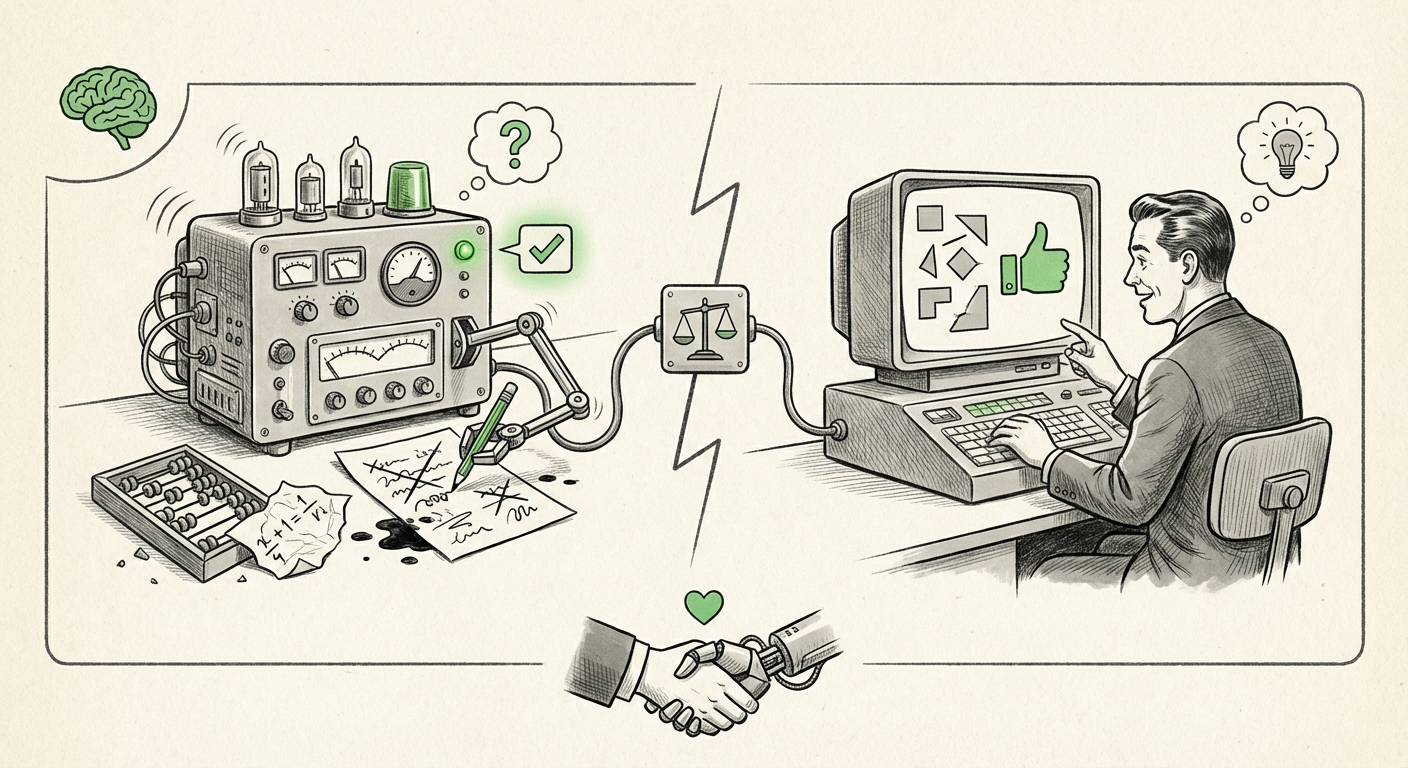
Google's Election AI Overviews Are Taking Sides: What This Means for the Future of AI
Every day, millions of people type questions into Google Search. They want quick answers about weather, recipes, sports scores, and news. During election season, those questions become more serious. People ask about candidates, voting rules, and whether elections are secure. Increasingly, the first thing they see is an AI-generated summary called an AI Overview. It sits at the top of the search results, neatly packaged and confident. But a deep look at Google's election AI Overviews reveals a troubling pattern: they are opaque, they rely on only a few sources, and sometimes they take sides. That is a big deal for democracy, for trust in AI, and for the future of how we get information.
What Are AI Overviews?
AI Overviews are Google's way of using artificial intelligence to answer your question directly. Instead of giving you a list of links to click, the AI writes a short paragraph summarizing what it thinks is the best answer. It pulls information from websites and presents it as a clear, easy-to-read response. For simple questions like "How do I tie a tie?" this can be helpful. But for complex, high-stakes questions about elections, the stakes are much higher. An AI Overview can shape what someone believes. If that answer is wrong, one-sided, or based on a tiny slice of information, it can mislead people at the exact moment they need trustworthy facts.
The Three Big Problems Found
A recent examination of Google's election-related AI Overviews uncovered three major concerns. None of them are small. And together, they point to a serious problem with how AI is being deployed in one of the most important areas of public life.
1. The AI Is Opaque
The biggest problem with election AI Overviews is that no one can truly see inside the machine. When Google ranks a website in normal search results, there are many signals about quality, authority, and relevance. But with AI Overviews, the process is a black box. The AI gives an answer, but it does not clearly explain why it chose one piece of information over another. Users cannot tell which facts were trusted, which were ignored, or why the AI decided one source was more credible. This lack of transparency makes it almost impossible to hold the system accountable. If something is wrong, we cannot trace the error back to its root.
2. They Rely on Very Few Sources
Another major finding is that the AI Overviews lean on a surprisingly small number of sources. Rather than pulling from many balanced material, the AI often builds its answer from just a handful of websites. That is risky. A robust answer should reflect many voices, opinions, and perspectives. When an AI relies on too few sources, it can easily miss important context, ignore alternative viewpoints, or repeat a single website's bias as if it were universal truth. In an election, where every issue has multiple sides, this narrow approach can be harmful. A voter might get an answer that sounds authoritative but is actually a slice of the picture, not the whole picture.
3. Sometimes They Take Sides
Perhaps the most alarming finding is that the AI Overviews sometimes take sides. Instead of remaining neutral and presenting a balanced view, the AI appears to favor one position over another. This can happen in subtle ways, such as how a question is framed, which facts are emphasized, or what tone the answer uses. Or it can happen directly, with the AI giving an answer that clearly aligns with a particular political viewpoint. Whether this bias is intentional or accidental, the result is the same: people are being guided toward a conclusion without realizing it. And because the answer looks so clean and neutral, many users will trust it without a second thought.
Why This Matters for the Future of AI
This is not just a Google problem. It is a warning about the future of AI everywhere. We are moving into a world where AI systems will generate more and more of the information we consume. Search engines, virtual assistants, news apps, and social media platforms will all use AI to summarize, recommend, and explain. If these systems are opaque, narrowly sourced, and biased, then the entire information ecosystem becomes fragile. We could end up in a place where people cannot trust what they read online, not because the facts are hidden, but because AI is shaping the facts in ways no one understands.
The future of AI depends on solving these problems now. We need systems that can explain their reasoning. We need AI that is trained to seek out diverse sources, not just the most convenient ones. And we need safeguards that prevent bias, especially in areas like elections, health, and public safety. Without those safeguards, AI will not become a trusted assistant. It will become another source of confusion and polarization.
What This Means for Businesses
For companies, the rise of AI Overviews has serious practical implications. If your business depends on being seen as a credible source, you now have a new challenge. AI summaries can choose to include your information, ignore it, or even misrepresent it. And you may not know why. This creates a new kind of reputational risk. A single AI answer that misstates your company's position on a political issue could damage public trust in a way that is hard to repair.
There is also a marketing and visibility concern. Traditional search engine optimization (SEO) focused on ranking higher on the results page. But AI Overviews change the game. If the AI writes the answer for the user, fewer people click through to websites. That means businesses could lose traffic, even if their content is excellent. To adapt, companies need to understand how AI picks sources and what makes a website more likely to be included in an AI summary. They also need to monitor what AI says about their brand and industry, so they can quickly respond to errors or bias.
But businesses should also see this as a moment to lead. Companies that use AI in their own operations should ask the same hard questions we are asking of Google. Does our AI explain its decisions? Does it rely on enough sources to avoid blind spots? Are we checking for bias before we let an AI answer affect customers? By building transparent and balanced AI systems, businesses can earn trust, avoid mistakes, and set a standard for others to follow.
Practical Guidance for Everyone
What can you do about this today? Plenty. Even if you are not a developer or a tech executive, you have power as a user. The most important habit is simple: do not accept AI answers as final truth. Use them as a starting point, not the last word. If an AI Overview tells you something important, click into the sources and check them yourself. Look for the primary source, the original report, or the official government page. Ask yourself whether the AI answer included multiple perspectives or just one.
For businesses, the advice is more specific. Start by evaluating your own digital footprint. Search for your company name and see what AI Overviews say. Create a list of key topics related to your industry and check them regularly. If you see a wrong or biased answer, document it and push for a correction. At the same time, produce clear, factual, and well-cited content on your own website. The more high-quality content you publish, the more likely AI systems will see you as a credible source.
For policymakers and regulators, the message is clear: we need rules for AI transparency. Companies should be required to disclose when content is AI-generated. They should be required to explain the source basis of their AI answers. And they should be audited for bias, especially when the AI handles election information. Self-regulation is not enough. The stakes are too high for users to be left in the dark.
Building a Better AI Future
We are at a fork in the road. On one path, AI becomes a fast and helpful guide that makes information more accessible. On the other, AI becomes an invisible gatekeeper that controls what we see, what we believe, and how we vote, all while hiding its own bias. The problems found in Google's election AI Overviews are a clear signal that we are drifting toward that second path. But we can change direction.
Developers and AI researchers can make transparency a core design goal. That means building models that can point to their evidence, explain how they weighted different sources, and say when they are uncertain. It also means using evaluation methods that check for source diversity and bias before a model is released to the public. Companies can commit to regular third-party audits of their AI systems, especially those serving millions of users. And users can stay curious, skeptical, and engaged, treating every AI answer as a suggestion to be verified, not a fact to be accepted.
None of this is impossible. We already have tools for search, citation, and fact-checking. The challenge is to make them standard practice in AI systems. If we do, the future of AI can be bright. If we do not, we risk building a world where the most powerful communication tool in history is also the least accountable.
Looking Ahead
Google has a unique responsibility because it sits at the center of the internet. When billions of people use one search engine, its AI choices shape global conversations. The recent findings about election AI Overviews are not just a report card; they are a warning bell. As AI becomes even more integrated into search, messaging, and daily life, the margin for error gets smaller. We cannot afford to build AI systems that are confident, convenient, and wrong.
The good news is that this moment is still early. There is time to fix the problems before AI-generated information becomes the default for an entire generation. But that time is limited. The companies building AI must act with urgency, users must demand better, and policymakers must set clear expectations. All of us have a role to play in making sure that AI serves the truth, rather than hiding from it.
In the end, the future of AI will be defined not by how fast it can answer questions, but by how much we can trust those answers. Transparency, source diversity, and neutrality are not nice-to-have features. They are essential requirements. The path forward is clear. It is up to all of us to walk it.