Google Gemini Can Now "Watch" Video for 88% Less Compute, A Turning Point for AI Video Understanding
Some of the biggest breakthroughs in artificial intelligence are not glamorous. They do not write poetry, paint pictures, or beat humans at chess. Instead, they quietly make AI cheaper, faster, and more practical. Google Gemini's new agent-based video analysis is exactly this kind of advance. Early details show the system can understand video content while cutting token usage by up to 88 percent.
That number deserves a double take. Eighty-eight percent is not a small optimization. It is the kind of improvement that changes whether a technology is used by a handful of wealthy companies or by everyone else. To understand why, we first need to understand why video has always been so expensive for AI to process, and why the agent approach may mark the beginning of a much bigger shift in how we build intelligent systems.
The Hidden Cost of Teaching AI to Watch Video
Most modern AI models do not "see" video the way humans do. Instead, they read the world through tokens. A token is a small piece of information, roughly the size of a short word or a fraction of a sentence. When you ask a chatbot a question, your words are broken into tokens, and the model charges its compute based on that count. Ask a long question, get a long answer, and you use many tokens.
Now imagine asking an AI to understand a video. A single minute of footage contains hundreds of separate frames, each one a complete image filled with millions of pixels. If the model must examine every frame at high quality, the token count explodes. One hour of video becomes billions of pixels of data. Before any analysis can begin, the cost of simply reading the video can dwarf the cost of understanding it.
This reality has held back video AI for years. Companies that wanted to search their security footage, index their media libraries, or monitor factory floors found themselves staring at enormous bills. In many cases, the math simply did not work. Storing the video was cheap; asking AI to watch it was ruinous.
That is why the new Google Gemini approach is so significant. By using an agent-based system, Gemini no longer tries to consume every frame with equal effort. Instead, it behaves less like a student forced to read a textbook from cover to cover and more like a smart assistant who first skims the chapter, finds the important pages, and only then reads those carefully.
How the Agent-Based Approach Works
The word "agent" is everywhere in AI right now, and it can confuse people. In simple terms, an agent is an AI system that does not just answer one question. It plans, makes decisions, and sometimes uses other tools to complete a larger goal. Instead of a single model doing all the work, an agent coordinates the work.
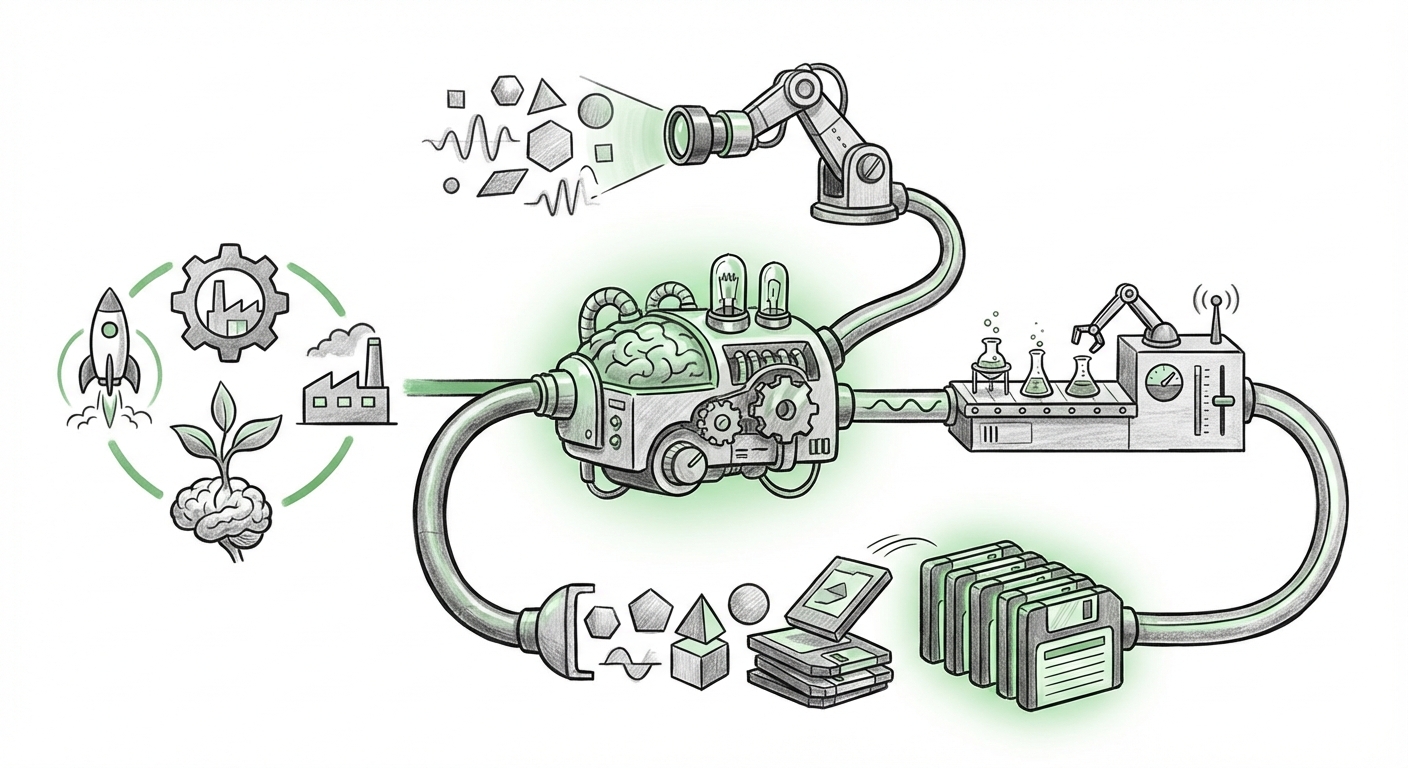
With agent-based video analysis, the workflow looks something like this. First, a lightweight model performs a quick pass over the video. It is not trying to understand every detail. It is looking for key moments: when a person enters a room, when a machine stops working, when a scene changes, or when something unusual appears. This first pass is cheap because it is fast and focused.
Once the important moments are found, only those moments are passed to the full-strength model for deep analysis. The main model never sees the boring hours of empty hallways or static camera feeds. It only sees the parts that matter. This simple division of labor is what makes the dramatic token savings possible.
Think about a security camera pointed at a parking lot for twelve hours. Most of that footage is empty pavement. An old-fashioned analysis system would "pay" to look at all twelve hours. The agent-based approach might find that only eleven minutes contain meaningful motion. It sends those eleven minutes to the deep analysis stage and ignores the rest. The result: up to 88 percent fewer tokens consumed for the same answer.
To put that in perspective, imagine a video analysis job that once required one million tokens. With an 88 percent reduction, the same job would now consume roughly 120,000 tokens. That means a company can process about eight times more video with the same budget. Or it can get answers eight times faster. For many businesses, both options are hugely attractive.
Why This Is a Bigger Deal Than It Looks
On the surface, this sounds like a cost-cutting story. But the ripple effects are much larger. For years, the AI industry has had a simple formula: make models bigger, feed them more data, and hope they get smarter. This approach works, but it also makes every new capability more expensive. The Gemini agent breakthrough suggests a different path: instead of feeding everything to one giant model, we can build systems that are smarter about what they look at.
This is sometimes called efficiency over scale. Rather than brute-forcing a problem, the AI uses judgment. A cheap model does the easy work of filtering, and an expensive model does the hard work of understanding. The whole pipeline becomes cheaper than either model alone would be.
We are likely to see this pattern spread far beyond video. The same agent logic applies to audio files, long documents, sensor data, and any other form of information that is enormous but mostly boring. In every case, the winning strategy is the same: find the signal, skip the noise, and spend your computing budget on what actually matters.
This also changes what AI can be used for in the first place. There is an old saying in business: if something is too expensive to do, it simply does not get done. Video analysis has been exactly that. Companies have known for years that their camera footage contained useful insights, but the cost of extracting those insights was too high. By cutting token consumption by up to 88 percent, Gemini makes video analysis affordable enough to actually use.
What This Means for Business and Society
When a technology becomes eight times cheaper, the world tends to find new ways to use it. Here are the areas most likely to feel the impact first.
Security and Public Safety
Security teams currently review video after an incident, or sometimes not at all because footage is too vast to watch. With cheap AI video analysis, systems can flag dangerous situations in real time or quickly find the one moment that matters from weeks of recordings. This does not replace human judgment, but it removes the impossible chore of watching endless footage.
Media and Entertainment
Broadcasters, film studios, and social media platforms hold enormous libraries of video. Most of it is never searched because indexing video is so difficult. With agent-based analysis, these libraries can become searchable databases. A newsroom could find every clip of a specific politician, every shot of a particular landmark, or every moment a certain topic was discussed, in seconds, without burning through a huge AI budget.
Healthcare and Medical Training
Hospitals already record surgical procedures for training and quality improvement. Reviewing those recordings is time-consuming for senior doctors. An AI that efficiently identifies key steps, unusual events, or risky moments could help train the next generation of surgeons. This is a careful and sensitive field, but the cost reduction makes serious exploration far more realistic.
Manufacturing and Quality Control
Factories have used cameras for years to watch assembly lines. Agent-based video analysis could detect defects, safety violations, or equipment failures more affordably. A small manufacturer that could never justify an expensive AI system might now find the economics work.
Retail and Customer Experience
Retailers already understand foot traffic, but deep video insight has usually been a luxury reserved for large chains. Cheaper analysis could help smaller shops understand how customers move through a store, where they pause, and what they ignore. Used responsibly, this improves store layouts and customer experiences.
Autonomous Vehicles and Robotics
Self-driving cars and robots record huge amounts of video during testing. Engineers often need to find rare edge cases, such as unusual pedestrian behavior. The agent-based approach can help teams find those needle-in-a-haystack moments without paying to analyze every mile of tape.
The wider social impact is just as important. Cheaper video understanding means AI can be pointed at problems that benefit the public: monitoring wildlife populations, studying crowd safety in public spaces, or preserving historical footage. When a tool becomes affordable, it moves from the hands of the few into the hands of the many.
Actionable Insights for Businesses
For organizations watching this development, the message is simple: start preparing now. Even if you are not ready to deploy video AI this quarter, the coming shift will affect your costs, your competitors, and your customers. Here are five practical steps to consider.
First, audit your video assets. You already know video is expensive to store. Now ask a different question: if you could search it all for a reasonable price, what would you look for? Write those questions down. They will form the basis of your first use case.
Second, start with a pilot, not a revolution. Pick one workflow with hours of video and a clear business question. It might be reviewing customer wait times or checking warehouse safety. Run it through a modern agent-based system and measure the cost against the value of the answer. The pilot will teach you more than any report.
Third, think about output, not just cost. The real prize is not saving tokens; it is building a searchable memory of your operations. A video that has been analyzed becomes a structured record: events, timestamps, descriptions, and categories. That record is an asset your company can query for years.
Fourth, prepare your team for agent thinking. The skills that matter are changing. Knowing how to describe what "important" means in a video, what count as a key moment, will become a valuable craft. People who can design good agent instructions will be as important as people who can write code.
Fifth, keep human oversight in the loop. Agent-based systems are faster and cheaper, but they are not perfect. A first pass may sometimes miss an important moment. Build review steps into your workflow, especially for high-stakes decisions in security or healthcare. Let the AI do the skimming, but keep humans responsible for the final call.
Looking Ahead: The Future of AI Efficiency
It is tempting to view any technology announcement in isolation. But Google Gemini's agent-based video analysis is best understood as part of a broader story. The AI industry is slowly moving from an era of "how big can we make it?" to an era of "how smart can we make it?" Agent-based systems are at the center of that shift.
The next few years will likely bring more breakthroughs in this direction. We will see models that decide what to read before they read it. We will see pipelines that combine tiny specialized models with massive general ones. We will see AI that budgets its own computing power the way a careful traveler budgets money: spending deeply only when something is truly worth the price.
For video, the immediate promise is already exciting. The ability to understand recorded life at an affordable cost opens doors in medicine, education, public safety, science, and entertainment. Every hour of footage that was previously too expensive to understand becomes a potential source of insight.
None of this means AI is becoming omniscient or that machines will replace human judgment. The opposite is true. By making video analysis affordable, we give humans better tools for asking questions of the world around us. We let doctors review more surgeries, safety teams find more hazards, and historians rediscover more archives.
Sometimes the most powerful AI breakthrough is not a smarter model. It is a cheaper way to use the one we already have.