Anthropic's Claude Code Goes Parallel: What Autonomous AI Coding Agents Mean for the Future of Software
Something important shifted in how AI writes software in September 2026. Anthropic is continuing to push Claude Code toward fully autonomous coding, and its newest move centers on a simple but powerful idea: instead of one AI assistant working through a problem step by step, many AI agents work at the same time on different parts of the job. The company calls these parallel agent workflows, and they represent one of the clearest signals yet that AI is moving from "helpful assistant" to "independent worker."
That shift matters far beyond the world of software developers. If AI agents can plan, divide work, run tasks in parallel, and assemble the results without a human guiding every keystroke, then the same pattern will spread to law, finance, research, customer support, and operations. Understanding what Anthropic is doing with Claude Code today is a preview of how knowledge work gets restructured tomorrow.
From Autocomplete to Autonomy: The Arc of AI Coding
To understand why parallel agents are a big deal, it helps to trace how far AI coding tools have already come. The first generation of AI coding assistants behaved like very smart autocomplete. You typed, it guessed the next line. Useful, but you were still driving.
The next generation moved to conversational coding. You described a task in plain English, and the AI wrote a function, explained a bug, or suggested a fix. The human still owned the plan, the review, and the decision to ship.
Claude Code pushed further into what the industry calls agentic coding. Here the AI does not just answer a question, it takes action. It reads files across a project, runs commands, edits multiple documents, tests its own changes, and iterates until the job is done. The human shifts from typist to reviewer.
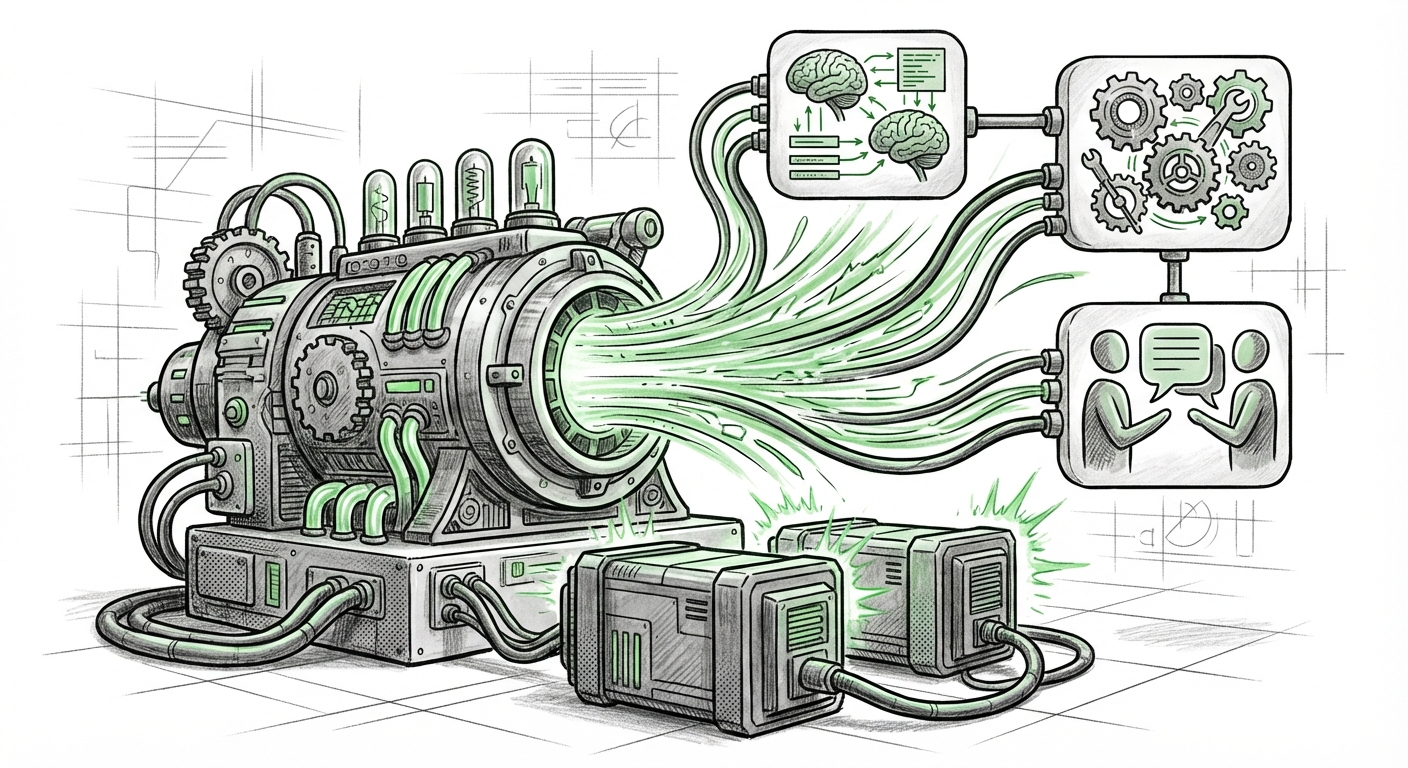
The parallel agent workflow stage is the next step on that same road. Rather than one agent working through a long to-do list, the system spins up multiple agents that tackle different pieces simultaneously, one exploring how a feature should be built, another writing the code, another running tests, another checking for security problems. Then the results get merged. It is the difference between one contractor building a house alone and a coordinated crew where the electrician, plumber, and framer all work at once.
Why Parallelism Is the Real Breakthrough
Speed is the obvious benefit, but it is not the most important one. Parallelism changes the shape of what AI can attempt.
A single agent working sequentially hits hard limits. Long tasks drift. Context gets lost. Errors compound because each step inherits the mistakes of the one before it. Ask one agent to handle a sprawling, multi-part project and the odds of a clean finish drop fast.
Parallel agents attack that problem from several angles at once:
- Independent verification. One agent can write code while another tries to break it. That adversarial setup catches mistakes a single agent would happily ship.
- Exploration in breadth. Several agents can test different approaches to the same problem and let the best result win, rather than committing to the first idea.
- Context isolation. Large tasks can be split so each agent only holds the information it needs, keeping reasoning sharp instead of drowning in noise.
- Wall-clock speed. Work that took an hour of sequential steps can finish in minutes.
The deeper implication is about reliability. The biggest knock on autonomous AI has never been capability, it has been trust. Can you leave it alone and expect a good outcome? Parallel workflows with built-in checks and multiple perspectives are one of the most credible answers yet.
What This Means for the Future of AI
Anthropic's direction points to three bigger trends that will define the next few years of AI.
1. Multi-agent systems become the default architecture
For years, the mental model was one model answering one prompt. That is changing. The future looks more like an organization chart than a chatbot: a manager agent that breaks down a goal, specialist agents that execute, and reviewer agents that check the work. Parallel agent workflows in coding are the first mainstream version of this pattern, but the architecture is domain-neutral. The same structure can run a marketing campaign, a financial audit, or a scientific literature review.
2. Evaluation and trust become the bottleneck, not raw intelligence
As agents get more autonomous, the hard question stops being "can the AI do this?" and becomes "how do we know it did it right?" Expect enormous investment in testing frameworks, sandboxed execution, permission systems, audit trails, and human checkpoints. The winners in this era may not be the companies with the smartest model, but the ones with the most trustworthy agent pipelines.
3. The unit of work changes
When agents work in parallel, humans stop managing tasks and start managing outcomes. You define the goal, set the constraints, and review the result. That is a fundamentally different job than the one most knowledge workers trained for, and it is arriving faster in software than anywhere else.
Practical Implications for Businesses
If you run a company that builds or depends on software, the near-term implications are concrete.
Team structures will compress
Parallel agents do not replace engineers. They change the ratio. A smaller team supervising a fleet of agents can cover ground that previously required a much larger group. The scarce skill shifts from writing code quickly to specifying problems precisely and judging output critically.
Review becomes the core workflow
When AI can generate volume, human attention becomes the limiting resource. Organizations that build strong review practices, clear standards, automated checks, fast feedback loops, will capture far more value from agentic tools than those that treat AI output as automatically ready to ship.
Smaller companies gain leverage
Parallel agent workflows lower the coordination cost of big projects. A handful of people with well-designed agent pipelines can now attempt work that used to require a large, expensive team. That is genuinely disruptive for startups and small businesses.
Governance can no longer wait
Autonomous agents that edit files, run commands, and touch real systems need real guardrails. Businesses should be deciding now who is accountable when an agent makes a mistake, what systems agents are allowed to touch, and how every action gets logged and reversed. Waiting until these tools are everywhere is a recipe for an incident.
What Could Go Wrong
Honest analysis means naming the risks. Parallel agents introduce failure modes that a single assistant does not.
- Conflicting work. Two agents editing the same thing can create messes that are harder to untangle than a single wrong answer.
- Compounding errors. If the coordinator agent misunderstands the goal, every parallel worker inherits the mistake, and does it faster.
- False confidence. A polished, multi-agent result can look more trustworthy than it is. Volume is not the same as correctness.
- Skills atrophy. If humans stop reading code closely, their ability to catch subtle problems erodes over time.
None of these are reasons to stop. They are reasons to build carefully, with sandboxes, staged rollouts, and clear human sign-off on anything that matters.
Actionable Insights: How to Prepare Now
Whether you are a developer, a manager, or an executive, here is what to do with this shift.
- Start small and instrument everything. Pick a low-risk, well-defined task and run an agent on it. Measure quality, not just speed.
- Write better specifications. The clearer your problem statement, the better any agent, parallel or not, will perform. This skill is now a competitive advantage.
- Build your review layer first. Automated tests, linters, security scans, and a defined human checkpoint should exist before you scale up agent usage.
- Define your boundaries. Decide in advance which systems agents can touch and which require human approval.
- Retrain for judgment. Invest in your team's ability to evaluate AI output, not just produce work alongside it.
- Track the trend, not just the tool. Specific products will change fast. The durable shift is toward multi-agent, goal-driven workflows, plan for that.
The Bigger Picture
Anthropic pushing Claude Code toward autonomous, parallel workflows is more than a product update. It is a statement about where the whole field is heading: away from AI as a tool you operate, and toward AI as a system you delegate to.
Software development is simply the first domain where this is measurable. Code has properties that make it perfect for agentic work, it is testable, it lives in version control, and mistakes can be caught automatically. Those same benefits are beginning to appear in other fields as evaluation methods mature.
The companies and individuals who thrive in the next few years will not be the ones who adopted the flashiest AI tool first. They will be the ones who learned to specify clearly, verify rigorously, and supervise intelligently. That is the real skill of the autonomous AI era, and Anthropic's latest push toward parallel agents is a loud signal that the era has already started.