Anthropic Is Building a Biology Lab Where Claude Runs Drug Experiments, Here's Why That Changes Everything
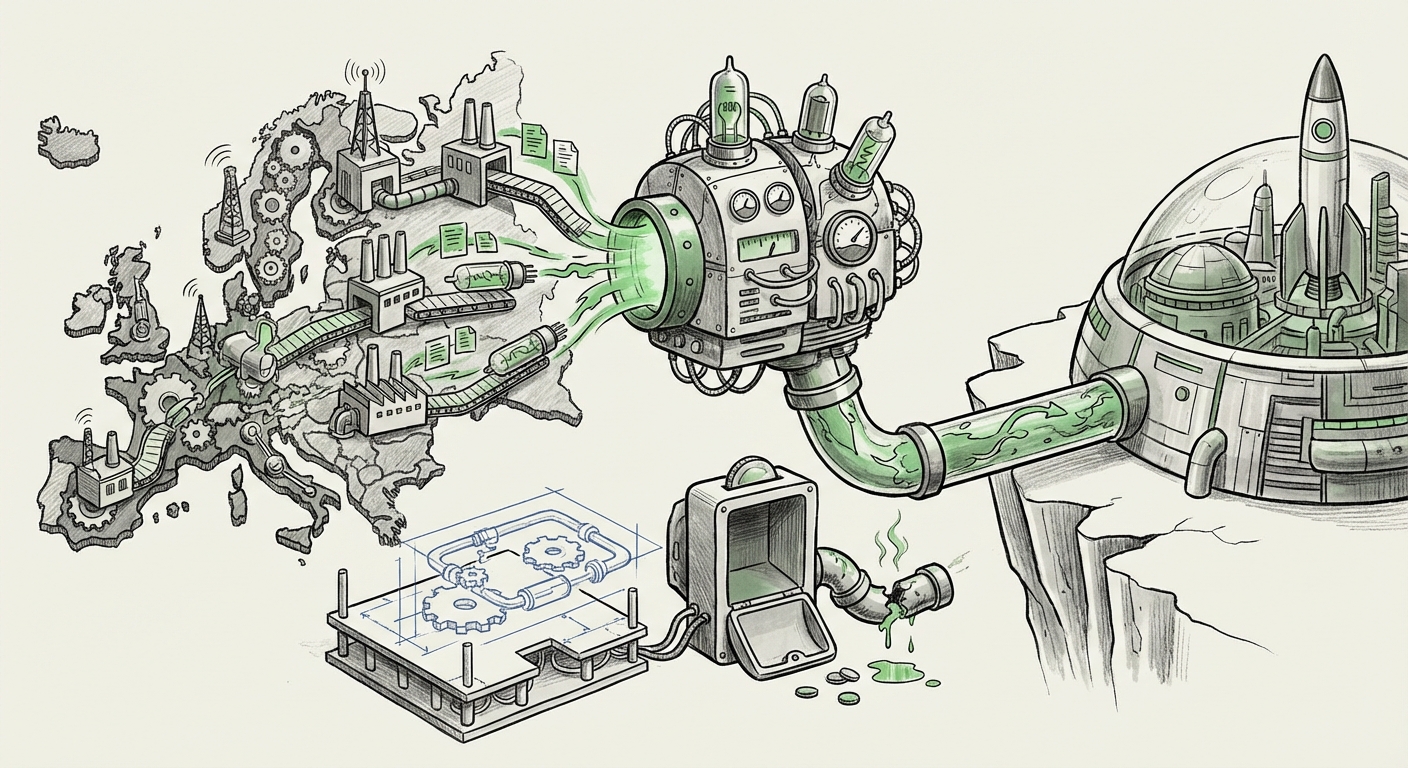
Imagine a science lab where nobody is wearing a white coat. Instead, a computer program reads the results, thinks about what to try next, and tells robots to pick up the pipettes. That is exactly what Anthropic is setting up: a biology lab where its AI model, Claude, guides robots through drug experiments.
On the surface, it sounds like one company opening one lab. But look closer and you see something much bigger. This is AI stepping out of the chat window and into the physical world, and it is doing it in one of the hardest, slowest, most expensive fields humans have: drug discovery. This article breaks down what is happening, why it matters, and what it means for businesses, researchers, and everyone else.
What Anthropic Is Actually Doing
The core of the story is simple to state. Anthropic is setting up a biology lab where Claude guides robots through drug experiments. The AI is not just analyzing data after the fact. It is directing the work, deciding what experiment to run, and having robotic equipment carry it out.
That is a meaningful step up from how most people use AI today. Most of us type a question, get an answer, and then do the work ourselves. Here, the model is part of the loop that actually does the work. Claude proposes; robots execute; results come back; Claude proposes again.
It is worth being precise about what we know. We know Anthropic, the company behind the Claude family of AI models, is building this lab. We know the lab is centered on biology, and specifically on drug experiments. We know robots are involved, and that Claude is the guide. That combination alone is the news.
Why Drug Discovery Is the Perfect Stress Test for AI
Drug development is famously brutal. Bringing a new medicine to patients often takes many years and costs enormous amounts of money, and most attempts fail. The reason is not that scientists are bad at their jobs. It is that biology is complicated. There are millions of possible molecules, and testing them in the real world takes time you cannot compress by working harder.
This is exactly the kind of problem where AI agents shine, or fall flat on their faces. Here is why:
- There are too many options to check by hand. AI can narrow millions of possibilities down to a short list worth testing.
- The loop is repetitive. Design, test, learn, repeat. That is the natural rhythm of an AI agent.
- Feedback is measurable. An experiment either works or it does not. That gives the AI a clear signal to learn from.
- Robots do not get tired. They can run experiments around the clock in ways humans cannot.
Put those together and you get a closed loop: an AI that thinks, machines that act, and data that flows back fast enough to make the next decision better than the last one. That is the real experiment Anthropic is running.
The Robot Lab: Where Software Meets the Physical World
For years, AI lived entirely in screens. It wrote text, made images, answered questions. Impressive, but harmless in the physical sense, it could not break a beaker.
Robotic labs change that. When an AI controls physical equipment, mistakes are no longer just wrong answers. They are spilled chemicals, wasted samples, contaminated results, and money burned in real time. That raises the stakes enormously.
It also raises the value. A robot lab guided by AI does not need to be faster than a human chemist. It needs to be relentless. It can run the boring experiments that humans put off, log everything perfectly, and never lose focus at hour eleven of a long shift.
This is the moment AI stops being a tool you consult and starts being a coworker that takes action. The technical term is "agentic AI", AI that pursues goals over time. The plain-English version is: AI that does things instead of just talking about them.
Why This Matters Way Beyond Biology
If you run a business that has nothing to do with science, it would be easy to shrug this off. Do not. The pattern Anthropic is testing is universal:
1. AI is moving from advice to action
Today, most companies use AI to draft an email or summarize a report. Tomorrow, they will use it to trigger the next step in a real workflow, ordering parts, adjusting a schedule, running a quality check. The biology lab is a preview of that shift in an extreme setting.
2. Closed loops beat one-off answers
The most valuable AI systems will not be the ones that give the best single answer. They will be the ones that keep learning from what happens next. Any business with a repeatable process, manufacturing, logistics, marketing tests, customer support, has a loop that AI could eventually run.
3. Physical work is now in scope
For a long time, white-collar knowledge work was the obvious AI target and manual work seemed safe. Robot labs show that the line is blurrier than people assumed. Wherever a task can be measured and a machine can perform it, AI can potentially take the wheel.
What This Means for Business Leaders
You do not need to build a robot lab to learn from this. But you should be asking some very practical questions right now.
- Where is your feedback loop? If your process has clear inputs, clear outputs, and measurable results, it is a candidate for AI-driven experimentation.
- What is your "robot layer"? Not literal robots, but the systems that can actually execute what an AI decides. Software that can click, send, order, or schedule on its own.
- Who checks the AI? In a lab, a bad decision wastes money. In finance or healthcare, it can cause real harm. Human review does not disappear; it moves.
- Are your records clean? AI agents learn from data. Messy logs produce messy thinking.
The companies that win the next few years will not be the ones with the flashiest model. They will be the ones whose operations are ready to hand a machine a real task and get a real result back.
The Risks Nobody Should Wave Away
An AI that runs experiments is powerful, and power cuts both ways. A few honest concerns:
- Safety and containment. Biological work carries physical risk. Automated systems need hard limits on what they can and cannot do.
- Reproducibility. If an AI designs and runs experiments, other scientists need to be able to check the work. Black-box results help no one.
- Speed without wisdom. Running more experiments is not automatically better. Asking the right question still matters more than asking it a thousand times.
- Concentration of capability. If only a handful of organizations can afford AI-driven labs, the benefits, and the risks, concentrate in a few hands.
None of these are reasons to stop. They are reasons to build carefully, publish results, and keep humans accountable for outcomes.
Actionable Takeaways: How to Prepare Now
Here is what you can actually do this quarter, whether you run a startup, a department, or a company.
- Pick one repeatable process and map it end to end. Find the decision point where AI could choose the next step.
- Test in a sandbox. Let an AI agent act in a low-risk environment first and watch what it does when it fails.
- Measure the loop, not the answer. Track how much faster you learn, not just how clever one output looks.
- Invest in data plumbing. Agents are only as good as the information they receive back.
- Decide your human checkpoints before you automate anything, not after something goes wrong.
The Bigger Picture: AI That Does Science
The most striking thing about Anthropic's biology lab is not the robots. It is the ambition. For decades, AI has been a tool scientists used. Now it is becoming a participant in science itself, forming a hypothesis, running the test, reading the result, and trying again.
If that works in drug discovery, it will not stay there. The same loop, think, act, measure, improve, applies to materials science, agriculture, energy, and manufacturing. Each of those fields is full of slow, expensive experiments that someone has to run. Increasingly, that someone may be a machine.
We are still early. One lab does not change medicine overnight. But it can change expectations. Once people see an AI run a real experiment in the real world, "AI that only talks" starts to look like a phase we have already passed.
Conclusion
Anthropic setting up a biology lab where Claude guides robots through drug experiments is more than a headline about one company. It is a signal that AI is graduating from answering questions to taking actions, and that the physical world is now fair game. The winners will not be the loudest adopters, but the ones who build clean feedback loops, keep humans in the right places, and let machines do what they do best: run the loop, again and again, without getting tired. Watch this space closely. The next breakthrough may not be written by a scientist at all, it may be designed, tested, and repeated by one that never sleeps.