Nvidia's SoL-Pi Cuts Coding Agent Token Use Nearly in Half, And It Didn't Touch the Model
For the past few years, every big leap in AI has come with the same story: a bigger model, a smarter model, a model trained on more data. The assumption has been baked into how companies buy AI, how investors value AI companies, and how engineers think about their jobs. If you want better results, you get a better brain.
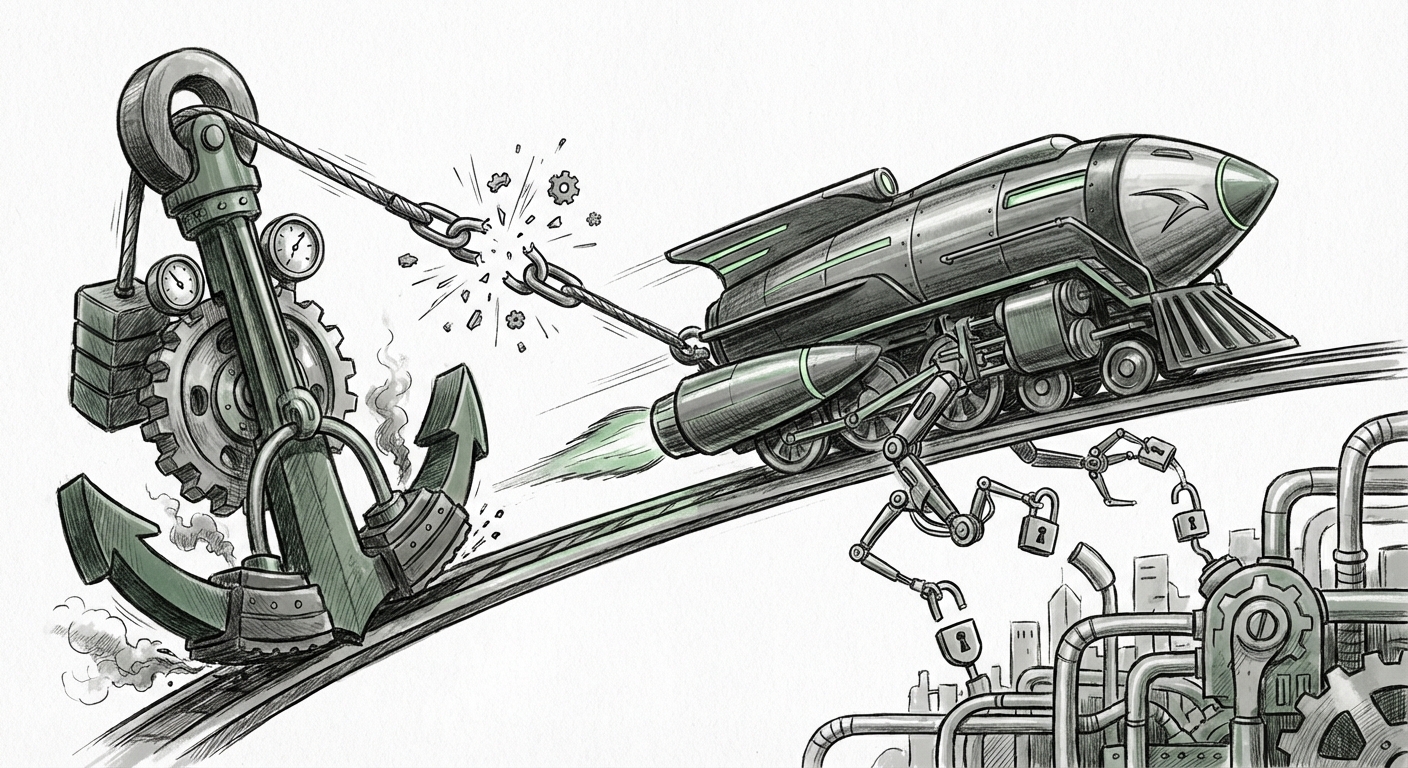
Nvidia's SoL-Pi system complicates that story in a useful way. SoL-Pi is a system for coding agents, the kind of AI that doesn't just answer a question about your code, but actually goes and works on it: reading files, running tests, fixing errors, and trying again. According to Nvidia, SoL-Pi cuts the token usage of those coding agents by nearly half. The headline number is impressive on its own, but the more important detail is where the savings came from. They didn't come from a new model. They came from optimizing the harness.
That single word, harness, may end up being more consequential than any model release this year.
What Exactly Is a "Harness"?
When most people picture an AI coding assistant, they picture the model: the thing that reads your request and writes code. But in an agent, the model is only one part of a much bigger machine. The harness is everything wrapped around the model, the code that decides what to show it, when to show it, and what to do with what it says back.
A harness handles jobs like:
- Assembling the prompt before each step, including code files, error messages, and history
- Deciding which tools the agent can use, like searching a codebase or running a terminal command
- Managing the context window so the model isn't drowning in information it doesn't need
- Handling retries, loops, and stopping conditions when the agent goes down a wrong path
- Storing memory from earlier in the task so it doesn't have to be re-sent every time
Think of the model as an engine and the harness as the car around it, the steering, the brakes, the transmission. A great engine bolted to a bad car still drives badly. And a huge part of what makes an agent expensive to run happens in the car, not the engine.
Why Tokens Are the Real Bill for AI Agents
Traditional chatbots are cheap to run because they answer once. You ask, you get an answer, you're done. Agents don't work that way. They take many steps. Each step usually means sending a large chunk of context back to the model, the code, the task description, everything that happened so far, and getting a response.
That's the trap. An agent that takes twenty steps isn't paying for one smart answer. It's paying for twenty rounds of context, and each round can get bigger as the task goes on. Costs multiply. So does waiting time. So does the amount of computing power and electricity needed to get a single job done.
This is why a near-50% reduction in token usage is not a small optimization. It is the difference between an agent workflow that's affordable at scale and one that isn't. It's the difference between a demo and a product.
The Hidden Lesson: Better Scaffolding Beats Bigger Brains (Sometimes)
Here's the part the AI industry has been slow to internalize. If you can get nearly the same results with half the tokens by improving the harness, trimming context, avoiding redundant steps, being smarter about what the model sees, then the biggest wins in agent performance may not come from model training at all.
That flips a lot of assumptions:
- Model quality is converging. Top models are getting closer to each other in raw capability. When the brains are similar, the plumbing decides who wins.
- Efficiency is now a feature. A slightly less capable model paired with an excellent harness can beat a top-tier model with a sloppy one, especially on cost-per-task.
- The economics change fast. Cutting tokens nearly in half doesn't just save money. It opens up use cases that were previously too expensive to justify.
- Energy and compute matter. Fewer tokens means less compute, less power, and less strain on data centers that are already stretched thin.
Nvidia's position here is interesting. Nvidia is best known for the chips that train and run AI models. A system like SoL-Pi suggests the company isn't only selling the engine, it's also selling the car. That's a signal about where the value is heading.
What This Means for the Future of AI
If harness optimization delivers results like this, expect the next wave of AI competition to look different from the last one.
1. Agents will run longer, not just smarter
The main limit on autonomous agents today isn't intelligence, it's cost and reliability over long tasks. When each step is cheaper, agents can run longer, take more careful paths, and check their own work without the bill spiraling. That moves us from "AI that helps you code" toward "AI that finishes a task while you do something else."
2. Cost-per-completed-task becomes the metric that matters
Benchmarks that measure raw accuracy will matter less. Businesses will ask a simpler question: how much does it cost to get this job done correctly? That number combines model quality, harness efficiency, retries, and human review time. Harness improvements attack the part of that equation that model upgrades can't reach.
3. Context management becomes a core research field
Getting more out of less context is now a competitive advantage. Expect serious investment in memory systems, smarter summarization, and retrieval that pulls the right information rather than all the information. The winners won't be the ones who feed the model the most, they'll be the ones who feed it the least and still get the job done.
4. The moat moves up the stack
When models are widely available, the durable advantage sits in orchestration: the harness, the tooling, the evaluation loops, and the integration with real work. That's harder to copy than a model weight file, and it compounds over time as teams learn what actually works in production.
Practical Implications for Businesses
If you're a technology leader, this shift has concrete consequences you can act on now.
Stop buying intelligence you don't need
Many teams reach for the largest, most expensive model by default. If harness improvements can cut token use nearly in half, the smarter play is often a smaller, cheaper model inside a well-built harness. Test both. Measure the full cost of a completed task, not the cost per token.
Track tokens like you track cloud spend
Token usage is the new cloud bill, easy to ignore, painful to discover later. Instrument your agent workflows. Know which tasks are expensive, which step types burn the most context, and where retries are wasteful. Most teams find that a small number of behaviors drive most of the cost.
Invest in the boring parts
Prompt assembly, context trimming, caching, and loop control are unglamorous. They are also where the returns are. A team that treats the harness as a first-class engineering product, with owners, tests, and metrics, will outperform a team that treats it as glue code.
Design for verification, not blind trust
Cheaper steps make it tempting to let agents run wild. Don't. Pair longer autonomous runs with automated checks: tests, linters, static analysis, and clear approval gates for high-risk changes. Efficiency without guardrails just produces expensive mistakes faster.
Watch your vendor dependencies
If harness quality is the differentiator, then the harness becomes a place where lock-in hides. Ask whether your agent tooling is portable, whether you can swap models, and whether your workflow data stays yours.
What to Watch, and What to Be Skeptical About
A near-50% token reduction is a big claim, and it's worth holding it to a high standard. Three questions matter most:
- Does it hold up on real work? Benchmark tasks are tidy. Real codebases are messy, with legacy code, unclear requirements, and dependencies nobody documented. Efficiency gains often shrink in the wild.
- Does the quality stay the same? Cutting tokens is only a win if the agent still completes tasks correctly. A cheaper agent that fails more often isn't cheaper at all.
- How much is harness and how much is the model? If the gains depend on tight integration with specific models or hardware, the results may not transfer everywhere.
There's also a security dimension. A coding agent's harness typically has deep access, it reads your files, runs commands, and touches your repositories. Every optimization that makes the harness more powerful also makes it a more valuable target. Efficiency gains and safety engineering need to advance together.
The Bigger Picture
For years, the AI conversation has been a story about scale: more parameters, more data, more chips. Nvidia's SoL-Pi points to a quieter but equally important story, a story about craft. The careful engineering of what the model sees, when it sees it, and what happens next.
That's actually good news for most organizations. You don't need to train a frontier model to benefit from this shift. You need to take the harness seriously. You need to measure costs honestly, cut context ruthlessly, and verify outcomes reliably.
The companies that win the agent era probably won't be the ones with the single smartest model. They'll be the ones whose agents finish the job, on budget, over and over again. A near-50% cut in token usage isn't just a cost story, it's a preview of where the next round of AI advantage will come from.