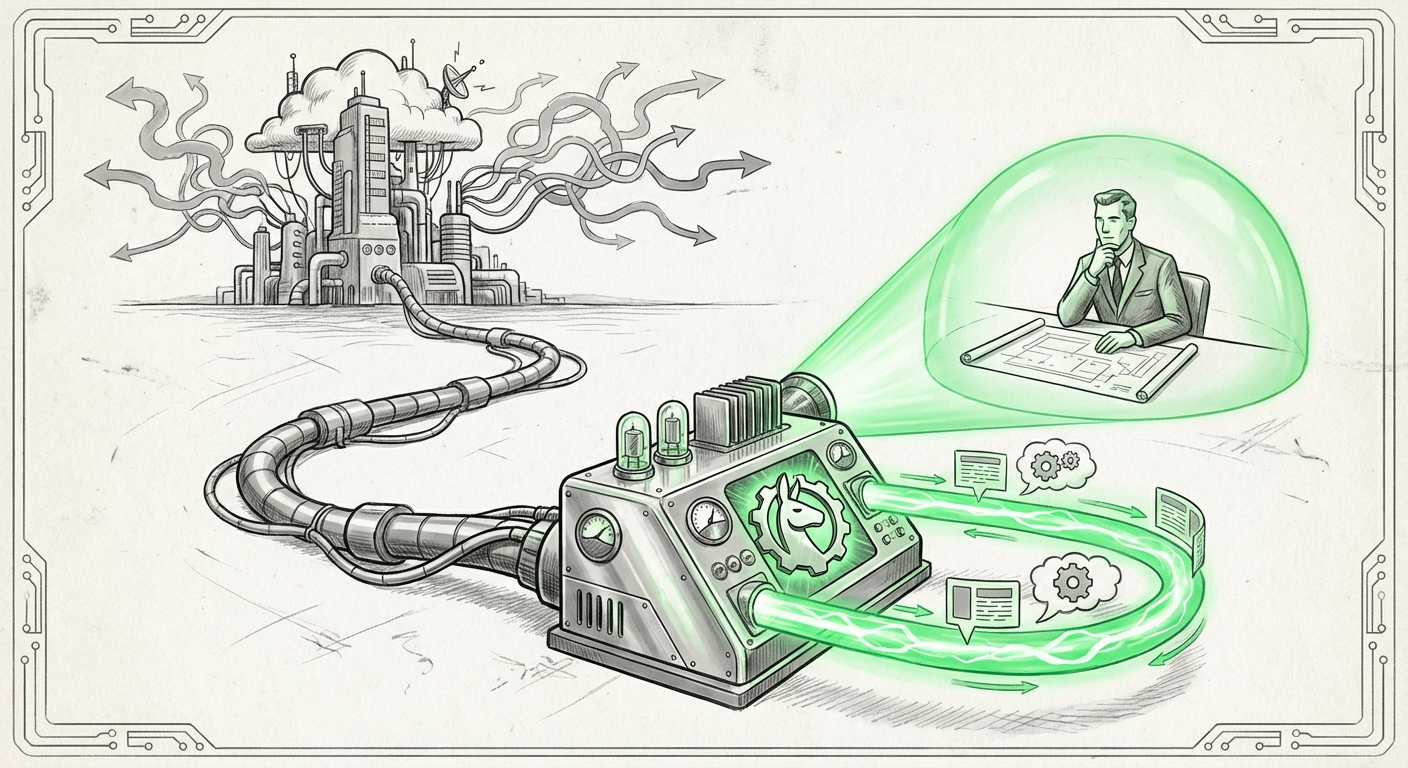
GPT-6 Astra Meets a Real Kitchen: What Happens When You Plug a Frontier AI Straight Into a Robot
Imagine walking into a kitchen you have never seen before. The drawers are in odd places. The counters are cluttered. Nobody gave you a map, a checklist, or a training manual. Now imagine you are a robot, and the only thing telling you what to do is a single AI model wired directly into your body.
That is exactly what researchers did in September 2026. They plugged GPT-6 Astra straight into a robot and let it clean up an unfamiliar kitchen. No special programming for that room. No custom training run. Just a frontier AI model, a robot body, and a messy room it had never encountered.
On the surface, it sounds like a fun demo. In reality, it may be one of the clearest signals yet about where artificial intelligence is heading next, out of the chat window and into the physical world.
What Actually Happened
The setup was simple to describe and hard to pull off. Researchers connected GPT-6 Astra to a robot and pointed it at a kitchen it did not know. The model had to look at the room, figure out what "cleaned up" even means in that space, decide what to pick up, plan how to move, and then actually do it with motors and grippers.
There was no pre-built map of the kitchen. There was no list of objects the robot had memorized. The environment was new, and the AI had to handle that on its own.
That last point is the whole story. For years, robots have been great at repeated tasks in controlled places. A robot arm in a factory can weld the same spot ten thousand times. A robot vacuum can learn one floor plan and follow it forever. But drop a robot into a brand-new room and ask it to make a judgment call, and older systems tend to fall apart.
GPT-6 Astra did not fall apart. It cleaned the kitchen.
Why the Word "Unfamiliar" Matters So Much
If the robot had cleaned a kitchen it had trained on a thousand times, nobody would care. That is memorization. The interesting part is generalization, the ability to handle something new without being told how.
Generalization is the dividing line between a tool and an agent. A tool does what you programmed. An agent figures out what needs doing.
Think about how a human cleans a strange kitchen. You glance around. You spot the trash. You notice dishes in the sink. You see a towel on the floor. You build a quick mental list, decide what order makes sense, and start moving. Nobody hands you instructions.
For the AI to do that, several hard problems have to be solved at once:
- Seeing: Understanding what is in the room and what it is.
- Reasoning: Deciding what "clean" means here and what to do first.
- Planning: Turning a goal into a sequence of physical steps.
- Acting: Moving a real body without knocking things over or hurting anyone.
- Adapting: Recovering when something goes wrong, which it always does.
Any one of these is a research project on its own. Doing all five, in a room the system has never seen, is a different level of difficulty.
The Bigger Shift: AI Is Getting a Body
For the past few years, the story of AI has been about words, images, code, and conversation. Powerful, yes, but every output ended up on a screen. The model could write a plan to clean a kitchen. It just could not pick up a sponge.
That boundary is now blurring. When a frontier model can be connected directly to hardware and act in the real world, the entire value of AI changes shape. Software that gives advice becomes software that does work.
This is often called embodied AI, intelligence that lives in a body and interacts with the physical world. It is a much bigger deal than another chatbot upgrade, because most of the economy is not made of text. It is made of things: boxes moved, floors cleaned, shelves stocked, meals prepared, machines repaired.
If AI can reliably operate in messy, unpredictable physical spaces, it stops being a productivity tool for knowledge workers and starts becoming a labor platform for everyone else.
What This Means for the Future of AI
1. One model, many bodies
In the old robotics world, every task meant custom engineering. New warehouse? New code. New kitchen? Start over. The promise of plugging a general model into a robot is that the intelligence is portable. The same reasoning that cleans a kitchen could, in principle, help stock a shelf or sort a recycling line. The body changes. The brain does not.
2. Language becomes the interface for physical work
Notice what the researchers did not need: a programmer writing step-by-step robot instructions. If a model can understand plain goals and translate them into action, then telling a robot what to do looks a lot like talking to a person. That makes robotics far more accessible and far faster to deploy.
3. The long tail becomes reachable
Most automation today only makes sense at huge scale, because setting it up is expensive. If a general model can adapt to a new setting quickly, automation starts to make sense for smaller, weirder, more varied jobs, the "long tail" of tasks that were never worth automating before.
4. Failure becomes the main design problem
When AI writes text, a mistake is annoying. When AI moves a robot arm holding a knife near a stove, a mistake is dangerous. The moment models get bodies, safety, reliability, and physical consequences move to the center of the conversation.
Business Implications: Who Wins, Who Gets Squeezed
Robotics and hardware makers
Hardware just became more valuable, not less. A great model with no capable body is a brain in a jar. Companies that build reliable, affordable robot bodies, arms, mobile bases, grippers, sensors, could see demand shift upward fast, because the intelligence layer is increasingly something you plug in rather than build.
Service industries
Cleaning, food prep, hospitality, facilities management, and logistics are all built on repetitive physical work in unpredictable spaces. Those are exactly the conditions where a general-purpose model that adapts to new rooms matters most. Expect early pilots in back-of-house settings where the stakes are lower and the mess is higher.
Software and AI teams
If intelligence is becoming a plug-in layer, then the competitive edge moves to integration: connecting models to sensors, safety systems, and workflows. The winners may not be the teams with the best model. They may be the teams that best connect a model to the real world.
Small businesses
Historically, robots were only for companies with big budgets. A general model that adapts quickly could change that math. A small restaurant or clinic might one day rent a robot that learns its space in a day instead of a custom system built over months.
The Hard Problems That Are Still Open
A successful kitchen demo is a milestone, not a finished product. Several questions remain unanswered.
- Reliability: A demo that works once is not the same as a system that works every day for years.
- Safety: How do you guarantee a model's physical actions stay within safe limits, especially around people?
- Cost: Running a frontier model in real time, on a moving machine, is not cheap.
- Speed: Physical work happens in seconds. Thinking takes time. Balancing the two is tricky.
- Accountability: If a robot breaks something or hurts someone, who is responsible, the model maker, the robot maker, or the operator?
- Privacy: A robot that sees and understands everything in a home or workplace is a camera that also reasons about what it sees.
None of these are dealbreakers. All of them are reasons the rollout will be gradual, starting in controlled environments and expanding outward.
Actionable Steps for Leaders Right Now
You do not need to buy a robot today. But you should start preparing for a world where physical work can be automated by general models.
- Map your physical tasks. List the repetitive work in your operation. Note which tasks happen in predictable places and which happen in messy, changing ones. The messy ones are now on the table.
- Track the trend, not the demo. Watch for repeats: can the same model handle a different room, a different task, a different body? Repetition is the signal. One-off demos are not.
- Fix your data and your spaces. Organized environments with clear labeling and good lighting make any future automation easier.
- Plan for safety and oversight early. Decide now who supervises a machine, what it is never allowed to do, and how you would stop it.
- Upskill your people toward supervision. The near-term job change is less "robot replaces worker" and more "worker manages a fleet of robots."
What This Means for Society
The honest answer is that we do not know yet, and anyone who claims certainty is guessing. What we do know is that when a technology moves from screens into physical labor, it touches more people's lives faster.
Cleaning a kitchen sounds small. But the same abilities, seeing an unfamiliar space, deciding what matters, and acting on it, are the foundation for helping in warehouses, hospitals, farms, and homes. That is a huge opportunity to take dangerous and exhausting work off human shoulders. It is also a real disruption for people whose jobs are exactly that work.
The countries and companies that handle this well will likely be the ones that treat it as a transition to manage, not a switch to flip. Retraining, safety rules, and clear accountability matter as much as the model itself.
The Bottom Line
Plugging GPT-6 Astra into a robot and letting it tidy a strange kitchen is a small story with a big implication. It shows that frontier AI is no longer confined to conversation. It can look at a new place, understand it, and change it.
That is the moment AI stops being something you talk to and starts being something that does things. The kitchen was just the first room.