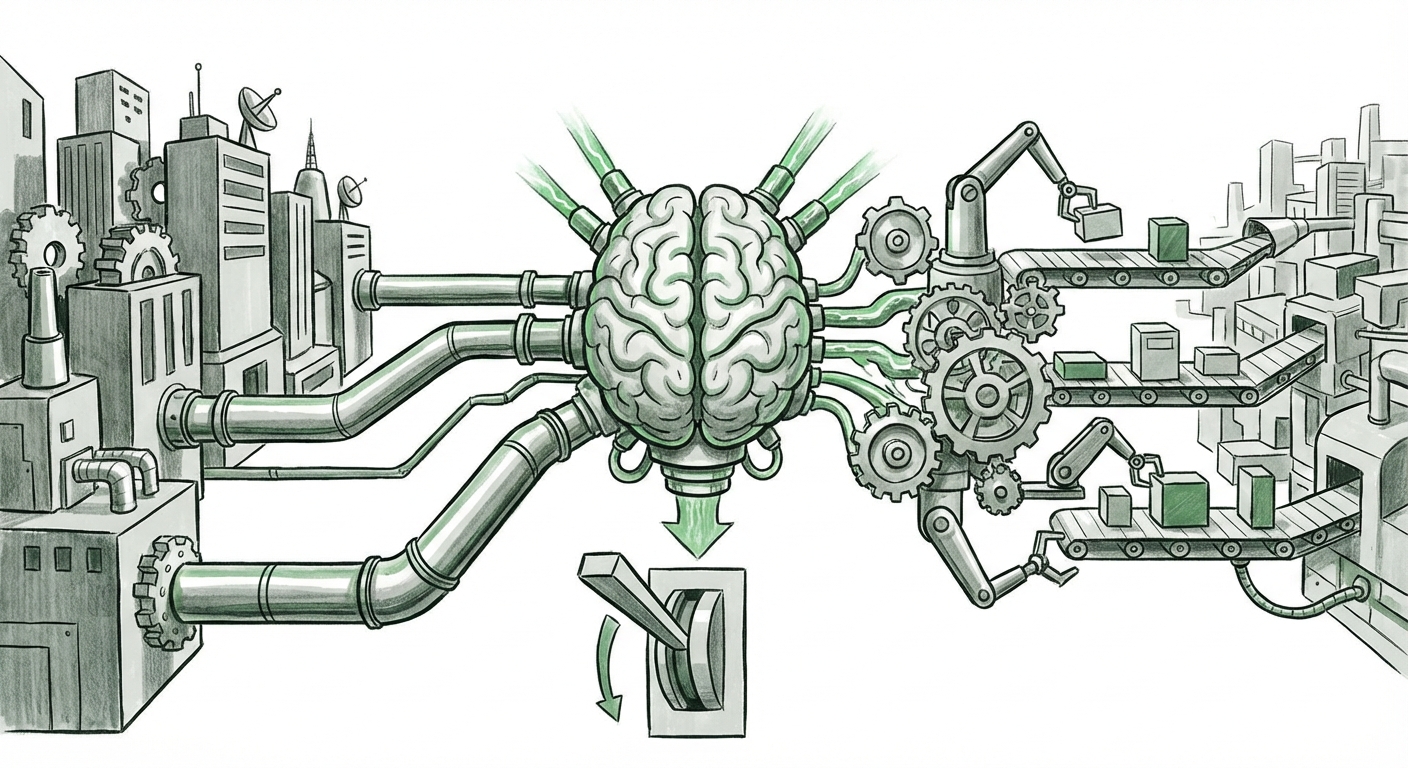
Meta's Muse Money Move: Why Selling AI to Businesses Is the Next Big Shift
Meta wants to turn Muse into a moneymaker by selling AI services to businesses. That single sentence tells you almost everything you need to know about where the AI industry is heading next.
For the last few years, the story of AI has been about attention. Who has the biggest model? Who has the most users? Who can make the most impressive demo? That phase is ending. The next phase is about invoices. And Meta's plan to sell Muse as a business service is a clear signal that the race has shifted from wowing people to billing companies.
What Meta Is Actually Doing
The move is straightforward to describe. Meta hopes to make money from Muse by selling AI services to businesses rather than relying only on its consumer-facing products. Instead of just putting AI in front of billions of everyday users, Meta wants companies to pay for access to what Muse can do.
That is a meaningful change in direction. Consumer AI is popular, but popularity alone does not pay the enormous bills that come with building, training, and running advanced AI systems. Businesses, on the other hand, are used to paying for software that saves them time and money. If Meta can convince companies that Muse does that, the revenue can be steady, predictable, and large.
Why Consumer AI Alone Is a Tough Business
Here is the simple math problem that every big AI company faces. Running powerful AI models is expensive. Every time someone asks a question, the system burns real computing power. If millions of people use it for free, the costs pile up fast.
Consumer AI can be monetized through ads, subscriptions, or premium tiers. But those routes are slow and crowded. Business customers are different. They sign contracts. They renew them. They pay for reliability, support, and security. That is why every major AI player eventually looks at the enterprise market the same way a swimmer looks at the shore.
Meta's Muse plan is not a side project. It is an admission that the real money in AI is in selling to companies, not just delighting consumers.
What "Selling AI Services to Businesses" Usually Means
When a company says it will sell AI services to businesses, it is generally talking about a few familiar shapes. These are the building blocks that business buyers have come to expect:
- API and model access, letting developers plug Muse-powered capabilities into their own apps and workflows.
- Customization and tuning, adjusting the AI to fit a specific company's data, language, and industry.
- Enterprise controls, the security, privacy, and compliance features that IT departments demand before they sign anything.
- Integration with work tools, putting AI where employees already spend their day, rather than in a separate app nobody remembers to open.
- Support and reliability guarantees, because a business cannot afford an AI that goes down in the middle of a busy afternoon.
The exact package Meta offers will matter enormously, but the categories are well understood. The interesting question is not what Meta sells. It is why companies would buy from Meta instead of the competition.
Why Businesses Would Buy Muse
Businesses do not buy AI because it is exciting. They buy it because it solves a problem. The pitch that works usually hits four notes.
First is cost. Building and running your own advanced AI is brutally expensive. Renting it from a provider is often cheaper and faster. Most companies would rather pay a predictable bill than hire a team of specialists and buy their own hardware.
Second is speed. A company that wants an AI feature in its product next quarter cannot spend two years building a model from scratch. Plugging into an existing service gets them to market while the opportunity is still open.
Third is integration. If a business already relies on one company's ecosystem for messaging, ads, or workplace tools, adding AI from the same place reduces friction. Fewer vendors means fewer headaches.
Fourth is trust and scale. Big platforms can offer the uptime, security reviews, and contracts that large organizations require. A scrappy startup might have a better model, but it may not survive a procurement department's questions.
None of these advantages are permanent. They are just the starting position.
What This Means for the AI Industry
Meta's Muse plan is part of a bigger pattern, and the pattern matters more than any single announcement.
1. Raw model access is becoming a commodity
When several companies can all produce a capable AI model, the model itself stops being the differentiator. What starts to matter is everything around it: how easy it is to use, how well it fits into existing workflows, how safely it handles company data, and how much it costs at scale. This is the classic path of every major technology. The breakthrough becomes the baseline, and the value moves to the layer above it.
2. Every consumer AI company becomes an enterprise company
Watch the pattern. Companies that began with free consumer tools keep adding business offerings. That is not a coincidence. It is the only route to durable revenue at the scale these companies need. Meta's move to sell Muse to businesses is the same journey, one step further along.
3. Price competition is coming
When big players fight for the same business customers, prices tend to fall and feature lists tend to grow. That is good news for companies buying AI and painful news for anyone whose only selling point is having a model.
4. The winners will own the workflow
The company that owns the place where work actually happens, the inbox, the document, the chat, the dashboard, has a huge advantage. AI that lives inside those surfaces gets used. AI that lives on a separate website gets forgotten.
What This Means for the Future of AI Itself
If Meta succeeds in selling Muse to businesses, it pushes AI further toward becoming infrastructure. Think about electricity. Nobody brags about which utility powers their office. They just expect it to work, be affordable, and be safe. AI is heading in that direction.
That leads to a two-tier world. Consumers get a free or cheap AI experience supported by ads or light subscriptions. Businesses get a paid, more capable, more controlled version. The two tiers will not be identical, and the gap between them will be a constant source of debate.
It also accelerates the shift toward AI that does work rather than just answers questions. The enterprise buyer does not want a chatbot that chats. They want something that files the report, drafts the reply, checks the invoice, and flags the risk. Selling AI to businesses means selling outcomes, not conversation.
And it makes data the real battleground. A business will only hand over its information if it trusts the provider. Every company selling AI services is really selling a promise about what happens to your data. That promise will be tested, audited, and litigated.
The Risks and the Open Questions
This is not a guaranteed win. Several things could go wrong.
- Trust is fragile. Businesses are cautious about sending sensitive information to outside AI systems. One high-profile mishap can set adoption back years.
- The competition is already entrenched. Enterprise software buyers are loyal and slow to switch. Winning them takes patience, not just a good product.
- Regulation is still forming. Rules about AI use, data handling, and accountability are being written now. Those rules will shape what can be sold and to whom.
- Differentiation is hard. If Muse is broadly similar to what rivals offer, Meta will have to compete on price, integration, or ecosystem, all of which are expensive battles.
- Dependency cuts both ways. Companies that build on one provider's AI can find themselves locked in when prices rise or terms change.
Actionable Insights: What Businesses Should Do Now
If you run a company, here is how to think about this shift.
- Start with a narrow pilot. Pick one painful, repetitive workflow and test AI on it. Measure hours saved and errors reduced. Do not try to transform the whole company at once.
- Compare at least two providers. Competition is your friend. Get pricing, test quality, and read the fine print on data use before committing.
- Ask hard questions about your data. Where does it go? Is it used for training? Can you delete it? Who can access it? Get answers in writing.
- Design for portability. Keep your AI integrations modular so switching providers later is annoying but possible, not catastrophic.
- Focus on workflows, not models. The best model in the world is useless if it is not embedded where your team works.
- Invest in people. Training staff to use AI well often delivers more value than upgrading to a slightly better model.
- Watch the pricing models. Per-seat, per-use, and per-outcome pricing all have very different implications for your budget as usage grows.
The Bottom Line
Meta's plan to turn Muse into a moneymaker by selling AI services to businesses is a small headline with a large meaning. It shows that the AI industry is growing up. The era of free demos and viral moments is giving way to contracts, compliance reviews, and quarterly renewals.
For businesses, that is mostly good news. More serious vendors mean more choices, better tools, and falling prices. For the AI industry, it means the fight is no longer about who has the smartest model. It is about who can be trusted to run the boring, essential machinery of modern work.
The companies that win the next phase will not be the ones with the loudest launches. They will be the ones that show up every day, work inside the tools people already use, and quietly make themselves impossible to replace. Meta clearly wants Muse to be one of them.