Datumbox Machine Learning Framework v0.8.1 Released: Why Open-Source AI Tools Keep Changing Business
On August 31, 2017, the Datumbox Machine Learning Framework shipped version 0.8.1. On its own, that sounds like a small piece of news. A version number with a zero in front of it. A point release. Nothing that would make headlines.
But look closer and this is exactly the kind of event that shapes the future of artificial intelligence. The biggest shifts in AI rarely arrive as dramatic breakthroughs. They arrive as quiet updates to the tools developers use every day. Each release makes the technology a little faster, a little easier, and a little more available to people who are not researchers.
So let's talk about what a release like Datumbox v0.8.1 really tells us, and what it means for the businesses and people who will live with the results.
What Actually Happened
The Datumbox Machine Learning Framework released version 0.8.1 on August 31, 2017. That is the core fact. It is an update to an open machine learning framework, a set of code libraries that developers use to build systems that can learn from data.
The version number itself carries meaning. A leading zero, the "0" in 0.8.1, is a signal used across software. It usually means the project is still before its first full, stable release. The team is still iterating. The software works, people use it, but the builders are not yet promising that everything is locked down. The final digit, the "1," suggests a quick fix on top of a larger update.
In plain terms: this is a project in motion. Someone is maintaining it. Bugs are being fixed. Features are being added. The engine is being tuned while it is running.
Why Framework Releases Matter More Than Headlines
When people imagine AI progress, they picture a robot learning to walk or a computer beating a human at a game. Those moments get the attention. But the real work happens one layer down, in frameworks.
A machine learning framework handles the hard, repetitive parts of building an AI system. It gives developers ready-made building blocks: tools for cleaning data, training models, testing how well those models perform, and putting them to work. Without frameworks, every team would have to rebuild the same foundation from scratch. That would be slow, expensive, and full of mistakes.
Think of it like construction. You could make your own bricks, mix your own cement, and forge your own nails. Or you could buy standard materials and spend your time designing the building. Frameworks are the standard materials of AI.
Every update to a framework is a small gift to every developer using it. A fix here saves an afternoon. A performance tweak there saves a server bill. Multiply that across thousands of projects and you get real economic movement.
The Big Trend: AI Is Turning Into Plumbing
The release of Datumbox v0.8.1 sits inside a much larger trend. AI is moving from being a specialty subject into being ordinary infrastructure.
In the early days of any technology, only experts can use it. They need rare skills, expensive tools, and lots of time. Then frameworks arrive. Then those frameworks mature. Then the technology disappears into the background, the way electricity did. Nobody thinks about the power grid when they flip a light switch.
Machine learning is on that path. Open frameworks are a major reason why. They let a small team, or even one person, build something that would have needed a research lab just a few years earlier.
Three trends this release points to
- Faster release cycles. Incremental updates like v0.8.1 show that AI tooling is being maintained like a modern software product, not a one-time academic project.
- Lower barriers to entry. As frameworks improve, the amount of specialist knowledge needed to build a working system keeps dropping.
- Open tools as the default. Open frameworks let many companies share the same foundation, which speeds up the whole field.
What This Means for Businesses
If you run a company, you may never type the words "Datumbox" or "version 0.8.1." That does not mean this news is irrelevant to you. Here is how it reaches your bottom line.
The cost of trying things falls
When tools are free, open, and improving, the price of an experiment drops. A business can test an idea about predicting customer churn, spotting fraud, or sorting support tickets without a huge upfront investment. Cheap experiments lead to more experiments. More experiments lead to more chances of finding something that works.
Build versus buy gets more interesting
Open frameworks give companies a third option. You do not have to build everything from scratch, and you do not have to rent everything from a vendor. You can start with a framework and add your own data and your own logic on top. That can mean lower long-term costs and more control.
Lock-in risk goes down
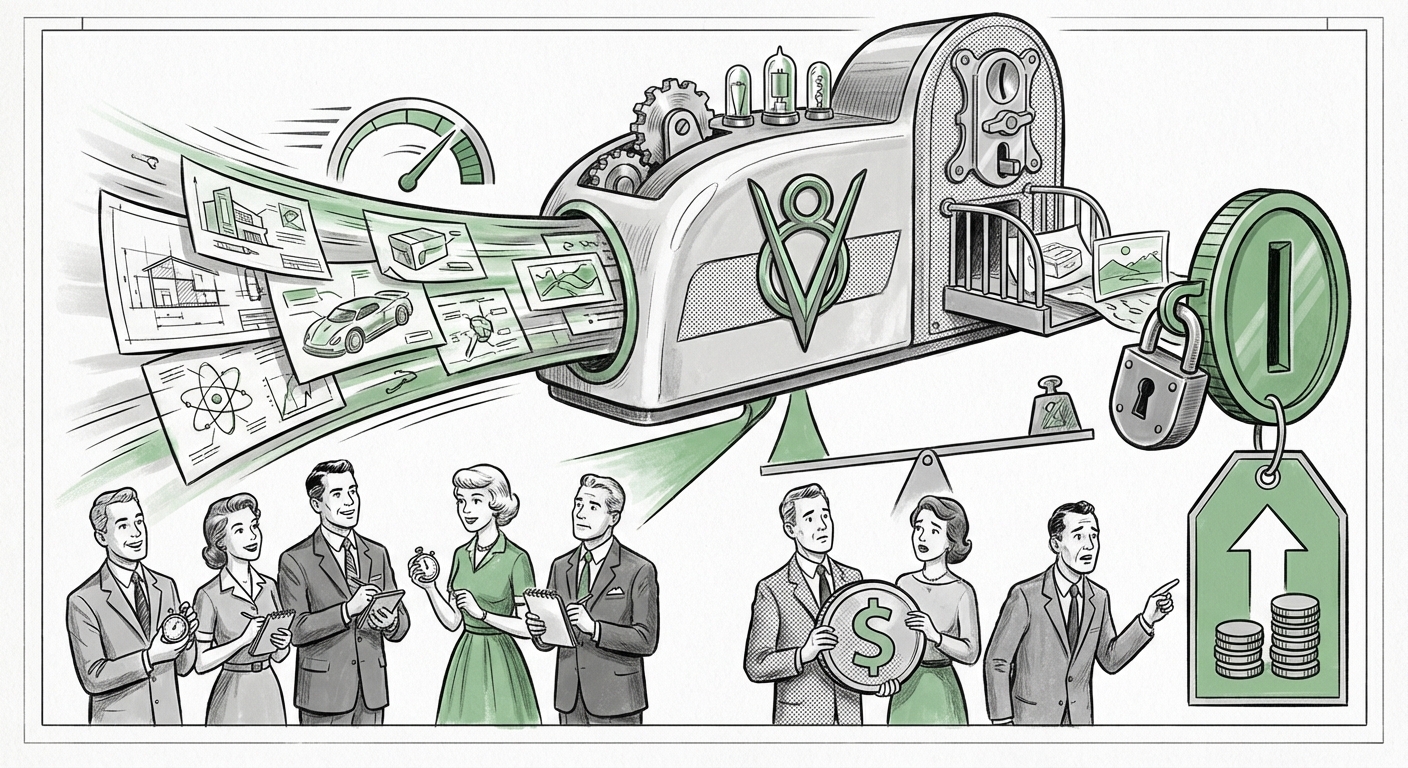
When your AI runs on open code, you are not trapped. If a vendor raises prices or changes direction, you have options. Open frameworks act as a kind of insurance policy. That leverage matters more as AI becomes central to how businesses operate.
Talent becomes the real bottleneck
As tools get easier, the scarce resource shifts. It is no longer "can we get the software?" It is "do we have people who know what to do with it?" The winners in the next few years will be the organizations that pair good tools with people who understand the business problem.
What It Means for Society
The effects go beyond quarterly earnings.
Access widens. Open frameworks let smaller organizations, public agencies, and researchers in less wealthy regions build AI systems. A tool that once required a corporate budget can now be used by a clinic, a school district, or a startup with three employees.
Transparency becomes possible. Open code can be inspected. When a system makes a decision about a loan, a job, or a medical referral, being able to see how the machinery works matters. Closed systems ask for trust. Open systems allow proof.
But quality becomes uneven. Easy tools also mean easy mistakes. Someone can build a model that looks accurate in testing and behaves badly in the real world. Open frameworks lower the skill needed to start, not the skill needed to do it well.
The skill gap becomes the fairness gap. If the benefits of AI flow to organizations that understand it, and the harms fall on people who do not, the divide grows. Training and literacy programs are not a side issue. They are part of the infrastructure.
Actionable Insights: What to Do Now
Whether you are a developer or a decision-maker, here is a practical playbook.
- Start small and start now. Pick one business problem where you already have data. Run a limited test. Do not wait for a perfect plan.
- Pin your versions. If you use an open framework, record exactly which version you built on. Updates can change behavior. Know what you are running.
- Follow release notes. Point releases like v0.8.1 often carry fixes that save you real pain. Someone is doing the maintenance work. Take advantage of it.
- Keep your data clean and portable. Your data is your advantage. Frameworks come and go. Well-organized data keeps its value across every tool change.
- Measure outcomes, not activity. A model that runs is not the same as a model that helps. Track the business result, not just the technical score.
- Set guardrails early. Decide who reviews decisions, how you handle errors, and what you will never automate. It is far easier to set these rules before launch than after.
- Invest in people. Tools are cheap and getting cheaper. Judgment is not. Train the team you have.
The Road Ahead
Expect more releases like this one, and expect them faster. Open machine learning frameworks are in a cycle of constant improvement, and that cycle feeds on itself. Better tools attract more users. More users find more bugs. Fixes make better tools.
Over time, three things are likely to happen.
First, the frameworks will converge. They will borrow each other's best ideas, and the gap between them will narrow. Choosing one will matter less than using one well.
Second, machine learning will stop being a separate project. It will become a feature inside ordinary software, the way search boxes and maps did. You will not "add AI." You will just build software that happens to learn.
Third, the conversation will shift from capability to responsibility. Once the tools are everywhere and cheap, the hard questions are no longer "can we?" but "should we, and who checks?"
The Datumbox v0.8.1 release from August 31, 2017 is a small marker on that road. It is a maintenance update, not a revolution. But revolutions in this field are built out of maintenance updates. Each one makes the next layer of innovation possible.
The organizations that understand this will not wait for a headline moment. They will build steadily on the tools as they arrive, one version at a time.