Anthropic's Dynamic Workflows: How Claude Agents Finally Learn to Work as a Team
For the past few years, the story of artificial intelligence has been about a single, incredibly capable model answering a single question. You type something in, you get something back. Powerful, yes, but also a bit like hiring a genius who can only ever handle one task at a time before forgetting everything and starting over.
That era is ending. The next chapter is about many AI agents working together on long, messy, real-world jobs, and Anthropic's approach to dynamic workflows for coordinating Claude agents is one of the clearest signals yet of where this is heading.
This isn't just a technical upgrade. It changes what AI can actually be trusted to do at work, how software gets built, and how companies will organise their teams in the coming years.
What "Dynamic Workflows" Actually Means
Most people picture AI agents as chatbots with a to-do list. You tell an agent to do something, it plans a few steps, and it executes them. That works for small jobs. It falls apart on big ones, because real work isn't a straight line. It branches. It loops back. It hits dead ends.
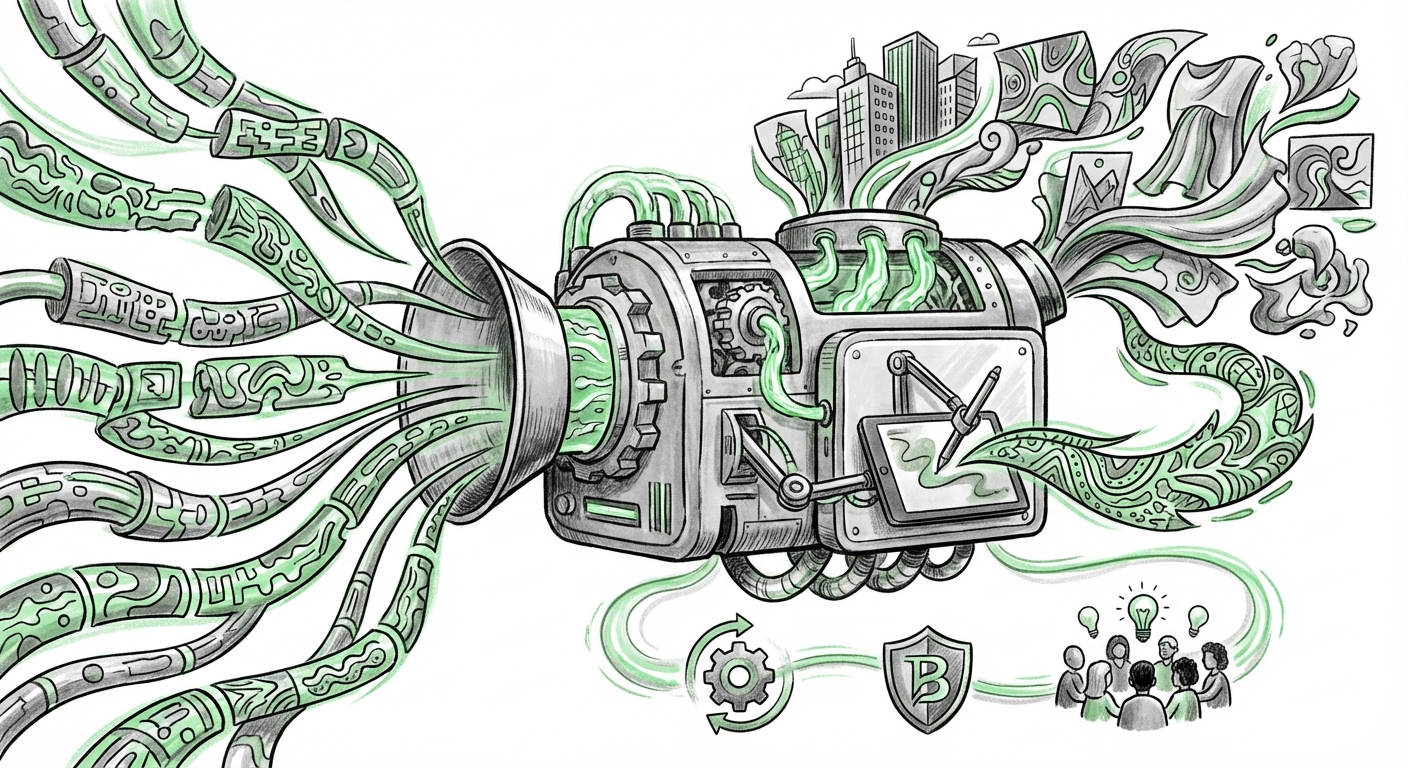
A workflow, in this context, is the structure that decides which agent does what, in what order, and under what conditions. The word "dynamic" is the important part. A static workflow is a fixed recipe, step one, step two, step three, always the same. A dynamic workflow can rewrite itself while it's running. If one path fails, it builds a new one. If a task turns out to be bigger than expected, it spins up more agents to handle it.
Think of it like the difference between a fixed assembly line and a team of experienced contractors. The assembly line is fast and predictable, but it can only build one thing. The contractors look at the job, figure out who's needed, adapt when they hit a surprise, and get it done.
Why Claude Agents Are Built for This
Anthropic's Claude models have long been designed around careful reasoning and following instructions reliably over long stretches of work. Those two traits matter enormously when you start chaining agents together. A single agent that drifts off-task is an annoyance. Ten agents that each drift slightly create chaos. Coordination only works when each agent can be trusted to do its narrow slice properly and report back honestly.
The same reasoning-first design is also what makes delegation possible. To hand work to another agent, a model has to understand what it doesn't know and who should handle it. That's a real skill, and it's the invisible engine underneath any coordinated multi-agent system.
From One Brain to an Orchestra
The simplest way to understand multi-agent coordination is to imagine a company, not a computer.
There's a lead agent that talks to you, the client. It takes your goal and breaks it into pieces. Then there are specialist agents: one that researches, one that writes code, one that checks the code for mistakes, one that reviews the final result against the original request. Finally, there's the workflow layer itself, the manager that decides when a task is done, when to loop back, and when to stop.
The magic isn't any single agent. It's the handoffs. That's where things usually break, and that's exactly what dynamic workflows are built to fix.
- Parallel work: instead of one agent grinding through twenty research topics one at a time, several go at once and report back.
- Checks and balances: a second agent reviews the first agent's output, catching errors before they reach a human.
- Adaptive replanning: when a step fails, the workflow doesn't crash, it reroutes.
- Context management: each agent only carries the information it needs, keeping the whole system from drowning in its own notes.
These sound like engineering details. In practice, they're the difference between a demo that impresses at a conference and a system a business can actually depend on.
What This Means for the Future of AI
Three big shifts follow from this.
1. AI stops being a feature and starts being a workforce
When you can coordinate agents, you stop buying "an AI tool" and start designing processes. A marketing team doesn't want a writing assistant, it wants a pipeline that researches a topic, drafts three angles, fact-checks them, and hands a human a shortlist. That's a workflow, and it's a fundamentally different product category.
2. Reliability becomes the real competition
Raw model intelligence is getting more and more similar across providers. What will separate winners isn't who has the smartest single model, but whose agents can be trusted to finish a long task without going off the rails. Coordination, error handling, and self-correction are becoming the battleground.
3. Human roles move up the stack
If agents handle the execution, humans increasingly handle intent: setting goals, defining what "good" looks like, and reviewing outcomes. That's a more strategic job, and, for many people, a more interesting one.
Practical Implications for Businesses
For software teams: expect coding work to shift toward supervising and reviewing agent output rather than writing every line. The valuable skill becomes knowing how to break a problem into pieces an agent team can actually execute.
For operations and back office: the biggest wins will come from processes that are long, repetitive, and rule-heavy, claims processing, compliance checks, data cleanup, report generation. These are exactly the jobs where a coordinated team of agents beats a single prompt.
For customer-facing teams: coordination means faster, more consistent answers, but it also raises the bar on oversight. A multi-agent system that quietly invents a policy and repeats it to a thousand customers is a real risk, not a hypothetical one.
For small businesses: this is arguably the biggest opportunity. A two-person company can now assemble an agent team that handles research, drafting, and quality checks, work that used to require hiring.
Actionable Insights: What to Do Now
- Map your workflows before you buy tools. Write down the steps of a process as if you were hiring a team for it. If you can't describe the steps, you can't delegate them to agents.
- Start with one bounded process. Pick something with a clear start, a clear finish, and a straightforward way to check the result. Expand only once it's proven reliable.
- Build in review points. Every coordinated agent system should have at least one place where a human looks before something irreversible happens.
- Measure finished work, not clever demos. The right question isn't "can it do a task?" It's "how often does it complete the whole job without a human fixing it?"
- Keep your data tidy. Agents that coordinate well still depend on clean, findable information. Messy systems produce confident, well-organised mistakes.
- Train people to brief, not to operate. The most valuable skill in this new world is writing a clear goal, not clicking the right buttons.
The Risks Nobody Should Ignore
More autonomy means more ways for things to go wrong quietly. A single agent making a mistake is easy to spot. A team of agents agreeing on a wrong answer looks exactly like success until someone checks.
There are also cost and accountability questions. Dynamic workflows that spin up extra agents consume more compute, which means bills can scale in ways that are hard to predict. And when a decision comes out of a chain of six agents, working out who got it wrong, and who is responsible, becomes genuinely difficult.
The organisations that handle this well will be the ones that treat coordination as a governance problem, not just an engineering one.
The Road Ahead
The move from single models to coordinated agent teams is the same jump the software industry made decades ago, from individual programs to networked systems. It's messier, harder, and far more powerful.
Anthropic's focus on dynamic workflows for Claude agents shows where the frontier has moved. The question is no longer whether AI can do a task. The question is whether it can be trusted to run a process, start to finish, without falling apart halfway through.
That's a much higher bar. And it's the bar that will decide which AI products actually make it into the daily life of a business.