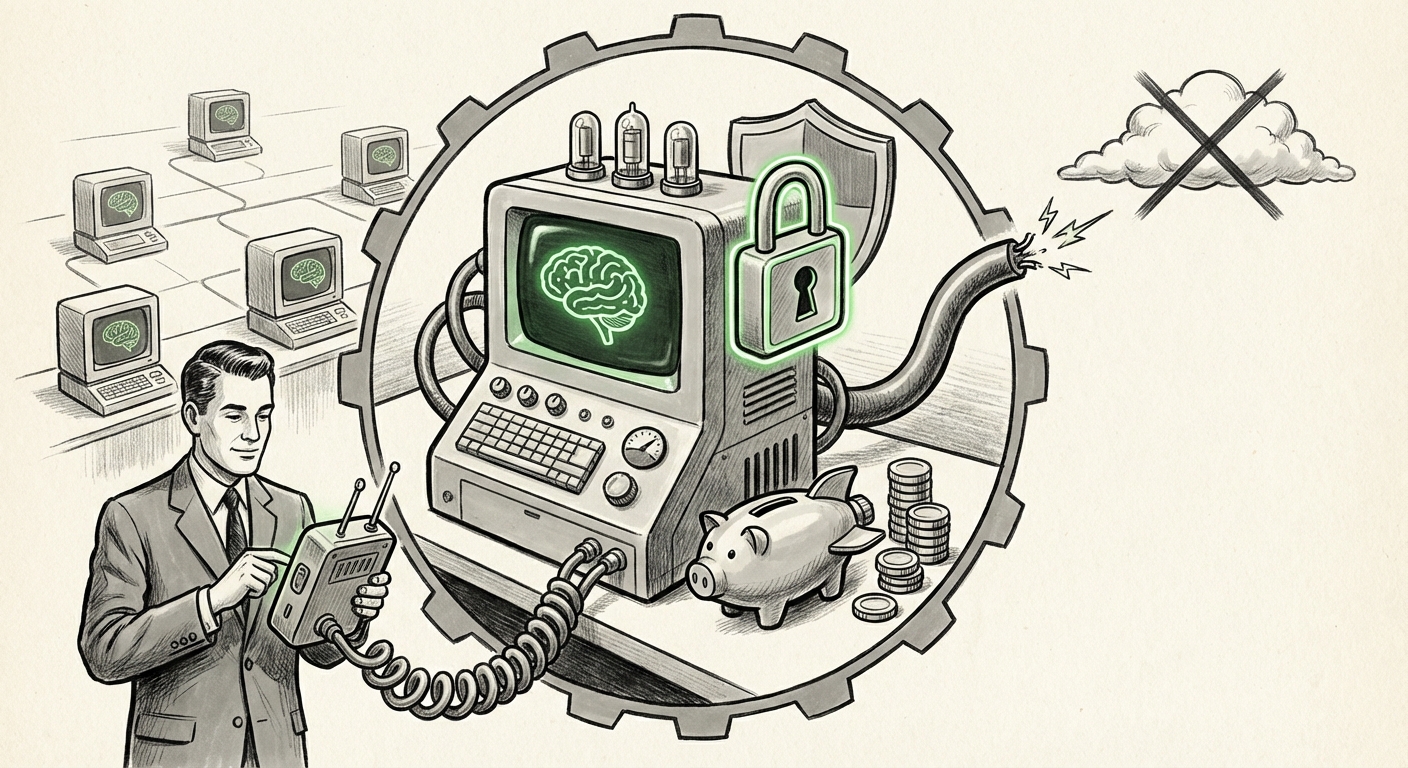
GPT-6 Astra: What Happens When One Prompt Builds an Entire Product?
Something shifted this month, and it did not announce itself with a press conference. It arrived as a single line of text on a screen, followed by a finished thing that should have taken a team weeks to make. GPT-6 Astra built all this from one prompt.
That is the claim. It is also the sentence that should make every founder, product manager, developer, and IT director stop and read twice. Not because it is flashy, we have seen flashy AI demos for years, but because of what it quietly deletes from the process. No scaffolding. No back-and-forth. No carefully engineered chain of instructions. One prompt, one output, one finished artifact.
If that holds up, the story is not really about a model. It is about the moment the work stopped being a conversation and started being a delivery.
The Headline That Changes the Conversation
For the last several years, the AI story has followed a predictable arc. Each new model answers questions better. It writes cleaner code. It summarizes longer documents. It reasons through harder problems. Progress was measured in quality, how good is the answer?
GPT-6 Astra rewrites that question entirely. The measurement that matters here is scope, how much finished work arrives in one shot?
There is a real difference between a model that can write a function and a model that can build a whole working system from a single description. The first is a tool you use. The second is a collaborator you brief, the way you would brief a contractor.
And the "one prompt" detail is not a marketing flourish. It is the technical heart of the story. Prompt engineering, the craft of coaxing good output through carefully layered instructions, was always a workaround. It existed because models needed help holding a big idea together across many steps. If a single prompt can carry an entire build from start to finish, that workaround is no longer the point. The model is holding the whole shape of the project in its head at once.
That is a different class of capability. It is the difference between a very smart assistant and a very smart builder.
From Answering Questions to Shipping Work
Think about how software has always been made. Someone has an idea. Someone else writes it down. Designers sketch it. Engineers break it into pieces. Those pieces get built one at a time, tested, stitched together, and shipped. The whole thing is a relay race, and every handoff loses a little something.
One-prompt building collapses that relay into a single jump. And when you remove the handoffs, you remove the friction, but you also remove the checkpoints where humans used to catch mistakes.
This is the trade everyone is about to make, whether they realize it or not. Speed for oversight. Volume for verification. It is a good trade in many cases. It is a dangerous trade if you never think about it.
The practical effect is that the cost of making something is falling toward zero. Not the cost of making it well. Not the cost of keeping it running. But the cost of getting from "here's my idea" to "here's a working version" has never been lower, and GPT-6 Astra appears to push that cost down another notch.
What This Means for Software Teams
If you run an engineering team, this is not a threat to your existence. It is a threat to your backlog.
The work that fills most engineering calendars, scaffolding a new service, wiring up a form, building a standard dashboard, connecting an API, writing the tests for the obvious cases, is exactly the work a one-prompt system does first and fastest. That does not mean those tasks disappear. It means the time they consume collapses, and the team's attention has to go somewhere else.
Where does it go? Three places, most likely:
- Architecture and intent. Deciding what should exist and why becomes the scarce skill, not the ability to make it exist.
- Verification. Reviewing AI-built output for correctness, security, and edge cases becomes a first-class engineering job, not an afterthought.
- Integration and ownership. Someone has to own what gets shipped. Models can build, but they cannot be held accountable. People still have to be.
The teams that adapt fastest will be the ones that stop measuring themselves by lines of code produced and start measuring themselves by how quickly they can validate and ship something trustworthy.
The Business Case, and the New Bottlenecks
For business leaders, the appeal is obvious and immediate. Prototypes that used to take a quarter can take an afternoon. Internal tools that nobody could justify building suddenly become cheap enough to try. Small companies get access to capabilities that used to require a real budget.
But every removed bottleneck reveals the next one. And with one-prompt building, the new bottlenecks are almost entirely human:
- Deciding what to build. When building is cheap, choosing badly becomes expensive fast. A thousand working prototypes that nobody needs is still zero value.
- Trusting what was built. Nobody signs off on a system they do not understand. If the model built it in one shot and no human traced the logic, who is willing to put it in front of customers?
- Maintaining what was built. Software is not a delivery. It is a relationship. Something built in one prompt still has to be maintained, patched, and explained to the next person who touches it.
- Governance. Who approved this? What data does it touch? What happens when it breaks? These questions do not get easier when creation gets faster.
The organizations that win with GPT-6 Astra will not be the ones that generate the most. They will be the ones that built a review process strong enough to safely absorb a flood of output.
Society, Trust, and the Verification Gap
Zoom out further and the picture gets more complicated.
When anyone can build a functional tool, app, or system from a sentence, the supply of software explodes. That is mostly good, more problems get solved by more people who never had the skills before. A small business owner can build the inventory tracker they always wanted. A teacher can build the practice tool their students needed. That is a genuine widening of who gets to create.
But the same capability multiplies the supply of things that look finished and are not. Systems that work in the demo but fall apart under real use. Tools that quietly leak data. Code that no one on earth fully understands, including the person who asked for it.
We are entering what might be called the verification gap: the distance between how fast things can now be made and how fast they can be checked. That gap is the central problem of the next few years, and it is not a technology problem. It is a process, culture, and accountability problem.
The good news is that this is a solved pattern in other industries. Construction has inspectors. Finance has auditors. Software is about to get the same treatment, because one-prompt building makes it unavoidable.
Security and the Attack Surface
There is a harder edge to this too. A tool that builds systems from a single prompt will also be pointed at building systems you would never want built. The barrier to creating working software was, for a long time, a quiet form of defense. That barrier is dropping.
For defenders, the implication is straightforward: assume more software exists, assume less of it was reviewed, and assume some of it was made by people who meant harm. The response is not to slow down building. It is to get much better at scanning, monitoring, and containing what gets built, automatically, at machine speed.
In other words, the same era that automates creation has to automate protection. One without the other is a losing position.
An Actionable Playbook
If you want to be ready for a world where one prompt builds working products, start here:
- Build a review lane now. Define what a human must check before any AI-generated output reaches a customer. Make it fast and mandatory.
- Write down your intent, not your instructions. The skill that matters most is describing what you want clearly and completely. Practice it.
- Assign ownership to every artifact. If a model builds it, a person still signs their name to it. No exceptions.
- Redesign your metrics. Track time-to-validated-shipment, not volume of output. Volume without verification is just risk with extra steps.
- Reinvest the saved time. When building gets faster, the freed hours should go into architecture, testing, and customer understanding, not into building more things nobody asked for.
- Train your people on limits. Everyone using these tools should know what they cannot do. Confidence without calibration is how teams ship disasters.
What to Watch Next
Three signals will tell us whether GPT-6 Astra represents a genuine turn or a very good demo.
First, reliability. Does one-prompt output hold up when the project gets complicated, or does it only shine on clean, small examples? Second, maintainability. Can a human who did not build it understand and change it six months later? Third, accountability. Does the industry develop real standards for reviewing and owning machine-built systems?
Watch those three things. They will matter far more than any launch-day demonstration.
The Bottom Line
The story here is not that a model got smarter. It is that the unit of work changed. For years, AI helped with steps. GPT-6 Astra suggests AI is ready to handle whole jobs, brief it once, receive something finished.
That is a profound shift, and like most profound shifts, it is neither purely good nor purely bad. It is a transfer of effort. Building gets easier. Choosing, checking, owning, and maintaining get harder and more valuable.
The people and organizations who thrive in this next chapter will not be the ones who generate the most from a single prompt. They will be the ones who figured out, early, how to trust and govern what the prompt produces.
The prompt is now the easy part. Everything after it is where the real work moved.