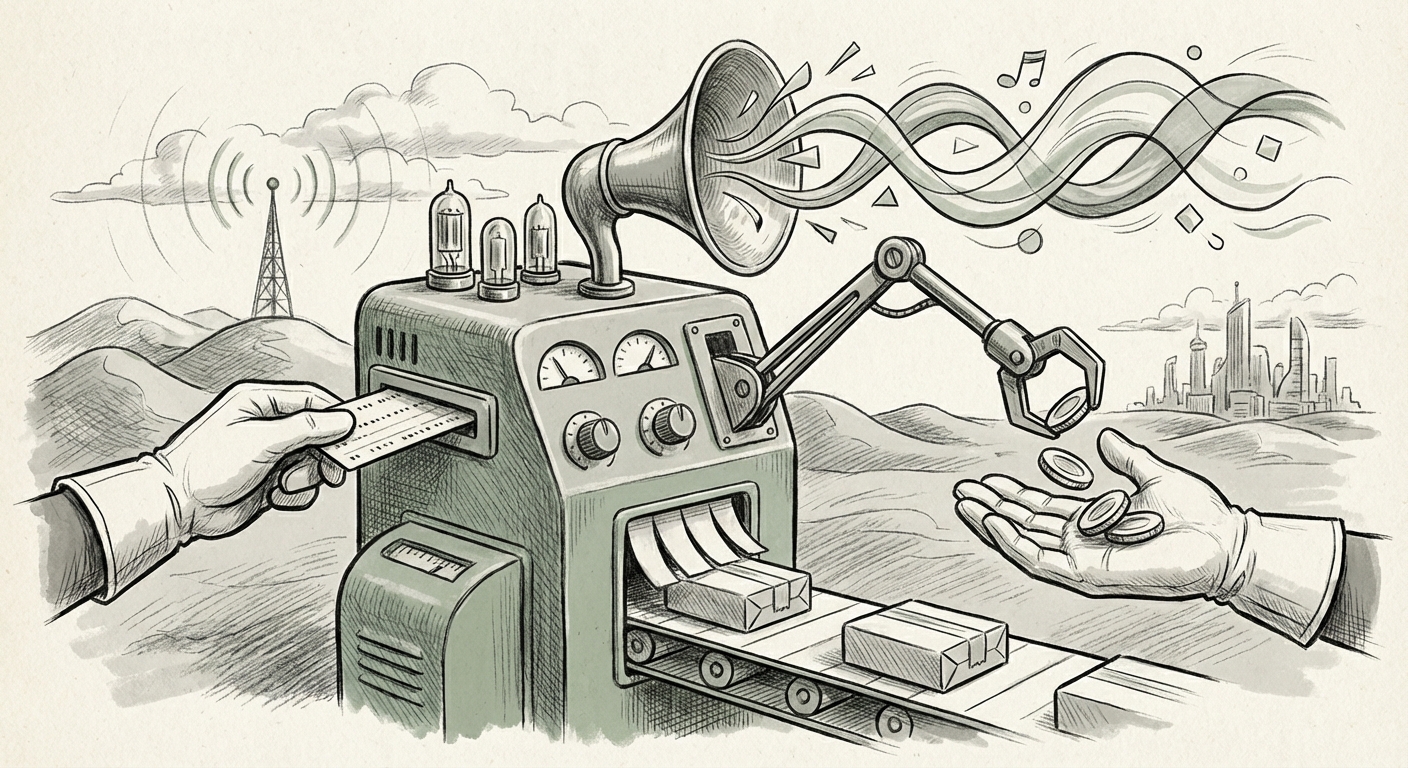
Liquid AI's LFM2.5-24B-A2B: The 2B-Active AI Model That Could Put Smart Agents Right on Your Device
On October 14, 2026, Liquid AI released a new AI model called LFM2.5-24B-A2B. The full name looks like a random code, but it hides a big idea. This is a model built for on-device agents, software that can think, plan, and act right on your phone, laptop, or a small piece of hardware, without sending your data to a giant server farm somewhere far away.
That may sound like a small technical detail. It is not. It points to one of the biggest shifts happening in AI right now: the move away from "everything lives in the cloud" and toward "the smart stuff lives with you."
Let's break down what Liquid AI actually released, why it matters, and what it means for businesses, workers, and everyday people.
What Liquid AI Just Released
The name LFM2.5-24B-A2B tells a story all by itself. The "24B" points to a model with roughly 24 billion total parameters, the learned weights that make an AI model work. The "A2B" points to only about 2 billion active parameters at any given moment. And the "MoE" in the description stands for Mixture of Experts.
Put together, this is a model with a big brain but a small, fast working set. It was designed specifically for agents, AI that doesn't just answer questions but takes actions: opening apps, filling out forms, booking things, sorting files, running multi-step tasks.
And the key word is "on-device." The model is meant to run where you are, not on a distant server.
Mixture of Experts, Explained Simply
Imagine a huge company with thousands of specialists. Now imagine that for any single question, only a handful of them actually get called into the room. Everyone else stays at their desk.
That is essentially how a Mixture of Experts model works. The model has many "expert" sections, but each request only activates a small slice of them. So the model can store a lot of total knowledge (24B) while only doing a small amount of work per request (2B active).
Why is that a big deal?
- Speed: Less work per request means faster answers.
- Memory and power: Smaller active slices use less battery and RAM, which matters a lot on a phone or a small device.
- Quality: Because the full model is large, it can still "know" more than a tiny model would.
In plain terms: MoE is how you get big-model smarts with small-model speed. That combination is exactly what on-device AI needs.
Why "On-Device" Is the Real Headline
For the last few years, the standard way to use a powerful AI model was to send your request to a data center, let a giant model handle it, and send the answer back. That works well, but it comes with real trade-offs.
Privacy. If your request goes to a server, your data goes with it, your messages, your documents, your habits. When the model runs on your own device, that data can stay put.
Latency. A round trip to a server takes time. On-device AI can respond almost instantly, with no network delay.
Cost. Every cloud request costs someone money. Running on a device shifts that cost to hardware you already own.
Availability. On a plane, in a tunnel, in a rural area with weak signal, on-device AI keeps working when the internet doesn't.
Liquid AI's new model is aimed directly at all four of these problems. It is a bet that the future of AI assistants is not a single giant brain in the sky, but millions of smaller brains living right next to the people who use them.
The Bigger Trend: AI Is Shrinking to Grow
For a while, the story of AI was "bigger is better." More parameters, more data, more computing power. That race still matters at the top end, but a second race has started alongside it: the race to make AI small enough to be everywhere.
Small, efficient models are already changing how AI gets used:
- Phones and laptops that summarize, draft, and organize without sending anything out.
- Smart devices that understand voice and intent locally.
- Business tools that keep sensitive customer data inside the company's own walls.
- Agents that can act on your behalf across apps and tasks, step by step, without waiting on a server.
The release of LFM2.5-24B-A2B fits squarely into this shift. It is not trying to be the biggest model in the world. It is trying to be the model that runs where the work happens.
That is a very different design goal, and it changes what the model is good at. Instead of being a general-purpose chatbot in the cloud, it is built for the job of being an agent: following instructions, using tools, and completing task after task reliably.
What This Means for Businesses
If you run a company, this trend matters more than any single model release. Here is why.
1. Privacy becomes a product feature
Companies in healthcare, finance, law, and government have long struggled with AI because sending data off-site is a compliance nightmare. On-device models change that conversation. When the AI runs locally, the data never leaves the building. That unlocks entire industries that have been sitting on the sidelines.
2. The cost math changes
Cloud AI is often billed per request. That gets expensive fast when you have thousands of employees or millions of customers. On-device inference flips the model: you pay once in hardware and power, then run as many requests as the device can handle. For high-volume use cases, the savings can be enormous.
3. Agents become practical
An agent that has to call the cloud for every single step is slow and fragile. An agent that runs locally can chain many small actions together quickly. That makes real automation possible in places where it was previously too clunky, customer support flows, back-office paperwork, field work, and mobile productivity.
4. Build for the edge, not just the cloud
The practical takeaway for product teams: stop assuming every AI feature needs a server. Ask which features could run locally, and design for that. It changes your architecture, your costs, your privacy story, and your user experience all at once.
What It Means for Society
The shift to on-device AI has effects that reach well beyond the tech industry.
More access. When AI runs on cheaper hardware without a network connection, more people in more places can use it, including places where fast internet is unreliable or expensive.
Different privacy rules. "Your data stays on your device" is a much simpler promise to make and keep than "we handle it securely in the cloud." It gives people more control over what machines learn about them.
New expectations. Once assistants work instantly, offline, and privately, people will expect that everywhere. A cloud-only assistant will start to feel slow and nosy by comparison.
New questions too. If an agent can act on your device, what stops it from acting badly? Who watches it? How do you update it? These are not solved problems, and the industry is only beginning to wrestle with them.
The Hard Questions Still Open
It would be dishonest to pretend this is all upside. Some real questions remain.
- Quality gap. Small active slices are efficient, but do they match the biggest cloud models on hard tasks? That trade-off is the central question for every efficient model.
- Security. An agent that takes actions on your device has real power. Bad instructions, tricked prompts, or malicious code could cause real harm.
- Updates and control. Cloud models can be fixed overnight. Models on millions of devices are harder to update, monitor, and correct.
- Hardware limits. Running a 24B-total model on a phone or small device depends on the memory and chips available. Not every device will manage it equally well.
None of these are dealbreakers. But they are the questions that will decide how fast this shift actually happens.
What to Watch Next
Keep an eye on a few things in the coming months:
- Real-world agent tasks. The best test of a model like this is not a benchmark score, it is whether it can reliably finish multi-step jobs on a real device.
- Which devices ship it. On-device models live or die by the hardware they run on.
- Whether developers adopt it. A model only matters if builders use it to make products people want.
- How cloud providers respond. If on-device AI takes off, the economics of the whole AI industry shift with it.
The Bottom Line
Liquid AI's LFM2.5-24B-A2B is not just another model release. It is a marker of where AI is heading: smaller active footprints, smarter architectures, and agents that live on the device in your pocket instead of in a warehouse of servers.
The era of the giant cloud model is not over. But a second era, the era of AI that is fast, private, cheap, and always with you, is now clearly underway. The companies and developers who understand that shift early will be the ones building the products everyone else has to catch up to.