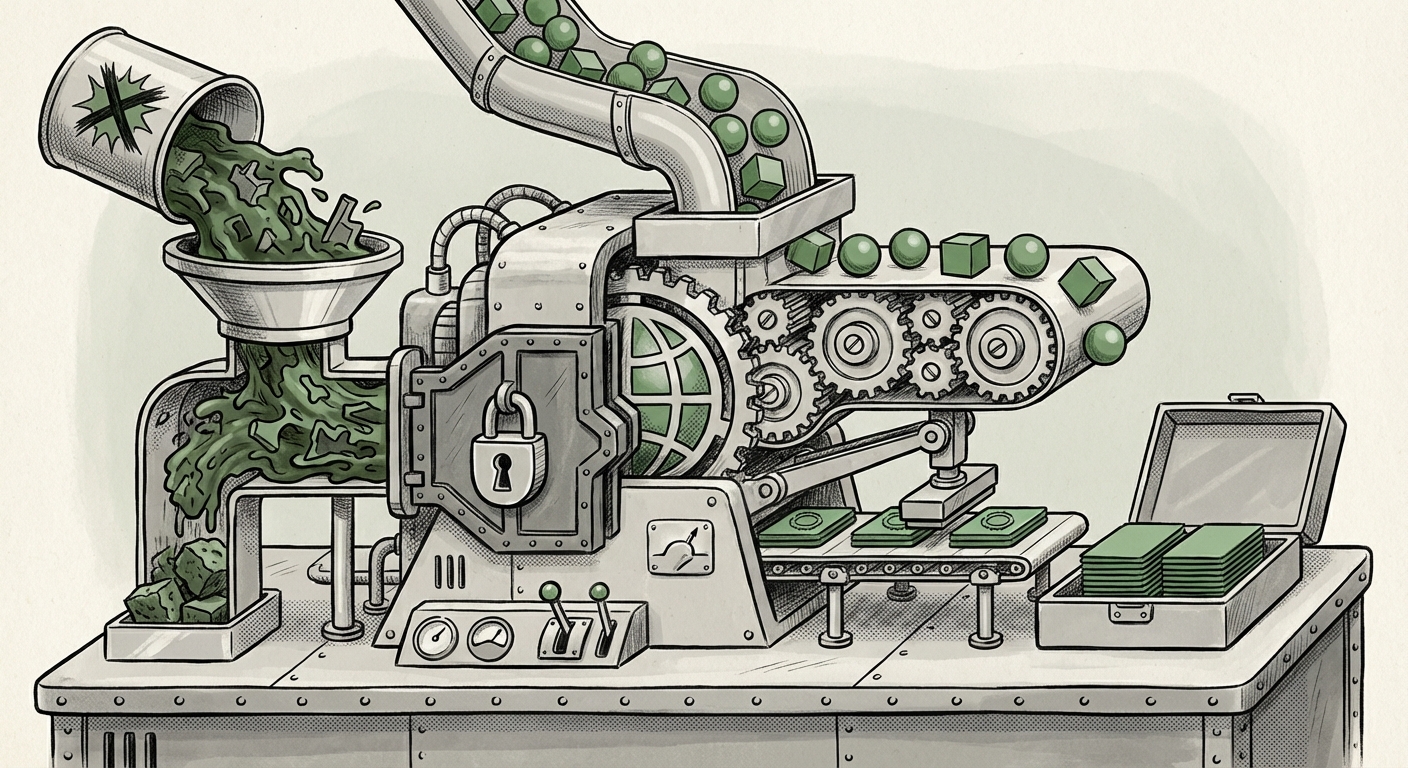
Building DeepSeek-V3 From Scratch: A PyTorch Blueprint for the Future of AI
In October 2026, a new project caught the attention of AI researchers and developers: a from-scratch implementation of the DeepSeek-V3 architecture using PyTorch. This isn't just another code repository. It's a signal that the way we build, understand, and use large language models is changing fast. By rebuilding a powerful model from the ground up, the project shows how far the AI community has come, and where it's heading next.
For businesses, this trend matters. It means more control, more customization, and more competition. For society, it means AI is becoming less of a black box and more of a tool that anyone can learn to build and improve. Let's break down what this development means for the future of AI and how it will be used.
What DeepSeek-V3 Represents
DeepSeek-V3 is a large language model, one of the many advanced AI systems that can understand and generate text. But the specific details of its architecture are less important than what the from-scratch rebuild represents. When developers choose to recreate a model like DeepSeek-V3 without relying on proprietary code, they are saying: we want to understand how this works, and we want others to understand it too.
This is a shift from the early days of large language models, when only a handful of well-funded labs could build them. Today, the knowledge and tools are spreading. PyTorch, an open-source machine learning framework, has become a common language for this work. It's flexible, well-documented, and supported by a massive community. Building DeepSeek-V3 in PyTorch is like rebuilding a car engine in your garage, it's a learning exercise that also proves the design can be replicated.
Why Building From Scratch Matters
There are three big reasons why this trend is important.
1. Transparency and Trust
When a model is built from scratch, every part of its design is open to inspection. Researchers can see how data flows, how decisions are made, and where biases might creep in. This is crucial for building trust in AI. Companies that use AI in hiring, lending, or healthcare need to explain how their systems work. A from-scratch implementation provides a reference point that anyone can check.
2. Education and Skill Building
Reading about AI is one thing; building it is another. By recreating DeepSeek-V3 in PyTorch, developers gain hands-on experience with the core components of modern AI: attention mechanisms, training loops, and optimization. This kind of deep learning is how the next generation of AI engineers will be trained. It also helps existing engineers transition into AI roles without needing a PhD.
3. Reproducibility and Innovation
Science advances when results can be reproduced. A from-scratch implementation allows other researchers to test new ideas on a known architecture. They can tweak one part and see what happens, without having to rebuild everything. This speeds up innovation and makes it easier to compare different approaches. In the long run, it leads to better models and more efficient training methods.
The Role of PyTorch
PyTorch has become the go-to framework for this kind of work, and for good reason. It's designed to be intuitive, with a syntax that feels like standard Python. That makes it easier for beginners to pick up and for experts to experiment with. It also has strong support for dynamic computation graphs, which means developers can change the model's behavior on the fly, a huge advantage when you're learning or prototyping.
More importantly, PyTorch is open source. Anyone can use it, modify it, and share their work. This aligns perfectly with the spirit of from-scratch projects like the DeepSeek-V3 rebuild. It's not about locking down knowledge; it's about spreading it. When a complex model is implemented in PyTorch and shared publicly, it becomes a teaching tool for the entire community.
Implications for the Future of AI
So what does this mean for where AI is going? Several trends are likely to accelerate.
Democratization of AI Development
Just a few years ago, building a large language model required massive computing resources and a team of specialists. While training a full model still requires significant resources, understanding and modifying one is becoming more accessible. From-scratch projects lower the barrier to entry. This means more voices, more ideas, and more innovation from around the world, not just from a few tech hubs.
Faster Iteration and Customization
When businesses can rebuild and modify an architecture, they can tailor it to their specific needs. A hospital might want a model that's especially good at reading medical notes. A law firm might need one that understands contracts. Instead of relying on a one-size-fits-all API, companies can start with a known architecture like DeepSeek-V3 and adapt it. This leads to more specialized, efficient AI systems.
Greater Focus on Efficiency
Building from scratch forces developers to think about every layer and every operation. That often leads to discoveries about how to make models smaller, faster, and cheaper to run. As more people experiment with architectures like DeepSeek-V3, we can expect a wave of optimizations that benefit everyone, from startups to large enterprises.
How It Will Be Used: Practical Implications
The from-scratch movement isn't just academic. It has real-world applications across industries.
For Businesses
- Reduced reliance on vendors: Companies can build and maintain their own models, giving them more control over costs and data privacy.
- Custom solutions: By understanding the architecture, businesses can fine-tune models for niche tasks without paying for expensive generic APIs.
- Talent development: Encouraging engineers to rebuild models from scratch is a powerful training program. It builds deep expertise that stays in-house.
For Researchers and Developers
- Experiment faster: A reference implementation means you can test new ideas without starting from zero.
- Collaborate more easily: Shared code in PyTorch is easy to read and contribute to, fostering open-source collaboration.
- Build a portfolio: For individual developers, from-scratch projects are a way to demonstrate skills and stand out in a crowded field.
For Society
- More transparency: When models are built openly, the public can better understand how AI makes decisions.
- Better regulation: Policymakers can refer to open implementations when drafting rules for AI safety and fairness.
- Global participation: Developers from underrepresented regions can contribute and adapt models to local languages and needs.
Actionable Insights
So what should you do with this information? Here are some practical steps.
- If you're a business leader: Start a small internal project to rebuild a known model architecture. It doesn't have to be production-ready. The goal is to learn. This will help your team understand the trade-offs and build confidence.
- If you're a developer: Pick an open architecture like DeepSeek-V3 and try to implement it in PyTorch. You'll learn more from debugging a training loop than from reading a dozen papers.
- If you're a researcher: Use from-scratch implementations as baselines for your experiments. Share your code and results openly to move the field forward.
- If you're a policymaker: Look to open implementations as a resource for understanding AI systems. They can help you ask better questions about safety and accountability.
The key takeaway is that AI is becoming more open, more understandable, and more customizable. The DeepSeek-V3 from-scratch project is one example of a larger movement. It shows that the future of AI isn't just about bigger models, it's about broader access and deeper understanding.
Conclusion
Building DeepSeek-V3 from scratch in PyTorch is more than a technical challenge. It's a statement about the direction of AI. As more developers and organizations take on similar projects, the field will become more transparent, more innovative, and more inclusive. The models of tomorrow won't just be built by a few giants, they'll be built by anyone with curiosity and a laptop. That's a future worth working toward.