Anthropic Turns Claude Into a Proactive Assistant: What Proactive AI Means for the Future of Work
For the past few years, using an AI assistant has followed a simple script. You open a window, you type a question or paste a document, and the model answers. Then you close the window. The AI sits idle until you need it again. It is, in every practical sense, a very smart tool that waits for instructions.
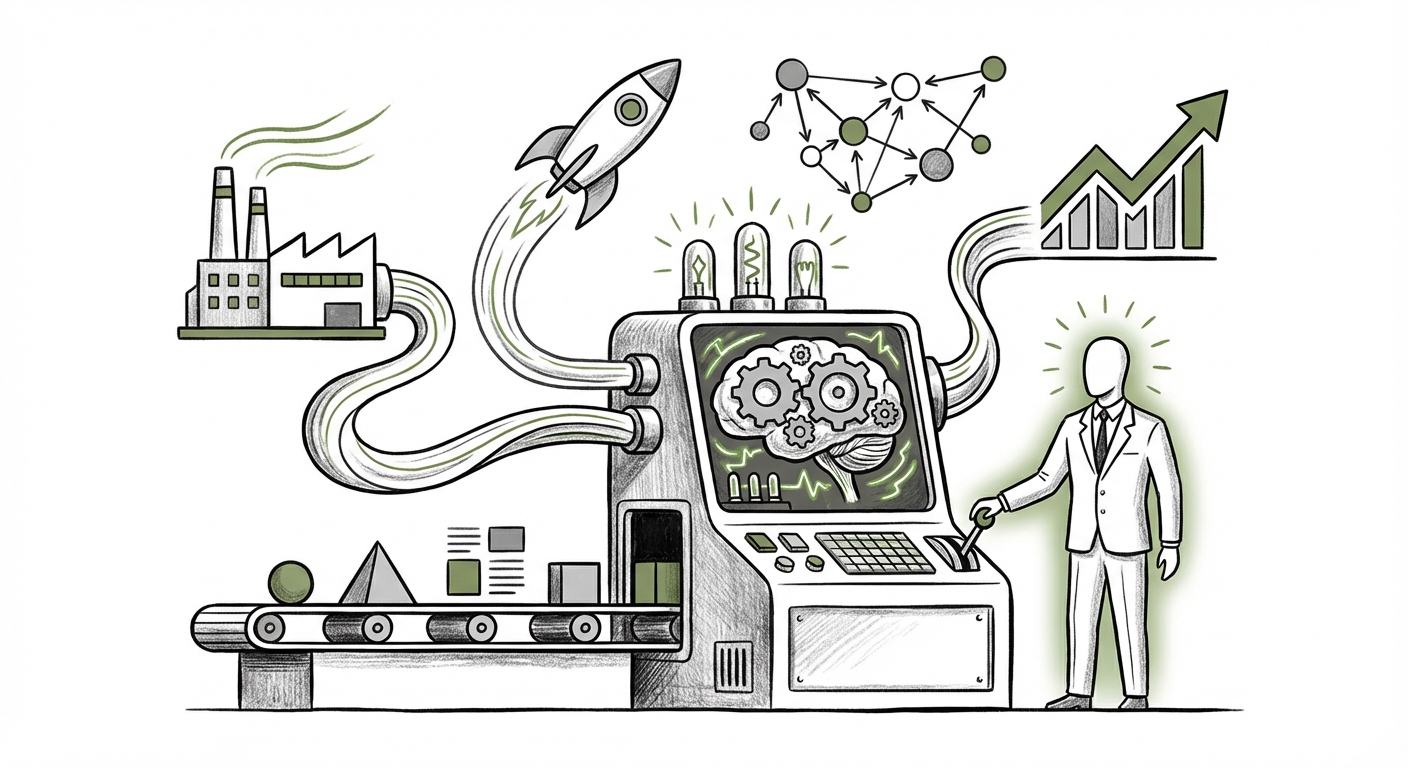
Anthropic is now pushing against that model. The company is turning Claude into a proactive assistant, a system built to take initiative rather than just respond. That phrase sounds like a small marketing tweak. It is not. Moving an AI from "answer when asked" to "act before being asked" is one of the biggest design shifts in the industry, and it changes almost everything about how these systems are built, trusted, priced, and supervised.
Here is what that shift means, why it is happening now, and how businesses and workers should prepare for a world where their AI does not wait for a prompt.
From Answering Questions to Anticipating Needs
The reactive model has a built-in ceiling. A chatbot can only be as useful as the user's ability to ask a good question. If you do not know what to ask, or you forget to check in, the value never gets delivered. The AI's intelligence is real, but it is locked behind human memory and human attention.
A proactive assistant flips that. Instead of waiting to be summoned, it watches for moments where it can help, a deadline approaching, a thread going quiet, a number that looks off, a task that has stalled. Think of the difference between a search engine and a good chief of staff. The search engine is brilliant at answering, but you have to know what you are looking for. The chief of staff notices things you did not think to check.
That is the promise Anthropic is chasing. The assistant becomes less like a tool you pick up and more like a colleague who is already up to speed.
Why This Is the Next Frontier for AI
Three forces are pushing the industry toward proactivity.
1. The novelty of chat has worn off
Most people now know how to use a chatbot, and most companies have tried one. The problem is that usage is spiky. People use it heavily for a week, then forget about it. A tool that requires a habit is a tool that gets abandoned. A tool that shows up with something useful does not depend on the user remembering it exists.
2. The technical pieces finally fit together
Proactive behavior is not one feature. It is a stack: models that can hold long context, memory that persists across sessions, the ability to call other software tools, and enough reasoning to plan a few steps ahead. Each of those has matured. The hard part has moved from "can the model understand?" to "can the system around the model be trusted to act?"
3. The business case is easier to measure
It is surprisingly hard to prove the return on a chatbot that people use inconsistently. It is much easier to prove the return on an assistant that catches a missed renewal, flags a stalled deal, or cleans up a messy handoff. Proactive AI creates events you can count.
What "Proactive" Really Requires Under the Hood
For the technical crowd, the interesting part of this shift is that the model is no longer the bottleneck. The scaffolding around it is. If an assistant is going to act without being prompted, several new systems have to exist.
- Persistent memory with boundaries. The assistant needs to remember what matters and forget what does not. Memory that grows forever becomes noise, and noise produces bad suggestions.
- Triggers and scheduling. Something has to decide when the assistant should look at the world. That means background jobs, event hooks, and quiet polling of connected systems, all of which cost money and require monitoring.
- Confidence calibration. A wrong answer is annoying. A wrong action is expensive. Proactive systems need a clear sense of when they are sure enough to act and when they should ask first.
- Tool access with guardrails. Reading data is low risk. Writing, sending, deleting, or paying is high risk. The permission model becomes as important as the model itself.
- Audit trails. Every automatic action needs a plain-language record of what happened and why. Without that, nobody can debug the system or defend it in a review.
There is also a subtler engineering problem: quiet failure. A chatbot that breaks is obvious, the user sees an error. A proactive assistant that breaks silently just stops being useful, or worse, keeps acting on stale assumptions. Measuring something that is supposed to work in the background is genuinely hard, and it is where many agent projects quietly fall apart.
The Trust Problem: Permission, Privacy, and the Creepy Line
Every proactive feature trades a little control for a little convenience. That trade is fine when the stakes are low and the user understands it. It becomes a problem when the assistant acts in ways the user did not expect.
The design questions are not really technical. They are about consent. Does the user know what the assistant is watching? Can they see why it did what it did? Can they undo it? Can they narrow its scope without turning it off entirely?
The companies that get this right will probably follow a few principles: start with reversible actions, prefer suggesting over doing, make the "why" visible next to the "what," and give users a simple dial between "just watch" and "go ahead and handle it." The assistants that feel magical will be the ones that are conservative by default and earn more autonomy over time.
There is also a data question. A proactive assistant needs a wider view of your work than a chatbot ever did, calendars, documents, messages, tickets. That is exactly the kind of access that makes security teams nervous, and rightly so. Expect procurement conversations to shift from "which model is best?" to "what can it see, where does that data live, and how do we turn it off?"
What This Means for Businesses
For leaders, the practical question is not whether proactive AI is impressive. It is where it pays for itself. The best early candidates share a pattern: the work is repetitive, the trigger is easy to define, the action is low risk, and a missed item is costly.
- Operations monitoring: flagging anomalies, stalled approvals, or broken handoffs before a human notices.
- Sales and pipeline hygiene: spotting deals that have gone quiet or records that are missing key steps.
- Customer support triage: drafting or routing responses the moment a ticket lands, with a human approving anything sensitive.
- Finance and compliance: catching mismatches and missing documentation on a schedule instead of at quarter-end.
- Project coordination: turning scattered updates into a status picture without someone chasing people for it.
Two new management problems arrive with this. The first is cost unpredictability. A chatbot spends money when a human clicks. A proactive assistant spends money on its own schedule. Budget owners will want caps, quotas, and a clear sense of cost per useful intervention, not just cost per token.
The second is accountability. When an AI takes an action on its own, who owns the outcome? The answer needs to be written down before the pilot starts, not after something goes wrong. Assign a named owner for every proactive workflow, define what "good" looks like, and review the audit log weekly during the first month.
What It Means for Workers
The skill that matters is shifting. Prompt writing was the signature skill of the chatbot era. In a proactive era, the valuable skills are delegation and review, the ability to describe a job clearly, set boundaries, and check work efficiently.
That is closer to managing a junior colleague than to using software. It also means the job changes in a way some people will love and others will resist. Less hunting for information. More judgment about what the assistant surfaced. Less typing. More deciding.
There is a real risk of deskilling, too. If the assistant always drafts the first version, people may get worse at starting from a blank page. The healthiest teams will likely keep some work deliberately manual, especially where original thinking matters.
And then there is attention. An assistant that is always helpful can also be always interrupting. The winners in this category will not be the ones that generate the most nudges, they will be the ones that know when to stay quiet. Notification fatigue is a product design problem, and it will decide whether proactive AI feels like a great colleague or a needy one.
The Bigger Picture: AI Moves From Tool to Teammate
Anthropic's repositioning of Claude is part of a broader pattern. The industry has spent years competing on how well models answer. The next round of competition is about how well they notice, decide, and follow through, and how gracefully they hand control back to a human when they should.
That raises the stakes in a useful way. A model that answers badly wastes a few minutes. A model that acts badly can damage a relationship, a record, or a budget. So the mature version of this technology will look less like an eager intern and more like a careful one: it asks before it touches anything important, it explains itself, and it gets a little more freedom as trust builds.
For anyone building or buying AI right now, the takeaway is straightforward. Proactive assistants are coming, and the technology will improve faster than the rules around it. The organizations that do well will be the ones that start small, pick workflows where a mistake is cheap, measure what actually got caught, and write down the guardrails before the autonomy arrives.
The chatbot era asked: how good is the answer? The proactive era asks a harder question: how much should we let it do on its own? Getting that balance right is the whole ballgame.