Claude Duet Explained: The AI That Keeps Working While Your Phone Is Off
For the last few years, using an AI assistant has felt a lot like making a phone call. You open an app, you type something, you wait, you get an answer, and then you hang up. The moment you close the app or lock your screen, the conversation stops. Nothing happens. The AI is only as productive as the time you spend staring at it.
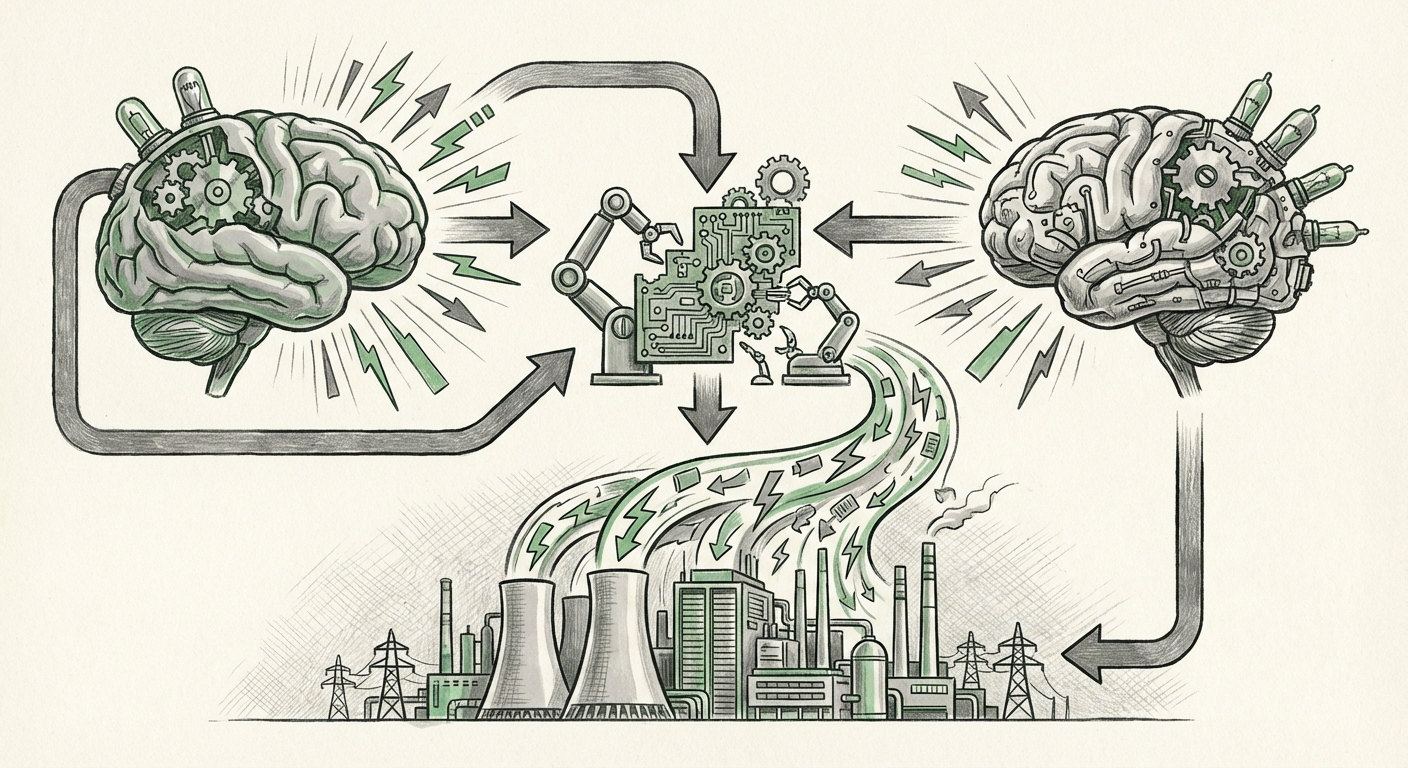
Claude Duet, revealed on October 22, 2026, breaks that pattern in a way that sounds small but is actually enormous. The headline feature is simple: it keeps working while your phone is off. You give it a job, you put your phone away, and the work continues without you.
That one sentence, "works while your phone's off", quietly moves AI from being a chat window you visit into a worker you delegate to. And that shift has bigger consequences for businesses, workers, and the whole AI industry than any leaderboard score or model benchmark.
The Real Headline: AI Stops Waiting For You
Most AI tools today are synchronous. That's a technical word for a simple idea: you and the AI have to be there at the same time. You ask, it answers, and the loop only moves forward when you push it forward.
Claude Duet pushes in the other direction. It's built around the idea of asynchronous work. You hand over a task, and the task keeps running in the background, not on your phone's processor, but somewhere out in the cloud where your battery level and screen state don't matter.
Think about what your phone being "off" actually represents. It means:
- Your battery is not a limit on how long work can run.
- Your attention is not required for the task to move forward.
- Your device does not need to be awake for the job to be finished.
- You are free to sleep, travel, or do something else entirely.
Those four points sound like convenience features. They are actually the foundation of a completely different working relationship with software.
Why This Is Bigger Than It Looks
1. The "duet" idea implies teamwork, not commands
The name matters. A duet is two performers making something together, not one person giving orders to a tool. That framing suggests Claude Duet is designed for a back-and-forth working rhythm, you set direction, the AI carries it forward, and you check back in later to review and adjust.
In practice, that turns the AI from an answer machine into a collaborator with a work queue. And work queues are how real businesses operate. Nobody runs a company by standing over every employee's desk. They assign, they review, they follow up.
2. Background work is the gateway to real agents
The entire promise of AI "agents", software that can plan and complete multi-step jobs on its own, has been held back by one awkward truth: agents need time. Research, drafting, checking, retrying, comparing options, that's not a five-second chat. It's minutes, sometimes hours.
If the AI only runs while you're watching, long tasks are impractical. You'd be glued to your screen, waiting. By decoupling the work from your device, Claude Duet makes long-running tasks normal instead of experimental.
3. It reframes what "using AI" feels like
Right now, using AI feels like doing. You're actively typing and reading. With a background mode, using AI starts to feel like delegating. That is a psychological shift as much as a technical one, and psychological shifts are what turn a niche tool into a daily habit.
What This Means for the Future of AI
Persistence becomes the new benchmark
For years, the AI conversation was dominated by model quality: how smart is the model, how long is its context, how well does it reason. Those things still matter. But once assistants can work asynchronously, a new set of questions takes over:
- Does the AI remember what it was doing? Can it pick a task back up after a pause?
- Can it report back clearly? When you return, do you get a summary, or a mess?
- Can it ask for help at the right moment? A good worker flags a blocker instead of guessing.
- Can it be trusted with time? The longer a task runs unsupervised, the more damage a wrong assumption can do.
Expect the industry to start competing on exactly these things. "Always-on capability" is the next battleground, and it's a much harder problem than raw model intelligence.
Human attention becomes the scarce resource, not compute
When AI can work around the clock, the bottleneck in any workflow stops being machine time. It becomes human review time. If an assistant can produce ten drafts overnight, someone still has to read them.
This is the great unfinished problem of the agent era. The tools that win won't be the ones that produce the most output. They'll be the ones that produce the right amount of output, sorted well, so a human can approve it in minutes instead of hours.
Practical Implications for Businesses
Overnight work becomes a real category
The most obvious business use is the simplest: set it up review it in the morning. Draft proposals, summarize incoming messages, prepare research briefs, clean up data, compare vendor options, assemble meeting prep. None of these need a human present at the moment they happen, they just need to be done by the time someone looks.
Small teams get leverage once reserved for big ones
A two-person company can't hire a night shift. But it can queue up background AI work. That's a genuinely leveling effect, not because the AI is brilliant, but because the constraint of "someone has to be sitting there" has been removed.
Customer-facing work needs new guardrails
If an assistant can act while nobody is watching, then permissions matter enormously. Businesses will need clear answers to some uncomfortable questions:
- What is the AI allowed to send, and to whom?
- What must always wait for a human "yes"?
- How do we log what it did while we were offline?
- Who is responsible when a background task goes wrong?
The companies that answer these questions before they deploy will avoid the messy headlines that follow the ones that don't.
Developers get a new default
For technical teams, background execution changes design habits. Instead of building a prompt-and-wait interface, more products will be built around task submission, status tracking, and result review. That's a familiar pattern, it looks a lot like a job queue or a CI pipeline, and it means the skills that matter shift from prompt writing toward workflow design.
Practical Implications for Society and Workers
The cultural effect may be the most interesting part. For two decades, smartphones have been tools of continuous interruption. An AI that works while your phone is off is, oddly, an anti-attention-economy product. It asks less of your screen time, not more.
That's a meaningful change in direction. It suggests a future where the value of an AI assistant isn't measured in minutes engaged, but in minutes returned. If that becomes the standard, the whole design philosophy of consumer software could shift with it.
At the same time, honest concerns deserve airtime. When work happens invisibly, oversight gets harder. People may over-trust output they didn't watch being made. And the line between "my assistant did it" and "I did it" gets blurry in ways that workplaces, schools, and regulators will have to sort out.
Actionable Insights: How to Prepare Now
Whether you run a business, manage a team, or just want to get ahead of the curve, here's what's worth doing today.
For business leaders
- Audit your "waiting" work. List every task that sits idle because a person has to be present. Those are your first background-AI candidates.
- Write down permission rules. Decide, in plain language, what the AI can do alone and what requires sign-off. Do it before deployment, not after.
- Set up a review ritual. A morning check-in on overnight output works better than scattered, ad-hoc glances.
- Measure review time, not output volume. The real productivity gain shows up in how fast a human can approve good work.
For teams and individuals
- Learn to write task briefs, not prompts. A brief includes the goal, the constraints, and what "done" looks like. That's what a background worker needs.
- Build a habit of verifying. Anything produced while you weren't watching deserves a check, even when it looks polished.
- Protect the human step. Keep judgment, relationships, and final decisions firmly on your side of the line.
For technical teams
- Design for resumability. Assume tasks will pause, fail, and resume. Plan for it from day one.
- Log everything. An audit trail of what an assistant did while you were offline is not optional, it's the product.
- Treat "asks a good question" as a feature. Blockers surfaced early are cheaper than confident mistakes.
What to Watch Next
Claude Duet's phone-off promise raises a set of questions that will define the next year of AI products. How long can a task run before it needs a human? How does the assistant hand work back to you, a wall of text, or a clean summary? What happens when two background tasks conflict? And crucially, how do you stop a helpful assistant from quietly doing something you'd never have approved?
Watch for how competitors respond. If background work becomes the expected default, the entire category shifts from "chatbot" to "colleague with a queue." That's a much bigger market, and a much higher bar for trust.
The Bottom Line
"Works while your phone's off" sounds like a spec sheet detail. It isn't. It's a statement about what kind of thing an AI assistant is supposed to be. For ten years, AI has been something you go to. Claude Duet is a bet that it should become something you hand things to, and then walk away.
That bet will be judged not by how impressive the demos look, but by a far more ordinary measure: whether the work waiting for you in the morning is good enough to trust. The companies and teams that figure out how to earn that trust, with clear permissions, tight review loops, and honest reporting, will get the real benefit. Everyone else will get a very full inbox.