Ensemble Forecasting With IBM Granite Time-Series Models: What It Means for the Future of AI
Forecasting is one of the most practical things AI can do. It helps a business decide how much stock to order, how many staff to schedule, how much cash to keep on hand, and when to expect a spike or a slowdown. But forecasting is also risky. A single model can be wrong in a confident way. It can miss a sudden change, overreact to noise, or learn the wrong pattern from history.
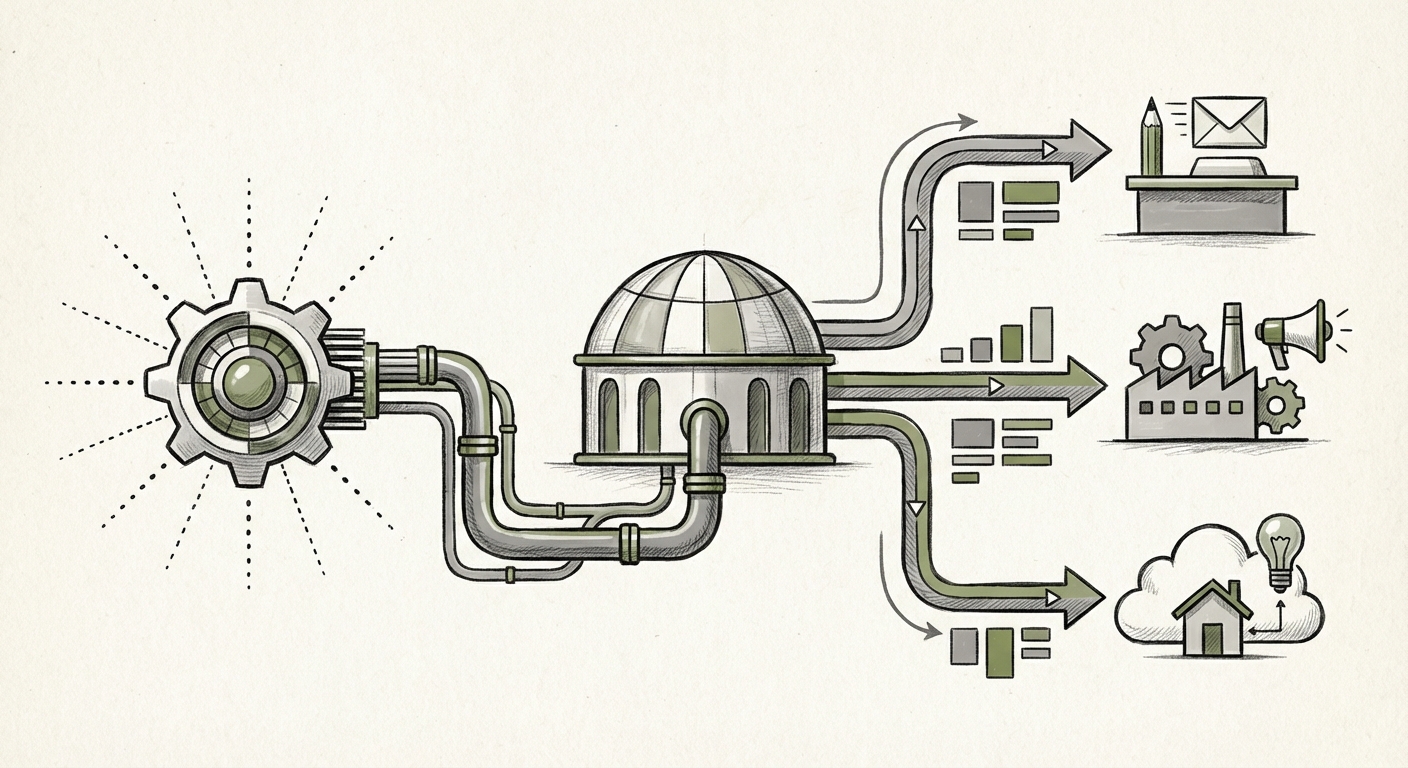
That is why ensemble forecasting is becoming a bigger idea in AI. Instead of trusting one forecast, an ensemble combines several forecasts into one stronger view. The arrival of IBM Granite time-series models gives this old idea a new engine. These models are built for time-series data, the kind of data that moves through time, such as sales, traffic, demand, sensor readings, and financial flows. When used in an ensemble, they point toward a future where AI forecasting is more reliable, more accessible, and more deeply woven into daily operations.
Forecasting’s Quiet Upgrade
Most organizations already forecast. Spreadsheets, statistical models, and business intelligence tools have done this work for decades. What is changing is the kind of model doing the forecasting. Traditional time-series methods often need a lot of manual tuning. They can work well for one product line or one region, but they may struggle when a business has thousands of series to manage.
Foundation-style time-series models take a different path. They learn from broad patterns in sequence data and can be adapted to specific forecasting jobs. IBM Granite time-series models sit in this shift. They are not just a faster spreadsheet formula. They represent a move toward reusable AI building blocks for prediction.
That matters because most real forecasting problems are not clean. Demand jumps. Holidays move. Supply chains break. Weather changes. A model that only knows one pattern will fail when the world changes. An ensemble accepts that no single view is complete. It turns uncertainty from a hidden risk into a visible part of the forecast.
What Ensemble Forecasting Really Means
An ensemble is a team of forecasts. Each member looks at the same problem in a slightly different way. One might focus on recent weeks. Another might weigh seasonal patterns more heavily. Another might use a different model setup or a different slice of history. The ensemble then combines their outputs, through a simple average, a weighted average, a median, or a more careful rule, to produce a final forecast.
The logic is simple: many good guesses can beat one good guess. If the members make different kinds of mistakes, their errors can cancel out. The result is often more stable. It is less likely to swing wildly because one model had a bad day.
This does not mean every ensemble is better. A team of identical models adds little. The value comes from diversity. If every member sees the same data in the same way, the ensemble just repeats the same mistake with more confidence. Good ensemble design is about creating useful disagreement, then resolving it in a disciplined way.
Why IBM Granite Time-Series Models Matter for Ensembles
IBM Granite time-series models give teams a new type of ensemble member. A foundation-style model can bring broad learned patterns to a specific forecasting task. That can be useful when data is limited, when a business has many related series, or when teams want a strong starting point without building every model from scratch.
But the real value is not that one model replaces everything else. It is that IBM Granite time-series models can sit alongside other approaches. A practical ensemble might combine a Granite time-series forecast with a simpler statistical model, a business rule, or a model trained on a narrow local pattern. The ensemble becomes a way to blend general AI knowledge with local knowledge.
This is an important shift for the future of AI. The question is moving from “Which model is best?” to “How do we combine models well?” That is a more mature question. It accepts that no model is perfect and builds systems around that fact.
A foundation model is not a final answer
A common mistake is to treat a time-series foundation model as a plug-and-play oracle. Forecasting does not work that way. The model still needs the right data, the right time horizon, and the right evaluation. It still needs human judgment about events that history cannot explain. An ensemble helps because it does not put all the weight on one model’s confidence.
For business teams, this is a healthy message. AI forecasting is not about removing judgment. It is about giving judgment better inputs. IBM Granite time-series models can raise the quality of those inputs, especially when they are used as part of a thoughtful ensemble rather than as a solo act.
How an Ensemble Forecasting Workflow Comes Together
A strong ensemble workflow is part engineering and part discipline. The details vary by industry, but the core steps are consistent.
- Define the decision, not just the forecast. A demand forecast for a warehouse is not the same as a revenue forecast for finance. The time horizon, cost of error, and need for explainability all change the design.
- Build diverse members. Use IBM Granite time-series models alongside other model types, different data windows, and different assumptions. Diversity is the point.
- Combine with a clear rule. Simple averages are easy to explain. Weighted averages can favor stronger members. The rule should be tested, not guessed.
- Backtest like the real world. Test on past periods that include shocks, seasonality, and quiet stretches. A model that only works in calm times is not ready.
- Monitor after launch. Forecast accuracy can drift as customer behavior changes. An ensemble needs regular review, not a one-time launch.
This workflow shows why ensemble forecasting is more than a modeling trick. It is an operating habit. The organizations that benefit most will be the ones that treat forecasting as a living system, not a one-off project.
The Business Case: Better Decisions, Not Just Better Scores
Forecasting accuracy is easy to measure and easy to celebrate. But the business value comes from better decisions. A small improvement in forecast stability can reduce emergency orders, cut waste, free up working capital, and make staffing plans less stressful. In some cases, the biggest gain is not a lower error score. It is fewer extreme misses.
That is where ensembles shine. They tend to smooth out wild swings. A single model might forecast a huge spike because it overreacts to one unusual week. An ensemble can temper that view. For a supply chain team, a calmer forecast can be more useful than a slightly more accurate but highly volatile one.
IBM Granite time-series models make this approach more practical for teams that do not want to build every forecasting model from zero. They can act as strong ensemble members across many forecasting tasks. That can lower the barrier for companies that have data but limited specialized forecasting staff.
The practical implications reach across functions:
- Operations and supply chain: Better demand forecasts can support inventory planning, production scheduling, and logistics.
- Finance: Cash-flow and revenue forecasts can become more robust when multiple models are combined.
- Energy and utilities: Load and demand forecasting can benefit from ensembles that handle changing patterns.
- Retail and consumer goods: Product-level forecasts can be stabilized across many series with different behavior.
- Risk and planning: Ensemble ranges can make uncertainty more visible to decision-makers.
None of this happens automatically. An ensemble is not a magic layer that fixes bad data or unclear goals. It is a better way to use models when the problem is well framed.
The Hard Parts: Compute, Trust, and Change Management
Ensemble forecasting sounds like a free win. It is not. Running several models can cost more compute and take more time than running one. That matters for real-time use cases. A team that needs a forecast every few minutes cannot always afford a large ensemble. The design has to match the speed of the decision.
Trust is another challenge. An ensemble can be harder to explain than a single model. Business users may ask why the forecast changed. “The models disagreed” is not a satisfying answer. Teams need ways to show which members drove the final number, how confident the ensemble is, and what would change the view.
There is also a people challenge. Forecasters and business teams often have favorite methods. An ensemble asks them to share control. That can be uncomfortable. The best rollouts treat the ensemble as a decision-support tool, not a replacement for expertise. Human review stays important, especially around promotions, strikes, weather events, and other shocks that history may not capture.
Finally, ensembles can create a false sense of safety. Combining models does not remove bias. If every member is trained on the same blind spot, the ensemble will be confidently wrong together. Diversity in data and assumptions matters as much as diversity in algorithms.
What This Means for the Future of AI
The bigger story is not just about forecasting. It is about how AI systems will be built. For years, the popular image of AI was one giant model giving one answer. The next phase looks more like a system of models, rules, and checks. Ensemble forecasting with IBM Granite time-series models is an early example of that future.
In this future, AI will be used less as a single oracle and more as a layered decision engine. One layer generates possibilities. Another compares them. Another checks them against business rules. A human reviews the result when the stakes are high. This is how AI moves from demo to dependability.
We are also likely to see ensembles become more common in everyday business tools. Planning platforms, spreadsheets, and supply-chain systems could quietly run multiple forecasts in the background and present a combined view. Users may never see the individual models. They will just see a forecast that is steadier and a range that is more honest about uncertainty.
For AI teams, the lesson is that model quality is only one part of the job. The real work is system design: how models are combined, how they are monitored, and how their output fits into a decision. IBM Granite time-series models add a useful building block, but the value comes from the architecture around them.
Actionable Insights for Teams
- Start with one high-value forecasting problem. Pick a decision where better forecasts clearly matter, such as inventory, staffing, or cash flow.
- Test an ensemble against your current model. Use a fair backtest and compare stability, not just average error.
- Use IBM Granite time-series models as part of a diverse set. Do not make one model the whole team. Mix in other approaches and local knowledge.
- Measure the cost of being wrong. A forecast that is slightly less accurate but far less volatile may be the better business choice.
- Invest in monitoring. Forecasts drift. Set up regular reviews and alerts for when ensemble members start to disagree sharply.
- Keep humans in the loop for shocks. Give business experts a way to flag events that models cannot see coming.
- Explain the ensemble in plain language. Decision-makers need to understand the range and the drivers, not just the final number.
Conclusion
Ensemble forecasting with IBM Granite time-series models points to a more practical and more mature use of AI. It replaces the search for one perfect model with a disciplined way to combine many imperfect ones. That is a better fit for the messy, changing world that businesses actually operate in.
The future of AI will not be built on blind trust in a single answer. It will be built on systems that compare, combine, and check. Forecasting is one of the first places where that future is becoming real. Teams that learn to design, explain, and monitor ensembles now will be better prepared for the next wave of AI-driven decisions.