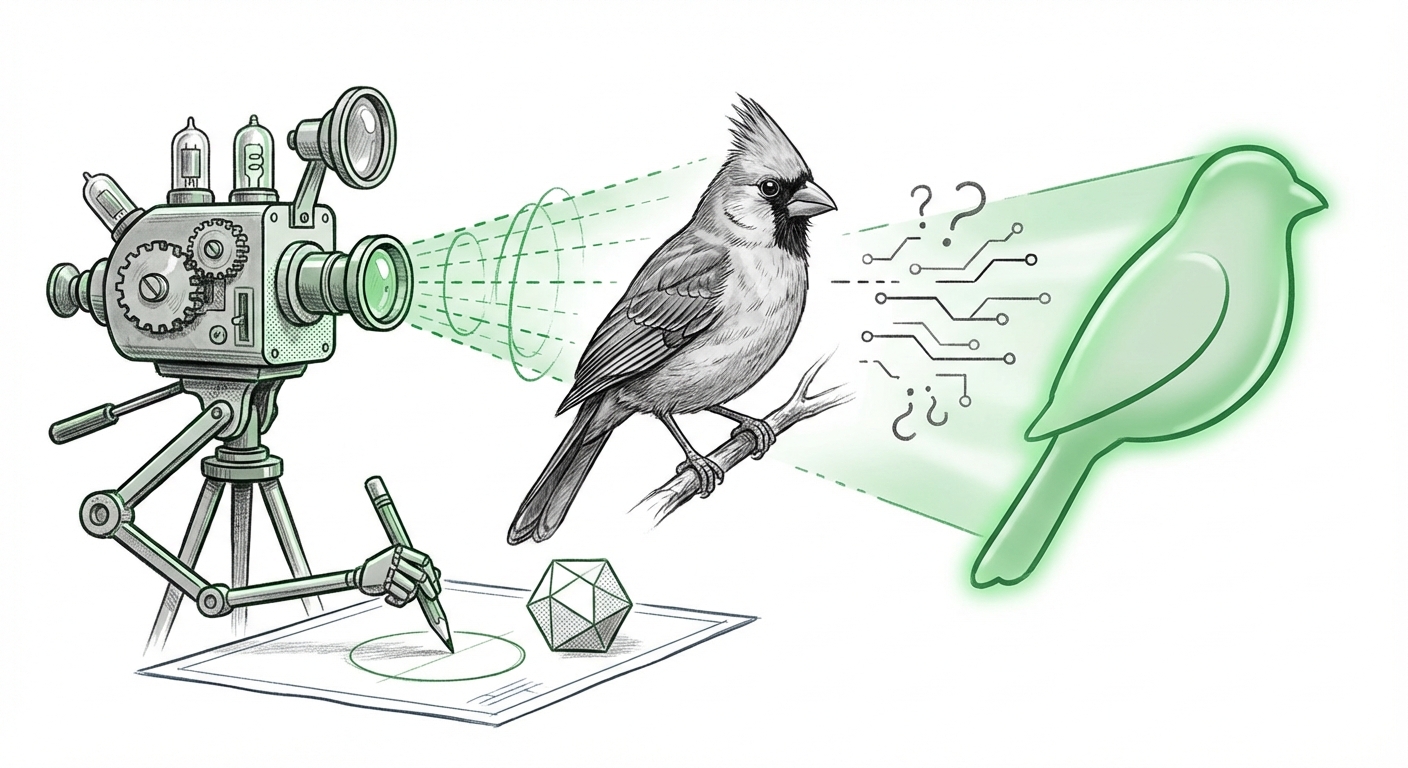
Google ML Drift Accelerates On-Device AI Inference Across Diverse GPUs, and That Changes Where AI Lives
For most people, artificial intelligence still feels like something that happens far away. You type a question, it travels across the internet, a giant data center thinks about it, and an answer comes back. That model worked well enough for the first wave of AI chat tools. But it has a hidden cost: every single request needs a network connection, a server, and a steady flow of electricity in a warehouse somewhere.
The next wave is pushing in the opposite direction. In late October 2026, Google detailed work called ML Drift, billed as a step forward in accelerating on-device AI inference across many GPUs. That single sentence sounds technical, but it describes one of the most important shifts in the industry: moving the "thinking" part of AI out of the cloud and onto the phone, laptop, car, camera, or smart speaker that you are already holding.
Here is what that shift really means, why graphics processors are the battleground, and what businesses should do about it now.
The Core Idea: Inference Is the Expensive Part of Everyday AI
AI work splits into two phases. Training is the slow, enormous process of teaching a model by feeding it huge amounts of information. Inference is the model actually being used, answering your question, labeling a photo, translating a sentence, transcribing your voice.
Training happens rarely. Inference happens billions of times a day. That makes inference the part of AI that dominates real-world cost, real-world energy use, and real-world user experience. If inference can happen on the device in your hand, several problems solve themselves at once.
Why GPUs Are the Key to Doing This Well
Modern AI models are built from massive piles of simple math. The hardware that is best at doing that math in parallel, quickly and cheaply, is the graphics processing unit, the GPU. GPUs were originally designed to draw video game worlds, and the AI world borrowed them because the underlying math turned out to be a great fit.
The catch is that GPUs are not all the same. A chip designed for a flagship phone, a chip designed for a budget laptop, and a chip designed for an embedded industrial sensor all have different memory layouts, different instruction sets, and different driver software. Code written to squeeze maximum speed out of one GPU often runs poorly, or not at all, on another.
That is exactly the problem the ML Drift work appears to target. Accelerating inference across diverse GPUs means getting strong performance without requiring every developer to hand-tune their model for every chip on the market. It is the difference between a road that only one kind of car can drive and a road that works for everything with wheels.
Why "Diverse GPUs" Is the Hard Part, and the Valuable Part
For years, the practical answer to AI performance was brute force and narrow focus: pick the most powerful hardware, tune everything for it, and accept that everything else gets a worse experience. That approach works fine inside a data center, where you control the hardware and can standardize on one vendor.
On devices, it collapses immediately. The same app has to run on dozens of hardware configurations, across multiple manufacturers, with wildly different price points. Fragmentation is the single biggest reason on-device AI has been slower to arrive than the hype suggested.
So when a major platform company reports progress on accelerating inference across many different GPUs, it is not just a performance headline. It is a portability headline. Three things follow from that:
- Lower cost to ship AI features. A developer can build a feature once and expect reasonable performance across a broad device range, instead of paying for separate engineering efforts per chip family.
- Wider reach. AI features stop being a premium-only experience reserved for the most expensive devices and start showing up on mid-range ones.
- More predictable quality. When performance stops swinging wildly from device to device, teams can design reliable products around it rather than adding heavy fallbacks for the devices that fall short.
This is the unglamorous work that actually decides whether a technology reaches people. The flashy demos get the attention; the hardware abstraction layers get the users.
What On-Device Inference Changes for Real People
Speed You Can Feel
When a model runs locally, there is no round trip to a server. That removes a delay that users notice even when it is short, and it removes the much longer delays when the network is weak. Features that live behind a network call feel like features. Features that run locally feel like part of the device.
Privacy That Is Structural, Not Promised
This is the biggest one. Data that never leaves your phone cannot be intercepted in transit, cannot be stored in a company's logs, and cannot be part of a breach. A model that runs locally on your keyboard, camera roll, or microphone keeps the raw material, your words, your photos, your voice, on hardware you own.
Companies often talk about privacy as a policy question. On-device inference turns it into an architecture question, which is a much stronger guarantee. You do not have to trust a promise when the data physically never travels.
AI That Works Without a Connection
Planes, basements, rural roads, hospitals with strict network rules, factories with interference, disaster zones. A large share of the world, and a large share of important moments, have no reliable connection. Local inference creates a class of AI features that simply did not exist before.
What This Means for Businesses
The strategic implication is bigger than "faster apps." It changes the economics of building with AI.
Per-Request Costs Start to Disappear
Cloud inference is metered. Every user interaction carries a marginal cost that scales with usage. That is manageable at small scale and painful at large scale. When inference moves to the user's device, the marginal cost to the provider collapses toward zero and gets absorbed into a device the customer already bought.
For any product where AI runs constantly in the background, transcription, translation, photo organization, accessibility tools, always-on assistants, this changes the business model entirely. Features that were too expensive to offer free become viable.
The Product Design Constraint Changes
Teams that have only ever built cloud AI carry assumptions they may not realize: that they can upgrade the model instantly for everyone, that hardware does not matter, that latency is roughly uniform. On-device flips all of that. Model size, battery draw, memory, and thermal limits become first-class design concerns alongside accuracy.
Tools that make cross-GPU performance more consistent lower the cost of adapting to those constraints. That is a meaningful reduction in engineering risk for any company shipping AI to consumers.
A New Kind of Competitive Layer
If running a model well on any hardware becomes easier, then the differentiator stops being "who has the best model" and becomes "who has the best product built on top of a good-enough model, running everywhere." That favors companies with deep user understanding over companies with the biggest compute budget, a shift worth planning for.
What It Means for the Future of AI
Three bigger patterns are worth watching.
1. Hybrid Becomes the Default Architecture
The near-future is not "cloud AI replaced by local AI." It is a split. Simple, frequent, privacy-sensitive tasks run on the device, autocomplete, summarization of a message, object detection in a photo, noise removal in a call. Heavy, rare, or knowledge-intensive tasks go to the cloud. Getting that split right is becoming a core architectural skill, and the more capable local inference becomes, the more work migrates inward.
2. Small Models Get Serious
Running on a phone forces discipline: fewer parameters, smarter quantization, better use of the hardware you have. Every improvement in that discipline expands what can be done locally. Progress in cross-GPU acceleration compounds with progress in model efficiency, and the two together push the boundary of what a local device can handle.
3. AI Becomes Infrastructure Rather Than a Destination
When inference is fast, free-at-the-margin, and always available, AI stops being an app you open and becomes a layer inside everything else. That is the moment the technology stops being remarkable and starts being assumed. It is also the moment it becomes genuinely useful at scale.
Risks and Open Questions
None of this is frictionless, and honest analysis should say so.
- Model updates get harder. Updating a cloud model is a deployment. Updating models spread across millions of devices is a distribution problem, with all the version drift and fragmentation that implies.
- Safety controls are weaker on-device. Guardrails that live on a server cannot be inspected or changed by the user. Local models need a different, harder approach to safety and misuse.
- Energy and heat are real. Moving computation off data centers does not delete it, it spreads it across batteries and thermal budgets. The net energy picture depends heavily on how efficiently the local work is done, which is precisely why acceleration work matters.
- Security surface moves. Models and weights sitting on devices can be extracted, modified, or attacked in ways server models cannot.
The industry will need to solve these alongside the performance work. Acceleration without safety and update discipline just relocates the problem.
Actionable Insights: What to Do Now
- Audit your AI features by latency and privacy sensitivity. Anything that must feel instant, or handles raw personal data, is a candidate for local execution. Start there rather than trying to move everything.
- Model your unit economics against zero marginal inference cost. Ask which features you would launch free if per-request cost were not a factor. Those are your roadmap candidates for on-device.
- Assume hardware heterogeneity. Design for a range of GPUs, not a single reference device. Test on your cheap devices first, that is where adoption lives.
- Plan a model distribution strategy early. Versioning, rollout, and rollback for models on devices should be designed before launch, not retrofitted after.
- Treat the local/cloud split as a product decision, not just an engineering one. It affects pricing, privacy claims, offline capability, and marketing. Get product and engineering in the same room.
- Watch platform-layer progress closely. Tools that improve cross-GPU inference performance, like the direction ML Drift points, reduce your differentiation risk and lower the cost of shipping everywhere. Build so that you can take advantage of them quickly.
The Bottom Line
A headline about accelerating inference across diverse GPUs will not trend on social media. But it describes the work that determines whether AI becomes something you visit or something that is simply there, in your phone, your camera, your car, your hearing aid, working instantly, privately, and without a network connection.
The cloud built the AI era. The device will define the AI decade. Progress on making that local execution fast and portable across the messy reality of real-world hardware is the quiet engine behind that change, and it deserves far more attention than it gets.