OVHcloud Joins Hugging Face Inference Providers: A Big Win for Open Models and European AI
Something quietly important happened in the AI world on November 24, 2025. OVHcloud, the French cloud company known for standing up European data centers and championing data sovereignty, became a listed Inference Provider on Hugging Face. On the surface, that sounds like a technical plumbing update. In reality, it's a signal about where the AI industry is heading: away from a handful of giant model providers and toward a wide, competitive marketplace of compute.
Here's the simple version. Hugging Face is the biggest public library of open AI models on the planet. But downloading a model is not the same as running it. You need hardware, engineers, and a way to keep it fast and reliable. Inference Providers solve that problem. They let anyone send a request for a model and get an answer back, without owning a single graphics card. Adding OVHcloud to that list gives developers one more serious place to run open models, and one that comes with a distinctly European passport.
What Inference Providers Actually Do
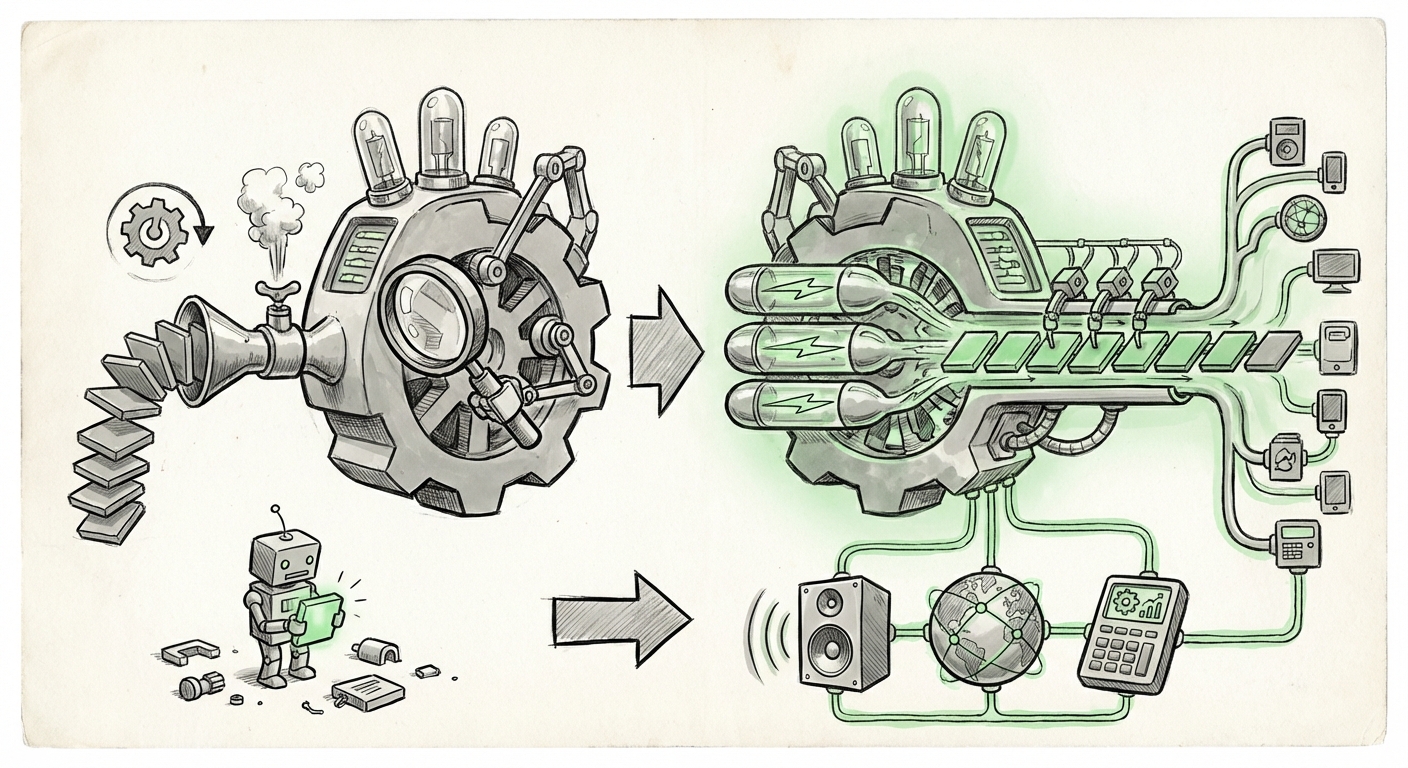
Think of Hugging Face as a giant parts store. It holds hundreds of thousands of open models, text generators, image makers, speech tools, code assistants. Inference Providers are the mechanics in the back who can actually install and run those parts for you.
Instead of signing up separately with five different cloud companies, a developer can point an app at one interface and let the platform route the request to a provider. The platforms that host these providers usually offer an interface that looks like the widely used chat-completion format, so switching costs stay low.
That design matters more than it first appears. It means the model and the machine are now separate choices. You can pick the best open model for your task and then pick the best-priced, fastest, or most compliant place to run it. That is a fundamental shift away from the old "one vendor, one stack" world.
Why a Router Between Models and Hardware Changes Everything
When access is easy and interchangeable, competition moves to price, speed, and trust. That's good news for buyers. It also pushes providers to specialize, some chasing the lowest cost per token, some chasing the lowest latency, some chasing regulatory comfort.
OVHcloud's arrival leans hard into the third category. The company has built its identity around European hosting, local data rules, and infrastructure that stays within a known legal boundary. For a lot of organizations, especially in health care, finance, and the public sector, that is not a nice-to-have. It's the whole decision.
The Sovereignty Story Is the Real Headline
Most conversations about AI infrastructure focus on speed and price. But a quieter question is rising fast in boardrooms: where does our data physically go, and whose laws govern it?
Every time a company sends a prompt to a model, it hands over context. Sometimes that context is a product description. Sometimes it's a customer record, a legal document, or a medical note. Under many regulatory frameworks, moving that data across borders creates paperwork, risk, and in some cases, a hard stop.
A European inference option inside a global model hub means an organization can use the newest open models without automatically exporting its data outside its region. That single change unlocks projects that were previously stuck in legal review for months.
- For regulated industries: a clearer path to adoption without renegotiating every data-transfer clause.
- For governments and public services: a way to experiment with open models while keeping resident data at home.
- For startups inside Europe: a competitive local option instead of defaulting to wherever the biggest cloud was.
- For everyone else: leverage. More providers means better prices and fewer single points of failure.
Open Models Are Growing Up
The other piece of this story is credibility for open models. For a long time, the assumption was that open weights were for hobbyists and closed APIs were for serious businesses. That gap has been closing fast, and infrastructure announcements like this one accelerate the closing.
Here's the mechanism. Open models get better when more people fine-tune them, benchmark them, and deploy them. Deployment gets easier when there are many places to run them. So each new provider makes open models slightly more practical, which attracts more users, which attracts more providers. It's a flywheel.
The losers in that flywheel are the ones betting on lock-in. If your only advantage is that your customers can't easily leave, cheap and easy routing erodes that advantage quickly.
The Commodity Layer Is Moving Down the Stack
Raw model calls are becoming a commodity. The differentiation is shifting to what surrounds them: tooling, safety controls, evaluation, fine-tuning pipelines, vertical data, and, increasingly, the legal and operational guarantees around the compute itself.
That's exactly the layer OVHcloud is competing on. Not "our model is smarter," but "running your model here is simpler, safer, and keeps you out of trouble." For a huge share of enterprise buyers, that pitch is more persuasive than a benchmark table.
What This Means for Businesses: Practical Takeaways
If you run a company that touches AI, which is nearly all of them now, here's what to actually do with this news.
1. Stop Treating Model Choice as Permanent
Models change every few months. If your architecture assumes one provider, you will rewrite your code constantly. Build against an interface that lets you swap models and hosting behind a stable layer. The router model exists precisely to make that cheap.
2. Add Region to Your Vendor Scorecard
When you evaluate inference options, score three things, not one: cost, latency, and jurisdiction. A provider that costs slightly more per request but removes a six-month legal review is often the cheaper choice in total.
3. Pilot Small, Then Negotiate
Because it's now easy to test the same open model across several providers, run a real comparison. Send your actual production-style traffic to two or three options. You'll learn more in a week than in three months of slide decks, and you'll have data when it's time to talk price.
4. Build a Fallback Before You Need One
Outages happen. Rate limits happen. Having a second inference path configured, even if it carries a fraction of traffic, turns a crisis into a routine switch. Multi-provider routing makes this cheap to set up.
5. Revisit Projects That Were "Blocked on Data"
Dig up the ideas that stalled because of data residency concerns. A regionally hosted inference option changes the math. Some of those projects are now viable with no new engineering work at all.
The Wider Signal: AI Infrastructure Is Fragmenting, in a Good Way
A year or two ago, the AI stack felt like it was consolidating into a handful of enormous platforms. What's happening now looks more like the early web: many providers, many models, many routes, stitched together by open interfaces.
That's healthier than it sounds. Fragmented infrastructure with standard interfaces gives you resilience, price pressure, and room for regional rules to coexist. It also makes AI adoption less of an all-in bet. You can start on one provider, shift traffic as prices change, and keep your regulatory posture intact in every market you operate in.
The catch is that fragmentation raises the bar on engineering discipline. When there are twenty good options, choosing badly is easy. Teams that invest in clean abstractions, solid observability, and clear data-handling rules will get the upside. Teams that hardcode their first vendor will feel the pain.
What to Watch Next
- Which providers join next. Regional and specialized players joining the routing layer is the clearest sign the model is working.
- Price transparency. If switching becomes frictionless, published pricing per model becomes a real competitive weapon.
- Sovereignty certifications. Expect buyers to start asking for proof, not promises, about where inference runs.
- Latency edges. As prices converge, speed and reliability become the differentiator.
The Bottom Line
Adding OVHcloud as an inference provider on Hugging Face is not a flashy announcement. There's no demo video of a robot doing backflips. But it represents two trends that will shape the next few years of AI: the separation of models from the machines that run them, and the rise of geography as a first-class requirement in AI procurement.
For developers, it means one more button to click. For businesses, it means a genuine second option in a market that badly needed one. And for the open model ecosystem, it means one more runway where good models can actually take off.
The future of AI is not going to be one giant brain in one giant building. It's going to be thousands of models running wherever it makes sense, fast, cheap, and legally clean. This is a small, concrete step in that direction.