Baidu Open-Sources Unlimited OCR 2: What Hundred-Page Document Parsing Means for AI
Most business data is still locked in documents. Contracts, invoices, medical records, tax forms, and old scans sit in PDFs and image files. Teams can search a web page in milliseconds, but finding one clause in a 200-page scan can take hours. That gap is why Baidu's decision to open-source Unlimited OCR 2 matters. The tool is built for parsing documents that run to hundreds of pages. It is a small headline with a big signal: document AI is moving from side tool to core infrastructure.
The document bottleneck is real
OCR, or optical character recognition, turns pictures of text into machine-readable text. Early OCR read clean, printed pages one at a time. Modern systems do more: they detect columns, tables, headers, stamps, and handwriting. But long documents break many pipelines. A 300-page loan file may mix scanned pages, digital pages, rotated pages, and tables that span pages. Page-by-page OCR loses the thread. The result is a pile of text with no reliable order, no table structure, and no link between a footnote and its page.
Unlimited OCR 2 is aimed at that problem. Baidu open-sourced it for parsing documents of hundreds of pages. The name is a signal about ambition, not a promise of infinite size. Real systems still face memory, speed, and cost limits. But the design goal is clear: treat a long document as one object, not as 300 separate images. That shift matters for any organization that runs on paperwork.
Why open source changes the game
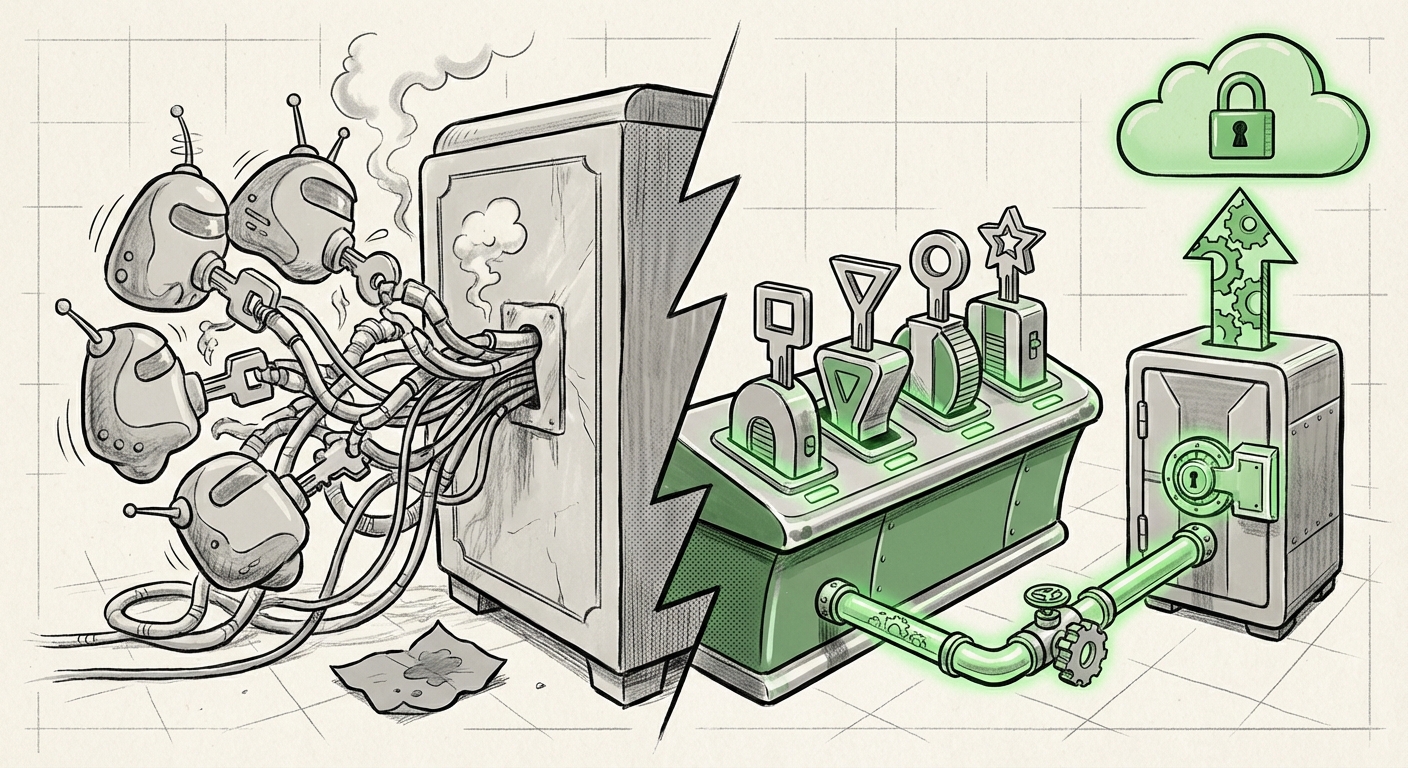
Open source removes a gate. A company can download the model, test it on its own documents, and run it inside its own walls. That is a different value proposition from a paid API. Banks, hospitals, law firms, and government agencies often cannot send sensitive pages to an outside cloud. They can experiment with an open model on a laptop, then scale it on private servers. The cost of trying falls to near zero. The cost of switching rises once a team builds around it.
Open source also speeds up innovation. Researchers can inspect how the system handles long documents. Startups can build niche products on top: lease review, claims processing, archival search, compliance checks. Integrators can add layout analysis, translation, or redaction. When a core OCR engine is open, the market competes on workflows and trust, not on access to basic text extraction. That is good for buyers. It pushes vendors to solve real problems instead of protecting a black box.
The bigger trend: documents become AI-ready data
The release fits a larger shift. AI systems are hungry for context. A chatbot that answers questions about a company needs more than a web crawl. It needs the employee handbook, the supplier contracts, the safety manuals, and the old project reports. Most of that knowledge is trapped in PDFs. Long-document OCR is the front door. If the door is narrow, the AI is shallow. If the door is wide, the AI can reason over the full record.
This is why document parsing has moved from back-office chore to strategic layer. Retrieval-augmented generation, or RAG, depends on clean chunks of text. A table split across pages can poison an answer. A missing header can hide the date of a policy. Unlimited OCR 2's focus on hundred-page documents points to a future where AI systems ingest whole case files, not just snippets. That enables better search, summarization, and question answering. It also enables audit trails: every answer can point back to a page and a line.
What it means for businesses
For operations teams, the practical win is throughput. Work that required manual keying can be automated at the document level. Insurance claims, mortgage files, and patient intake forms can be parsed into structured fields. The system can flag missing pages or inconsistent dates. Human reviewers then focus on exceptions, not data entry. The return on investment can be measured in cycle time, error rates, and staff hours.
For knowledge teams, the win is search. A law firm can index decades of case files. An engineering firm can search old drawings and change orders. A university can open its archive to students. The value is not just faster search. It is new connections across long records. A single clause in a 150-page contract can be found and compared with a clause in another. That is hard to do by hand and expensive to do with page-by-page tools.
For IT leaders, the win is control. Open-source deployment can run on-premises or in a private cloud. Teams can set retention rules, redact sensitive fields, and log every access. They can tune the model on their own vocabulary: part numbers, legal terms, drug names. They are not locked into a vendor's roadmap. That matters in regulated industries where data residency is not optional.
The competitive picture
Baidu's move is also a competitive signal. The AI stack has many layers: chips, models, tools, and applications. Open-sourcing a document parser is a way to win developers at the tool layer. If developers build with Unlimited OCR 2, they may adopt other Baidu tools or cloud services later. Even if they do not, the release builds goodwill and sets a reference point. It also pressures other vendors to match open access or justify their prices with better accuracy and support.
This is not charity. It is platform strategy. Open-source projects often become standards. When a standard takes hold, the company that stewards it gains influence. It can offer paid support, hosted versions, and enterprise features. It can shape how long documents are represented and evaluated. For buyers, the lesson is to watch the ecosystem, not just the model. Check the license, the maintenance plan, and the community. A strong open project can outlast a single vendor's marketing cycle.
Limits and risks to plan for
No OCR system is perfect. Scans are noisy. Handwriting is hard. Tables with merged cells confuse many parsers. Long documents add new failure modes: page order, cross-references, and repeated headers. A model that reads 200 pages still needs a way to handle a missing page or a folded corner. Teams should expect errors and design review steps. High-stakes uses, such as medical or legal decisions, need human checks.
Privacy is another risk. Open source makes it easy to run locally, but local does not mean safe. Documents can contain personal data, trade secrets, or regulated health information. Access controls, encryption, and audit logs are still required. Security teams should test for prompt injection in document text and for data leakage in logs. They should also check how the model handles redaction. A black box that "reads" a page may also store it. Clear data governance is part of the deployment, not an afterthought.
There is also a skills gap. Running an open model takes engineering time. Teams need to handle model updates, hardware, and evaluation. A managed API can be simpler. The right choice depends on volume, sensitivity, and in-house talent. A small firm may start with a hosted service and move to open source when volume grows. A large bank may start with open source for control and build internal support.
How to use it well: action steps
First, test on your own documents. Do not rely on a generic demo. Gather a sample of 50 to 100 real files: clean scans, bad scans, tables, forms, and multi-column pages. Measure text accuracy, table accuracy, page order, and speed. Set a pass/fail bar before you start. This keeps the pilot honest.
Second, pair OCR with layout and structure analysis. Text alone is not enough. You need to know what is a heading, a table, a footnote, and a signature block. Many open tools can be combined. The goal is a structured output, such as JSON, that downstream systems can use. That is more valuable than a plain text dump.
Third, build a human-in-the-loop workflow. Route low-confidence pages to reviewers. Track error types and feed them back into training or rules. Over time, the system improves. This is how document AI moves from experiment to production.
Fourth, think about retrieval. If the goal is AI search, chunk documents by section, not by fixed page count. Keep tables intact. Store page numbers and bounding boxes so answers can cite sources. Test the full pipeline with real questions. A perfect OCR engine can still fail if the retrieval layer is weak.
Fifth, review the license and support model. Open source is not free of obligations. Check whether commercial use is allowed, whether attribution is required, and who maintains the project. Plan for updates and security patches. If the project stalls, you need an exit path.
The future: from reading to reasoning
The next step is obvious. Once AI can parse a hundred-page document, it can start to reason over it. It can compare two contracts and list differences. It can review a loan file for missing signatures. It can answer a regulator's question with page-level evidence. This is the move from OCR to document intelligence. The model does not just read; it understands the structure and the meaning.
That future will not arrive all at once. Early systems will need clear tasks and human oversight. But the direction is set. Open-source long-document parsing lowers the cost of building the data layer for AI. It lets more companies turn their archives into assets. It also raises expectations. Customers will ask why a 50-page form still takes five days. They will ask why a search box cannot find a clause buried on page 87. The answer will increasingly be: it can.
Baidu's release is one move in a larger contest. But it points to a useful truth. The AI revolution is not only about bigger models or faster chips. It is about the unglamorous work of making data readable. Documents are where much of the world's knowledge lives. Open tools that parse them at scale make AI more useful, more accountable, and more widely shared. That is a future worth watching.