Anthropic Says You Don't Need a Mental Model of Claude Code, Here's Why That Claim Matters
For decades, the best software tools came with a simple bargain: learn how they work, and they will work better for you. Developers built mental models of compilers, version control systems, databases, and cloud platforms. Those models helped them predict failures, debug problems, and push tools to their limits.
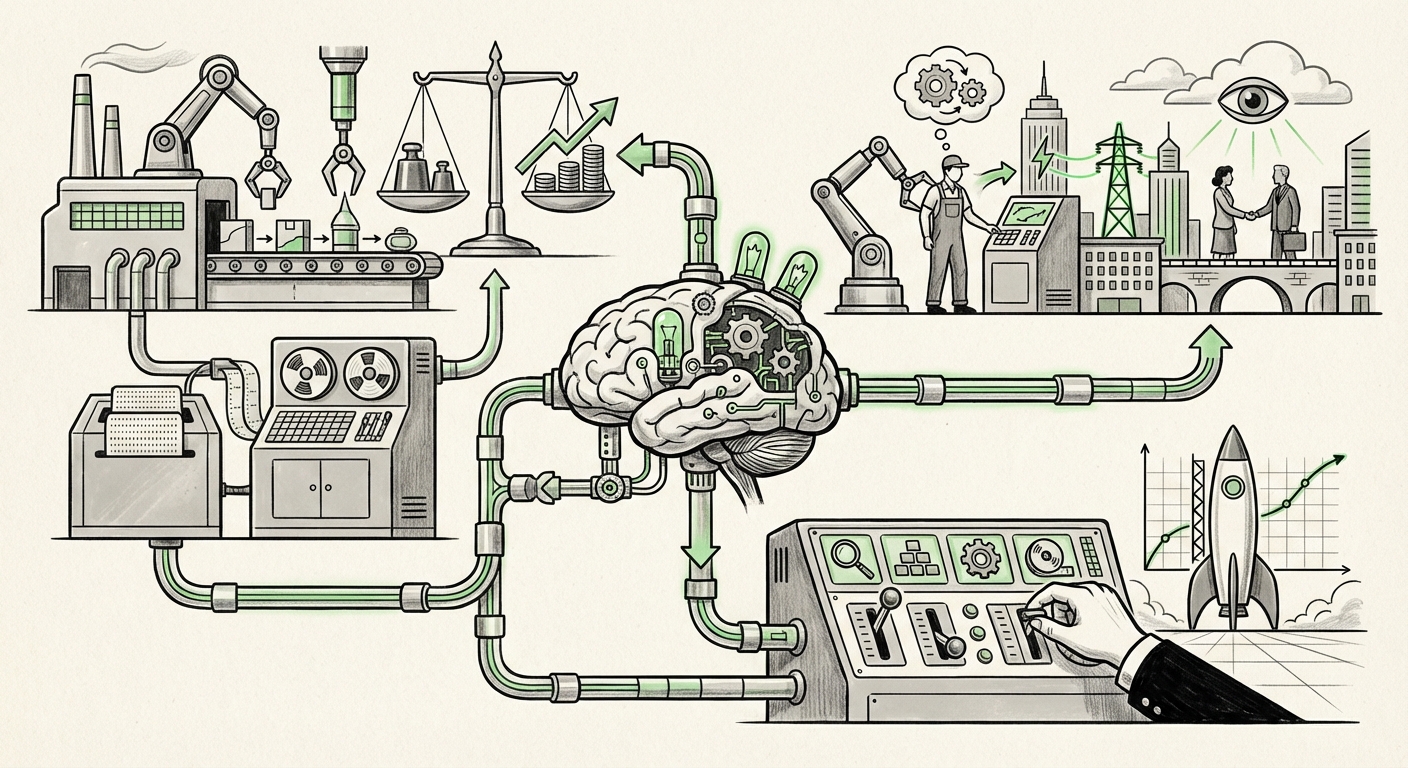
Now Anthropic is making a bold claim about Claude Code: you do not need a mental model of it. In other words, you should not have to understand how the agent plans, calls tools, manages context, or recovers from mistakes. You should be able to describe what you want and let the system handle the rest.
That is a big promise. It is also one that practitioners are actively testing. The result of that test will shape how businesses adopt AI coding agents, how developers learn their craft, and how the next wave of AI tools is designed.
What "No Mental Model Needed" Actually Means
A mental model is the picture in your head of how a system works. For a traditional code editor, it might be simple: you type, the file changes, you save. For a compiler, it is more complex: source code becomes machine code through parsing, optimization, and linking. For an AI coding agent, the mental model is much harder. The agent reads files, decides what to change, runs commands, checks results, and may loop through several steps before finishing.
When Anthropic says nobody needs a mental model of Claude Code, the company is arguing that this complexity should be hidden. The user should not need to know how the agent chooses files, how much context it keeps, or when it decides to ask a question. The tool should behave more like a skilled colleague than a machine with levers and dials.
This is not just a usability claim. It is a product philosophy. It says the value of an AI coding agent comes from outcome-level trust, not from user-level control. If the agent is reliable enough, the user can stay at the level of intent: "fix this bug," "add this feature," "make this test pass."
Why Anthropic Would Make This Argument
There are strong business reasons to push the "no mental model" message. AI coding tools are moving from early adopters to mainstream teams. Early adopters enjoy learning quirks. Mainstream users do not. They want tools that work with minimal training and predictable results.
Every mental model a user must build is a barrier to adoption. It is also a support cost. If users need to understand context windows, tool permissions, and agent loops, vendors must teach those concepts. Documentation grows. Onboarding slows. Support tickets multiply.
There is also a competitive angle. If Claude Code can handle complex work without asking users to manage its internals, it can compete on simplicity. That matters in a market where many AI coding tools look similar on the surface. The winner may be the one that makes the agent feel least like a machine.
But the claim also carries risk. If users have no mental model, they may not know when the tool is wrong. They may trust output they should question. They may not know how to recover when the agent fails. The practitioner's test is really about whether the tool can fail safely when nobody is watching the internals.
The Practitioner's Test: Where Does It Break?
Practitioners are testing the claim in the most practical way possible: by giving Claude Code work that mirrors real projects. That means large codebases, unclear requirements, legacy code, missing tests, and tasks that touch many files at once. The goal is not to see whether the agent can succeed on a clean demo. The goal is to see what happens when the work gets messy.
A useful test usually looks like this. Give the agent a task with a hidden assumption. See whether it asks for clarification or quietly guesses. Give it a codebase with duplicate logic. See whether it changes the right place. Give it a failing test with an ambiguous error. See whether it diagnoses the cause or patches the symptom.
These tests reveal the difference between capability and predictability. An agent can be impressive in a demo and still be hard to trust in production. The "no mental model" claim only holds if the agent's failures are obvious, contained, and easy to reverse.
Practitioners are also testing the human side. If a developer does not understand how the agent works, can they review its output well? Can they spot a subtle security issue? Can they explain the change to a teammate? These questions matter because code is not just produced. It is owned, maintained, and audited.
The Hidden Cost of Skipping the Mental Model
There is a real cost to treating AI coding agents as black boxes. The first is debugging. When something goes wrong, a mental model helps you form a hypothesis. Without one, you may only see symptoms. You may retry the same prompt and get a different result without understanding why.
The second is trust calibration. People tend to either trust a tool too much or too little. A mental model helps you know when to check. It tells you which kinds of tasks are risky and which are routine. Without that model, trust becomes a feeling rather than a judgment.
The third is security and compliance. AI agents can read files, run commands, and change code. Teams need to know what data the agent can access, where that data goes, and what actions it can take. This does not require a deep understanding of the model. It does require a clear model of permissions and boundaries.
The fourth is skill development. Junior developers learn by understanding why code works. If they only see final outputs, they may miss the reasoning. That does not mean they need to understand every internal step of Claude Code. But they do need to understand the code they ship.
Where Mental Models Still Matter
The claim that nobody needs a mental model of Claude Code is best understood as a claim about daily use, not about all use. Most users should not need to think about how the agent works during routine tasks. But someone on the team still needs to understand the boundaries.
That means understanding a few practical things:
- What the agent can access. Which files, folders, secrets, and systems are in scope?
- What the agent can change. Can it edit files, run tests, install packages, or push code?
- How work is reviewed. Who checks the output before it reaches production?
- How failures are handled. What happens when the agent is wrong, stuck, or unsure?
- How cost is controlled. What limits exist on usage, context, and long-running tasks?
These are not deep technical internals. They are governance questions. A team can adopt Claude Code without teaching everyone how the agent plans. But the team cannot skip the conversation about boundaries and review.
What This Means for the Future of AI
The bigger story is a shift in how we think about software tools. For years, power users were rewarded for learning complexity. AI agents invert that. The best agent may be the one that requires the least internal knowledge while still being dependable.
That will push vendors in two directions. First, they will compete on robustness. The agent must handle messy inputs, recover from errors, and avoid silent failures. Second, they will compete on explainability at the right level. Users may not need a mental model, but they do need clear signals when something is uncertain or risky.
This also changes the skills that matter. Prompt writing is useful, but it is not the whole job. The more durable skills are task decomposition, review, testing, and system design. The developer of the future may spend less time typing code and more time defining outcomes and checking quality.
For businesses, the implication is clear. AI coding agents can lower the cost of getting started, but they do not remove the cost of ownership. Teams that treat the agent as a black box without review will take on hidden risk. Teams that pair the agent with strong review and clear boundaries will get the benefit without the surprise.
Practical Advice for Teams Testing the Claim
If you want to test whether you need a mental model of Claude Code, start small and measure what matters. Do not begin with your most critical system. Begin with work that is easy to reverse and easy to review.
Pick a handful of real tasks with clear success criteria. Include at least one ambiguous task and one task that touches multiple files. Track whether the agent asks good questions, whether it changes the right code, and whether its failures are obvious. Review every output before it ships. Over time, you will build a failure map, a list of where the agent is reliable and where it needs a human.
That failure map is more useful than a deep mental model of the agent's internals. It tells you when to trust and when to check. It also gives you a way to onboard new team members without teaching them how the agent works under the hood.
Finally, keep the human in the loop for anything that matters. The "no mental model" claim is a promise about simplicity, not a license to skip review. The teams that succeed with AI coding agents will be the ones that make review easy, fast, and normal.
The Bottom Line
Anthropic's claim is a signal of where AI coding tools are heading. The industry is moving from tools you must learn to tools you can direct. That is a good thing for adoption. It is not a reason to stop thinking about risk.
The practitioners testing the claim are asking the right question: not "can the agent do this?" but "can I trust it when it fails?" The answer will decide whether "no mental model needed" becomes a real shift in software work or just a clever slogan.