TRL v1.0 and the Rise of Post-Training: Why AI Libraries Must Move as Fast as the Field
The biggest AI story is often not the biggest model. It is the work that happens after a model is built. That is where raw machine learning becomes a product that can follow instructions, avoid bad answers, use tools, and fit a real business workflow. The release of TRL v1.0, a post-training library built to move with the field, points to a quiet but important shift. The future of AI will not be won only by whoever trains the largest model. It will also be won by the teams that can adapt, fine-tune, and govern models quickly as methods change.
TRL v1.0 matters because it is a signal. A post-training library that is designed to change with the field is not just a set of tools. It is a bet that AI development will keep moving fast, and that developers need software that can keep up. For technical teams, that means less time rebuilding the plumbing. For business leaders, it means AI projects can move from demo to production with less friction. For society, it means the rules and habits around AI use need to mature at the same speed.
What Post-Training Means in Plain English
Pretraining is the long, expensive phase where a model learns patterns from huge amounts of data. It is like a student reading a giant library. But reading alone does not make someone a good employee. Post-training is the part where the model learns how to behave on the job. It learns to follow instructions, answer in the right format, prefer helpful responses, and avoid harmful ones. It can also learn to use external tools or fit a company’s style and rules.
This phase is where most business value is shaped. Two models with similar base power can feel very different after post-training. One may be sharp but unsafe. Another may be safe but too vague. A third may be excellent at customer support but poor at code. The difference is not just the model. It is the data, the method, the evaluation, and the tooling used to shape it.
That is why a post-training library is more important than it sounds. It gives teams a common way to run experiments, compare methods, and move successful settings into production. When the field changes, the library has to change too. New training methods appear. New safety concerns emerge. New model types arrive. A library that cannot move with the field becomes a bottleneck.
Why “Built to Move with the Field” Is the Key Phrase
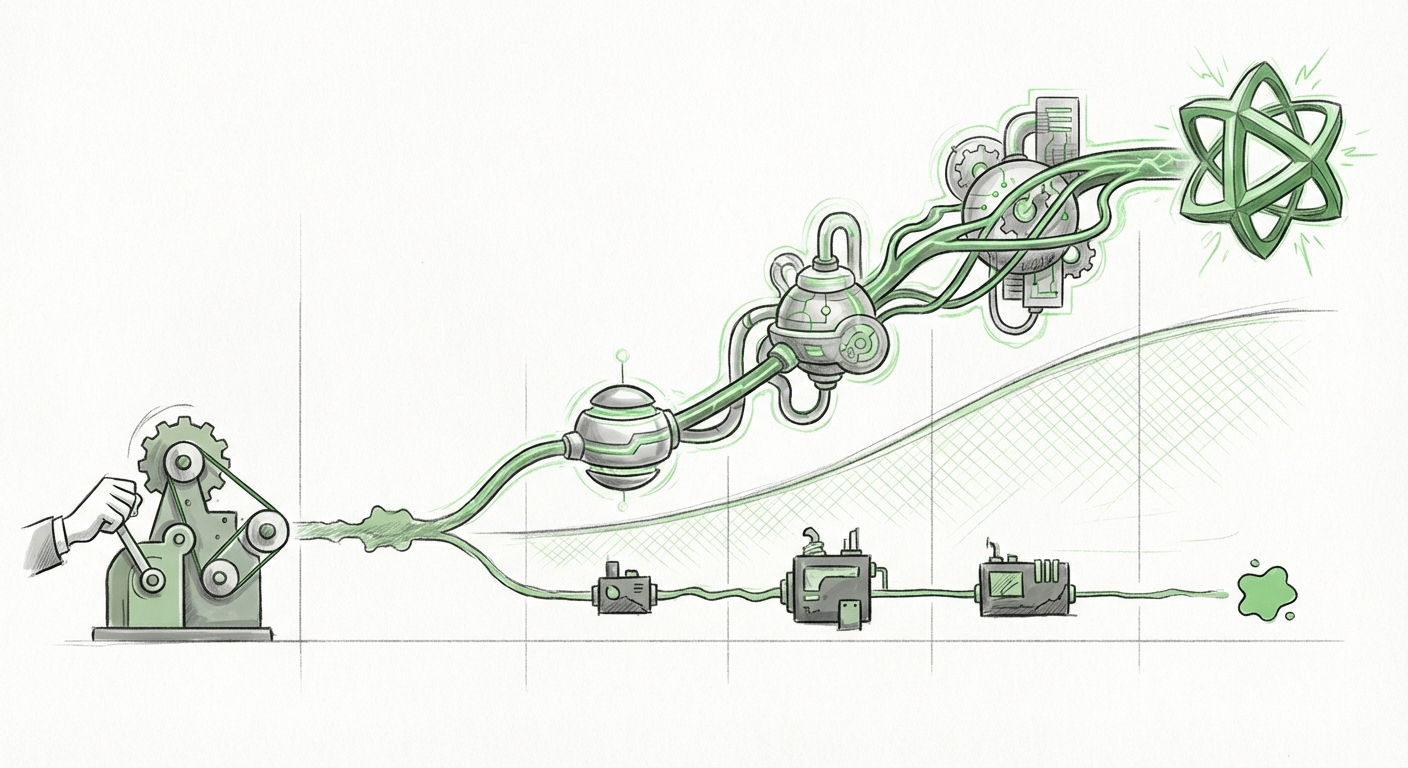
The phrase “built to move with the field” captures the central tension in AI tooling. Teams want stability so they can ship products. They also want flexibility so they can use the latest methods. Too much stability, and the library becomes outdated. Too much change, and teams cannot trust it. TRL v1.0 appears to aim at the middle: a foundation that can support new post-training ideas without forcing every user to start over.
This matters because AI methods do not sit still. The research community keeps finding new ways to tune models, align them with human feedback, and combine them with other systems. A library that is flexible by design can absorb those changes. A library that is rigid forces teams to patch it, fork it, or abandon it. Over time, rigid tools create hidden costs: duplicated work, inconsistent results, and slower product cycles.
For business audiences, the lesson is simple. The AI stack is not a one-time purchase. It is a living system. The tools that win will be the ones that help teams update models without freezing the whole product roadmap. TRL v1.0 is a marker of that shift toward adaptable AI infrastructure.
What a 1.0 Release Signals
A 1.0 label usually tells teams that a project is ready for serious use. It suggests a level of stability, a clearer interface, and a stronger promise that the software will not change wildly from week to week. For a post-training library, that matters. Production AI teams need to know that their training scripts, evaluation steps, and deployment paths will still work after an update.
But 1.0 is not a finish line. In AI, it is more like a starting gun. The field is moving too fast for any library to be “done.” The real promise of TRL v1.0 is not that post-training is solved. It is that the foundation is strong enough to support the next wave of methods. That is a healthier signal than a flashy demo. It says the ecosystem is maturing from one-off experiments to repeatable practice.
This maturation has practical value. When a library reaches a stable version, more teams can build on it. More tutorials appear. More integrations happen. More companies can justify the investment. The result is a flywheel: better tooling leads to more use, more use leads to more feedback, and more feedback leads to better tooling.
Trend One: From Model-Centric AI to Workflow-Centric AI
The AI conversation has been model-centric for years. Which model is biggest? Which scores highest? Which demo looks most impressive? That focus is changing. The real question is now: which model, wrapped in which workflow, solves a specific problem reliably?
Post-training sits at the center of that shift. A general model becomes a specialized tool through data, feedback, and evaluation. A customer service model needs to follow a brand voice. A coding assistant needs to respect a team’s style guide. A healthcare assistant needs to be careful, traceable, and bounded. None of that comes from pretraining alone. It comes from post-training and the systems around it.
TRL v1.0 fits this trend because it supports the layer where customization happens. As more companies move from “we have an AI model” to “we have an AI workflow,” the tools that shape model behavior become just as important as the base model itself. This is a big change in how AI budgets and teams will be organized.
Trend Two: Speed Versus Stability Will Define AI Tooling
Every AI team faces the same trade-off. They can chase every new method and risk chaos. Or they can lock down a stable stack and risk falling behind. The best tools reduce that trade-off. They offer a stable core with flexible edges. They let teams test new ideas without rewriting everything.
A post-training library built to move with the field is valuable because it treats change as normal. That is very different from traditional software, where change is often a risk to be managed. In AI, change is the baseline. New model families, new safety rules, and new user expectations arrive constantly. Tooling has to be designed for that reality.
This has a direct impact on talent. Data scientists and machine learning engineers do not want to spend their days rebuilding training loops. They want to test ideas, measure results, and ship improvements. A library that handles the moving parts gives them more time for the work that actually creates value. That is a competitive advantage, especially for smaller teams that cannot afford large platform groups.
Trend Three: Post-Training Becomes a Business Capability
In the early days of modern AI, many companies assumed they would simply use a vendor’s model through an API. That is still a good option for many use cases. But it is not enough for every use case. When AI is close to the core of a product, companies want more control. They want their own data, their own evaluation, and their own behavior. Post-training is how they get it.
This does not mean every company needs to train a model from scratch. It means more companies will need a post-training practice. They will need clean data, clear goals, and a way to measure success. They will need people who understand how to turn feedback into better model behavior. They will need tools that make that work repeatable.
TRL v1.0 is a sign that this practice is becoming more mainstream. A stable library lowers the barrier. It gives teams a shared language for experiments. It makes it easier to compare methods and share results. Over time, that can turn post-training from a craft into a managed capability.
What This Means for the Future of AI
The future of AI will likely be less about one giant model and more about many tuned systems. Some will be large and general. Many will be smaller and specialized. They will be tuned for a task, a domain, a language, or a workflow. They will be updated as conditions change. Post-training libraries will be the workbench where that tuning happens.
This points to a more continuous model of AI development. Instead of a one-time launch, teams will treat models like products that improve over time. They will collect feedback, adjust training data, test new methods, and roll out updates. The library becomes part of the product lifecycle, not a one-off research tool. That is a much more sustainable view of AI than the hype cycle suggests.
It also points to more agent-like systems. When models can use tools and follow multi-step instructions, the quality of post-training matters even more. A model that is poorly tuned may call the wrong tool, ignore a constraint, or fail to recover from an error. A well-tuned model is more reliable. The library that shapes that behavior is part of the safety layer.
Practical Implications for Businesses
For business leaders, the rise of post-training libraries has several clear implications. First, AI projects should be planned as ongoing programs, not one-time purchases. Budget for data work, evaluation, and updates. Second, teams should avoid locking themselves into a single method too early. The field is moving, and flexibility has real value. Third, data quality is not a side issue. It is the raw material of post-training.
There is also a procurement lesson. When evaluating AI tools, ask how they handle change. Can they adopt new methods? Can they export data and models? Can they support clear evaluation? A tool that cannot move with the field may look cheap today and become expensive later. The same logic applies to internal platforms. Build for adaptation, not just for the first launch.
Finally, governance should grow with the model. Post-training can improve safety, but it can also bake in bias or narrow behavior if the data is poor. Businesses need clear review steps, red-team testing, and usage policies. A stable library helps here because it makes experiments repeatable. Repeatable experiments are easier to audit and improve.
Actionable Insights for Teams Getting Started
- Start with a narrow use case. Pick one workflow where you can measure success. Use post-training to improve that workflow before expanding.
- Treat data as a product. Clean, label, and review the examples you use for post-training. Poor data will limit even the best library.
- Build an evaluation habit. Define what “good” looks like before you tune. Test for accuracy, safety, and tone. Keep a fixed test set so you can compare changes.
- Prefer adaptable tooling. Choose libraries and platforms that can adopt new methods without forcing a full rebuild. Check for stable interfaces and clear upgrade paths.
- Watch the release notes, not just the hype. A 1.0 release is a good moment to review what is stable and what is still changing. Plan upgrades with care.
- Keep humans in the loop. Post-training improves behavior, but it does not remove the need for review in high-stakes settings.
Risks and Open Questions
No library can solve every problem. Post-training still depends on good data, clear goals, and honest evaluation. Teams can overfit to a small test set. They can mistake a polished demo for a reliable system. They can also move too fast and skip safety checks. A library built to move with the field is useful, but it is not a substitute for judgment.
There is also a talent question. Post-training requires a mix of machine learning skill, data discipline, and product sense. Many teams are still learning how to do it well. Stable tools can help, but they do not replace training and experience. Companies should invest in both.
And there is a broader question for society. As more models are tuned for specific purposes, it may become harder for outsiders to understand why a system behaves the way it does. That makes documentation, testing, and transparency more important. The tools that make customization easy should also make accountability easier.
Conclusion: The Quiet Advantage
TRL v1.0 is not the kind of release that trends on social media for a week. It is the kind that shapes how AI gets built for years. A post-training library built to move with the field recognizes a basic truth: AI methods will keep changing. The winners will not be the teams that guess the next method perfectly. They will be the teams that can adapt quickly, measure honestly, and ship safely.
For businesses, the message is to treat post-training as a core capability. For developers, it is to value tools that reduce friction without locking you in. For society, it is to expect AI systems to be updated with care, not just speed. The future of AI will be built in the post-training layer, one adaptation at a time. TRL v1.0 is a clear sign that this layer is growing up.