DeepSeek-V3 From Scratch: What Building the DeepSeek Trainer Yourself Means for AI
For years, the story of artificial intelligence was told through model releases. A lab would announce a new model, publish a score sheet, and the world would measure progress by the size of the number in the name. That story is changing. The more interesting question now is not which model exists, but who can rebuild the machine that made it.
A project simply titled "DeepSeek-V3 from Scratch: Implementing the DeepSeek Trainer" captures that shift perfectly. It is not about downloading a finished model and running it. It is about rebuilding the entire training system, the data pipeline, the distributed training loop, the checkpoints, the evaluation, the post-training stage, that turns raw text into a working model. That is a much harder, and much more revealing, piece of work.
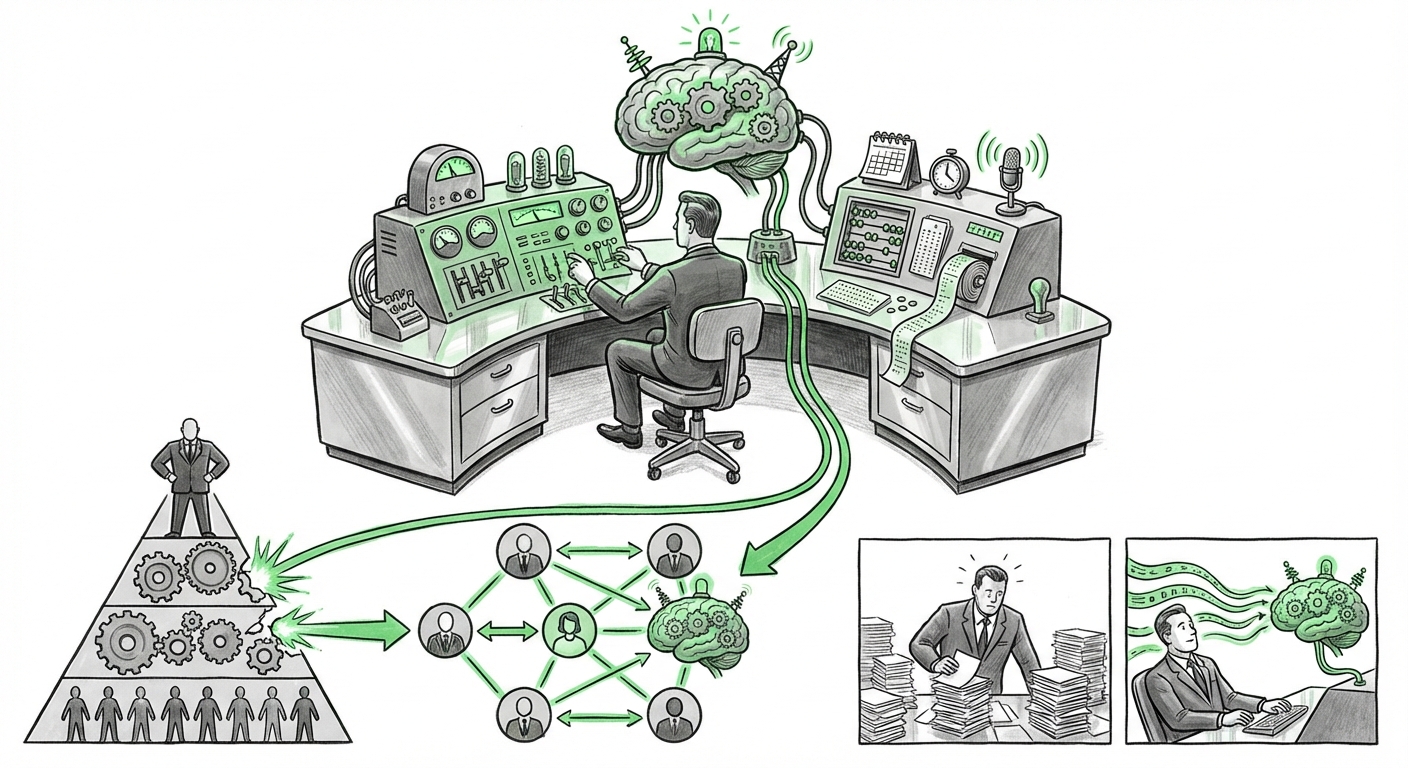
Here is the key idea: the model is the dish. The trainer is the recipe and the kitchen. And in 2026, the kitchen is where the real advantage lives.
What "From Scratch" Actually Means
Most people interact with AI at the very end of a long chain. They type a prompt and get an answer. Somewhat further up the chain, developers download open model weights and fine-tune them. A from-scratch trainer build sits at the very top of the chain, where almost nobody looks.
Rebuilding a trainer means recreating the machinery that:
- Cleans and mixes the training data, deciding what the model reads and in what order.
- Turns text into numbers through a tokenizer, a seemingly small choice that shapes everything downstream.
- Splits the work across many chips, keeping thousands of parallel calculations in sync without wasting time.
- Survives failure. Long training runs break. Hardware dies. Software drifts. A real trainer saves progress and recovers without losing days of work.
- Measures quality, so you know whether the run is working before you have spent the entire budget.
- Shapes behavior after training, through the tuning stages that decide whether a model is useful, safe, and pleasant to talk to.
Anyone can write a training loop that works for ten minutes on a toy dataset. The engineering that matters is what happens over weeks, at scale, when things go wrong quietly.
The Trainer Is Now the Real Product
Model weights age fast. A checkpoint that looks impressive today becomes ordinary within a year, sometimes faster. But the pipeline that produced it does not age the same way. It compounds.
Think of it in three layers:
1. The data engine
This is the part that decides what the model knows. Curation, filtering, balancing, and refreshing data is slow, unglamorous work. It is also the hardest thing to copy from the outside, because the best data pipelines are built on judgment and feedback, not just code.
2. The orchestration layer
This is the plumbing that keeps expensive hardware busy. Small inefficiencies here turn directly into money burned. A ten percent gain in hardware utilization can matter more than a clever new idea in the model design.
3. The feedback loop
This is how a team learns what works. Every experiment should produce a lesson that improves the next run. Teams with a strong feedback loop improve steadily. Teams without one repeat the same expensive mistakes with new names.
When a team rebuilds a known model like DeepSeek-V3 from scratch, they are really stress-testing all three layers. The target model acts as an answer key. If your rebuild does not behave the way the known model does, something in your pipeline is wrong, and finding that something is the whole education.
Why This Is Happening Now
Three forces are pushing rebuild projects from academic curiosity into mainstream engineering practice.
First, the tooling matured. The building blocks of large-scale training, distributed computing libraries, checkpoint systems, experiment trackers, have become far more usable. What used to require a specialist team can now be assembled by a strong engineering group with the right guidance.
Second, knowledge is public. Architecture choices, training tricks, and post-training methods are now widely discussed in technical write-ups and open code. Rebuilding a known model is the fastest way to convert that public knowledge into private skill.
Third, hardware choices widened. Teams are no longer locked into a single vendor's stack. That freedom makes it worthwhile to own your training code, because you can move it to different infrastructure as prices and availability shift.
What It Really Takes: The Unglamorous Truth
Rebuild projects fail for boring reasons far more often than for brilliant ones. Anyone planning one should expect the following realities.
- Reliability beats cleverness. A trainer that runs for weeks without silent corruption is worth more than a trainer with a fancy new trick that crashes on day three.
- Memory is the binding constraint. Every design choice eventually runs into the question of what fits. Splitting a model across chips is as much an art as a science.
- Small experiments must come first. Serious teams run scaled-down versions to test ideas cheaply, then commit to big runs only when the small ones agree. Skipping this step is how budgets disappear.
- Evaluation is not optional. Without a strong way to measure quality, you are flying blind. The most common hidden failure is a run that finishes and looks fine but is quietly worse than the baseline.
- Post-training decides the product. The final tuning stages often matter more to user experience than the raw training run. A technically strong model with weak post-training feels bad to use.
In short: the interesting research happens in the last five percent of the work. The other ninety-five percent is engineering discipline.
What This Means for Businesses
The ability to rebuild a training pipeline changes the balance of power between companies and their AI suppliers.
Negotiating leverage improves
If you can credibly build your own system, you are no longer a price-taker. Even if you never train a frontier model in-house, the option has value. Vendors know it, and pricing conversations change.
Build-versus-buy becomes a real question
For most routine tasks, buying access to a model is still cheaper than building one. But for high-volume, specialized, or sensitive workloads, owning a smaller model trained on your own data can win on cost, privacy, and control. The right answer differs by task, and it should be decided task by task, not company-wide.
Sovereignty and compliance get easier
Regulated industries face strict rules about where data goes and who can see it. Owning a training pipeline makes it far easier to prove what data touched the model and where the model runs. That is a paperwork advantage that turns into a sales advantage.
Talent becomes the bottleneck
Trainer engineers, people who understand data pipelines, distributed systems, and evaluation together, are scarce. They are also unusually valuable, because their work improves every future model the company makes. Hiring and retaining them is a strategic decision, not a staffing detail.
The Risks Nobody Talks About
Rebuilding is powerful, but it comes with real dangers.
Imitation is not innovation. Recreating a known model proves you can follow a map. It does not prove you can draw one. Companies should be careful not to confuse reproducibility with research capability. The rebuild is a training exercise; the next step must be doing something original.
Hidden costs are easy to underestimate. Demonstration projects often quietly benefit from generous access to compute, patient engineers, and a lot of failed attempts that never get mentioned. Budget for the failures, because there will be many.
The reproducibility gap is real. Published descriptions of training methods are always simpler than the actual code. Teams should expect weeks of debugging just to match behavior they thought they understood.
Safety guardrails do not scale automatically. As training methods spread, more people can build capable systems with less oversight. Data provenance, misuse testing, and clear documentation need to be built into the pipeline from day one, not bolted on later.
What This Means for the Future of AI
If rebuilding a strong model becomes a routine engineering project rather than a rare research feat, several things follow.
The moat moves. Raw model quality will matter less as a differentiator. What will matter is proprietary data, distribution, user feedback, and the speed at which a team can turn a lesson into a better model. In other words, the advantage shifts from the artifact to the organization.
Training stacks become infrastructure. Just as few companies write their own operating system, most will eventually use standardized training frameworks. A small number of teams will maintain them, and everyone else will build on top. That is a healthy, maturing pattern for any technology.
The ecosystem splits into tiers. A handful of labs will push the frontier. A much larger group will rebuild, adapt, and specialize. Specialists often win in the market even when they lose on the leaderboard, because they solve a specific problem better and cheaper.
Auditing becomes a product category. Once many organizations can train models, the ability to check what went into a model becomes valuable. Independent evaluation, data lineage, and reproducible testing are likely to grow into their own industry.
Education catches up fast. Rebuild projects are exceptional teaching tools. Expect universities, internal training programs, and bootcamps to lean on them, the same way earlier generations of engineers learned by writing a small compiler or operating system.
An Actionable Playbook
For teams thinking about following the same path, here is a practical sequence.
- Start with a scaled-down replica. Prove the full pipeline end to end at a size you can afford to fail at, many times over.
- Build the evaluation harness before the model. You cannot improve what you cannot measure. Make measurement the first deliverable.
- Track cost per experiment, not cost per project. This single habit prevents most budget blowups.
- Invest early in checkpointing and recovery. Assume hardware will fail. Design so failure costs hours, not weeks.
- Treat data as a product with owners, versions, and quality checks. It is the asset that outlasts every model you train.
- Decide build-versus-buy per use case. Run the numbers for each workload separately. Blanket policies are almost always wrong.
- Write down what you learn. The pipeline is the asset, but the documentation is what makes it reusable by people who were not in the room.
- Plan the post-training stage from the start. How the model behaves in production is decided there, not in the main training run.
The Bottom Line
Rebuilding the DeepSeek trainer from scratch is more than a technical exercise. It is a signal about where the industry is heading. The mystery is moving out of the model and into the process. Models will keep changing names and numbers, but the teams that understand the machinery underneath, data, orchestration, measurement, and feedback, will keep getting better regardless of which model is fashionable.
That is the real lesson. The era of admiring finished models is ending. The era of building the kitchen has begun.