DeepSeek-Prover-V2: How Recursive Proof Search and a New Benchmark Could Change AI Math and Software Verification
DeepSeek has unveiled DeepSeek-Prover-V2, a new AI system for neural theorem proving that introduces recursive proof search and a new benchmark. On the surface, this sounds like a niche advance in mathematics. In reality, it points to something much bigger: AI that can reason step by step, check its own work, and solve problems where being “mostly right” is not good enough. Theorem proving is a proving ground for the next generation of reliable AI.
The announcement matters because theorem proving is one of the hardest tests for machine intelligence. Unlike writing a poem or summarizing an article, a mathematical proof is either correct or incorrect. There is no gray area. When AI can produce and verify proofs, it gains a skill that translates directly into safer software, more trustworthy AI systems, and better tools for research and education. DeepSeek’s focus on recursive proof search and a new benchmark signals where the company believes the next breakthroughs will come from.
Why Theorem Proving Is the Next Big Frontier for AI
Most people know AI from chatbots and image generators. Those systems are impressive, but they can make things up. A chatbot can invent a fact, a citation, or a mathematical statement that sounds true but is false. That is a serious problem when you need to rely on AI for high-stakes work. Theorem proving offers a fix. In a proof, every step must follow logically from the previous ones. If a step is wrong, the proof fails. This makes theorem proving a natural training ground for AI that must be accurate.
Formal theorem proving also has a long history in computer science. Tools like proof assistants let humans and machines work together to verify mathematical statements and software code. These tools are already used in industry to prove that critical systems work correctly. For example, they can help verify that a chip design has no bugs or that a security protocol cannot be broken. But formal proofs are often slow and require expert humans. AI that can search for proofs automatically could dramatically speed up this work.
DeepSeek is not the first group to work on neural theorem proving, but the release of DeepSeek-Prover-V2 with recursive proof search is a sign that the field is maturing. The goal is no longer just to solve easy puzzles. The goal is to build AI that can tackle long, complex proofs by breaking them into smaller pieces. That is exactly what recursive proof search promises.
What Recursive Proof Search Actually Means
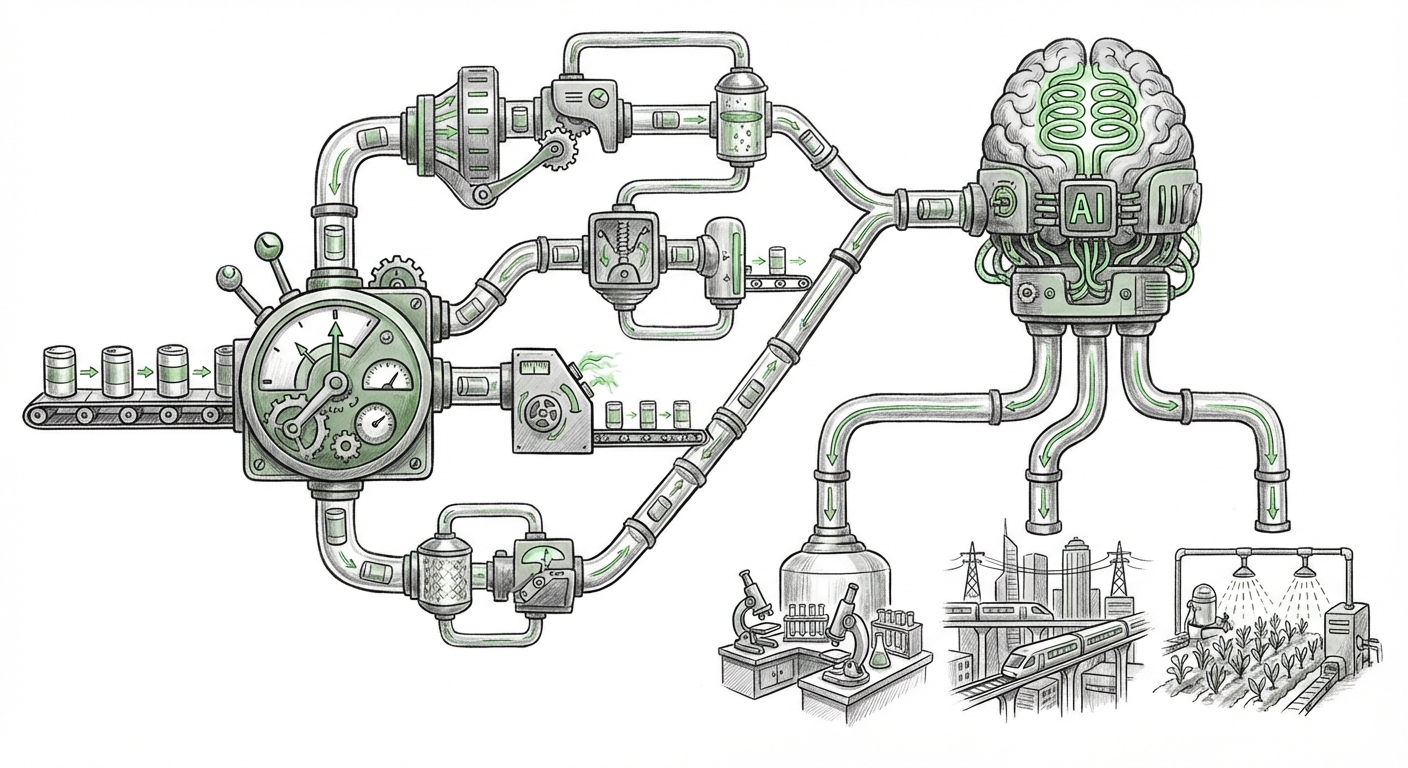
Recursive proof search is a simple idea with powerful consequences. Imagine you need to prove a hard theorem. Instead of trying to solve it all at once, you break it into smaller lemmas, or sub-theorems. You prove each lemma, then use those results to prove the main theorem. If a lemma is still too hard, you break it down again. This is recursion: solving a problem by solving smaller versions of the same problem.
For AI, this is a major shift. Many AI systems try to produce an answer in one shot. They generate a sequence of tokens and hope it works. That approach struggles with long reasoning chains because small errors compound. Recursive proof search lets the AI plan, test subgoals, and use verified results as building blocks. It is closer to how human mathematicians work: they do not prove a difficult theorem in one leap. They build up a library of lemmas and then combine them.
This approach also connects to the broader trend of AI agents. An agent is an AI system that can take actions, observe results, and adjust its plan. Recursive proof search is an agentic behavior. The system proposes a subgoal, searches for a proof, checks if it works, and if not, tries another approach. This kind of loop is essential for long-horizon reasoning, where the AI must stay on track across many steps. DeepSeek-Prover-V2’s emphasis on recursion suggests the company is building AI that can manage complexity rather than just pattern-match.
Why recursion matters for reliability
When an AI can verify each sub-proof, it can catch its own mistakes early. That reduces the chance of producing a convincing but wrong proof. In software verification, this is critical. A single missed bug can cause a security failure. Recursive proof search gives AI a way to be more careful, one step at a time.
The New Benchmark and Why It Matters
DeepSeek-Prover-V2 also introduces a new benchmark. Benchmarks are the scoreboards of AI research. They let researchers compare different systems on the same tasks. Without good benchmarks, progress is hard to measure. A new benchmark for theorem proving can focus attention on the problems that matter most. It can also expose weaknesses. If a model does well on easy problems but fails on harder ones, the benchmark shows that.
The new benchmark likely targets the challenges that recursive proof search is designed to solve: multi-step reasoning, subgoal decomposition, and long proofs. By releasing a benchmark alongside the model, DeepSeek is inviting the research community to test and improve on its work. This is how fields move forward. A model alone is useful, but a model plus a benchmark creates a shared standard. It helps everyone know what “good” looks like and where the next breakthroughs are needed.
For businesses, benchmarks matter because they indicate maturity. When a field has standard benchmarks, it becomes easier to evaluate vendors and tools. You can ask: How does this system perform on the benchmark? Is it improving quickly? Are there open results? That kind of transparency is essential for adoption. DeepSeek’s new benchmark could help companies compare theorem-proving tools and decide when they are ready for real-world use.
What This Means for the Future of AI
The bigger story is that AI is moving from generation to verification. Generative AI creates content. Verification AI checks whether content is correct. Both are needed. DeepSeek-Prover-V2 is a step toward AI that can verify its own reasoning. That could lead to AI systems that are far more trustworthy. Instead of asking users to double-check everything, the AI can prove that its answer follows from known facts.
This has huge implications for software development. Most software is still tested, not proven correct. Testing finds bugs, but it cannot guarantee that no bugs exist. Formal verification can provide that guarantee, but it is expensive and slow. AI-powered theorem proving could make formal verification cheaper and faster. Developers could use AI to prove that a function behaves correctly, that a security protocol is safe, or that a smart contract cannot be exploited. DeepSeek-Prover-V2’s recursive search is a building block for that future.
It also matters for AI safety. One way to make AI safer is to verify its behavior against formal rules. If an AI system can prove that its actions satisfy a set of constraints, we can trust it more. Theorem proving is a tool for building that kind of trust. As AI systems become more autonomous, the ability to formally verify their decisions will become essential. DeepSeek’s work on proof search is a step in that direction.
Finally, theorem proving advances AI for science. Mathematics is the language of science. AI that can help prove theorems can also help derive new results in physics, economics, and engineering. It can check whether a theoretical model is consistent. It can explore conjectures and find counterexamples. DeepSeek-Prover-V2 is not a general scientist, but it is a tool that scientists could use to automate part of their reasoning work.
Practical Implications for Businesses and Society
For business leaders, the key question is: when will this technology be useful? The answer depends on the domain. Some areas are already seeing early adoption. Formal verification is used in chip design, aerospace, and cybersecurity. AI-powered theorem proving could accelerate those efforts. Companies in these fields should watch DeepSeek-Prover-V2 and similar systems closely. They should also experiment with proof assistants and AI-assisted verification tools.
In finance, formal methods can help model complex contracts and risk rules. A theorem prover could check that a trading algorithm never violates a risk limit, or that a smart contract has no loopholes. In healthcare, formal verification can help ensure that medical devices follow safety rules. In legal tech, theorem proving could help analyze contracts and regulations for logical consistency. These are high-stakes areas where being “probably right” is not enough.
For education, AI theorem provers could change how math is taught. Instead of just checking answers, an AI tutor could check a student’s proof step by step. It could point out exactly where the logic fails. That kind of feedback is valuable and hard to scale with human teachers. DeepSeek-Prover-V2’s recursive approach could make such tutors more capable. They could break a problem into subgoals and guide a student through each one.
For society, the rise of AI theorem provers raises questions about trust and transparency. If an AI produces a proof, can we understand it? Formal proofs are often long and technical. We may need new tools to explain proofs to non-experts. There is also a risk of over-reliance. If people trust AI proofs without question, they may miss errors. The right approach is human-AI collaboration: the AI searches for proofs, and humans review the results and the assumptions. DeepSeek’s new benchmark can help by making it easier to compare systems and identify their limits.
Actionable insights
- For developers: Start exploring theorem-proving APIs and open-source proof assistants. Even if you are not building a prover, understanding formal methods can help you write safer code. Look for ways to integrate lightweight verification into your workflow.
- For business leaders: Identify high-stakes processes where correctness is critical. Ask your engineering teams whether formal verification could reduce risk. Pilot AI-assisted verification in a small project, and measure the time saved and bugs caught.
- For educators: Use AI proof checkers to give students step-by-step feedback. Teach students how to write formal proofs, not just solve equations. The ability to reason logically will become more valuable as AI handles routine calculation.
- For policymakers: Support standards for AI verification. Encourage transparency in how AI systems prove their claims. Fund research into explainable proofs and human-AI collaboration.
It is also important to avoid hype. DeepSeek-Prover-V2 is an advance, but it is not a solved problem. Theorem proving remains hard. Recursive search can blow up in complexity. Benchmarks can be gamed. Models can fail on problems that require creativity or deep insight. The announcement is best seen as a sign of direction, not a finish line. The direction is clear: AI is getting better at structured reasoning, and that will have ripple effects across the economy.
The Road Ahead
DeepSeek-Prover-V2’s combination of recursive proof search and a new benchmark is a meaningful contribution. It pushes the field toward AI that can plan, verify, and build on its own results. That is a foundation for more reliable AI in software, science, and education. The companies and countries that invest in formal reasoning and verification will be better prepared for a future where AI systems must be trusted, not just impressive.
For now, the practical takeaway is to pay attention. Watch how the new benchmark is used. Look for follow-up work that builds on recursive proof search. Experiment with theorem-proving tools in your own domain. The AI that can prove a theorem today may be the AI that secures your software, checks your contracts, and tutors your children tomorrow. DeepSeek’s release is a reminder that the most important AI advances may not be the loudest ones. They may be the ones that quietly make AI more correct.