Waypoint-1: Real-Time Interactive Video Diffusion Is About to Change How We Use AI
For the last few years, AI video has mostly been something you wait for. You type a prompt, you hit generate, you wait, and eventually a short clip appears. It was impressive, but it was passive. You watched the result, then you started over.
On January 20, 2026, Overworld introduced Waypoint-1, and the headline is not really about video quality. It is about speed and control. Waypoint-1 is described as real-time interactive video diffusion, meaning the video is generated as you interact with it, not after you walk away. That is a small sentence with very large consequences.
This article breaks down what Waypoint-1 signals, why "real-time interactive" is the line that matters, and what businesses, creators, and everyday users should do about it.
What Waypoint-1 Actually Signals
Video diffusion models work by starting with noise and gradually refining it into a coherent image sequence. That process has historically been heavy. It takes serious compute, and it takes time. The output is beautiful, but it is a finished product, not a live system.
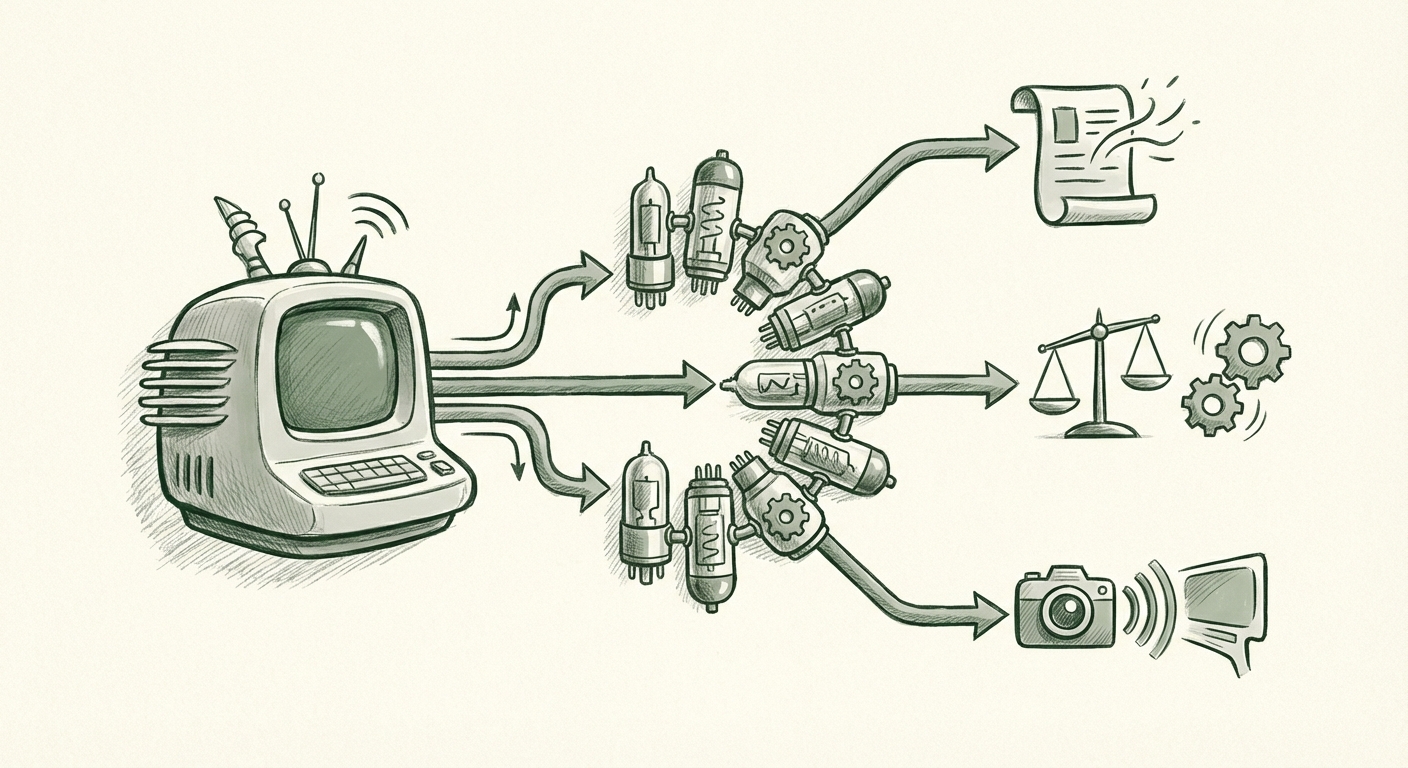
Waypoint-1 flips that from a product into a medium. The phrase "real-time interactive" tells us three things at once:
- Real-time: the model has to produce frames fast enough that a person can respond to them without breaking the experience. Latency, not just fidelity, becomes the core engineering problem.
- Interactive: your input, movement, a choice, a camera angle, a command, flows into the generation. The video is not pre-rendered; it is responding to you.
- Video diffusion: the underlying method is still diffusion-based generation, which means the visuals carry the same rich, generative, "created from scratch" quality that made this class of models famous.
Put together, Waypoint-1 points at a world where AI does not hand you a video. It hands you a world you can move through.
Why "Real-Time" Is the Real Breakthrough
There is a simple way to understand why this matters. Think about the difference between sending a letter and making a phone call. The letter can be more carefully written. But the phone call is where the relationship happens.
Most AI generation today is a letter. Real-time generation is a phone call. And once a technology becomes conversational, everything downstream changes:
- Iteration collapses. Instead of generating ten versions and picking one, you steer the output live. Creative decisions happen in the moment.
- Failure becomes cheap. When feedback is instant, trying something silly costs nothing. Exploration goes up.
- New product categories open up. You cannot build an interactive experience on top of a system that takes minutes per clip. You can build one on top of a system that responds at conversational speed.
- Human judgment stays in the loop. The person is not approving a finished artifact. They are co-driving the generation. That is a fundamentally different relationship with AI.
This is the same shift that happened when image generation moved from overnight batches to a few seconds. The quality mattered, but the tempo is what changed who could use it and how.
From Video You Watch to Worlds You Touch
The most obvious home for technology like Waypoint-1 is interactive entertainment. Games, virtual spaces, and playable scenes have always been expensive to build. Every environment, every texture, every animation is crafted by hand or heavily authored.
Real-time interactive diffusion suggests a different model: describe the world, then walk around inside it. The system generates what you see as you see it, shaped by where you go and what you do. That does not automatically replace traditional game development, but it creates a new layer on top of it, one where content is generated on demand rather than shipped in a fixed package.
The implications reach well past games:
Training and simulation
Robots and autonomous systems need enormous amounts of varied visual experience to learn safely. A system that can generate responsive, realistic environments in real time is a training ground that never runs out of scenarios. The same logic applies to human training, emergency responders, pilots, surgeons, and equipment operators could rehearse inside generated situations that adapt to their choices.
Design and prototyping
Architects, product designers, and filmmakers could step into an idea instead of rendering a still. A client does not look at a picture of a lobby; they look around it. Feedback loops that used to take days could shrink to a conversation.
Education and storytelling
Explorable explanations become possible. Instead of reading about a historical site or a biological process, a learner could move through a generated version of it and ask "what happens if I do this?" The material responds.
The Engineering Reality Behind the Hype
It is worth being clear about how hard this is. Real-time interactive generation is a brutal combination of constraints. The model must be fast, but it must also stay consistent, the world cannot morph into something unrecognizable the moment you turn around. It must be responsive to input, but it also must be stable enough that the user's actions feel like they matter.
Those goals pull against each other. Speed usually comes at the cost of quality. Interactivity usually comes at the cost of coherence. Consistency over time is one of the hardest problems in generative video, because errors compound: a small drift in frame one becomes a completely different world by frame one thousand.
That is why a real-time interactive video diffusion system is more than a demo. It implies a stack of engineering choices, about how much of the world is remembered versus regenerated, how input is translated into control, and how compute is spent frame by frame. Waypoint-1 is a signal that those problems are being attacked directly, not worked around.
What This Means for Businesses
For most organizations, the takeaway is not "build a video diffusion model." It is that interactive generation is becoming a design assumption, not a novelty. A few practical implications:
- Content becomes a service, not a deliverable. If visuals can be generated in response to a user, the value moves from the asset to the system that produces it. Companies should start thinking about their content as a live capability rather than a library of finished files.
- Prototyping gets dramatically cheaper. Teams that can explore ideas at conversational speed will out-iterate teams that cannot. Expect the gap between fast and slow product organizations to widen.
- New interface expectations. Once people experience a responsive, generated environment, static 3D scenes and pre-rendered walkthroughs will feel dated. Customer-facing experiences will be judged on responsiveness.
- Compute planning becomes strategy. Real-time generation is compute-hungry by nature. The businesses that win will be the ones that treat inference cost as a first-class design constraint, not an afterthought.
- Trust and provenance move to the front. Generated worlds that respond live are harder to fact-check than a single image. Clear labeling, audit trails, and content policy need to be designed in from day one.
The Risks Nobody Should Skip
Any technology that can generate convincing, responsive visuals in real time carries real risks. The same system that lets a designer explore a building could let someone manufacture a persuasive fake scenario. Real-time interactivity makes synthetic media feel more authentic, because responsiveness is something our brains associate with reality.
There are practical concerns too. Real-time generation is expensive, which raises questions about who gets access and at what price. Consistency failures could produce confusing or unusable experiences. And there is a labor question: if environments can be generated on demand, the roles that build them will change shape, even if they do not disappear.
None of these are reasons to slow down. They are reasons to build the guardrails early, while the technology is still finding its form.
Actionable Insights: How to Prepare
- Experiment now, at small scale. Pick one workflow where waiting for renders is a bottleneck. Prototype an interactive alternative, even roughly. The learning is in the loop, not the demo.
- Track latency as a metric. If interactive generation becomes standard, response time becomes a competitive feature. Start measuring what "fast enough" means for your users today.
- Redesign for co-creation. Train teams to steer generative systems rather than approve them. The skill of the next few years is directing, not just prompting.
- Invest in consistency, not just beauty. The hardest part of interactive worlds is memory, things staying the same. Value vendors and tools on stability as much as on visual polish.
- Write your policy before you need it. Decide how your organization will label, review, and govern generated interactive content while the stakes are low.
- Watch the simulation angle. If real-time interactive generation matures, the biggest long-term impact may be in training environments rather than entertainment.
The Bigger Picture
Waypoint-1 arrives at a moment when generative AI is moving from producing artifacts to producing experiences. The first wave gave us images, then video, then audio, all of them things you receive. The next wave gives us systems you participate in.
That shift changes the questions we ask. Instead of "how good is the output?", we start asking "how well does it respond?", "how fast does it adapt?", "does it hold together when I push on it?" Those are the questions of a medium, not a tool.
Real-time interactive video diffusion will not replace film, games, or simulation overnight. But it draws a clear line in the sand: the era of waiting for AI to finish is ending. The era of AI you move through has begun, and Waypoint-1 is one of the first clear markers of it.