Apple Opens Siri to AI: What It Means for the Future of Voice Assistants, Business, and Everyday Life
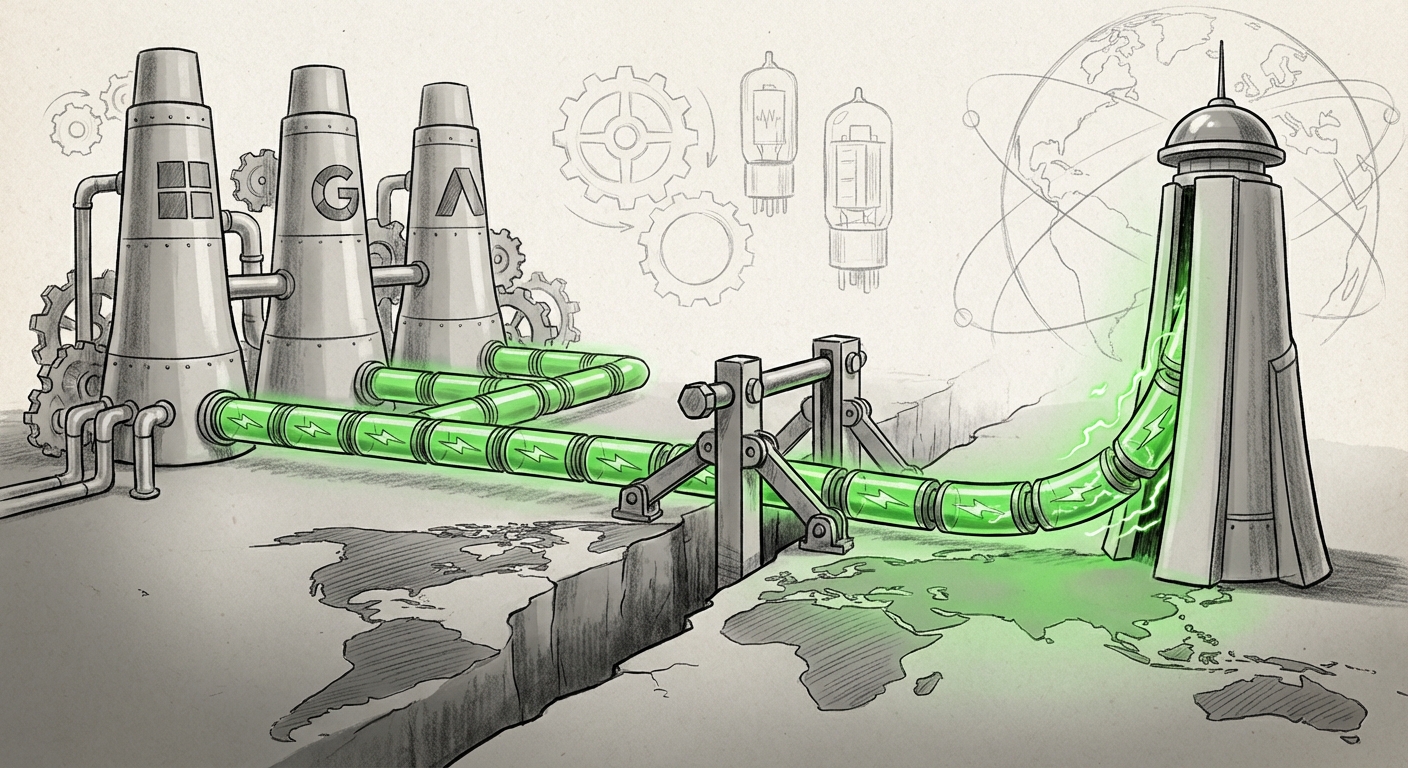
Apple has cracked the door open to Siri AI. That single move may look small from the outside. It is not. It is a signal that the voice assistant is changing from a closed, simple helper into something much more powerful: an AI-powered front door to daily life, work, and commerce.
The phrase “cracks the door open” matters. A cracked door is not a wide-open platform. It is a test. It is a controlled step. But it is also a clear admission that the old way of building a voice assistant is no longer enough. Apple is letting AI into Siri. That changes what Siri can do, what users will expect, and what businesses must prepare for.
The Door Is Cracked, Not Flung Open
For years, Siri was built as a tightly controlled assistant. It handled commands, set timers, played music, and answered simple questions. That model worked when voice assistants were new. It does not work in an age of AI that can reason, summarize, plan, and take action across apps and services.
By opening Siri to AI, Apple is acknowledging a new reality. Users do not want a voice assistant that only follows rigid commands. They want an assistant that understands context, remembers what matters, and helps complete tasks. They want to say, “Find the best option and handle it,” not “Open this app and tap that button.”
But Apple is not throwing the door wide open. The word “cracks” suggests caution. Apple is likely testing how much AI to allow, where to allow it, and how to keep trust intact. That is smart. A fully open assistant can become chaotic, unsafe, or confusing. A carefully opened assistant can become useful, reliable, and mainstream.
This is classic Apple pacing. The company rarely rushes to be first. It tries to be the one that makes a technology feel normal, safe, and easy. If Apple can do that with AI in Siri, it could bring AI assistants to millions of people who would never download a separate AI app.
Why This Is Bigger Than a Siri Update
It is tempting to see this as a feature update. It is more than that. The assistant layer is becoming the most important layer in computing. It sits between the user and every app, every service, and every piece of information. The company that controls that layer controls the starting point for millions of daily decisions.
If Siri can tap into AI, it becomes a router. It decides which capability to use, which app to call, which answer to give, and which action to take. That is a platform shift. Competition is no longer just about who has the best standalone AI chatbot. It is about who owns the front door.
Apple has a strong front door. Siri is built into devices people already use every day. Opening that door to AI could turn Siri into a distribution channel for AI services. It could also make third-party AI tools more useful because they can be reached through a familiar assistant. The door is cracked, but the hallway behind it is large.
Trend 1: Assistants Become AI Orchestrators
The first big trend is the shift from command-based assistants to AI orchestrators. An orchestrator does not just answer. It coordinates. It breaks a request into steps. It chooses tools. It checks results. It asks for missing details. It finishes the job.
For example, a user might ask for help planning a trip, comparing products, preparing a meeting, or organizing a project. A simple assistant can open apps. An AI orchestrator can work across them. That is the future Siri is stepping toward by opening to AI.
This matters because orchestration is where AI becomes genuinely useful. A chatbot that writes text is helpful. An assistant that can act on the text is transformative. The more Siri can orchestrate, the more it becomes a true digital assistant rather than a voice remote control.
Trend 2: Privacy Becomes the Product
Apple has built trust around privacy. Opening Siri to AI creates a tension. AI needs context to be useful. Context often means personal data. Users will want the benefits of AI without feeling that their lives are being mined.
This is where Apple can differentiate. If Apple can open Siri to AI while keeping strong privacy controls, it could own the “trusted AI assistant” position. That would be a powerful brand promise. Many people are excited about AI but worried about surveillance, data misuse, and runaway automation. A Siri that feels safe could win them over.
The key will be transparency. Users need to know when AI is involved, what data is used, and how to stay in control. If Apple gets this right, privacy stops being a constraint and becomes the product. If it gets it wrong, the cracked door could let in exactly the kind of mistrust Apple has worked to avoid.
Trend 3: Voice Becomes a Business Channel
Businesses should pay close attention. When Siri gets more AI, voice becomes a real channel for discovery, service, and transactions. Customers will ask assistants for recommendations, support, bookings, and comparisons. The assistant will shape what they see and what they choose.
That means businesses need to be ready for conversational discovery. Today, many companies optimize for search engines and app stores. Tomorrow, they may need to optimize for assistants. Clear product information, accurate availability, strong support content, and easy actions will matter more than ever.
If an AI assistant cannot understand a business’s offerings, it may skip that business entirely. If an assistant can complete a task smoothly, it may send more customers through. The assistant becomes a gatekeeper and a guide at the same time.
Trend 4: The App Model Shifts Toward Intent and Action
The app model has been built around screens and taps. AI assistants change that. Users express intent, and the assistant finds a way to fulfill it. This pushes developers toward APIs, structured data, and action-ready services.
Apps will still matter, but they may become less visible. The assistant may handle the first step, the search, the comparison, and the confirmation. The app becomes the engine behind the experience. That is a big change for product teams. It means designing for intent, not just for screens.
Developers should think about how their services can be discovered and used by an AI assistant. Can the assistant understand what the service does? Can it check availability? Can it complete a task safely? Can it hand control back to the user when needed? These questions will define the next wave of app design.
What It Means for Businesses
For business leaders, the message is simple: prepare for an assistant-first world, even if the door is only cracked today. The move signals where the market is going. AI assistants will become more common, more capable, and more trusted. Companies that adapt early will have an advantage.
- Design for conversational discovery. Make it easy for an AI assistant to understand your products, services, hours, prices, and policies. Use clear language and structured information.
- Build action-ready experiences. Let customers book, buy, change, cancel, or get support without unnecessary steps. Assistants favor services that are easy to complete.
- Invest in trust and privacy. Be transparent about data use. Give customers control. Trust will be a competitive advantage in an AI-mediated world.
- Measure assistant referrals. Track how customers arrive through voice and AI channels. Learn what requests lead to conversions and where assistants get stuck.
- Keep a human fallback. AI assistants will make mistakes. Fast, clear human support remains essential.
What It Means for Society
The social impact could be large. A more capable Siri could make technology easier to use for people with disabilities, older adults, and anyone who finds screens and menus hard to manage. Voice can be a great equalizer when it works well.
But there are risks. People may over-trust assistants. AI can be wrong, biased, or manipulated. If an assistant becomes the main gatekeeper for information and services, it must be accountable. Users need clear signals about what is AI-generated, what is sponsored, and what is verified.
There is also a dependency risk. If people stop learning how to find information or complete tasks on their own, they may become less resilient when AI fails. The goal should be augmentation, not replacement. Assistants should make people more capable, not more helpless.
Risks and Guardrails
The biggest risk is that the cracked door becomes either too closed or too open. If Apple opens too little, Siri may fall behind and feel outdated. If Apple opens too much without guardrails, users may face confusing answers, privacy leaks, or unsafe actions.
The right path is a managed opening. Apple needs clear rules for which AI capabilities are allowed, how data is handled, how errors are reported, and how users stay in control. It also needs to keep competition fair so that third-party services are not locked out or disadvantaged.
Regulators will be watching too. As AI assistants become more powerful, questions about competition, liability, and consumer protection will grow. Companies that build trust early will be better prepared for those questions.
Actionable Insights
- For product leaders: Map the top user intents in your product and ask how an AI assistant could complete them faster. Remove friction from high-value tasks.
- For marketers: Start treating voice and assistant discovery as a real channel. Write clear, factual content that AI can understand and trust.
- For developers: Build clean APIs and structured data. Make your service easy to call, easy to explain, and easy to hand back to the user.
- For executives: Put AI assistant strategy on the roadmap now. The door is cracked, but the direction is clear.
- For policymakers: Focus on transparency, data control, and fair access. Avoid rules that freeze the market before it can mature.
Conclusion
Apple cracking the door open to Siri AI is a small phrase with a large meaning. It signals that the voice assistant is no longer a side feature. It is becoming an AI-powered front door to computing. That shift will change how people search, shop, work, and get help.
The door is not wide open yet. That is exactly why this is the moment to pay attention. Early signals often matter more than big launches. They show where the platform is heading before the crowd arrives. Apple is testing how to bring AI into Siri without losing trust. If it succeeds, AI assistants could become as normal as the smartphone. If it fails, the lesson will be just as important.
For businesses, the message is to prepare now. For society, the message is to demand transparency and control. For the future of AI, the message is clear: the assistant is becoming the interface, and the interface is becoming the platform.