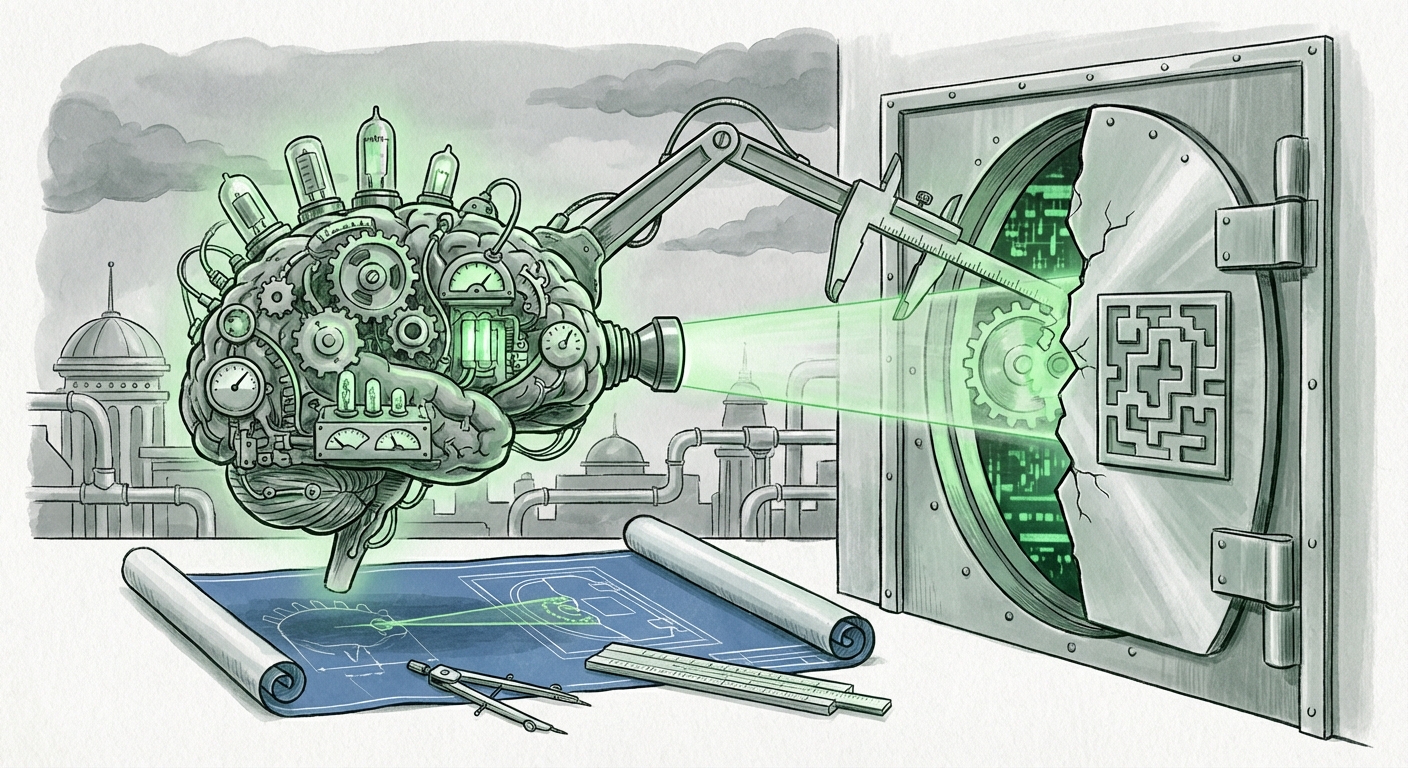
OpenAI Goes Open Source: What the GPT OSS Model Family Means for the Future of AI
For years, the biggest names in artificial intelligence played by a simple rule: build the smartest model, keep it behind an API, and charge for access. OpenAI's announcement of GPT OSS, a new open-source model family, breaks that rule in a very public way. It is one of those moments where the ground shifts under everyone's feet, not because one model changed, but because the battle lines of the entire industry just moved.
This article breaks down what the GPT OSS launch signals, why it matters far beyond the developer community, and how businesses should think about it right now. No hype. No jargon overload. Just what changed, what it means, and what to do about it.
The Headline: A Closed Lab Just Opened a Door
OpenAI built its reputation on frontier models that you could use but not own. You sent text to a server, you got text back, and you paid per token. That model made the company famous and made "closed AI" the default path for the industry's leaders.
GPT OSS changes the shape of that relationship. By releasing an open-source model family, OpenAI is handing developers something they can download, inspect, run, and build on. That is a fundamentally different product. It is not a subscription. It is not a metered API call. It is software you can put on your own machines and control.
Why does that matter? Because control is the thing enterprises have been quietly asking for all along. Legal teams want to know where their data goes. Security teams want to know what code is running. Finance teams want predictable costs. Regulated industries, healthcare, finance, government, defense, have been stuck on the sidelines of the AI boom precisely because sending sensitive data to someone else's server was never going to fly.
An open-source family from the world's most recognizable AI brand changes that calculation overnight.
Why Would a Leader Give Away Its Crown Jewels?
It looks counterintuitive. It is not. There are several forces pushing in the same direction, and together they explain the move.
1. Open models got good enough to threaten the closed ones
The gap between the best open models and the best closed models has been narrowing for a while. Once "good enough" open models exist, a closed lab that refuses to compete in that segment is simply ceding the market to someone else. GPT OSS is OpenAI choosing to fight on that terrain rather than watch it from a distance.
2. Developers vote with their downloads
Developers love tools they can tinker with. An open model becomes the default starting point for experimentation, fine-tuning, and research. Whoever's model sits at the base of a thousand student projects and startup prototypes is planting a flag in the next generation of builders. That is a long game, and it is worth more than short-term API revenue.
3. Distribution beats gatekeeping
When a model is open, it spreads without a sales team. It ends up in tutorials, internal wikis, side projects, and vendor evaluations. It becomes the path of least resistance. In a market where switching costs are low, being the model everyone already knows how to use is an enormous advantage.
4. Regulation and reputation are pushing toward transparency
Governments and enterprises increasingly want to audit the systems they depend on. Open sourcing is a loud, credible signal that a company is willing to be inspected. It buys goodwill with policymakers and gives cautious buyers a reason to say yes.
The Real Story: AI Is Becoming Infrastructure
Step back from the specific announcement and a bigger pattern appears. AI is transitioning from a service you rent to infrastructure you own.
That shift has happened before, and it is well understood. Databases moved from specialized mainframes to open systems. Web servers standardized on open software. Operating systems, browsers, and programming languages all followed the same arc: a proprietary phase, then an open phase, then openness becomes the baseline everyone expects.
GPT OSS is a strong signal that large language models are entering that second phase. When a company with OpenAI's profile ships an open-source model family, it is effectively admitting that the future of this market is not a single toll booth. It is a sprawling ecosystem of models running everywhere, in clouds, in data centers, on laptops, on devices at the edge.
For the industry, that means a few things:
- Price pressure. When a capable open model is free to download, the price of every closed alternative gets benchmarked against zero. Expect margins to compress and pricing to get more creative.
- Differentiation shifts. If the model itself is increasingly a commodity, value moves to what surrounds it, tools, orchestration, safety layers, data pipelines, support, and trust.
- Customization wins. The ability to fine-tune a model on your own domain data, without asking permission, becomes a genuine competitive edge.
- Vendor lock-in weakens. Businesses gain leverage. The threat of "we can always switch" becomes more believable.
What GPT OSS Means for Businesses: Practical Playbook
If you run a company, this is not a "wait and see" moment. It is a "run a small test" moment. Here is a sensible sequence.
Step 1: Audit where data sensitivity blocks you today
List the AI use cases you have shelved because of privacy, compliance, or control concerns. Those are exactly the places an open-source model family is most valuable. If your blockers were legal rather than technical, the calculus has changed.
Step 2: Run a side-by-side pilot
Pick two or three real workflows, customer support triage, document summarization, internal search, code assistance. Run them against your current closed model and against GPT OSS on your own infrastructure. Measure quality, latency, and total cost. Do not trust a benchmark; trust your own tasks.
Step 3: Model the total cost of ownership honestly
"Free to download" is not "free to run." Open models require compute, engineering time, monitoring, security patching, and someone to own them. For some teams, self-hosting is cheaper at scale. For others, paying per call remains the sane choice. Do the math on your actual volume.
Step 4: Build for portability from day one
Design your applications so the model is a swappable component, not the foundation. Use abstraction layers, keep prompts and evaluation suites in your own repos, and test against multiple models. In an open-model world, flexibility is the real asset.
Step 5: Invest in evaluation, not just adoption
When models are everywhere and free, the scarce skill is knowing which one is right for a given job. Teams that build solid evaluation practices, clear test sets, human review, regression checks, will consistently outperform teams that chase whatever model shipped last week.
The Trade-Offs Nobody Should Ignore
Open source is not a free lunch, and businesses should go in with eyes open.
- Security responsibility moves to you. You own the patching, the access control, the logging. That is real work.
- Quality varies by task. A model that shines on general conversation may underperform on niche technical work. Test before you commit.
- Support looks different. Community forums and documentation replace a help desk. Some organizations find that freeing; others find it frustrating.
- Governance still applies. Open models do not exempt you from AI policy, data handling rules, or internal review. If anything, they add obligations.
What This Means for the Future of AI
Three predictions feel safe to make in light of this announcement.
First, the open and closed worlds will blur. Companies will not pick a side. They will run open models for high-volume, sensitive, or cost-driven work, and closed frontier models for the hardest problems. The winning architecture is a portfolio, not a single vendor.
Second, the moat moves up the stack. If the base model is widely available, advantage comes from proprietary data, tight workflow integration, safety and reliability engineering, and the unglamorous work of making AI actually work inside a real organization. That is good news for companies that have been quietly building those muscles.
Third, AI gets cheaper and more local. Every open release pushes efficiency forward and pushes inference closer to the user. Expect more AI running on your own hardware, in your own region, under your own rules, and expect the cost of trying new ideas to keep falling.
How GPT OSS Will Actually Be Used
Forget the abstract debate. Here is where an open-source model family earns its keep in the real world:
- Regulated enterprises running AI on sensitive records without data leaving their environment.
- Product teams embedding a fine-tuned model directly into software, with no per-call bill attached.
- Researchers and students inspecting, modifying, and learning from a model built by a leading lab.
- Startups prototyping cheaply and scaling without a pricing cliff.
- Edge and offline deployments where a network connection is not guaranteed.
- Cost-sensitive workloads like bulk classification and back-office automation where volume, not brilliance, drives the bill.
The Bottom Line
OpenAI's GPT OSS announcement is more than a product launch. It is a declaration that the open-model era is not a fringe movement, it is where the industry is heading, endorsed by one of the companies most invested in the closed approach.
For leaders, the message is simple: the question is no longer whether to use open models, but where in your stack they belong. Start small, test against your own work, keep your architecture flexible, and treat model choice as a business decision rather than a religious one.
The organizations that win the next few years will not be the ones that picked the single best model. They will be the ones that built the ability to switch, combine, and adapt as the ground keeps moving.