What Can ChatGPT Work Actually Do? A Practical Guide for Teams and Businesses
Ask most people what an AI assistant does and you will get a simple answer: it writes things. Emails, blog posts, bad poems. That answer is now out of date. The big question in 2026 is no longer whether AI can produce text. It is whether AI can do work, the messy, multi-step, tool-heavy tasks that fill up an actual job.
That is the question behind ChatGPT Work, and it is the right question to ask. Businesses do not buy software because it is clever. They buy it because it removes a bottleneck, shortens a process, or lets a small team do more. So the useful way to evaluate any "work" version of an AI assistant is not to ask what it can say. It is to ask what it can finish.
This guide breaks down what a work-focused AI assistant can realistically do today, where it still falls short, and how leaders should think about rolling it out without creating a mess.
The Big Shift: From Chatbot to Coworker
Early AI chatbots lived in a single text box. You pasted something in, you got something back, and then you copied it into whatever tool you actually worked in. The AI was useful, but it sat outside the real work.
The direction of travel across the AI industry is clear: assistants are being pulled into the workflow. That means connecting to the files, messages, calendars, and business systems where work already lives. It means holding onto context over long tasks instead of forgetting everything the moment the window closes. And it means being able to plan a sequence of steps, take actions, check results, and hand back something finished rather than something half-done.
For a business audience, the practical translation is this: the value is shifting from generation to completion. Writing a draft is cheap now. Getting a task from "requested" to "done and checked" is still expensive, and that is exactly the gap these tools are aiming at.
What a Work Assistant Is Actually Good At
Based on how these systems behave in real deployments, the strongest use cases cluster in a handful of areas. None of them are magic. All of them are useful.
1. Drafting and rewriting at speed
This remains the most reliable win. Turning rough notes into a structured memo. Rewriting a dense policy for a non-expert audience. Producing five versions of a message for five different stakeholders. The time savings are real and easy to measure, which makes this the safest place to start.
2. Research and summarization
An assistant can pull together information from documents, meeting transcripts, and long threads, then condense it into something readable. For knowledge workers who spend hours a week just reading to catch up, this is where the tool pays for itself fastest. The catch is that summaries must be checked against the source, more on that below.
3. Turning unstructured input into structured output
Messy call notes into a clean action list. A pile of feedback into themes and counts. A long contract into a table of key terms. This "unstructured to structured" step is where AI genuinely changes what is possible, because humans are slow and inconsistent at it.
4. Multi-step tasks with tools
This is the frontier. A work assistant that can use connected tools can attempt longer chains: gather the data, analyze it, produce the summary, put it in the right place. It is impressive when it works and frustrating when it does not, because a mistake early in the chain can quietly travel all the way to the end.
5. A first pass on code and technical work
For engineering teams, assistants are now a normal part of the toolkit, explaining code, suggesting fixes, writing tests, and summarizing what changed. The productivity gain is real, but so is the review burden. Speed of writing code is no longer the bottleneck. Speed of trusting it is.
Where It Still Falls Short
Honest analysis matters more than hype. A work assistant is a confident system, and confidence is not the same as correctness.
- It can be wrong in a fluent way. Fabricated details do not look fabricated. Any output that touches numbers, names, dates, or legal language needs a human check.
- Long tasks drift. The longer the chain of steps, the more chances for a small error to compound. Short, well-defined tasks are far more reliable than sprawling ones.
- Context is only as good as the connections. If the assistant cannot see the right documents, it will guess. Guessing politely is still guessing.
- It does not know your business rules unless you tell it. The unwritten norms, how your company talks to customers, what it never promises, have to be written down somewhere before a machine can follow them.
- It is not a replacement for judgment. Deciding what matters, what is fair, and what is risky remains a human job. The tool can prepare the decision. It should not be the one making it.
Security, Permissions, and the Trust Problem
For most organizations, the technical capability is no longer the hard part. Governance is. The moment an assistant can read files and take actions, three questions become urgent:
Who can it see? An assistant should never be able to surface a document to someone who could not already open it themselves. Permissions have to carry over, not get bypassed for convenience.
What can it do without asking? Reading is low risk. Sending, deleting, paying, and publishing are not. The safest pattern is to let the assistant draft and propose, and require a human click for anything irreversible.
Where does the data go? Every organization needs a clear answer about what is stored, what is used for training, and what is retained. "We are not sure" is not an acceptable answer for regulated industries.
Leaders who get this right tend to follow one rule: give the assistant the narrowest access that still makes it useful, then widen it only after trust is earned.
What This Means for Jobs and Skills
The realistic near-term effect is not mass replacement. It is re-shaping. The parts of a job that are about producing a first draft, gathering information, or reformatting content shrink. The parts about deciding, verifying, relationship-building, and taking responsibility grow.
That changes what good performance looks like. The most valuable employee in an AI-enabled team is often the one who can brief a machine well, who can state the goal clearly, define what "done" means, and spot a wrong answer quickly. Those are old skills, but they are now applied to a new kind of colleague.
For individuals, the practical advice is straightforward: get good at directing AI, get better at checking it, and move your personal value up the chain toward judgment and accountability.
How to Roll It Out Without Regret
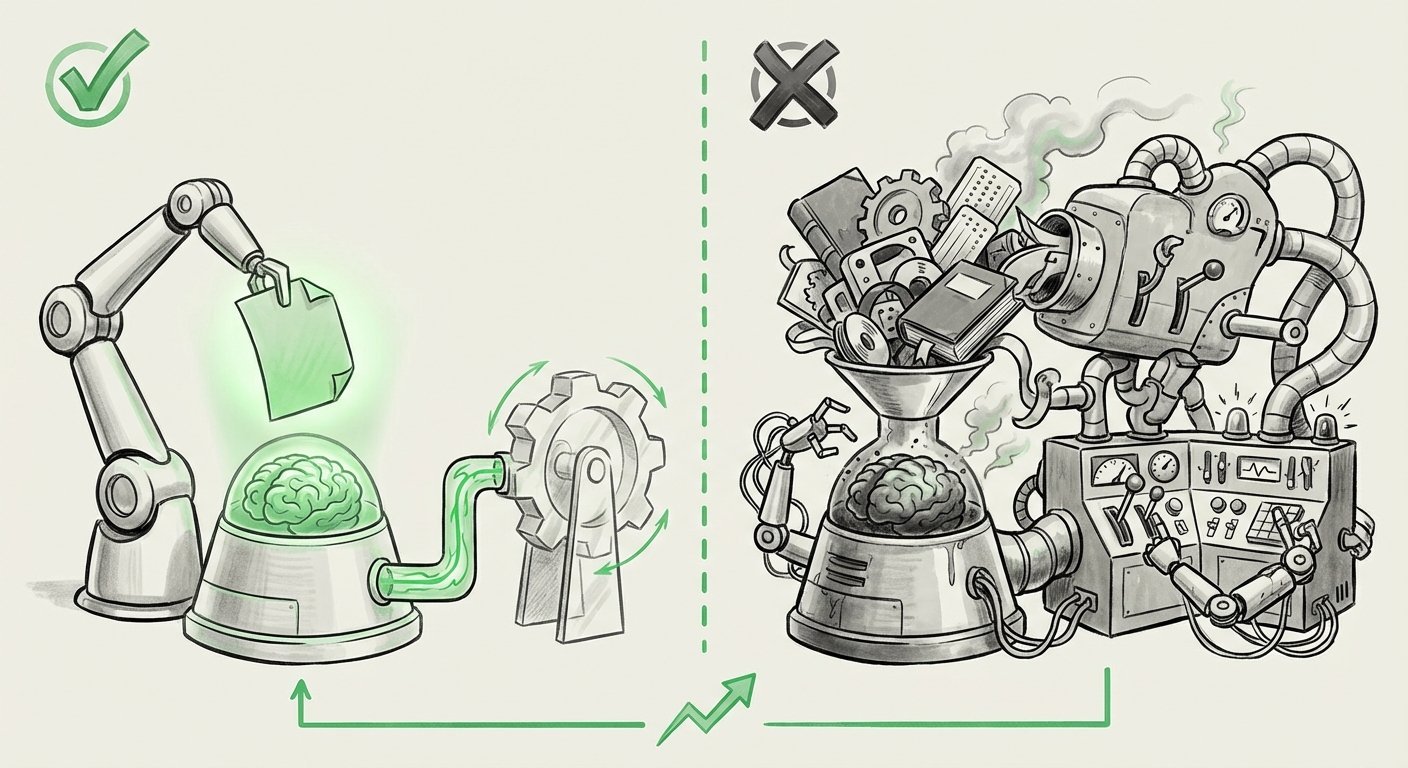
Avoid the two classic failure modes: banning the tool (people use it anyway, just less safely) and turning it on everywhere at once (nobody owns the results). A middle path works better.
- Pick one painful workflow. Choose something repetitive, measurable, and low-risk. Document the before-and-after time so you have proof, not vibes.
- Write down your rules. A short, plain-language usage policy beats a legal document nobody reads. Say what is allowed, what is never allowed, and who to ask.
- Keep a human in the loop on anything external. Drafts are fine. Sending to customers, publishing, and anything financial should have a named owner.
- Build a verification habit. Ask for sources. Spot-check numbers. Make "who checked this?" a normal question.
- Measure what changed. Time saved, error rates, cycle time, and employee satisfaction. If you cannot show a number, you cannot defend the spend.
- Train for briefing, not prompting tricks. The best results come from clear goals and good context, not from secret word combinations.
The Road Ahead
The trajectory of these tools points in one direction: from answering questions to owning small, bounded pieces of work. Expect assistants to get better at long tasks, better at using tools, and better at knowing when to stop and ask.
But the most important variable will not be the model. It will be the organization around it. Companies that write down their processes, clean up their permissions, and build a habit of checking will get far more from AI than companies that simply hand out licenses and hope. The tool amplifies whatever system it lands in, including a messy one.
So what can ChatGPT Work actually do? Today, it can meaningfully shorten the distance between a request and a finished first draft across many knowledge work. It can gather, summarize, structure, and propose. It cannot be trusted to be right on its own, and it should not be handed the keys to anything irreversible.
That is not a disappointment. That is a job description. And the businesses that treat it that way, a fast, tireless, occasionally overconfident junior colleague who needs clear instructions and a review step, will be the ones that actually capture the gains.