Gemini 4 Argon Ties GPT-6: What Google's Latest Launch Means for the Future of AI
On October 14, 2026, Google launched Gemini 4 Argon. The one-line verdict that followed was almost oddly quiet: it ties GPT-6.
Read that again. A tie. Not a blowout. Not a rout. A tie.
For anyone who has watched the last few years of AI releases, that word is the whole story. The industry has spent years chasing a moving target where one lab would leap ahead for a few months, everyone would rebuild their workflows around the new leader, and then the crown would change hands again. Now the two most important frontier models in the world are, by the clearest public measure we have, standing on the same step of the podium.
That sounds like a dull headline. In practice, it's the most consequential thing that could have happened this year, because a tie at the top changes what everyone below the top does next.
The Real Meaning of "Ties"
When people say one model "ties" another, they usually mean aggregate scores have converged. The two models land so close together on the standard battery of tests that the gap is inside the noise. You can't confidently say one is better without picking a specific task and a specific way of measuring it.
What a tie does not mean is that the two models are interchangeable. It means the opposite, and this is the part most people miss.
Two models that score the same overall can behave very differently in real work. One may write tighter, more literal prose. The other may take more liberties but handle messy multi-step requests with fewer stumbles. One may be faster on short prompts, the other steadier on long documents. One may play nicer with external tools; the other may hold up better when a task requires twenty steps without drifting off course.
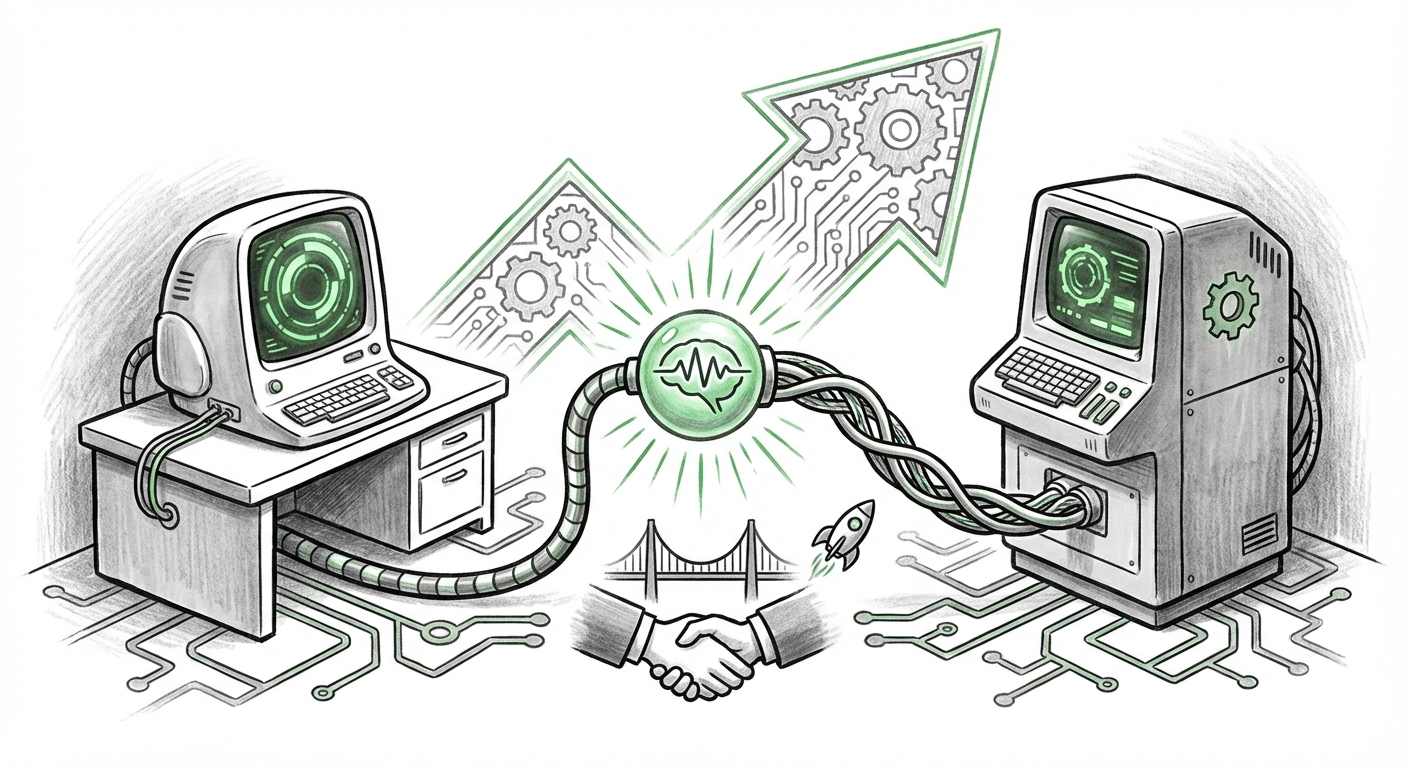
So the honest reading of a tie is this: the frontier has stopped being a single mountain with one peak. It's now a ridge, a long, flat, high plateau where several models sit at roughly the same altitude. Picking between them is no longer a question of raw capability. It's a question of fit.
Why This Changes the Business Conversation
For the past few cycles, the enterprise conversation had a simple shape: find the leader, standardise on it, move on. That strategy made sense when leaders were clearly ahead. It stops making sense the moment the lead disappears.
When two flagship models are effectively matched, several old assumptions flip:
1. Switching costs start to matter more than raw scores
If Gemini 4 Argon and GPT-6 are close enough that your team can't tell the difference on your own work, then the deciding factors become boring and practical: integration effort, latency, reliability, data handling terms, pricing structure, and whether your engineers already know the tooling. The model is no longer the bottleneck, your plumbing is.
2. Multi-model becomes the default, not the exception
Rational buyers don't pick one of two tied options. They use both, and route work to whichever performs better on that task type. This is already the direction serious AI teams have been moving. A tie at the top accelerates it, because there is no longer a clear reason to accept lock-in to a single vendor's strengths and weaknesses.
3. Evaluation moves in-house
Public leaderboards told you what to think when gaps were wide. With gaps this narrow, they stop being decisive. The only evaluation that matters is the one you run on your own tasks, with your own data, judged by your own criteria. Companies that build a small internal test suite, a few dozen real prompts with known good answers, will make better decisions than companies that read rankings and guess.
4. Price becomes the battleground
When two products do roughly the same job equally well, buyers start comparing the bill. That's not a prediction about any specific pricing move; it's what happens in every market that reaches this stage. Expect the competitive pressure to shift away from "who is smartest" and toward "who is cheapest at scale, fastest to respond, and most reliable under load."
The Distribution Question Nobody Escapes
There's one place where a tie on capability stops being a tie, and that's reach.
Google doesn't just ship a model. It ships a model into an ecosystem where search, email, documents, browsers, phones, and productivity software all sit in the same house. That means Gemini 4 Argon may show up in places GPT-6 simply cannot reach directly, and it may reach users who would never sign up for a separate AI product at all.
This is the quiet asymmetry in every "tie" story. Two models can be equally capable and still end up with wildly different adoption, purely because one is one click away from a billion existing daily habits and the other requires a deliberate trip to a new tab.
For builders, this cuts both ways. Distribution makes Gemini 4 Argon an easy default for consumer-facing and workplace surface areas. But distribution also creates a mild form of gravity, the risk that teams end up using whichever model is nearest rather than whichever model is best for the job.
What This Means for Developers
The practical advice for engineering teams has never been clearer: build for swap-ability.
That means keeping a thin abstraction layer between your product and any single model provider. It means storing prompts and evaluation cases in a way that lets you re-run them against a different model in an afternoon. It means treating prompt quality as a portable asset rather than something tuned so tightly to one model's quirks that it becomes worthless the moment you move.
The teams that did this during the last few cycles are now in an enviable position. They can take Gemini 4 Argon and GPT-6, run both, measure both, and split traffic based on what actually works. The teams that hard-wired everything to one provider are now facing a migration project they didn't plan for.
The Safety Side of Parity
Parity has a second-order effect that gets far less attention: it changes the safety conversation.
When one lab is clearly ahead, safety debates tend to focus on that lab, its policies, its red-teaming, its refusal behaviour. When several labs sit at the same capability level, the question becomes comparative. Are the guardrails on Gemini 4 Argon meaningfully different from those on GPT-6? Does one model handle sensitive requests more conservatively? Do their refusals behave the same way under pressure?
That matters for anyone deploying these systems in regulated industries. A tie on capability does not imply a tie on caution. Two models can score identically on a benchmark and behave completely differently on the edge cases that cause real harm, self-harm queries, medical questions, legal advice, financial guidance, anything involving minors.
The practical implication: safety behaviour should be part of your evaluation suite, not an afterthought. Test the refusals the same way you test the outputs.
The Bigger Picture: Commoditisation at the Frontier
Zoom out and the pattern is recognisable from other technology cycles. A capability starts rare and expensive. A handful of players race. Then the leaders bunch up, the gap closes, and the value migrates away from the raw capability and toward everything built on top of it.
AI is now at the bunching-up stage. If the two leading models are effectively matched, then the model itself is becoming a commodity, high quality, widely available, and increasingly hard to differentiate on. The durable advantage moves to the layers around it: the workflows you build, the data you own, the distribution you control, and the trust you earn.
This is genuinely good news for buyers and genuinely uncomfortable news for anyone whose entire business model was "our model is better." That pitch is running out of road.
What to Watch Next
Several signals will tell us whether this tie holds or breaks:
- Independent testing on real work. Benchmark scores are converging. Watch what happens when people run these models on agentic, multi-step, messy real-world tasks, that's where hidden gaps tend to surface.
- Pricing and packaging. If the capability gap is genuinely gone, competition shows up in the contract, not the chart.
- Developer adoption patterns. If teams start routing between both models rather than committing to one, that's the clearest evidence the tie is real.
- Latency and reliability at scale. A model that ties on quality but is slower or less stable in production is not really tied.
- Ecosystem depth. Tools, integrations, and platform support often decide winners long after the capability race ends.
The Bottom Line
Google launching Gemini 4 Argon and tying GPT-6 is not a story about which model is smarter. It's a story about a market maturing. The frontier has levelled out, and the question has shifted from "which model wins" to "which combination of models, wrapped in which workflows, at which price, gets the job done."
For businesses, that's a moment to stop shopping for a winner and start building for flexibility. For developers, it's a reminder that portability is a competitive advantage. And for the rest of us, it's a sign that AI is moving from a race into a utility, which is exactly what happens to every technology that actually sticks.