ChatGPT's Expanding World of Work: What It Means for the Future of AI
Something quiet but enormous is happening inside offices, workshops, clinics, and classrooms right now. ChatGPT is no longer the novelty people opened once to see a robot write a poem. It has become a working tool, one that drafts, summarizes, plans, checks, explains, and increasingly acts. That shift from curiosity to daily utility is the real story, and it tells us far more about the future of AI than any single product announcement.
The phrase that captures it best is simple: ChatGPT's world of work is expanding. It is moving from the edge of our jobs to the middle of them. Understanding why that is happening, and what it means for businesses, workers, and the wider economy, is now essential reading for anyone making decisions about technology.
From "Try This" to "This Is How We Work"
Every major productivity tool follows the same adoption curve. First it is a demo. Then it is a personal habit. Then it becomes a team standard. Then it becomes invisible infrastructure that nobody thinks about, like email or spreadsheets.
ChatGPT has been racing along that curve. The early phase was individual experimentation, one curious employee pasting a rough draft into a chat box and being surprised by the result. The next phase is the one we are in now: organizations actively building ChatGPT into documented workflows, training staff on it, and measuring what it saves. The phase after that, arriving fast, is when ChatGPT is wired into other systems so it can do work rather than just describe it.
This progression matters because the value of a general-purpose AI assistant compounds with trust. A tool that is occasionally useful stays a toy. A tool that is reliably useful for ten everyday tasks becomes part of the operating budget. ChatGPT's expansion into more kinds of work is fundamentally a trust story, not just a capability story.
What "Expanding World of Work" Actually Looks Like
Look closely at where ChatGPT is being used, and a pattern appears. The growth is not concentrated in glamorous, futuristic tasks. It is concentrated in the unglamorous middle of knowledge work, the messy, time-consuming connective tissue that fills most professional days.
- Drafting and rewriting: Emails, proposals, job descriptions, policy summaries, product notes. The first draft, once a blank-page problem, is now a starting point to react to.
- Compression: Turning a long thread, a transcript, or a dense document into the five points a busy person actually needs.
- Translation between audiences: Explaining a technical finding to a non-technical buyer, or a business requirement to an engineer.
- Research triage: Mapping a topic, generating questions worth asking, and flagging where human verification is required.
- Structured thinking: Building checklists, plans, comparison tables, and decision frameworks that used to be assembled by hand.
- Code and data assistance: Writing snippets, explaining errors, and helping non-specialists read technical material.
- Customer-facing work: Helping support teams respond faster, more consistently, and in more languages.
None of these tasks are dramatic on their own. Together they account for a staggering share of the working week. That is why ChatGPT's expansion feels less like a single disruption and more like a slow, steady re-pricing of time.
The Big Shift: From Answering to Acting
The most important trend in this expansion is a change in what the tool does, not just where it is used. Chat-based AI began as a responder. You asked, it answered. The next generation of work involves AI that can take a goal, break it into steps, use tools, and carry the task through, an agent rather than an oracle.
This is a profound change in the shape of software. Until now, software was something you operated. You clicked, typed, navigated, and built the result yourself. Agentic AI flips that: you describe an outcome, and the system works toward it. The human role becomes specification, review, and judgment rather than mechanical execution.
For the future of AI, the implications are enormous:
1. Integration becomes the battleground
An assistant that can act needs access to calendars, documents, inboxes, databases, and internal systems. The winner in the next phase will not simply be the smartest model, it will be the one trusted with the most useful connections to real work.
2. Evaluation becomes the bottleneck
When AI only wrote text, a human could read the output and judge it. When AI takes actions, errors have consequences that are harder to reverse. Measuring reliability, and designing systems that fail safely, becomes the central engineering challenge of the era.
3. Work design changes before job titles do
Jobs rarely vanish overnight. Tasks do. The realistic near-term outcome is a reshuffling of task mixes, fewer hours spent assembling first drafts, more hours spent reviewing, directing, and deciding.
Why This Matters for the Future of AI
ChatGPT's move into more work has three long-term consequences that go beyond any single product.
First, real-world work is the best training signal there is. Every time a professional corrects an AI draft, adjusts a plan, or rejects a suggestion, that interaction reveals what "good" looks like in a specific domain. The expansion of AI into workplaces is not just the industry selling more software, it is the industry learning what usefulness means in practice.
Second, adoption normalizes AI faster than regulation or debate can keep up. Policy conversations move at the speed of committees. Workflows move at the speed of Monday morning. ChatGPT's widening footprint means that decisions about how AI should behave in the workplace are being made, quietly and daily, by managers and teams, not only by lawmakers.
Third, the economics of expertise are shifting. When a capable assistant is available to everyone, the scarce resource stops being access to information and becomes judgment about what to do with it. That is a deep change in how professional value is created and rewarded.
Practical Implications for Businesses
For leaders, the question is no longer whether ChatGPT will show up in your organization. It already has, whether or not it was approved. The question is whether that use is visible, guided, and safe, or invisible and improvised.
A few practical realities stand out:
- Shadow usage is your baseline. Assume employees are already using AI tools. The choice is between a supported framework and an undocumented free-for-all.
- Start with high-volume, low-risk tasks. Drafting, summarizing, and internal research deliver fast returns with limited downside. Save customer-facing and irreversible actions for later, once review habits are established.
- Write down the rules. What data may never be pasted in? Which outputs must be verified by a human? Who signs off when AI contributes to a decision? Clarity beats caution here.
- Measure time, not enthusiasm. Track hours saved and rework created. Vanity metrics hide the truth: some teams gain enormously, others gain almost nothing.
- Buy the review layer. The value of AI output depends on the quality of the check. Teams need both the tool and the habit.
What Workers Should Do Right Now
For individuals, the message is more encouraging than the headlines suggest. The workers who thrive will not be the ones who resist AI or the ones who blindly trust it. They will be the ones who become excellent at directing it.
That means three habits. Learn to write clear instructions that specify the audience, the format, and the constraints. Learn to spot the failure modes, confident-sounding errors, missing context, invented detail, and verify accordingly. And learn to move up a level: spend less time producing the first draft and more time deciding what should be produced at all.
There is a genuine risk in the other direction too: over-reliance. If a skill is never practiced, it erodes. Organizations that care about long-term capability should be deliberate about which skills they use AI to amplify and which they insist on keeping sharp in human hands.
The Guardrails That Will Decide Success
Expansion without governance is how trust gets destroyed. The three questions every organization should be able to answer are deceptively simple.
What is it allowed to see? Data boundaries must be explicit, enforced by systems rather than good intentions.
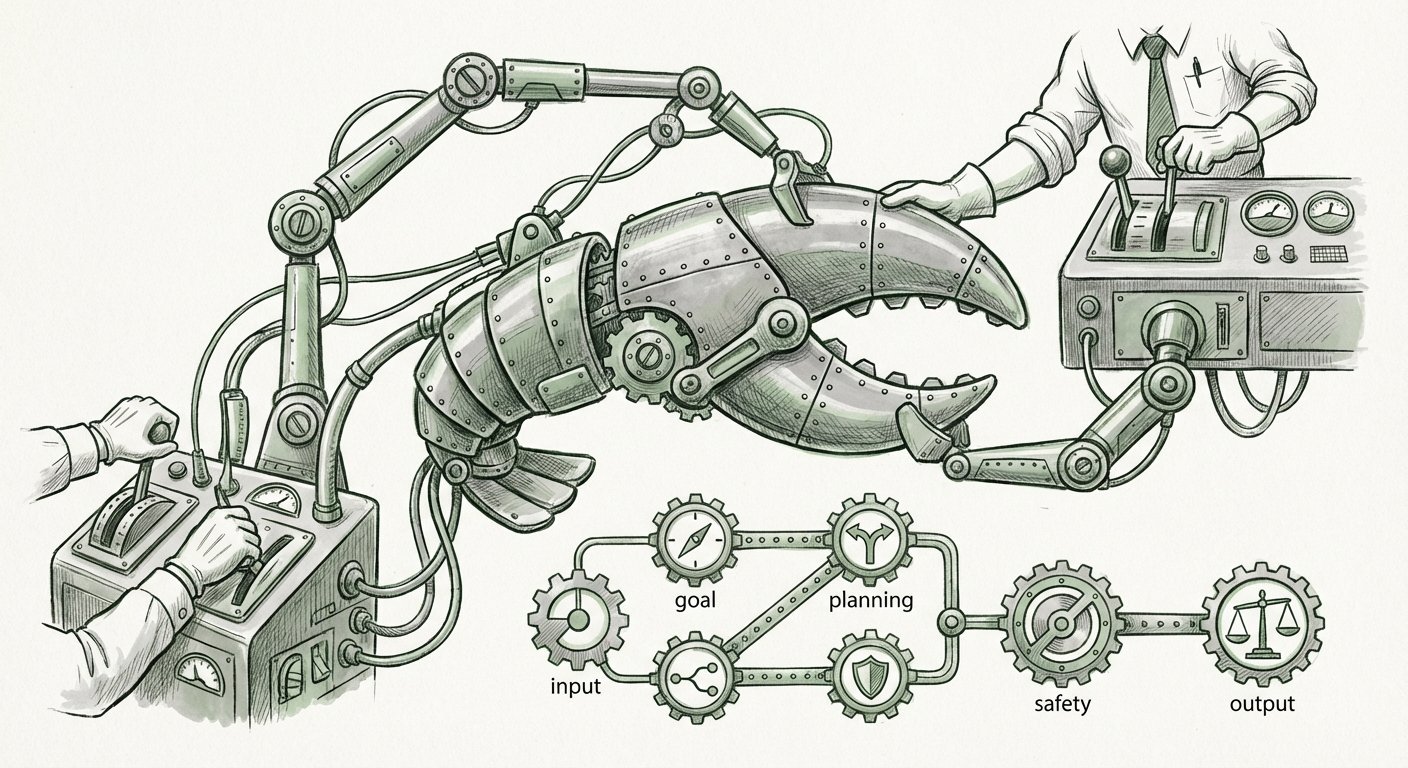
What is it allowed to do? The line between suggesting and acting should be deliberate and often human-gated.
Who is accountable when it is wrong? Clarity about responsibility is not bureaucracy, it is the price of delegation.
Get these right and AI adoption becomes a compounding advantage. Get them wrong and a single incident can set a program back by years.
Conclusion: The Quiet Revolution Is the Big One
The most significant thing about ChatGPT's expanding world of work is how ordinary it looks from the inside. No dramatic moment of replacement, no single product launch that changes everything at once. Instead, a million small reallocations of attention, a draft here, a summary there, a plan assembled in minutes instead of an afternoon.
That is how real technological change usually arrives. It seeps in through the boring parts of the job, and by the time it is obvious, the work has already been reshaped. The organizations and individuals who treat ChatGPT's widening role as a design problem, with clear rules, real review, and deliberate skill-building, will find themselves with more capacity, not less. Those who ignore it will simply be slower, without ever knowing exactly why.
The future of AI will not be decided in a lab. It will be decided in the everyday decisions of people choosing what to hand over and what to keep.