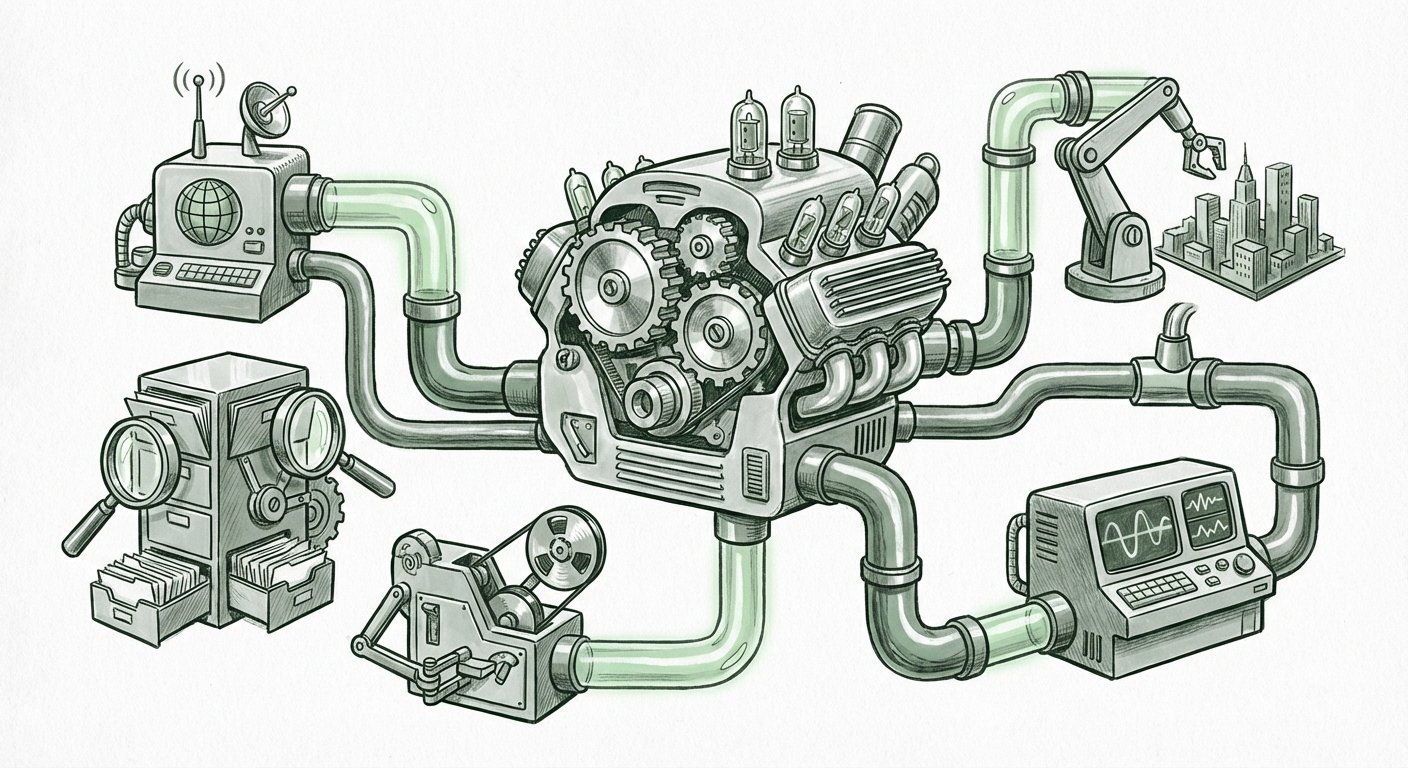
DeepSeek V3 to V3.2: How Sparse Attention and RL Updates Are Quietly Revolutionizing AI
In the fast-moving world of artificial intelligence, big leaps often grab headlines. But sometimes the most important progress happens in smaller, incremental steps. The journey from DeepSeek V3 to V3.2 is a perfect example. This update, focused on architecture, sparse attention, and reinforcement learning (RL) updates, may not sound flashy, but it signals a deeper trend: AI models are getting smarter, more efficient, and more practical. And that has huge implications for businesses, developers, and society at large.
In this article, we'll break down what these technical changes mean in plain English. We'll explore why they matter for the future of AI and how you can prepare for a world where models keep improving without always making a lot of noise.
Why Version Numbers Like V3.2 Matter More Than You Think
When a company releases a new version of an AI model, it's easy to dismiss it as a minor tweak. But in the world of large language models (LLMs), even small version bumps can represent significant behind-the-scenes work. Moving from V3 to V3.2 suggests a period of focused refinement. Instead of rebuilding from scratch, the team is likely fine-tuning what already works and fixing what doesn't.
This iterative approach is becoming the norm. It shows that the AI industry is maturing. The first wave of LLMs was about proving the concept. Now, the focus is on making models more reliable, affordable, and useful for real-world tasks. The changes highlighted in this update, architecture, sparse attention, and RL, are exactly the levers you pull when you want to improve performance without dramatically increasing cost.
For anyone following AI, this is a signal: the race is no longer just about who has the biggest model. It's about who can make the most efficient, capable, and safe model. And DeepSeek's V3.2 is a case study in that shift.
Architecture: The Hidden Foundation of Every AI Model
Think of a model's architecture as its blueprint. It determines how data flows through the system, how many parameters are used, and how efficiently the model can learn. When a new version mentions "architecture updates," it means the underlying design has been adjusted to improve something, speed, accuracy, memory use, or all of the above.
Architectural improvements are crucial because they can deliver better results without requiring more computing power. In a world where training and running large models is expensive and energy-intensive, that's a big deal. A better architecture might allow the model to handle longer conversations, understand more complex instructions, or generate more coherent text, all while using the same hardware.
For businesses, this translates to lower costs and better performance. If a model can do more with less, it becomes accessible to smaller companies and developers who couldn't afford the earlier, heavier versions. That democratization of AI is a major trend, and it's being driven by these unglamorous architectural tweaks.
While the specific changes in DeepSeek V3.2's architecture aren't detailed here, the focus on this area tells us that the team is working to squeeze more value out of every parameter. That's good news for anyone who wants to deploy AI at scale.
Sparse Attention: The Secret to Faster, Cheaper AI
If you've ever used a chatbot, you've experienced attention at work. Attention is the mechanism that lets a model focus on the right parts of the input when generating a response. In older models, this attention was "dense," meaning the model considered every word against every other word. That's powerful but computationally expensive, especially as context windows grow.
Sparse attention changes the game. Instead of looking at everything, the model learns to focus only on the most relevant parts. It's like skimming a document instead of reading every word. This dramatically reduces the compute needed, allowing models to handle much longer inputs and respond faster.
The inclusion of sparse attention in DeepSeek V3.2 is a big deal. It suggests the model is designed to be more efficient, especially for tasks that require long context, like summarizing a lengthy report, answering questions about a book, or maintaining a coherent conversation over many turns. For businesses, that means you can throw more data at the model without blowing your budget.
Sparse attention also helps with scalability. As companies try to build AI applications that process thousands of documents or messages, the ability to handle long sequences efficiently becomes non-negotiable. By adopting sparse attention, DeepSeek is positioning itself for the kinds of enterprise use cases that are growing fast.
And there's a broader implication: efficient attention mechanisms are one of the most active areas of AI research. They're the key to making AI more sustainable and accessible. So when a major model update emphasizes sparse attention, it's a sign that the entire field is moving in that direction.
RL Updates: Teaching Models to Be Helpful, Harmless, and Honest
Reinforcement learning (RL) is how we teach AI models to behave in ways we like. After a model is trained on vast amounts of text, it often needs a second phase where humans or other AI systems give it feedback. This feedback is used to adjust the model's behavior, encouraging helpful answers, discouraging harmful ones, and generally aligning it with human values.
In the journey from V3 to V3.2, "RL updates" likely mean the team has refined this feedback loop. They may have improved the quality of the feedback, changed how the model learns from it, or focused on specific behaviors. The result could be a model that's better at following instructions, less likely to produce biased or toxic content, and more reliable in sensitive situations.
RL is also being used more creatively these days. Beyond simple safety filters, it's now used to improve reasoning. For example, models can be trained to "think step by step" by rewarding them for producing correct chains of thought. If DeepSeek V3.2 incorporates such techniques, it could mean better performance on complex problems, math, logic, coding, without needing a bigger base model.
For businesses, improved RL translates to trust. You can deploy a model that's less likely to say something inappropriate or go off the rails. That's essential for customer-facing applications. And for society, better RL is part of the solution to the alignment problem, the challenge of making sure AI systems do what we actually want them to do.
RL updates are often harder to see than architecture changes. You can't easily measure them with a benchmark. But they're just as important for making AI usable in the real world.
The Bigger Trend: AI Is Getting Better, Faster, and Cheaper
Zoom out from DeepSeek V3.2, and you'll see a pattern across the AI industry. Models are improving at a rapid clip, but not always through massive increases in size. Instead, teams are getting smarter about how they train and deploy models. They're using better data, more efficient architectures, and clever training techniques.
This is great news for the future of AI. It means that powerful AI is becoming more accessible. A small startup can now use an open-source model that rivals last year's state-of-the-art system. That lowers the barrier to entry and sparks innovation. We're likely to see a wave of new applications built on these efficient models, from personalized education tools to advanced customer service bots.
It also means that the environmental impact of AI can be reduced. Training huge models consumes a lot of energy. By focusing on efficiency, updates like this help make AI more sustainable. That's a trend that both businesses and regulators are watching closely.
Finally, the iterative approach shows that the field is maturing. Instead of chasing hype, teams are focused on making real improvements that matter to users. That's a sign that AI is moving from the lab into everyday life.
What This Means for Businesses: Practical Takeaways
So, what should business leaders and developers take away from the DeepSeek V3.2 update? Here are a few actionable insights:
- Efficiency is the new frontier. When evaluating AI models, don't just look at benchmark scores. Look at cost per token, latency, and context window. Sparse attention and architectural improvements can give you more bang for your buck.
- Long-context capabilities are becoming standard. If your application involves analyzing long documents or maintaining extended conversations, models with sparse attention are worth exploring. They can handle larger inputs without breaking the bank.
- Alignment and safety are features, not afterthoughts. RL updates mean models are getting better at following instructions and avoiding harmful outputs. That's a selling point for customer-facing AI.
- Experiment with open-source models. DeepSeek's rapid iterations show that open models are catching up fast. You can prototype and deploy without locking into expensive proprietary APIs.
- Plan for continuous improvement. AI models will keep getting better every few months. Build your systems to be modular so you can swap in new models as they arrive.
By keeping an eye on these incremental updates, you can stay ahead of the curve without chasing every headline.
What This Means for Society: Opportunities and Responsibilities
The shift toward more efficient, capable AI has broad social implications. On the positive side, it can democratize access to AI-powered tools. Schools with limited budgets could use advanced tutoring systems. Non-profits could analyze large datasets to better serve their communities. Small businesses could automate tasks that were once out of reach.
But there are also risks. As AI becomes more powerful and accessible, it can be misused. Better models could generate more convincing disinformation. Efficient AI could be used for surveillance or manipulation. That's why updates to RL and safety are so important. They're not just technical details; they're safeguards.
Society will need to keep pace with these developments. That means investing in AI literacy, updating regulations, and encouraging transparency from companies. The good news is that the industry is paying attention. The focus on alignment and safety in updates like this shows that responsible AI is becoming a priority, not an afterthought.
As AI becomes more integrated into daily life, we all have a role to play in shaping how it's used. The choices we make now, as developers, businesses, and citizens, will determine whether these powerful tools benefit everyone or deepen existing inequalities.
Conclusion: The Quiet Revolution in AI
The update from DeepSeek V3 to V3.2 may not dominate headlines, but it represents exactly the kind of progress that will define the next phase of AI. By focusing on architecture, sparse attention, and RL, the team is making the model more efficient, more capable, and safer. These are the qualities that matter when AI moves from demo to deployment.
For businesses, the message is clear: the AI landscape is shifting toward cheaper, more effective models. Now is the time to experiment, build, and integrate. For society, the message is one of cautious optimism. We have the tools to make AI a force for good, if we use them wisely.
Keep an eye on the version numbers. They may be small, but they signal big changes. The future of AI isn't just about giant leaps; it's about steady, smart steps. And DeepSeek V3.2 is a step worth watching.