DeepSeek R2 and SPCT: The Next Big Shift Is Happening at Inference Time
DeepSeek has signaled a next-generation R2 model and introduced a new approach to scaling inference called SPCT. On the surface, that sounds like another release in the fast-moving world of AI models. But the deeper story is bigger. It points to a change in how AI systems get smarter, and where the real costs, opportunities, and competitive battles will be.
For years, the main way to make AI better was to train bigger models on more data. That approach still matters. But the next wave is about what happens after training, when a model is actually answering a question. This is called inference. DeepSeek’s signal around R2 and SPCT puts inference scaling at the center of the next phase of AI. That has major implications for builders, businesses, and anyone who uses AI tools.
Why inference is the new battleground
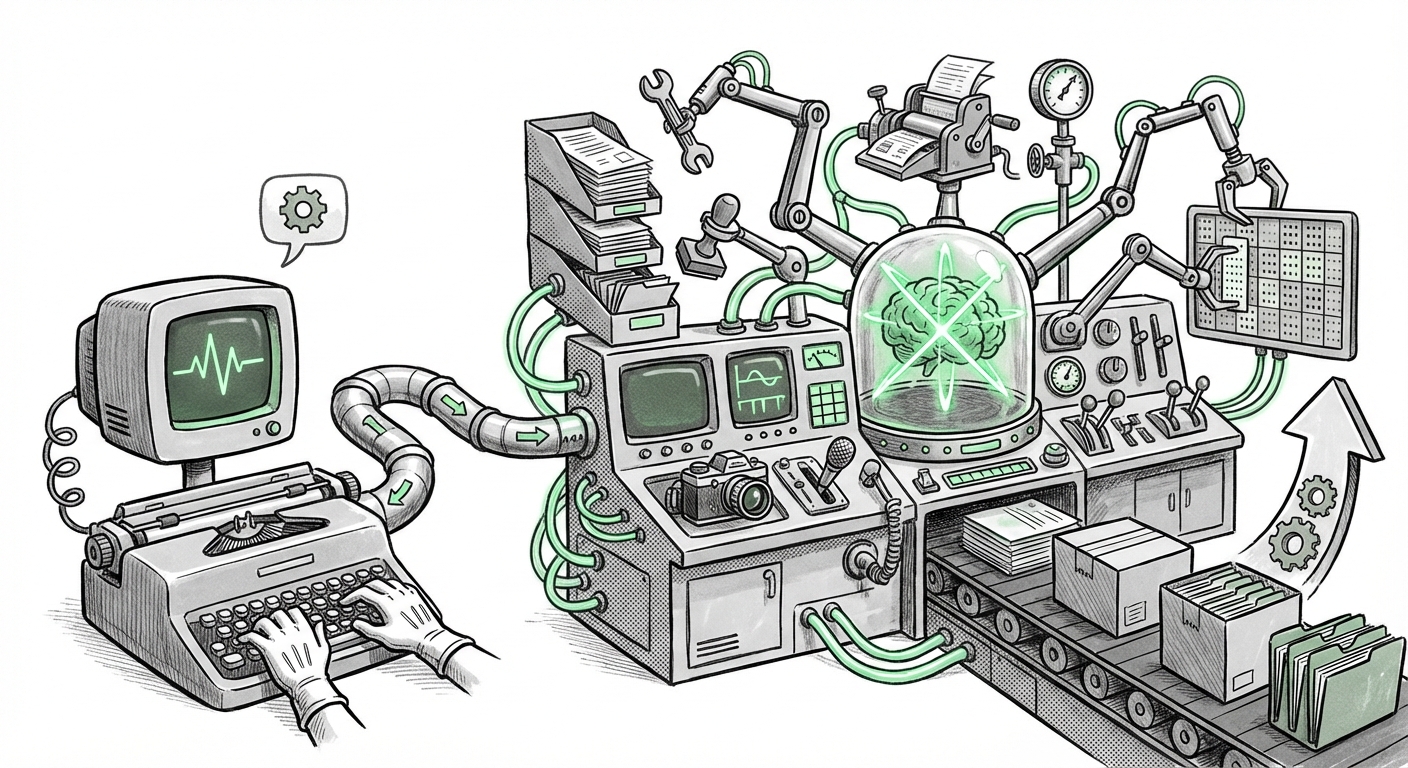
Training a large AI model is like building a factory. Inference is running the factory every day. In the past, most of the cost and complexity came from building. Now, more of it comes from running. Every time a user asks a question, the model must generate an answer. For advanced reasoning models, that answer often requires many steps of thinking, checking, and refining. Each step costs compute.
This is why inference scaling matters. If you can make a model smarter at answer time without retraining it, you get more value from the same model. You can spend more compute on hard problems and less on easy ones. You can improve accuracy, reliability, and trust. For businesses, that changes the math of AI adoption.
DeepSeek’s SPCT is described as a novel approach to scaling inference. The details will matter, but the direction is clear. The industry is moving toward methods that allocate extra compute during inference in a structured way. This includes techniques like test-time compute, search, verification, and multi-step reasoning. The goal is not just to make models bigger, but to make them think harder when it counts.
What a next-gen R2 model signals
The signal of an R2 model suggests DeepSeek is preparing a successor to its current generation. In the AI world, a new generation usually means better reasoning, stronger coding, improved math, and more reliable answers. But the more important signal is the pairing with SPCT. It suggests the next leap may come from how the model uses compute at inference time, not only from how it was trained.
That is a meaningful shift. Many models now compete on benchmark scores. But benchmarks often measure the best possible answer under controlled conditions. Real-world use is different. Users need models that can handle messy questions, follow instructions, and admit uncertainty. Inference scaling is one path to that. It can let a model spend more time on a hard question, check its work, and reduce errors.
For DeepSeek, R2 and SPCT together suggest a strategy: build a strong base model, then add a scaling method that improves performance during use. That approach can be more efficient than training a much larger model from scratch. It can also make the model more adaptable. If inference scaling works well, the same model can be tuned for different tasks by changing how much compute it uses.
The economics of thinking harder
There is a simple way to understand inference scaling. Imagine you ask an AI to solve a math problem. A fast model gives an answer in one second. A smarter model might take ten seconds, try several approaches, and check the result. The second model costs more to run, but it is more likely to be correct. The question is whether the extra cost is worth it.
For many business tasks, the answer is yes. If a model can reduce errors in customer support, legal review, or financial analysis, the value of a correct answer is much higher than the cost of a few extra seconds of compute. But for simple tasks, like summarizing a short email, extra thinking is wasteful. The future is likely to be a mix. Systems will decide how much inference compute to use based on the task.
This is where SPCT could matter. A novel approach to scaling inference may offer a way to manage that trade-off more predictably. If it can scale compute in a controlled way, businesses can set budgets and service levels. They can choose a “fast” mode for simple requests and a “deep” mode for high-stakes work. That kind of control is essential for adoption.
From model size to model effort
In the past, the main lever was model size. A bigger model was usually better. But bigger models are expensive to train and expensive to run. Inference scaling adds a second lever: effort. A model can be small but use more effort on hard problems. That can deliver strong results at lower average cost. It also makes AI more accessible. Smaller organizations may not be able to train giant models, but they can use models that scale effort at inference time.
This shift is important for the future of AI. It suggests that progress will not only come from a few huge training runs. It will also come from clever methods that make models use compute better. That is good news for competition. It means more players can build useful AI systems.
What this means for businesses
Business leaders should pay attention to inference scaling for three reasons. First, it changes cost models. AI costs are not just about training. They are increasingly about usage. If inference scaling makes models more reliable, it can reduce the hidden cost of errors and human review. Second, it changes product design. Teams can build features that adapt to difficulty. A customer support bot can answer simple questions fast and escalate complex ones to a deeper reasoning mode. Third, it changes vendor evaluation. Buyers should ask not only how a model performs, but how it scales inference and what that means for cost and latency.
There is also a strategic point. Inference scaling can create a moat. A company that masters it can offer better answers at a lower price. That is a strong position. DeepSeek’s signal around SPCT suggests the company sees this. The market should expect more competition on inference efficiency, not just raw model size.
Practical steps for teams
- Map tasks by difficulty. Separate simple, repetitive tasks from high-stakes reasoning tasks. Use different inference settings for each.
- Measure total cost, not just token price. Include the cost of errors, human review, and latency. A model that thinks longer may be cheaper overall if it reduces mistakes.
- Test reliability under real conditions. Ask models to handle ambiguous requests, missing data, and multi-step problems. Compare how they scale effort.
- Design for control. Build systems that let you choose speed versus depth. Set budgets and fallback rules.
- Watch open and efficient models. Advances in inference scaling can make smaller models more competitive.
The wider impact on society
Inference scaling also has social implications. If AI can think harder on demand, it can be more useful in education, healthcare, and public services. A tutor can spend more time on a student’s difficult question. A clinic can use deeper reasoning for complex cases. But the same capability can raise costs and widen gaps if only some organizations can afford deep inference. The policy question is how to make efficient inference widely available.
There is also an environmental angle. More inference means more energy use. The industry needs to balance smarter answers with sustainable operations. Methods that scale inference efficiently can help, but they are not a free lunch. The goal should be to use compute where it adds the most value.
Another concern is trust. A model that shows its reasoning can be more trustworthy, but only if the reasoning is accurate. Inference scaling methods must be designed to avoid confident-sounding errors. Verification and checking are part of that. The signal from DeepSeek suggests the field is moving in that direction, but the details will determine how well it works.
What to watch next
The next phase will be defined by a few questions. How does SPCT actually scale inference? Does it improve accuracy in a predictable way? What are the latency and cost trade-offs? How does R2 compare with other next-generation models on real tasks, not just benchmarks? And perhaps most important, can developers use these methods easily?
The answers will shape how fast AI moves from a novelty to a reliable tool. The signal from DeepSeek is a reminder that the frontier is not only about bigger training runs. It is also about smarter use of compute at the moment of answer. That is where the next wave of value will be created.
Conclusion: The intelligence is in the effort
DeepSeek’s signal of an R2 model and a novel inference scaling approach called SPCT is more than a product update. It is a sign of where AI is heading. The future will not be won only by the largest training budget. It will be won by systems that know when to think harder, how to check their work, and how to deliver reliable answers at a sensible cost. For businesses, that means new opportunities to build better products and new questions to ask vendors. For society, it means AI that can be more helpful, but also more demanding of resources. The companies and countries that master inference scaling will have an edge. The rest will be playing catch-up.