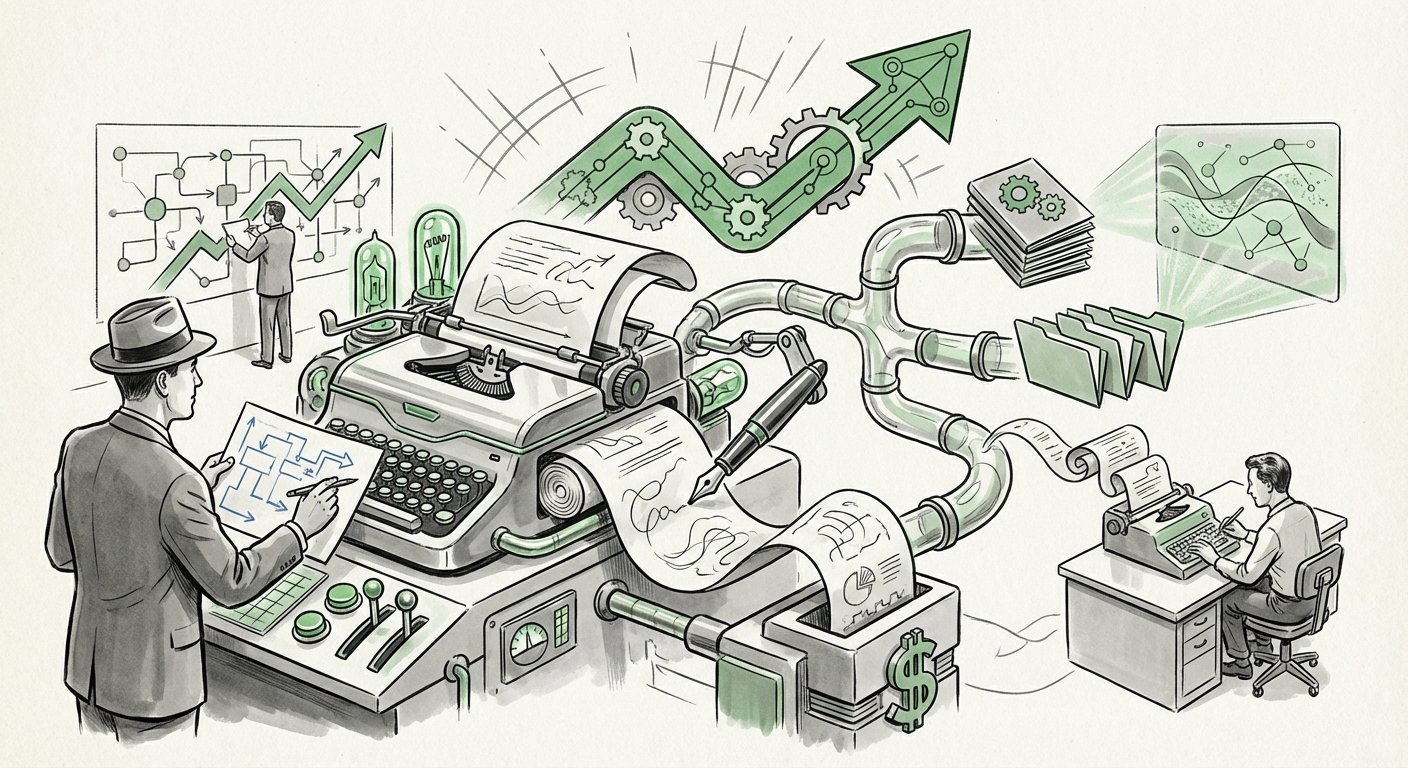
Rebuilding AUTOMATIC1111 with Gradio Workflows: The Shift From Prompt Boxes to Real AI Pipelines
Something quietly important is happening in the world of AI image generation. AUTOMATIC1111, the Stable Diffusion web interface that became the de facto front door for millions of people experimenting with open image models, is being rebuilt around Gradio workflows. On the surface, that sounds like a technical refactor, a bit of plumbing and a new interface layer. In practice, it points to a much bigger shift in how AI tools are designed, sold, and used.
The story here is not really about one interface. It is about the move from single-shot prompts to structured pipelines, and what that means for everyone from hobbyist artists to enterprise teams trying to make generative AI dependable enough to put in front of customers.
Why AUTOMATIC1111 Mattered in the First Place
AUTOMATIC1111 earned its place in AI history by being fast, flexible, and open. When open-source image models became widely available, this interface gave people a way to run them locally, load extensions, tweak sampling settings, and share results. It became a community hub as much as a piece of software.
But that success came with a familiar trade-off. Powerful open tools built by volunteers and enthusiasts tend to grow organically. Features stack up. Extensions multiply. The codebase becomes a patchwork that works brilliantly for insiders and feels fragile for newcomers. Users learn which settings to avoid, which extensions conflict, and which combination of steps produces a stable result.
That kind of knowledge does not scale. It lives in forums, Discord threads, and personal habit. Rebuilding the interface around Gradio workflows is an attempt to convert that hidden tribal knowledge into something explicit, visible, and repeatable.
What Gradio Brings to the Table
Gradio is a Python library for building web interfaces for machine learning models. It is popular because it lets a developer turn a function into a working web app with very little code. It handles the sliders, uploads, galleries, and streaming outputs that AI demos need.
More importantly, Gradio is designed around inputs and outputs flowing through defined steps. That mental model matches how real image-generation work actually happens. A serious workflow is rarely one prompt and one click. It is a chain: load a model, condition the generation, generate, upscale, refine, apply corrections, and export.
By rebuilding around Gradio workflows, the project is aligning the interface with the job to be done. Instead of presenting a wall of settings and hoping the user knows the right order, the software can present a sequence. Each stage becomes a visible, reusable block.
Trend One: From Prompt Boxes to Pipelines
The first big implication is conceptual. For the past few years, most people experienced generative AI through a single text box. You typed, you waited, you got something. That model is easy to demo and hard to productionize.
Pipelines change the unit of work. Instead of asking "what prompt produces a good image," teams start asking "what repeatable process produces a consistent asset." That is a very different question, and it is the question businesses actually need answered.
Once the workflow is the product, several things become possible:
- Reusability. A proven chain of steps can be saved and shared instead of rebuilt from scratch.
- Consistency. The same pipeline applied to different inputs produces predictable output styles.
- Auditability. You can see exactly which steps ran, in what order, useful when a client asks how an image was made.
- Handoff. A designer can build a workflow and an operator can run it without understanding every parameter.
This is the same evolution that happened in data science, where notebooks gave way to pipelines, and in software, where scripts gave way to CI/CD. Generative AI is now going through its own version of that maturation.
Trend Two: Maintainability Becomes a Feature
Open-source AI tools have an ongoing maintenance problem. Extensions break. Dependencies conflict. A new model architecture arrives and the old interface buckles under it. Users feel this as random breakage, which erodes trust.
Rebuilding on a modern interface framework is partly a bet on maintainability. Frameworks that are actively developed, well documented, and widely used make it easier to onboard contributors and harder for the project to drift into unmaintainability.
For the future of AI tooling, this matters more than it sounds. The open-source ecosystem is the counterweight to closed, API-only platforms. If open tools become too painful to run, the balance tips toward a handful of vendors. A rebuild that keeps local, open image generation usable is a small but real vote for a more plural AI future.
Trend Three: Lowering the Skill Floor Without Lowering the Ceiling
The best AI interfaces do something difficult: they let beginners succeed on day one while leaving room for experts to go deep. Gradio's component model supports this well. A simple path can sit on the surface, with advanced controls folded away underneath.
This is the pattern that made so many AI tools spread so fast. The moment a tool stops requiring a tutorial to get a decent result, adoption jumps. But the moment it caps what power users can do, they leave for something else. Workflow-based design is one of the few approaches that can serve both audiences at once, because the complexity lives in the structure rather than in a wall of sliders.
Business Implications: What Changes for Teams
For companies experimenting with image generation, the shift from prompt-and-pray to structured workflows has direct commercial value.
Cost control gets easier
Pipelines make resource use visible. If a workflow runs an unnecessary upscale step on every image, that shows up as wasted compute. Prompt-only interfaces hide this waste because nobody can see the sequence.
Quality assurance becomes possible
You cannot test a vibe. You can test a pipeline. Defined steps with defined inputs can be checked, compared, and regressed against. That is the difference between a demo and a product.
Roles separate cleanly
Creative direction and technical execution can become distinct jobs. One person designs the workflow; another runs it. This mirrors how design systems work in software and is likely to become standard practice in AI content operations.
Vendor risk drops
Local, open tooling that runs on your own hardware reduces dependence on a single cloud provider's pricing and policy. For regulated industries or teams handling sensitive material, that is a meaningful advantage.
Societal and Creative Implications
There is a cultural angle here too. The prompt box encouraged a particular kind of creativity: rapid, disposable, exploratory. Workflows encourage a different kind, deliberate, repeatable, craft-oriented. Neither is better, but the second is what you need to build a body of work or a brand.
There is also a transparency benefit. When an image is produced by a named, inspectable pipeline, it becomes easier to explain and to credit. As debates about AI content disclosure continue, having a visible process is a small step toward accountability. It will not solve provenance on its own, but it moves in the right direction.
The risk is over-standardization. If everyone converges on the same efficient pipelines, output can become homogeneous. The healthiest outcome is a rich ecosystem of shared workflows plus enough flexibility for people to break the mold.
Actionable Insights
- Treat workflows as assets. Save your best chains of steps, version them, and document them. They are more valuable than any single prompt.
- Separate exploration from production. Use loose, fast prompting to find ideas. Use a fixed pipeline to ship them consistently.
- Audit your compute. Review each step in your pipeline and ask whether it earns its cost. Remove steps that exist out of habit.
- Invest in interface literacy. Teams that understand their tools' structure adopt new versions faster and break less often.
- Keep an open-source option warm. Even if you rely on hosted services, maintaining familiarity with local tooling protects you against pricing and policy shifts.
- Watch the workflow-sharing ecosystem. Shared, downloadable pipelines are likely to become a distribution channel of their own, and a competitive edge for whoever curates them well.
What to Watch Next
The rebuild suggests a direction more than a finished destination. Three things are worth tracking. First, whether workflow portability becomes real, can a pipeline built by one team run cleanly for another? Second, whether the extension ecosystem adapts to the new structure or fragments. Third, whether performance holds up as the interface layer changes, since UI overhead is a real cost when every second in front of a GPU counts.
Each of these will reveal whether this is a cosmetic redesign or a genuine reset for open image generation.
Conclusion
The rebuild of AUTOMATIC1111 around Gradio workflows is easy to dismiss as housekeeping. It is better understood as a signal. The AI industry is moving past the era where a clever demo was enough, and into an era where reliability, repeatability, and structure decide which tools survive.
For users, that means a gentler learning curve and a faster path to consistent results. For businesses, it means generative AI that can finally be measured, taught, and trusted. And for the wider AI ecosystem, it is a reminder that the interface is not a cosmetic layer on top of the model, it is where the model actually becomes useful.
The prompt box got us here. The pipeline is what takes us further.