What Qwen-3's Chat Template Reveals About the Future of AI (and How to Use It)
When a new AI model like Qwen-3 arrives, most people focus on its benchmark scores or how well it writes code. But some of the most important lessons hide in a less glamorous place: the chat template. Released in April 2025, Qwen-3's chat template is a small set of rules that tells the model how to read a conversation. It looks technical, but it actually teaches four big lessons about where AI is heading and how businesses should use it. These lessons are not just for engineers. They matter for anyone who wants to build with AI, buy AI tools, or understand why some AI systems feel reliable and others feel chaotic.
What Is a Chat Template, Anyway?
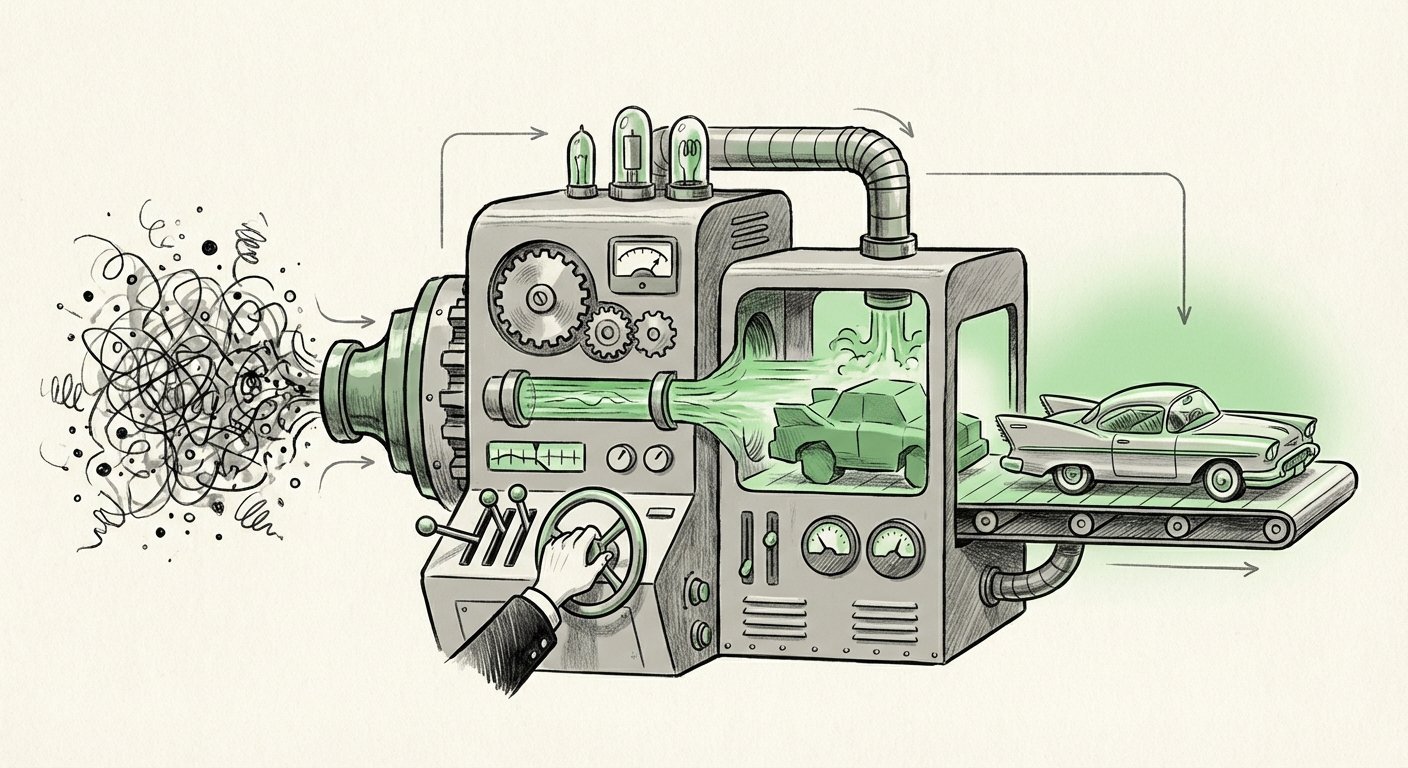
Imagine you are talking to a very smart assistant who cannot see or hear. You can only pass notes. If you write "Hello" on a piece of paper, the assistant has no idea who said it, who should answer, or what came before. A chat template solves that problem. It is a set of formatting rules that turns a back-and-forth conversation into one long string of text the model can process. The template adds special markers, think of them as labels, that say "this part is from the system," "this part is from the user," and "this part is the assistant's reply."
Without a good template, even a powerful model gets confused. It might answer the wrong person, ignore instructions, or mix up past messages. With a good template, the same model becomes predictable and useful. That is why the design of a chat template is a window into how a model is meant to be used. Qwen-3's template is a compact example of modern best practices, and it points to four trends that will shape the next wave of AI.
Lesson 1: Structure Beats Chaos
The first lesson is simple: clear structure makes AI more reliable. A well-designed chat template uses explicit role markers so the model always knows who is speaking. It separates system instructions from user questions and assistant answers. This sounds obvious, but many early AI systems failed because they crammed everything into one blob of text. The model had to guess the boundaries, and it often guessed wrong.
Why does this matter for the future? As AI models get bigger and handle longer conversations, the risk of confusion grows. A structured template acts like a traffic cop. It keeps messages in their lanes. For businesses, this translates directly into fewer errors and more consistent outputs. If you are building a customer support bot or a document analyzer, a model with a strict template will follow your instructions more faithfully. It will not accidentally treat a user's question as a system command. That reliability is the foundation of trust.
Lesson 2: The System Prompt Is a First-Class Citizen
The second lesson is about the system prompt. In a chat template, the system prompt is a special message that sets the rules. It might say "You are a helpful assistant" or "Always answer in French" or "Never share personal data." A good template gives the system prompt its own dedicated slot, separate from user messages. This design choice elevates the system prompt from a suggestion to a core part of the conversation.
This is a big deal. It means developers can control an AI's behavior without rewriting every user message. They can set safety guardrails, define a brand voice, or lock in a task format. As AI moves into regulated industries like finance and healthcare, the ability to enforce a system-level policy becomes essential. The lesson for businesses is to invest time in writing strong system prompts. Do not treat them as an afterthought. A clear system prompt, supported by a template that respects it, is the easiest way to make an AI system behave the way you need.
Lesson 3: Tool Use Needs a Clear Contract
The third lesson is about tools. Modern AI models can do more than chat. They can call functions, search the web, run calculations, or query a database. To do that safely, the model needs a clear contract for how tool calls are formatted. The chat template must define exactly how a tool request looks, how the tool's result is returned, and how the model should continue the conversation afterward.
Think of it like a restaurant order. The waiter (the model) writes down your order (the tool call) in a standard format. The kitchen (the tool) reads it and sends back a dish (the result). If the format is messy, the kitchen makes the wrong food. In the same way, a sloppy template leads to broken tool use. As AI agents become more common, systems that can take actions on their own, this lesson will only grow in importance. Businesses that want AI to automate workflows need templates that treat tool calls as first-class events, not as an afterthought. That is how you get AI that can actually get things done, not just talk about them.
Lesson 4: Reasoning Needs Its Own Space
The fourth lesson is about reasoning. Some AI models can "think" before they answer. They generate internal steps, like a scratchpad, before producing a final response. This is powerful for complex tasks like math or planning. But it also creates a problem: if the model's internal reasoning leaks into the final answer, users get confused or see information they should not see. A good chat template solves this by giving reasoning its own separate space, clearly marked and hidden from the end user.
This design choice reflects a broader trend: AI systems are becoming more transparent to their builders and more opaque to their users. That is not a bad thing. Just as you do not need to see a calculator's internal circuits to trust its answer, you do not need to read an AI's every thought. But you do need to know that the reasoning happened in a controlled way. For businesses, this means you can use reasoning modes for high-stakes tasks, like auditing a contract or planning a supply chain, without exposing messy intermediate steps to customers. The template becomes a trust boundary.
Why These Four Lessons Matter for the Future of AI
Put together, these four lessons point to a larger shift. AI is moving from being a novelty to being infrastructure. And infrastructure needs standards. Chat templates are becoming a kind of standard, a layer in the AI stack that sits between the model and the application. Just as web developers rely on HTTP to move data, AI developers will rely on well-designed templates to move conversations.
This shift has three big implications. First, model portability will depend on templates. If you build an application around one model's template, switching to another model becomes harder. Companies that understand templates can avoid lock-in. Second, security will depend on templates. Many prompt injection attacks work by tricking the model about who said what. A strict template makes those attacks harder. Third, compliance will depend on templates. Regulators will want to know how an AI system separates instructions from user input. A clear template gives you an audit trail.
For society, these lessons are a reminder that the details of AI design matter. A chat template is not just a technical artifact. It encodes assumptions about power, control, and trust. Who gets to set the system prompt? How transparent is the reasoning? These are not just engineering questions. They are governance questions. The good news is that the best practices visible in Qwen-3's template are also good for society: clear roles, strong system prompts, safe tool use, and separated reasoning. These are the building blocks of AI that people can actually rely on.
Practical Implications for Businesses and Society
What should you do with this knowledge? If you are a business leader, start asking your AI vendors about their chat templates. Do they support system prompts properly? How do they handle tool calls? Can you hide reasoning from end users? These questions will help you separate serious AI platforms from toys.
If you are a developer, treat the chat template as part of your product design. Document it. Test it. Make sure every role and every tool call has a clear format. A few hours spent on template design can save weeks of debugging later. If you are a policymaker or a concerned citizen, pay attention to how AI systems structure conversations. The template is where safety rules become real code.
Actionable Insights
- Audit your prompts. Make sure your system prompt is separate from user messages and that your template enforces that separation.
- Design for tools early. If your AI needs to call functions or APIs, define the tool-call format before you build the rest of the system.
- Hide reasoning. Use templates that keep internal thinking separate from final answers. This protects users from confusion and protects you from leaking sensitive logic.
- Test with messy conversations. Real users do not follow rules. A good template should handle interruptions, repeated questions, and role switches without breaking.
- Think about portability. If you plan to switch models, choose templates that follow common conventions. Standards reduce switching costs.
Conclusion
Qwen-3's chat template is a small piece of engineering, but it teaches big lessons. Structure beats chaos. System prompts are powerful. Tool use needs contracts. Reasoning needs its own space. These four ideas are not just about one model. They are about how AI will be built and used for years to come. As AI becomes more capable, the invisible rules that shape conversations will become more important, not less. The companies and developers who master those rules will be the ones who build AI that people actually trust.