NVIDIA's Nemotron, GPUs, and Agentic AI: The Three Forces Reshaping the Future of AI
One of the clearest views of where artificial intelligence is heading comes from a recent conversation with NVIDIA's Chris Alexiuk. The discussion ranged widely across the AI landscape, but three topics took center stage: Nemotron, GPUs, and agentic AI.
At first glance, these sound like separate chapters in the AI story. A family of open models. A line of powerful computer chips. A new class of artificial intelligence that acts instead of just answering.
But they are not separate chapters. They are the three layers of one stack: the hardware, the software, and the new way we will use both. Understanding how they fit together is the key to understanding where AI is going.
Right now, AI is crossing a line. The first wave was about experimentation, flashy demos, and pilot projects. The next wave is about deployment, putting AI into the daily operations of real organizations. At that moment, choices about hardware, models, and agents stop being theoretical. They become business decisions with real budgets and real deadlines. Whether you are a developer writing code, a business leader planning next year's plan, or someone trying to make sense of the headlines, this is the story worth following.
The Engine: Why GPUs Power Every AI Advance
Every AI system you have ever used depends on hardware. In practice, that hardware almost always includes a GPU, or graphics processing unit. GPUs were originally built to render video game graphics, yet they turned out to be perfect for the mathematics of deep learning.
A normal computer processor handles tasks one at a time, very quickly. A GPU instead handles thousands of calculations at the same time. That parallel power is exactly what modern AI needs. Training a large model means running billions of simple math operations, and GPUs make that possible in weeks instead of years.
From training to inference
For years, the biggest demand was for training, the expensive process of teaching a model using enormous amounts of data. But a shift is underway. As AI moves into everyday products, the real work is inference, which means using a trained model to answer questions and complete tasks. A model is trained once, then used millions of times a day. That pushes demand from a few giant projects to a constant, planet-wide flow of usage.
Compute is the new strategic resource
Scale matters as much as speed. Training a frontier model requires a data center full of chips, connected by fast networking, kept cool by giant cooling systems, and powered by enormous amounts of electricity. Building that infrastructure is one of the hardest engineering challenges of our time, which is why the GPU is not just a product. It is the foundation of a whole industry.
The result is that chips have become one of the most valuable resources on Earth. Companies spend billions to secure access to GPUs, and entire national strategies are being built around computing power. This is why the conversation starts with hardware: without the chip, nothing else in AI exists.
The Model: Nemotron and NVIDIA's Open Bet
Why a chipmaker would build models
It is easy to think of NVIDIA as a hardware company. The conversation around Nemotron, however, shows a bigger ambition. Nemotron is the name for NVIDIA's family of open models, powerful AI systems that developers can download, study, and build upon.
Why would a chipmaker also build models? Because the two strengthen each other. When more developers build with NVIDIA's models, more of them run those models on NVIDIA's chips. The software becomes a reason to buy the hardware. It is a strategy many experts call a virtuous circle.
The open model advantage
Open models are a big deal for businesses. Developers can fine-tune them on their own data, run them on their own servers, and avoid sending sensitive information to outside services. They also escape the monthly fees and limits that come with closed models. For many organizations, that combination of control and privacy is what makes AI practical.
The open model movement has also changed how AI competition works. Instead of a few companies controlling access to the world's best AI, open models let a hospital tune a model for medical paperwork, a factory tune a model for maintenance logs, and a bank tune a model for its own documents. The ability to customize is the ability to make AI actually useful in a specific business.
Models, data, and the flywheel
There is another reason open models matter: data. High-quality training data is the fuel of AI, and it is getting harder to find. Models like Nemotron help generate synthetic data, new realistic examples created by AI, that developers can use to train better models of their own. That makes a chip company a key player in the data economy as well. The more models that get built, the more chips get sold. Open models drive adoption, and adoption drives demand for GPUs.
The Application: Agentic AI Changes the Game
The next step beyond the chatbot
Most people first met AI through chatbots: ask a question, get an answer. Agentic AI is different. Instead of just answering, an agent works toward a goal. It breaks a big task into smaller steps, chooses which tools to use, checks its own work, and keeps going until the job is finished. Imagine an assistant that does not need instructions at every step.
A customer service agent might handle a return from start to finish. A research agent might gather data from dozens of sources, summarize it, and turn it into a report. These are not future ideas. They are the applications being built right now on the newest generation of models.
What made agents possible
Agents have been discussed for years, but three changes made them practical:
- Better reasoning. Modern models can follow long, multi-step chains of thought and still reach correct conclusions.
- Real tools. Agents can write and run code, call software tools, and tap into databases and web services.
- Memory and reflection. Agents can remember what they have done, review their results, and fix mistakes before they finish.
Why agents change the economics of work
An agent is not just a faster way to do an old task. It is a way to multiply effort. An agent can work around the clock, never get tired, and handle dozens of routine jobs at the same time. For businesses, this is the real prize of the AI wave: not a better search box, but software that plans and acts.
Of course, agents also raise new questions about safety and oversight. If software is acting on its own, who is responsible when it makes a mistake? That is why the best agent designs include human checkpoints, clear limits, and careful logging. The goal is not to remove people from the loop. It is to let people supervise more work than they could ever do by hand.
The Convergence: One Stack, Three Layers
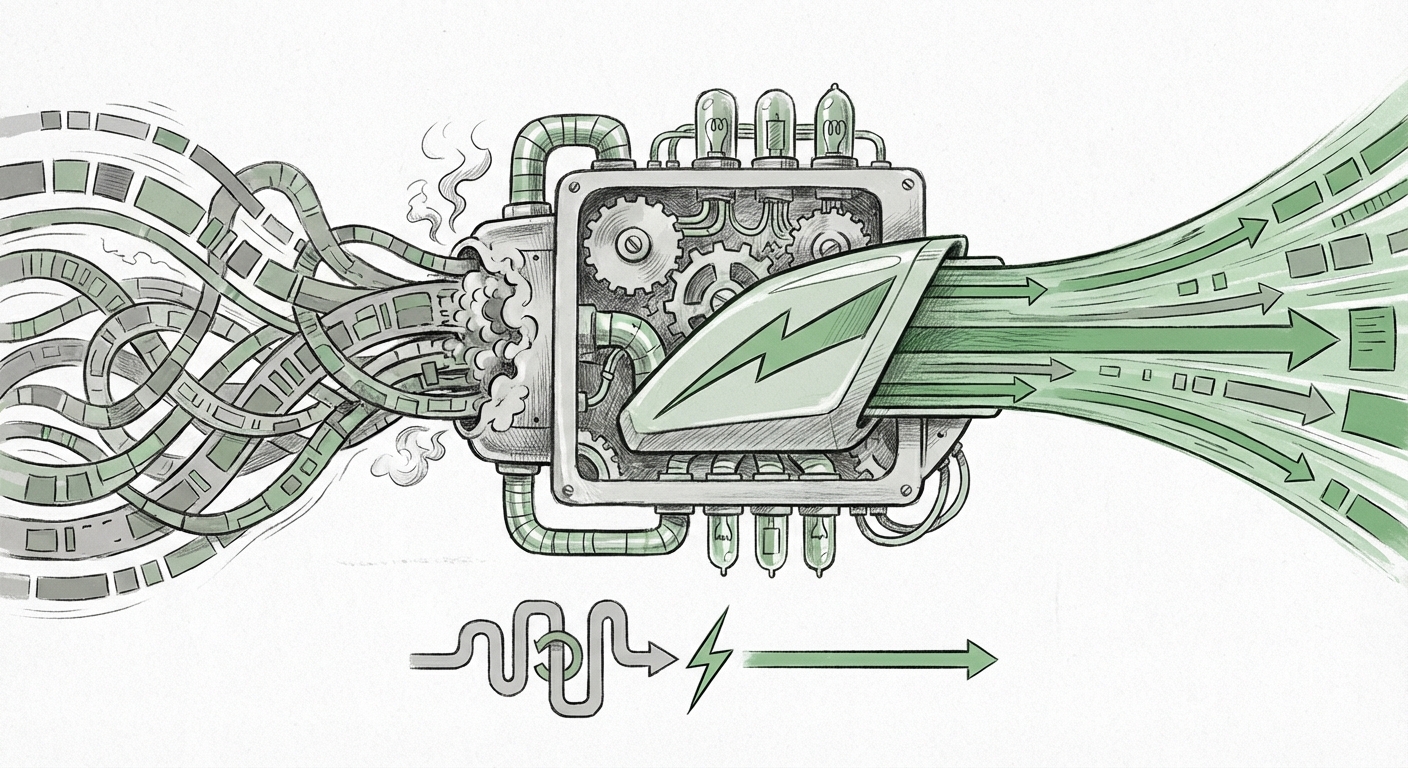
The most important idea here is how the three forces feed one another. GPUs make modern models possible. Open models like Nemotron put those capabilities within reach of any developer. And those models become the minds of agents, which in turn create even more demand for GPUs.
Think of the new AI stack in three layers:
- The silicon layer: GPUs and the data centers built around them.
- The model layer: open and closed systems, including the Nemotron family.
- The agent layer: applications that use models to get real work done.
Each layer is moving fast on its own, but the real action is where they connect. For years, the AI industry debated a simple question: is the future about hardware or software? The past few years answered that question: it is about both. Winning companies will offer chips, models, and the tools to build agents, and give customers a clear path from idea to deployment.
What Businesses Should Do Right Now
Companies do not need to wait for the dust to settle. They can act today, starting small and learning fast. Here are five practical moves:
- Start with narrow agentic pilots. Pick a repetitive task, such as customer support, internal data analysis, or report writing, and let an agent handle it with human review.
- Take open models seriously. They cut costs, protect data, and give teams room to customize. Nemotron and similar families are worth evaluating for real workloads.
- Budget for inference, not just training. Using AI every day is an ongoing operating cost, like electricity. Plan for it.
- Invest in evaluation. Agents can make mistakes. Build systems that check their work, measure quality, and catch problems early.
- Rethink workflows, not just tasks. The biggest gains come when a process is redesigned around what agents can do, not when one small step is automated.
None of this requires a giant AI team on day one. The fastest learners start with one workflow, one agent, and one clear measure of success. From there, they expand in small steps, building internal experience with every pilot.
The Bigger Picture: Power, Skills, and Society
Open models like Nemotron push AI toward democracy: more organizations can afford to build and run their own AI. But the scale of GPUs needed for frontier AI pushes power toward the biggest companies. Both forces are real, and the tension between them will shape the next decade.
As agents take over more routine mental work, the valuable human skills change. Directing agents, designing their goals, checking their outputs, and improving their tools become the new core competencies. The people who adapt will find themselves managing digital workers, not just doing tasks.
The Road Ahead
The direction is clear. We are moving from the era of AI that answers questions to the era of AI that takes action. In that world, hardware, open models, and agents are not separate industries. They are one machine. The conversation around Nemotron, GPUs, and agentic AI is the clearest map we have of where that machine is headed, and the organizations that understand all three layers will be the ones shaping what comes next.