Claude Code Now Runs Daily Maintenance on Anthropic's Software, What a 46% Merge Rate Means for the Future of AI
Software development has a new routine. Every day, an AI system called Claude Code sits down to maintain real, production-grade software, the very software that Anthropic builds and ships. This is not a one-time demo. It is not a carefully staged experiment. It is a daily habit. And the most striking part is this: about 46 percent of the changes Claude Code proposes are actually merged into the codebase.
That number is small enough to be believable, and big enough to change how we think about AI at work. It tells us that AI has crossed a line, from suggesting code to being responsible for code. For anyone who writes software, manages a technical team, or simply uses apps every day, this is a moment worth understanding.
What Does "Daily Maintenance" Actually Mean?
When most people picture software development, they imagine teams building brand-new apps, dazzling features, and shiny user interfaces. But that is only half of the job, often less. The other half is maintenance: fixing bugs, updating old libraries, cleaning up messy code, tweaking small details so everything keeps running smoothly, patching security holes, and modernizing outdated parts of the system.
This is the unglamorous work that keeps the digital world alive. In many companies, maintenance quietly consumes a massive share of developers' time. It is also exactly the kind of work that follows clear patterns, which makes it a perfect fit for AI.
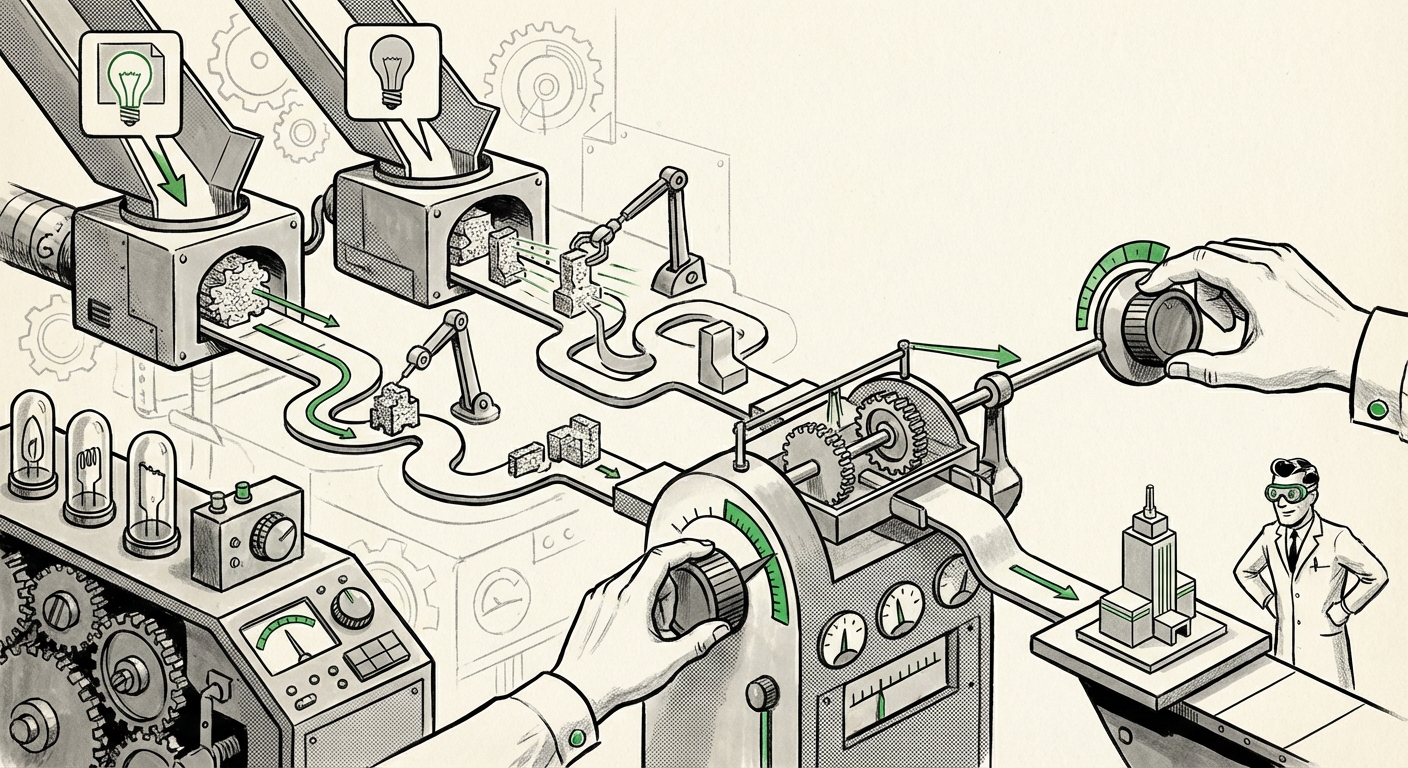
For Claude Code to run maintenance daily, it is effectively acting as a real engineer on the team. Its workflow likely looks something like this: scan the codebase for problems, write proposed fixes, run tests to check its own work, send changes for human review, respond to feedback, and then repeat the whole cycle the next day. That rhythm, steady, constant, and largely autonomous, is what makes this development so significant. Maintenance is no longer a once-in-a-while assisted task. It is a continuous, ongoing responsibility handed to AI.
Why the 46% Merge Rate Matters So Much
A "merge rate" sounds technical, but the idea is simple. When an AI proposes a change to a software project, a human team has to decide whether to accept it. If the change is accepted, it is "merged" into the main codebase. The merge rate is simply the percentage of AI-proposed changes that humans approve.
Why does 46 percent impress developers? Because getting a change merged is genuinely hard. A proposed change has to compile, pass every automated test, match the project's style, solve a real problem, and avoid breaking anything else in the process. It also has to survive the judgment of experienced human reviewers who care deeply about how the code fits into the bigger picture.
For a human developer, merging a meaningful change can take days of work. For an AI, doing this daily and landing nearly one in two proposals is a significant achievement. It suggests the AI is not guessing blindly. It is learning patterns, understanding the codebase, and producing work that trained engineers consider good enough to ship.
Equally important: 46 percent is not 100 percent. That gap tells us humans are still in the loop, still reviewing, and still making the final call. The system is powerful, but it is not unchecked.
The Big Shift: From Code Suggestions to Code Ownership
For years, the typical AI coding tool worked like an autocomplete on steroids. A developer would type a little, and the AI would suggest the next few lines. The human stayed firmly in charge. The AI was a co-pilot, helpful, but never the one flying the plane.
Running daily maintenance flips that relationship. Claude Code is not waiting for a human to prompt it at every step. It is operating more like an autonomous agent: given responsibility, it plans, executes, and delivers results on its own schedule. This is a shift from AI as a suggestion engine to AI as a worker.
This is also a powerful example of "dogfooding", a company using its own product on itself. When Anthropic runs Claude Code on Anthropic's own software, the feedback loop closes. The AI finds real problems in real code. Those problems teach the AI. The lessons improve the model. And the improved model handles even more maintenance. Over time, this self-reinforcing loop makes the system smarter, more reliable, and more useful not just for one company, but for everyone who adopts similar tools.
The Other Half of the Story: Why 54% Is Still Rejected
It is tempting to focus on the 46 percent and declare victory for AI. But the rejected 54 percent is just as revealing. Why would a human team reject an AI's proposed change?
Sometimes the code works but does not match the project's style. Sometimes it solves a problem in a way that works technically but clashes with the team's long-term architecture plans. Sometimes the risk of change is too high, even when the fix looks good. And sometimes, let's be honest, the AI simply got it wrong.
Rejections are not a failure. They are a form of training data. Every rejected change teaches the AI something about the team's preferences, standards, and priorities. A 46 percent merge rate is not a ceiling; it is a snapshot of where we are right now. As AI systems get better at reading context, matching style, and anticipating what reviewers want, that number will very likely climb.
But the rejected half also carries a warning. It reminds us that human judgment is still essential. The idea of fully autonomous AI rewriting entire software systems without oversight is not what is happening here, and it is probably not what we want.
What This Means for the Future of AI and How It Will Be Used
This news is a window into a much bigger future. If AI can maintain one company's software daily, it can eventually maintain software everywhere. The implications are huge.
1. Software Maintenance Becomes a Top AI Use Case
Maintenance is often seen as drudgery, but it is essential. AI that can handle a steady stream of maintenance tasks will free human developers to focus on the creative and strategic parts of software, new products, new features, new ways to help users. We are likely heading toward a world where AI handles the routine upkeep of our digital infrastructure, and humans handle the vision.
2. AI Will Maintain AI
Here is the mind-bending part: Claude Code is maintaining the software of a company that builds AI. That means AI is helping maintain the products that contain AI. Soon, AI systems will oversee infrastructure that other AI systems depend on. This "self-maintaining" loop could make software dramatically more stable, or dramatically more complex. The same tool that fixes a bug might be the tool whose update introduces one. This is why verification and testing become more important than ever.
3. The Verification Layer Becomes King
An AI is only as trustworthy as the tests that check its work. Companies that want to raise their own AI merge rates will pour investment into automated testing, continuous integration, and monitoring. The future of reliable AI is not just better models, it is better guardrails: systems that catch mistakes before they reach the real world.
4. Human Roles Shift from Writing Code to Directing Code
Developers will spend less time typing code and more time reviewing AI proposals, defining clear goals, setting quality standards, and handling the parts that require taste, empathy, and judgment. The skill of the future is not "can you write code?" but "can you review, direct, and improve AI-written code?"
What This Means for Businesses
For business leaders who do not write code themselves, this trend still matters deeply, because nearly every modern business runs on software.
- Lower maintenance costs, eventually. If AI can handle routine upkeep around the clock, software teams can redirect their most expensive people toward work that grows the business. However, the savings will not be instant. The first phase requires investment in testing, review processes, and careful oversight.
- Faster responses to problems. AI can work at 3 a.m. It can patch a bug before users even notice. For companies whose entire reputation depends on reliability, banks, hospitals, retailers, streaming services, round-the-clock automated maintenance is a major operational advantage.
- The review job becomes a top job. Companies will suddenly need more people who are excellent at reviewing code, spotting subtle flaws, and making sure AI proposals match the company's standards. Code review is no longer a chore; it becomes a strategic role.
- Risk and governance are non-negotiable. Every AI-merged change should be traceable, reversible, and auditable. Businesses need clear policies: what an AI is allowed to change without human sign-off, and what requires a human in the loop. The 46 percent merge rate shows that human oversight and smart policies matter as much as the technology itself.
Actionable Steps for Teams Exploring AI Maintenance
If this trend inspires you to explore AI-driven maintenance in your own organization, start smart. Here are concrete steps you can take today.
Start with low-risk, high-volume tasks
Do not let AI rewrite your entire platform on day one. Begin with safe, repetitive jobs: updating documentation, cleaning up minor issues, refreshing old dependencies. Measure how the AI performs before expanding its responsibility.
Invest in automated testing first
An AI agent is only as reliable as its verification layer. If you cannot automatically prove that a change works, you should not let an AI merge anything. Strong tests are the foundation of trusting AI.
Define the "human in the loop" boundary
Decide in advance which changes require human approval. Routine, low-risk fixes might flow through automatically. Critical, high-risk changes should always have a human reviewer. Write this policy down and stick to it.
Track your own merge rate
You cannot improve what you do not measure. Track how many AI-proposed changes your team accepts, why they reject others, and how the patterns change over time. Your own data will tell you when you are ready to trust AI with more.
Retrain your developers
Shift your team's skills toward reviewing, directing, and testing AI-generated code. The most valuable engineer on your team may soon be the one who is best at working with AI, not against it.
Use AI on your own product
Anthropic's move shows the power of using your own tools on your own problems. Whatever your company builds, look for opportunities to use AI internally. The lessons you learn will improve both your product and your team.
The Road Ahead: Toward AI-Run Software Lifecycles
The era of AI as a passive helper is ending. The era of AI as an active maintainer has begun. Every day, somewhere, an AI system is quietly keeping important software alive, fixing what breaks, cleaning up what is messy, and proving that machines can carry real responsibility in the digital world.
That does not mean human developers are disappearing. On the contrary, their role is becoming more important and more interesting. Someone still has to define what "good" looks like. Someone still has to make the final call on risky changes. Someone still has to understand the humans who use the software, and protect their interests.
The 46 percent merge rate is not the finish line. It is a milestone on a journey toward a world where humans and AI work side by side, with humans providing the judgment, the direction, and the accountability, and AI providing the tireless, reliable effort.
Conclusion
Claude Code running daily maintenance on Anthropic's own software, with a 46 percent merge rate, is one of those quiet moments that will look obvious in hindsight. It shows that AI has moved from helping us write code to maintaining code on its own, responsibly, daily, and with measurable results.
The future of AI will not be built by machines working alone. It will be built by humans and machines working together, each doing what they do best. If you are a developer, a business leader, or simply someone who depends on software, and in modern life, that is everyone, this is a future worth watching closely.