DataRobot OpenCode: Your Coding Agent, Your Model Choice, What It Means for the Future of AI
Artificial intelligence is changing how software gets built. For years, the dream was simple: an AI assistant that could write code for you, catch your bugs, and speed up your day. That dream has become real. Coding agents are now part of everyday development. But a new question has emerged: who decides which AI model powers your coding agent?
That is exactly the question DataRobot OpenCode answers with its simple but powerful promise: your coding agent, your model choice. It is a statement that says a lot about where AI is heading. The future is not about being locked into one tool or one model. The future is about choice, control, and putting the power in the hands of the people doing the work.
Let us break down what DataRobot OpenCode means, why the idea of model choice matters so much, and how this shift will reshape the future of AI for developers, businesses, and society.
Meet DataRobot OpenCode: Coding Agents Meet Freedom of Choice
Coding agents are AI helpers that do more than suggest a few lines of code. They can understand an entire project, plan changes, write whole functions, run tests, fix errors, and explain complex logic. Think of them as a junior developer who never sleeps, never gets tired, and works at machine speed. For many teams, they have already become irreplaceable.
DataRobot OpenCode enters this space with a clear idea: give people a powerful coding agent, but let them decide which model sits underneath it. The tagline "your coding agent, your model choice" is not just marketing. It represents a philosophy. Instead of forcing everyone into one AI brain, OpenCode lets teams pick the model that fits their specific needs.
That might sound like a small feature. It is not. The choice of model changes everything about how an agent performs. Different models have different strengths. Some are great at complex, multi-step reasoning. Others are faster and cheaper for simple tasks. Some are better at certain programming languages. Some are designed to run in secure, private environments. When you can choose, you can match the tool to the job.
For a developer, this means no more settling. If a model is too slow, switch. If one is too expensive for routine work, pick a leaner option. If your company requires that code never leaves its own servers, choose a model that can live there. The coding agent becomes a flexible workhorse instead of a one-size-fits-all gadget.
Why "Your Model Choice" Is a Big Deal
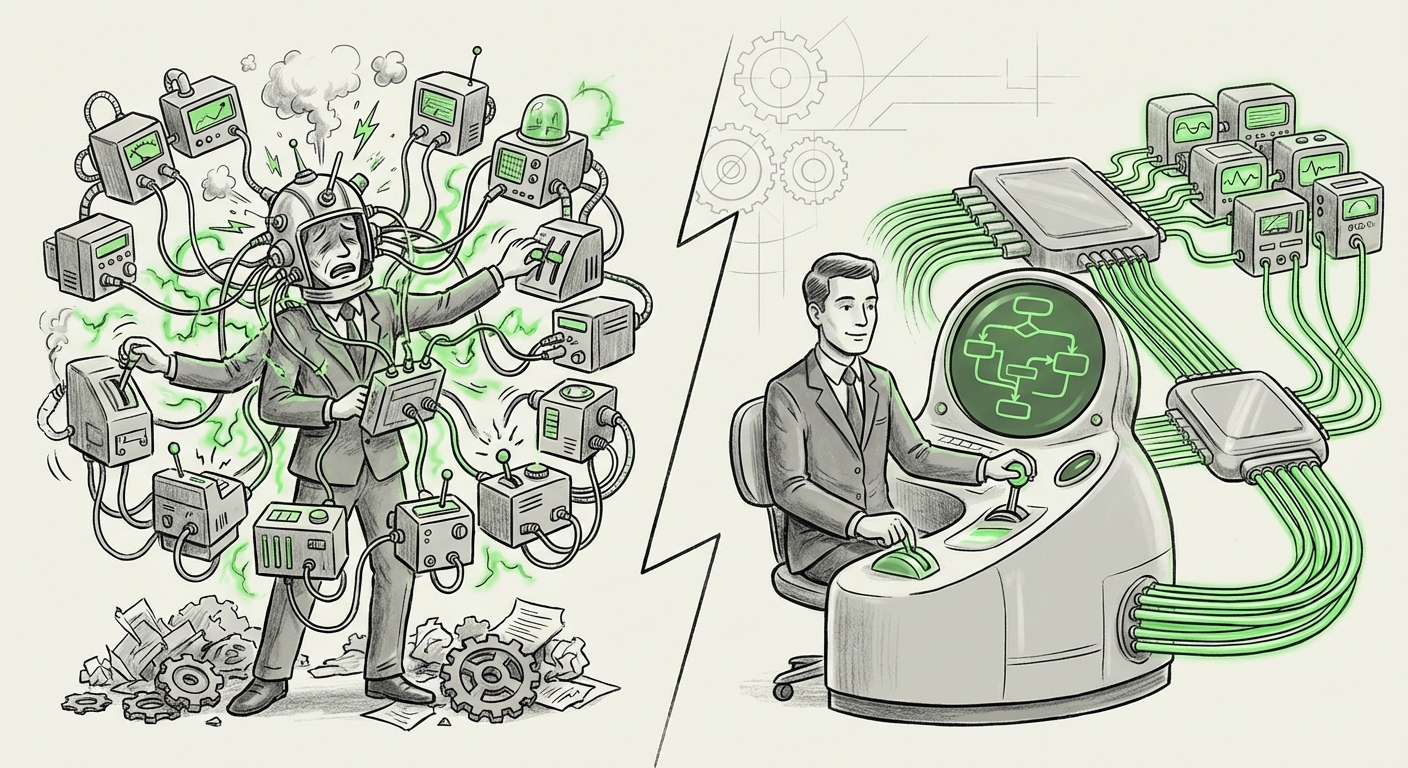
For most of the early AI boom, the pattern was simple: a company builds a tool and bakes a specific model into it. You wanted the tool? You took the model. This created a problem that many businesses started to notice. Vendor lock-in. If the built-in model was slow, costly, or not great at your type of code, you had no options.
The "your model choice" approach changes that equation. Here is why it matters so much:
- Performance matching. Not all coding tasks are the same. Writing a simple script and re-architecting a massive system are very different challenges. Choosing a model lets teams pick the right level of intelligence for each job.
- Cost control. Premium models cost more. For routine tasks, a lighter model can get the job done for a fraction of the price. Model choice puts the budget back in your hands.
- Security and privacy. Some organizations cannot send code to outside servers. Being able to choose models that fit within security rules is not a nice-to-have. It is essential for banks, hospitals, and government agencies.
- Resilience and flexibility. If one model has an outage or becomes outdated, teams can switch to another. No downtime. No waiting. No being stuck.
- Future-proofing. AI is moving fast. New models appear constantly. A coding agent that only works with one model gets old quickly. One that supports choice grows with the industry.
This is the real insight behind DataRobot OpenCode. The value is not just in the code it writes. The value is in the freedom it gives the people using it. In a world where AI models are changing every few months, flexibility is the most important feature of all.
The Bigger Trend: The Rise of Model-Agnostic AI
DataRobot OpenCode is part of a much bigger movement. Across the AI industry, the smartest tools are becoming model-agnostic. That means they work with many different models instead of being tied to just one. We are moving from a world of "one model to rule them all" to a world where models are like a team of specialists, and the platform helps you choose the right specialist for each task.
This trend makes sense. The strengths of AI models vary wildly. A model that is brilliant at creative writing might be only average at math. A model that is lightning-fast for simple answers might struggle with deep, multi-step logic. No single model is the best at everything. So why pretend otherwise?
The "your model choice" philosophy treats AI the way we treat other tools. You do not buy one hammer for every job. You pick the right tool for the right task. OpenCode applies this logic to coding agents, and it is a sign that the industry is maturing.
It also signals something deeper: the platform is becoming more important than the model. If you can swap models in and out, then what really matters is the layer around them, the interface, the workflow, the integrations, the experience. The agent itself becomes the anchor, and the models become interchangeable parts. That is a huge shift in power. It means no single AI company can hold your entire workflow hostage.
What This Means for the Future of AI
So where is all of this heading? Looking at DataRobot OpenCode and the trend it represents, we can see several clear directions for the future of AI.
1. Developers Will Become Managers of AI Workers
The developer of the future will spend less time typing code line by line and more time directing AI agents. They will choose the right model, give clear instructions, review the output, and manage quality. This changes the job from "writer" to "director." It requires new skills: clear communication, careful review, and good judgment about when to trust the AI and when to step in.
2. Choice Will Become the Standard
In the future, "bring your own model" will be a normal feature, not a differentiator. Businesses will expect every major AI tool to let them connect the models they want. This will push AI companies to compete on the quality of the platform and the experience, not on forcing their own model down your throat. That is good news for users.
3. Specialization Will Grow
When choice is easy, teams will pick models for specific jobs. We may see models tuned for security, for speed, for specific languages, or for working entirely offline. The idea of a single universal AI brain will fade. In its place: a portfolio of specialized models, chosen like chess pieces.
4. The Enterprise Will Demand Control
Large companies face real risks around data privacy, compliance, and cost. They cannot afford to be locked into a model that does not meet their standards. Tools like OpenCode point to a future where businesses set their own rules: which models are allowed, which data goes where, and who gets budget for premium AI. Control moves from the vendor to the customer.
5. Innovation Will Speed Up
When teams can switch models easily, they are no longer stuck waiting for their vendor to improve. If a new, better model appears tomorrow, they can adopt it immediately. This will accelerate the pace of improvement across the industry. The best ideas will spread faster, and everyone will benefit.
What Businesses Should Do Today
This shift is not something to watch from the sidelines. If your business uses AI for software development, or plans to, here are practical steps you can take right now.
- Ask about model flexibility. Before adopting any AI coding tool, ask a simple question: can we choose the model? If the answer is no, think carefully about the long-term cost of that lock-in.
- Build a model strategy. Do not treat AI models as one interchangeable blob. Map your needs: which tasks need maximum intelligence, which need speed, which need privacy? Then match models to those needs.
- Start with pilot projects. Try a coding agent on real work. Measure the results: speed, code quality, developer satisfaction. Let your team test different models and report what works.
- Train your developers. The best tool is useless if people do not know how to use it. Invest in teaching your team how to direct AI agents, review their output, and choose the right model for each task.
- Keep your data safe. Model choice is also a security feature. Use it. Set clear rules about what code can go to which models, and choose models that respect your privacy boundaries.
- Stay flexible. The AI market is moving fast. Do not sign contracts that lock you into one model for years. Keep your options open. The ability to switch is itself a competitive advantage.
The Road Ahead
There is no doubt that coding agents will keep getting better. They will write more code, handle bigger projects, and become even more useful partners to human developers. But the biggest change may not be how smart they are. It will be who is in charge.
DataRobot OpenCode makes a quiet but powerful statement: the user should be in charge of the model. Not the vendor. Not the platform. The person doing the work. "Your coding agent, your model choice" is really a promise of agency in an age of automation.
For developers, it means a future where AI works for them, under their control, with the best tool for the job at hand. For businesses, it means less risk, more flexibility, and the ability to adapt as the AI landscape shifts. And for the industry as a whole, it signals that the era of forced model lock-in is ending.
The future of AI is not about finding one perfect model. It is about building systems that respect choice, adapt to change, and put power in the hands of the people who use them. DataRobot OpenCode is a clear step in that direction.
The message for every business leader, developer, and decision-maker is simple: choose wisely, stay flexible, and never let a single model become your only option. The AI tools that respect your freedom will be the ones that win your trust. And trust, in the end, is the most important thing of all.