GPT-6.1 Sol Comes Close to Astra at a Fifth of the Price, And That Changes Everything About AI
Something important happened in the AI world in late September 2026, and it did not look like a dramatic breakthrough. It looked like a price tag.
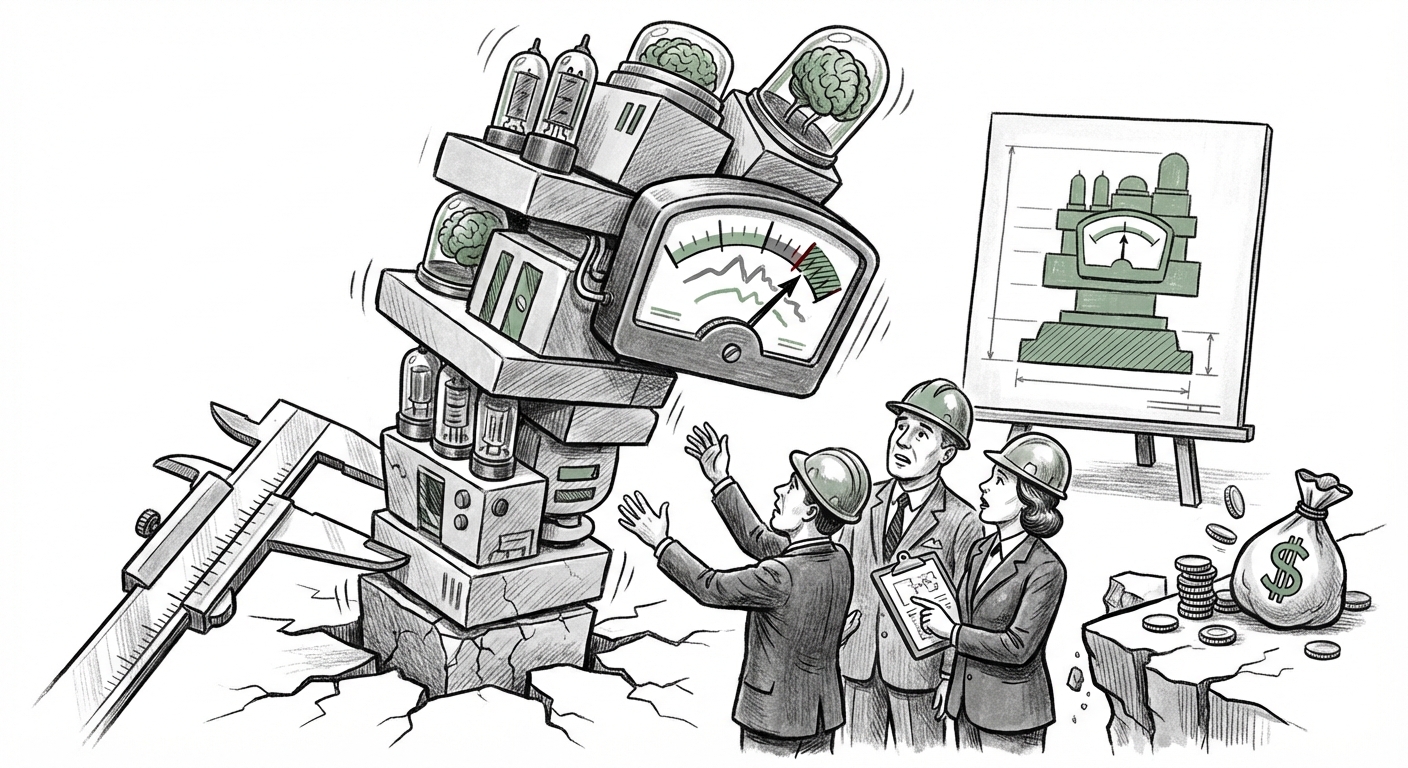
A new model, GPT-6.1 Sol, has arrived and it comes close to matching Astra, widely treated as the top of the heap, while costing about a fifth of the price. No fireworks. No giant leap in raw brainpower. Just the same kind of capability, for a fraction of what you used to pay.
That single sentence is the most important thing to understand about where AI is heading. The future of this technology is not only about who builds the smartest model. It is about who can deliver "smart enough" at a price the rest of the world can actually afford. Here is what that shift means, for businesses, for workers, and for the next few years of AI.
The Headline That Matters: Near-Parity at One-Fifth the Cost
For most of the past few years, the story was simple. The best AI model was clearly the best. It won the benchmarks, it handled the hardest tasks, and it charged whatever the market would bear. Everyone else was playing catch-up.
GPT-6.1 Sol breaks that pattern. It does not beat Astra. It comes close. And "close" is doing an enormous amount of work in that sentence.
Think about it like cars. If one car is the fastest in the world and another is 95 percent as fast but costs one-fifth as much, almost nobody buys the fastest car. The people who truly need the last 5 percent will pay for it. Everyone else, which is nearly everyone, buys the cheaper one and never notices the difference.
That is the moment AI just entered. Near-parity is not a consolation prize. Near-parity at a fifth of the price is a market-changing event.
Why Price-Performance Is the Real AI Story of 2026
Raw capability gets the headlines, but price-performance is what decides how widely a technology actually gets used. It always has.
Cloud computing did not change the world because someone built the most powerful server ever. It changed the world because computing became cheap enough to rent by the hour. Smartphones did not win because they were the fastest computers, they won because they were good enough and cheap enough to put in everyone's pocket.
AI is following the same path. A model that is slightly behind the leader but costs a fifth as much does something remarkable: it changes what is worth doing.
Tasks that made no financial sense at premium prices suddenly pencil out. Running an AI assistant on every customer email. Drafting every contract summary. Reviewing every support ticket. Translating every product page. Watching every security log. These are not glamorous tasks. They are the volume work that runs a business, and volume work only gets automated when the per-unit cost drops low enough.
That is exactly what GPT-6.1 Sol's pricing does. It moves AI from "a powerful tool for important moments" to "an invisible utility that runs all day."
The Commoditization of Frontier Intelligence
There is a bigger pattern hiding inside this one announcement. Frontier AI capability is becoming commoditized.
Not the absolute cutting edge, that will always have a leader and a premium price. But the layer just below the cutting edge, which is where most real-world value gets created, is turning into a competitive market with falling prices and multiple good options.
This is normal for maturing technology. It happened to database software. It happened to web hosting. It happened to GPUs before the AI boom made them scarce again. What was once a miracle becomes a product, and products compete on price.
Three forces drive this in AI:
- Fast followers learn faster. Every new capability the leader reveals shows rivals what is possible and where to aim. The gap between first and second keeps shrinking because the map is already drawn.
- Efficiency techniques travel. Better training recipes, better serving systems, and cheaper compute spread across the industry within months, not years.
- Buyers get smarter. Companies no longer chase the leaderboard. They run their own tests on their own tasks and discover that the cheaper model handles 9 out of 10 jobs just fine.
The result is a market where being "close" is commercially devastating to anyone charging a premium. GPT-6.1 Sol is not just a cheaper option. It is a signal that the era of paying top dollar for a few percentage points of extra capability may be ending.
What This Means for Businesses
The math on AI agents finally works
The biggest AI story of the coming year is agents, AI systems that do multi-step work on their own rather than answering a single question. Agents are expensive to run because they think, act, check, and try again. Every extra step costs money.
When the price per step falls to one-fifth, agents stop being a demo and start being a business. An agent that reviews a claim, checks the policy, drafts a response, and files it becomes affordable at real-world volumes. This is the single most important consequence of cheaper near-frontier models.
Procurement becomes a real competitive advantage
For the last few years, AI strategy meant picking the best model. Now it means something harder and more valuable: routing work to the cheapest model that can do it well. The best-run companies will use premium models for the hardest 10 percent of tasks and cheaper models like GPT-6.1 Sol for everything else. Getting that split right is worth more than any single model choice.
Vendor lock-in gets weaker
When two models perform similarly at very different prices, switching between them becomes practical. That puts power back in the hands of buyers. Any company still building on a single closed model with no exit plan should treat this as a wake-up call.
Your moat is not the model
If near-frontier intelligence costs a fifth of what it did, then intelligence itself is no longer a differentiator. It is an input. The advantage moves to what you pair it with: your private data, your workflow, your customer relationships, and your judgment about which problems are worth solving. Companies that built their edge purely on access to a specific model should be nervous. Companies that built it on what only they know should be excited.
What This Means for Society
Cheap, capable AI is a double-edged gift.
On the upside, it widens access. Small clinics, local governments, tiny law offices, independent developers, and students in places with limited budgets can now use AI that was previously out of reach. Tools that used to be reserved for well-funded organizations become available to almost anyone. That is a genuine leveling force.
On the downside, it accelerates automation of exactly the kind of routine knowledge work that employs millions of people. Cheaper AI does not just replace the expensive version, it makes replacement economically sensible in far more places. The pressure on entry-level white-collar roles will increase, not decrease, as the price falls.
There is also a reliability question. "Close to Astra" also means "not Astra." For a chatbot that is fine. For a system making medical, legal, or financial decisions, the gap between close and best can matter a great deal. The smarter path for most organizations is to pair cheaper models with strong human checks on high-stakes work, treating them as tireless assistants, not final authorities.
The Road Ahead
Expect the pattern set by GPT-6.1 Sol to repeat. Each new top model will be matched closely by cheaper rivals within a short window. Prices will keep falling. Capability at any given price will keep rising.
Three predictions follow naturally:
- Volume explodes. Lower prices unlock uses that were never economic before, and total AI usage grows far faster than per-unit prices fall.
- The premium tier persists, but shrinks. Frontier labs will keep charging top dollar for the hardest problems, science, complex reasoning, high-stakes decisions, while the broad market settles into cheap, good-enough models.
- The differentiator becomes trust and integration. When everyone can buy similar intelligence cheaply, the winners are the ones who make it reliable, secure, and woven into real work.
Actionable Takeaways
- Re-run your AI cost model now. If you priced a use case six months ago, the numbers have changed. Projects you shelved may now be profitable.
- Build model routing from day one. Design your systems so you can send easy tasks to cheap models and hard tasks to premium ones, and swap providers without a rewrite.
- Test on your own tasks. Public rankings tell you very little about your job. Run GPT-6.1 Sol and Astra side by side on your real work before you decide.
- Move spend toward agents. The biggest return on cheaper intelligence is in multi-step automation, not in slightly better chat.
- Invest in what AI cannot copy. Your data, your processes, and your customer trust are the assets that get more valuable as intelligence gets cheaper.
The Bottom Line
GPT-6.1 Sol coming close to Astra at a fifth of the price is not a story about one model beating another. It is a story about AI growing up into an ordinary, affordable utility, and about what happens when a technology becomes too cheap to ignore.
The companies that win the next few years will not be the ones with the single smartest model. They will be the ones that figured out, fastest, what to do with intelligence that is good enough and now costs almost nothing.