OpenAI's Dots Agents Never Clock Out: What Always-On AI Means for the Future of Work
For the past few years, using AI has felt a lot like using a search engine. You open a tab, type a question, get an answer, and close the tab. The AI waits. It does nothing until you show up. That model is now being pushed aside.
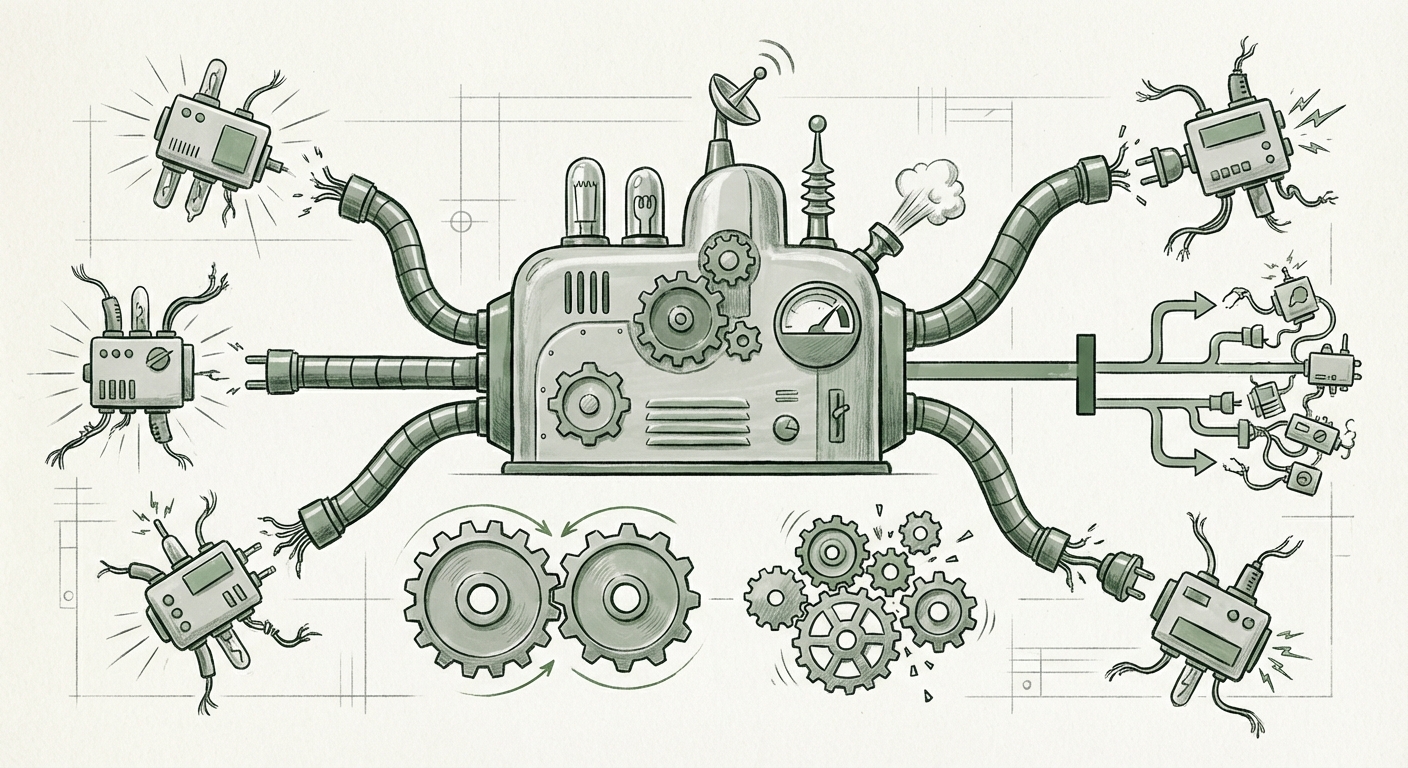
On September 29, 2026, OpenAI launched Dots, a set of always-on agents built to compete directly with Meta's Muse. The name is simple, but the shift it represents is not. An always-on agent does not sit idle between questions. It keeps working in the background. It watches, remembers, plans, and acts. It becomes less like a tool you pick up and more like a presence that stays with you.
That is the real story here. Not a new model with a bigger score on some benchmark, but a change in what an AI product is. And it is a change that will ripple through every company that sells software, every job that involves a screen, and every person who has ever forgotten to follow up on an email.
What OpenAI Actually Shipped
OpenAI's Dots are always-on agents. The framing matters: this is not a single chatbot with a new coat of paint. It is a category of assistant designed to run continuously rather than wait for a prompt.
The launch places OpenAI in direct competition with Meta's Muse, which had already staked out ground in the same territory. Two of the largest AI companies in the world are now chasing the same idea from different starting points. OpenAI comes from the model-and-platform side. Meta comes from the social-and-device side. Both want the same thing: to be the AI that lives inside your daily routine instead of the one you visit when you remember to.
When two giants collide on the same concept at the same time, it usually means the concept is about to become normal. Think about how quickly "the cloud" went from a strange phrase to something nobody bothers to explain. Always-on agents are on that same path.
Why "Always-On" Is the Whole Ballgame
An AI that only answers when spoken to is limited by human attention. You have to notice a problem, describe it, and ask for help. That caps how much value the AI can create, because the bottleneck is you.
An always-on agent removes that bottleneck. It can notice things you did not notice. It can start work before you ask. It can hold context across days and weeks instead of forgetting the moment you close a window.
The name "Dots" hints at what this is really about: connecting separate moments into a pattern. A calendar entry here, an email there, a document someone shared, a deadline creeping closer. Individually, each is a dot. An always-on agent is the thing that draws the lines between them.
That is a fundamentally different product. A chatbot is a destination. An always-on agent is an environment. Destinations get visitors. Environments get residents. And residents are worth far more to the company that hosts them.
The Race with Meta's Muse
Competition between OpenAI and Meta is not new, but the shape of this particular race is worth understanding.
Meta's Muse represents the distribution-first approach: put an agent where people already spend their time and make it feel native to those surfaces. OpenAI's Dots represent the capability-first approach: build the most capable agent and let its usefulness pull people in.
Both strategies have worked before in tech. Both have failed before too. What is different now is that the product is not a website or an app you check. It is something designed to be continuously present. That raises the stakes considerably, because the winner is not just the company with the best model, it is the company that becomes the default layer between you and your digital life.
That is a position with enormous lock-in. Switching costs are low when you are changing search engines. They are much higher when you are changing the assistant that knows your schedule, your writing style, your priorities, and your history.
The Bigger Trend: From Tools to Teammates
Dots and Muse are not isolated products. They are the clearest sign yet of a three-stage shift that the whole industry has been moving through.
- Stage one: assistants. AI answers questions. Useful, but passive. You drive every interaction.
- Stage two: copilots. AI works alongside you inside a specific task, writing code, drafting a document, editing a photo. Still reactive, but embedded.
- Stage three: agents. AI runs continuously, holds long-term context, and takes action on its own within limits you set. This is where Dots and Muse are landing.
Each stage moves the AI closer to the center of the work. Each stage also moves more responsibility onto the AI. That is exciting and slightly uncomfortable at the same time, and both feelings are appropriate.
What This Means for Businesses
Software gets a brain, not just a button
For years, business software competed on features. Now the differentiator is whether the software can act on your behalf. An always-on agent can flag a deal that has gone quiet, draft the follow-up, and suggest the next step, without anyone opening a dashboard. Companies that bolt an agent onto their product just to say they have one will not win. Companies that rebuild around what an agent makes possible will.
Customer service becomes continuous
Today, support is reactive: a customer has a problem, contacts you, and waits. An always-on agent can spot friction before the customer complains. That changes the metric from response time to problems prevented. It also raises a hard question: if the agent can fix something, should it just fix it? Most customers will say yes, until the agent gets one wrong.
Operations get a second pair of eyes that never blinks
Supply chains, compliance checks, invoice reconciliation, security monitoring, these are areas where the value of constant attention is obvious. An agent that never gets tired and never gets bored is genuinely well-suited to them. The catch is that constant attention also means constant alerts, and teams that are already overwhelmed will drown unless the agent is tuned to be quiet by default.
The cost model changes
An always-on agent consumes resources even when nothing interesting is happening. That is a real operational difference from a chatbot that only spins up when queried. Businesses evaluating these products should be asking about cost predictability, not just capability. A brilliant agent with a bill nobody can forecast is a liability.
What This Means for Workers
The honest answer is that always-on agents shift the job, rather than erase it.
When an agent handles the noticing, the drafting, the scheduling, and the follow-up, the human role moves upward. You spend less time producing and more time deciding. You review, you set direction, you handle the parts that require judgment, relationships, or context the agent does not have.
That sounds good on paper, and for many people it will be. But it requires a skill that has never been evenly distributed: the ability to supervise work you did not do yourself. Managing an agent is closer to managing a junior colleague than to using a spreadsheet. You have to give clear instructions, check the output, and know when to override it.
The workers who adapt fastest will not be the most technical. They will be the ones who are comfortable delegating, reviewing, and correcting, the same skills good managers have always needed.
Privacy, Trust, and the Price of Always Being On
There is no way around it: an agent that is always on has to know a lot. To connect dots, it needs access to the dots.
This is where the Dots-versus-Muse competition gets genuinely interesting, because the two companies bring very different histories to the question of trust. Users will want to know what the agent can see, what it stores, who else can access it, and how to turn it off without losing the benefits.
Three things will separate winners from losers here:
- Clarity. People accept systems they understand. They resist systems that feel sneaky.
- Control. A simple, honest off switch and clear boundaries on what the agent may do on its own.
- Reversibility. When the agent acts, can you undo it? Agents that can take irreversible actions will scare people away faster than any privacy policy.
None of this is a reason to avoid the technology. It is a reason to demand that the companies shipping it treat trust as a feature rather than a legal formality.
Actionable Steps You Can Take Now
Whether you run a company or just use AI at work, the arrival of always-on agents changes what is worth doing this quarter.
- Map your repeated decisions. List the tasks where you or your team make the same call over and over with slight variations. Those are the first things an always-on agent will be good at.
- Separate reversible from irreversible. Decide today which actions an agent may take freely and which must always require a human. This is the single most important guardrail.
- Fix your data first. An agent is only as good as the information it can reach. Messy, siloed systems produce a confidently wrong assistant.
- Pilot on low-stakes, high-volume work. Internal summaries, meeting follow-ups, ticket triage. Learn how the agent fails before it fails somewhere that matters.
- Plan for cost variance. Ask vendors how always-on usage is priced. Budget for a range, not a number.
- Build review habits. If people will supervise agents, they need time and training to do it well, not an extra task squeezed into an already full day.
What Comes Next
The launch of Dots in response to Meta's Muse tells us where the next year of AI competition will be fought. Not on model quality alone, and not on price alone, but on who can build the most trusted, most useful, most continuously present agent.
Expect the category to fill up fast. Once two major players commit to always-on agents, everyone else has to respond. Within months, "runs in the background" will stop being a headline feature and start being table stakes.
Expect the boundaries to get tested too. How much autonomy is enough? How much is too much? Those questions will be answered in public, sometimes by accident, and the answers will shape what regulators do next.
The Bottom Line
OpenAI's Dots and Meta's Muse are not just two products fighting for users. They are the opening moves in a fight over who gets to be the always-present layer of intelligence in everyday life.
For businesses, the message is that passive AI adoption is no longer enough. The companies that win the next few years will be the ones that figure out how to delegate real work to agents while keeping humans firmly in charge of the decisions that matter.
For everyone else, the message is simpler. The AI that waits for you to ask is already old news. The AI that is already working when you wake up is the new normal, and the sooner you decide what you want it to do, and what you never want it to do, the better off you will be.