OpenAI's New ChatGPT Looks Less Like a Chatbot and More Like an Operating System
For most people, ChatGPT has been a destination. You opened a tab, you typed a question, you got an answer, and you closed the tab. It was useful, but it was also separate, a tool you picked up and put down, like a calculator sitting on a desk.
The newest version of ChatGPT changes that shape entirely. It no longer behaves like a single conversation window. It behaves like a layer that runs underneath everything else you do. That is the difference between an app and an operating system, and it is the most important shift in this technology since the first chatbot appeared.
Understanding why matters, not just for people who build software, but for anyone who runs a business, manages a team, or simply lives in a world where more decisions are being handed to machines.
From a Box You Type In to a System That Runs Things
A chatbot has one job: it responds. You give it a prompt, it gives you text. Everything valuable it does depends on you showing up and asking.
An operating system is different in kind, not just in degree. An operating system manages memory. It coordinates other programs. It decides what runs, what waits, and what gets resources. It sits between the user and the machine, quietly making everything else possible.
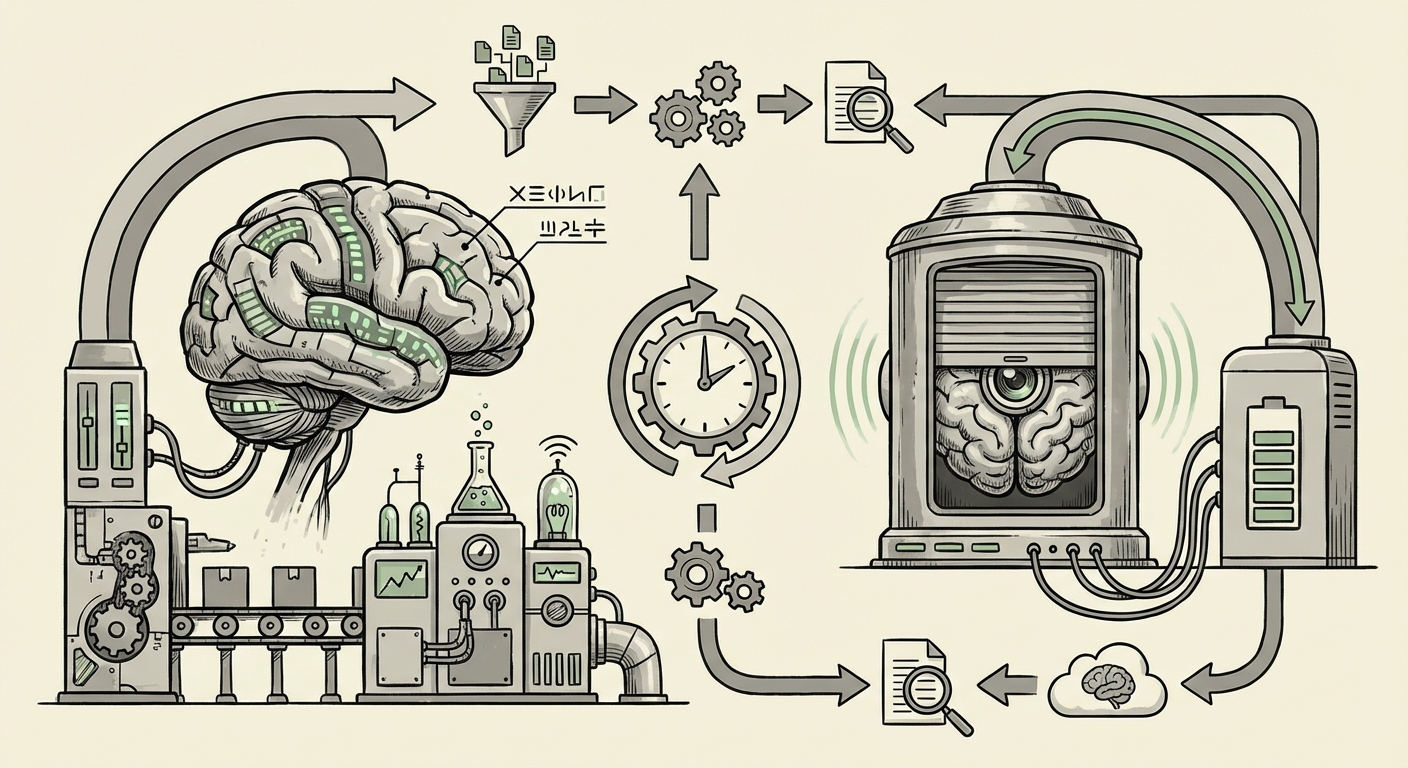
When ChatGPT starts acting like an operating system, the same logic applies. Instead of being one program among many, it becomes the thing that coordinates the other programs. Instead of waiting for a prompt, it holds context about what you are doing across tasks. Instead of producing a single answer and stopping, it moves work forward through multiple steps.
The important word here is coordination. That is what operating systems do, and that is what an AI layer becomes when it grows up.
Why the Framing Is the Story
It is tempting to read a headline like this as marketing language, a company dressing up an update in grander words than it deserves. But the shift from chatbot to operating system is not really about features. It is about where the value sits.
When AI is a chatbot, its value is measured in answers. How good was the response? How fast? How accurate?
When AI is an operating system, its value is measured in work completed. Did the task finish? Did three systems stay in sync? Did the person have to do less?
That is a completely different scorecard, and it changes who wins and who loses. A better chatbot competes on the quality of a single reply. A better operating system competes on how much of your day it can absorb.
The interface starts to disappear
Operating systems are famous for becoming invisible. Nobody thinks about the operating system on their phone while sending a message. The better it works, the less you notice it.
The same trajectory now applies to AI. The goal is not to make you chat more. The goal is to make chatting unnecessary, to have the system already understand the context, already know the tools, already know what "done" looks like.
This is why the chatbot metaphor was always temporary. Chatting is a clunky interface. It is a step we accepted because it was the only door available. As the layer matures, the door gets smaller and the room gets bigger.
What This Means for Businesses
For companies, the practical consequences arrive faster than the philosophical ones.
1. Software budgets get re-examined
If a single AI layer can coordinate tasks that currently require several separate tools, then some of those tools start looking redundant. That does not mean they all vanish. It means every subscription, every seat license, and every integration now has to justify itself against a new baseline: can the AI layer do this already?
2. The advantage shifts to data and process
A model is available to everyone. Your messy internal knowledge, the way your team actually handles exceptions, the context that lives in people's heads, is not. As the AI layer becomes a platform, the differentiator moves from the technology itself to the quality of what you feed it and the clarity of the processes you ask it to run.
3. Job roles get rewritten, not just reduced
When a system can coordinate multi-step work, the human role moves upstream. Less doing, more deciding. Less drafting, more reviewing. This is not automatically good or bad, but it is definitely different, and teams that plan for it will handle the transition far better than teams that react to it.
4. Vendors become platforms, and platforms become powerful
An operating system is a position of enormous leverage. Whoever owns the layer that coordinates everything else sets the rules for what connects, what it costs, and what data flows where. That is a business risk as much as an opportunity, and it deserves a seat at the strategy table, not just the IT budget.
Actionable Insights: What to Do Now
You do not need to predict the future perfectly to prepare for it. You need to make a few decisions that hold up under several versions of it.
- Map your repeatable work. List the tasks your team does the same way every week. Those are the first candidates for an AI layer that coordinates rather than chats.
- Clean your data before you need it. AI systems are only as useful as the context they can reach. Sloppy internal knowledge produces sloppy coordination.
- Write down your rules. What can the system decide alone? What needs a human? Clear boundaries make adoption faster and safer.
- Test one workflow end to end. Pick something small, measure the time saved, and learn where it breaks. One honest pilot beats ten slide decks.
- Keep an exit plan. If the layer you depend on raises prices or changes terms, how hard is it to move? Portability is boring until the day it isn't.
- Train people, not just systems. The biggest bottleneck is rarely the technology. It is whether your team knows how to work alongside it.
- Watch the security surface. A system that touches more of your tools also touches more of your risk. Access control and audit trails are not optional extras.
The Risks Worth Naming Out Loud
Every shift toward a more central platform carries its own hazards, and pretending otherwise does not help anyone.
Concentration. If one layer coordinates everything, one company holds a great deal of influence over how work gets done. That is a genuine question for markets, regulators, and customers alike.
Over-trust. Systems that feel seamless are systems we stop checking. The smoother the experience, the more important it becomes to keep a human in the loop on decisions that actually matter.
Accountability. When a multi-step task goes wrong, who is responsible, the person who asked, the company that built the layer, or the tools it coordinated? Clear answers are still being written.
Access gaps. Platform-level tools can widen the distance between organizations that can adopt them quickly and those that cannot. Smaller businesses and public services are often the ones left behind.
What This Means for Society
The chatbot era trained hundreds of millions of people to talk to machines. That was an enormous cultural shift, and it happened in a remarkably short time.
The operating-system era asks for something harder. It asks people to hand over not just a question, but a process. That requires a level of trust that has to be earned, not announced.
Schools will need to teach judgment about AI output, not just avoidance of it. Workplaces will need to redefine what "skilled" means when coordination is automated. And everyday users will need plain-language clarity about what the system is doing on their behalf, because a layer you cannot see is a layer you cannot easily question.
The Road Ahead
The direction is unmistakable. AI is moving out of the chat box and into the plumbing. It is becoming the thing that connects your tools, remembers your context, and pushes work forward while you do something else.
That does not mean chatbots disappear. It means the chat box becomes one small door into something much larger, the way a terminal window is one small door into a computer.
The organizations that thrive in this transition will be the ones that treat AI as infrastructure rather than entertainment: deliberate about where it runs, honest about what it can't do, and disciplined about the data and rules they give it.
The chatbot was the demo. The operating system is the business. And the businesses that start preparing now will be the ones who recognize the difference before it becomes obvious to everyone else.